The forecast changed overnight and the winds looked good again for Lake Watching so we headed to Hamilton Monday afternoon and spent 5 hours scoping and chatting with other birders. The winds were quite strong so I was hoping for something good but it was fairly quiet with just a couple of Parasitic Jaegers coming in for a close look at the shore and a Sabine’s Gull later.
Tuesday there was a report of an Ibis up in Cambridge so we went up to see it on the off chance it would be identified as a Glossy and add it to our Hamilton Study Area list. Many of the Ibis’s seen in the fall are juvenile birds and it is very difficult to ID them to either Glossy or White-faced. Pictures were looked at carefully and it was determined to be a Glossy Ibis. That was a bird we chased way back in the spring and drove 4.5 hours to see and now here is one 30 minutes away from our house. But it is a far easier ID in the spring.
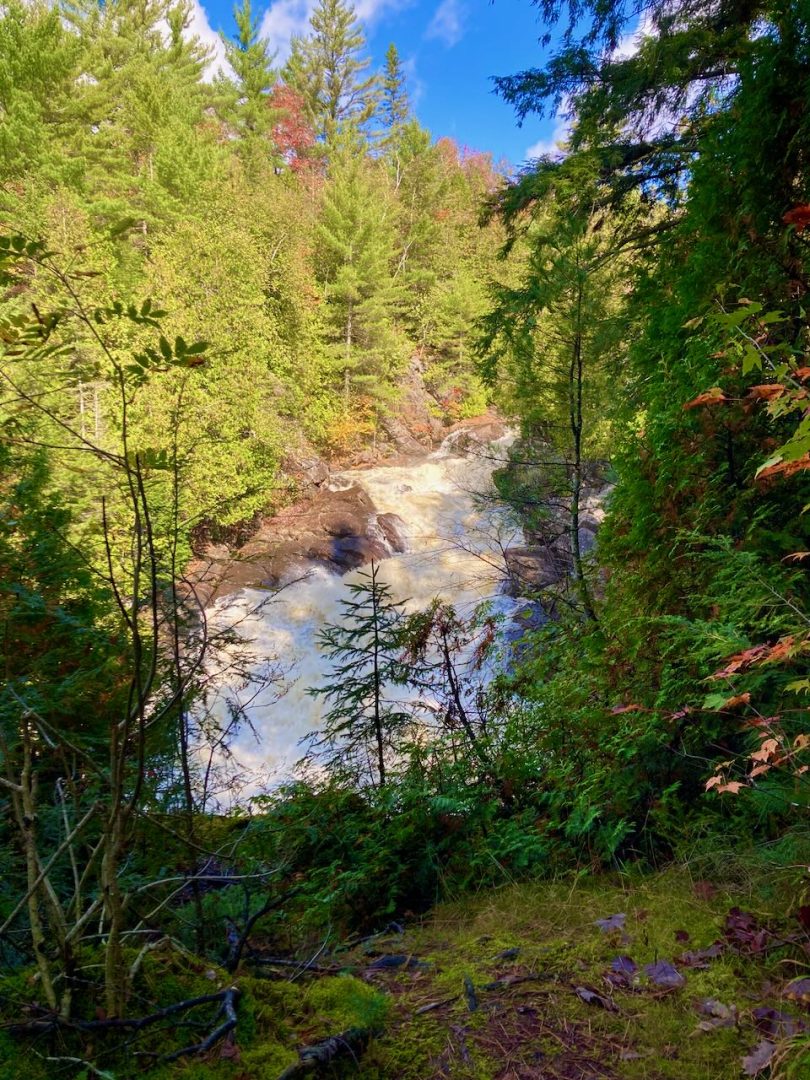
Thursday we headed up to the northern Ontario Field Ornithologists Conference instead of attending the southern one in Leamington. We left early knowing that we wanted to bird along the way. I also wanted to get checklists in 2 of the remaining Counties so we were taking a detour to do that as well. A report came in that a Kirkland’s warbler was found in Oakville and of course we were 2 hours into our drive up north. I was starting to think committing to a whole weekend up north might have been a bad idea… We stopped at the Bracebridge Sewage Lagoons to get a checklist in Muskoka County and to see if we could find a Nelson’s Sparrow that had been reported but we did not find the sparrow, many other species of sparrows but not a Nelson’s. We then detoured along highway 60 to Oxtongue Ragged Falls to put in a checklist for Haliburton County. We are down to two Counties left to bird in, at either end of the province, Lambton on Lake Huron and Prescott/Russell east of Ottawa.
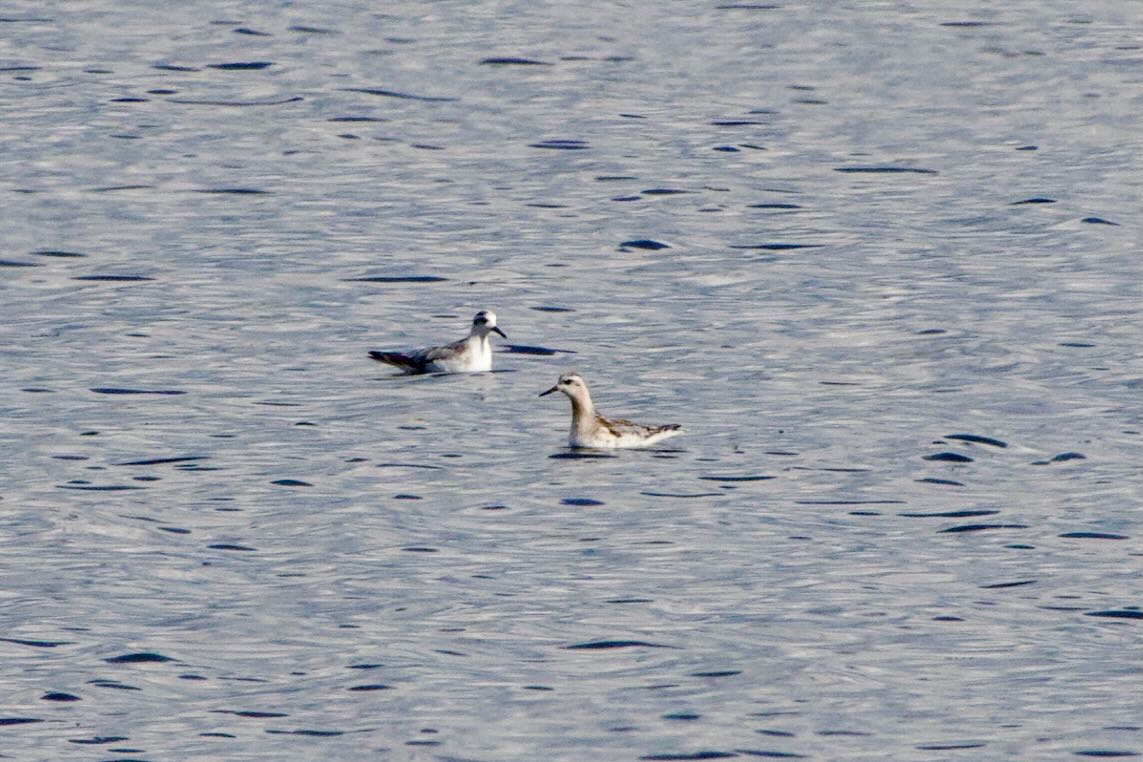
Next stop was the Powassen Sewage Lagoons to see if we could get better pictures of a Hudsonian Godwit that was reported there. When we got out of the car I quickly checked my emails and saw that 2 Red Phalaropes had been reported an hour before at a lagoon about 80 km away. We got back in the car without looking for the Godwit and made our way to the Warren Sewage Lagoons to find the 2 Red Phalaropes happily swimming about. This is a tough bird to get in any given year so I was happy to have the chance to add it to my rarities list. The Kirkland’s Warbler had not been re-found in Oakville so I was feeling better about my decision to head north.
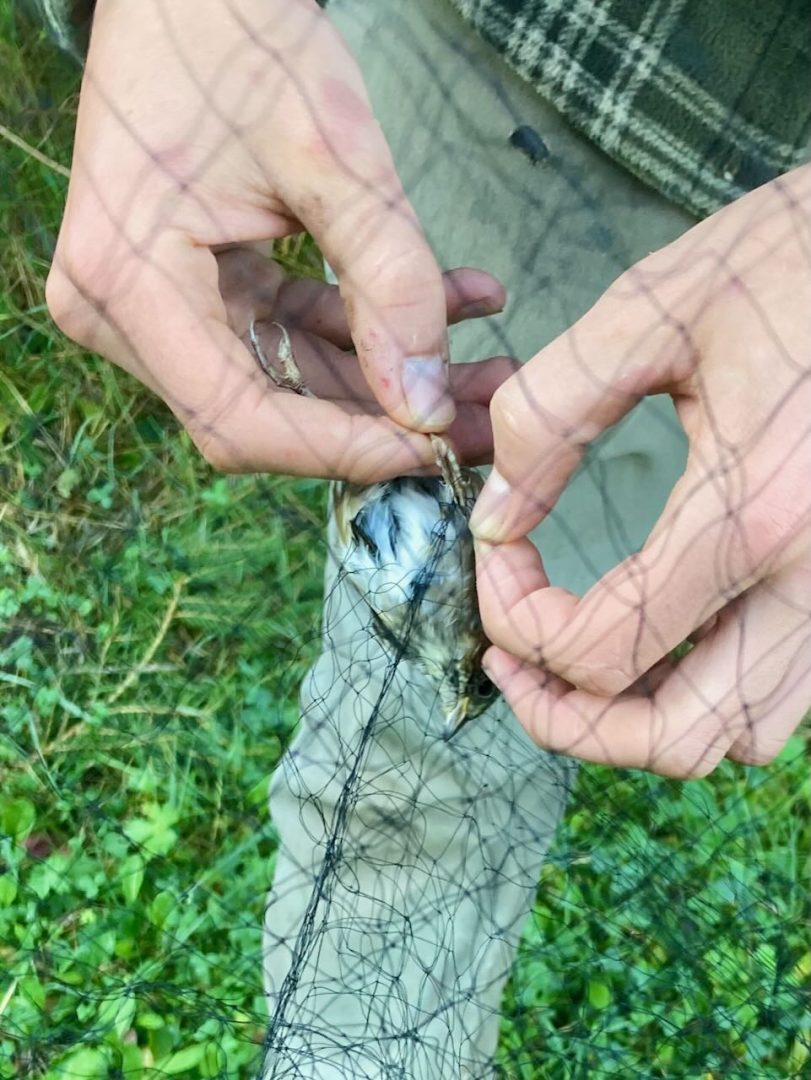
Friday we attended the OFO outings that included bird-banding in the morning and more sewage lagoons in the afternoon. While we didn’t expect to add any birds to our list it was fun to be out with other birders, socialize a bit and learn about the Hilliardton Research and Bird Banding Center. The banders are all volunteers that are excellent at explaining the intricacies of bird banding and identification and then go the extra step to patiently show you how to hold the birds before release.
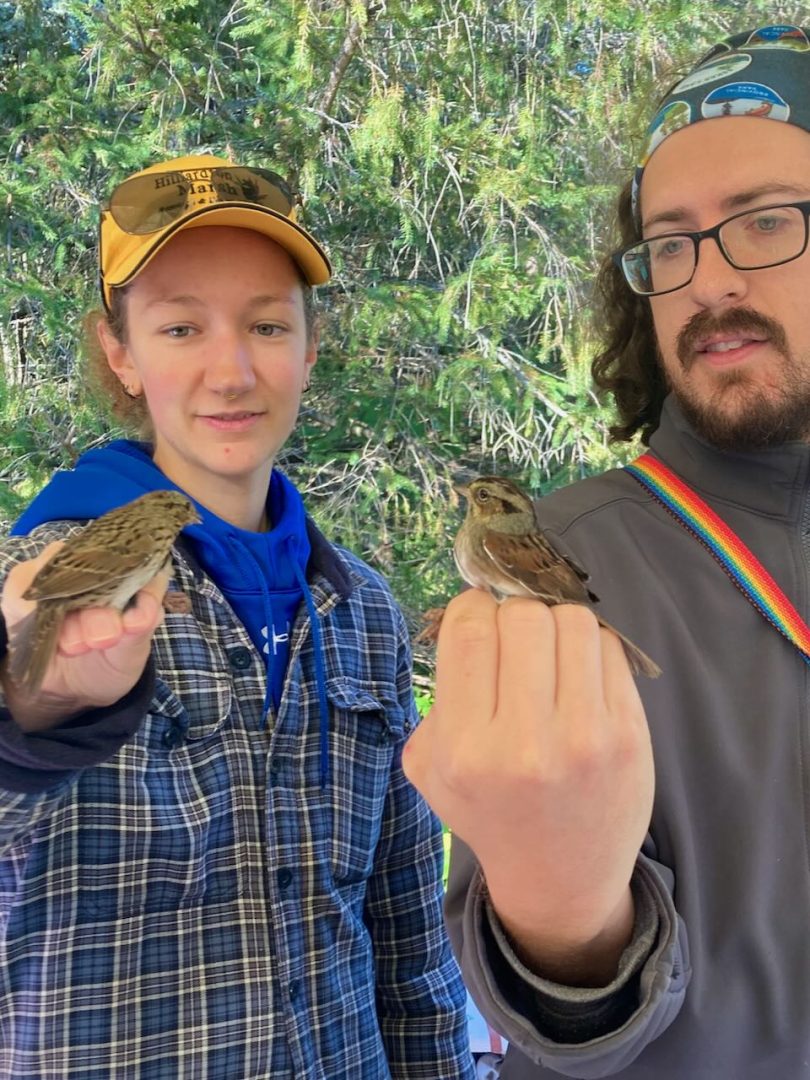
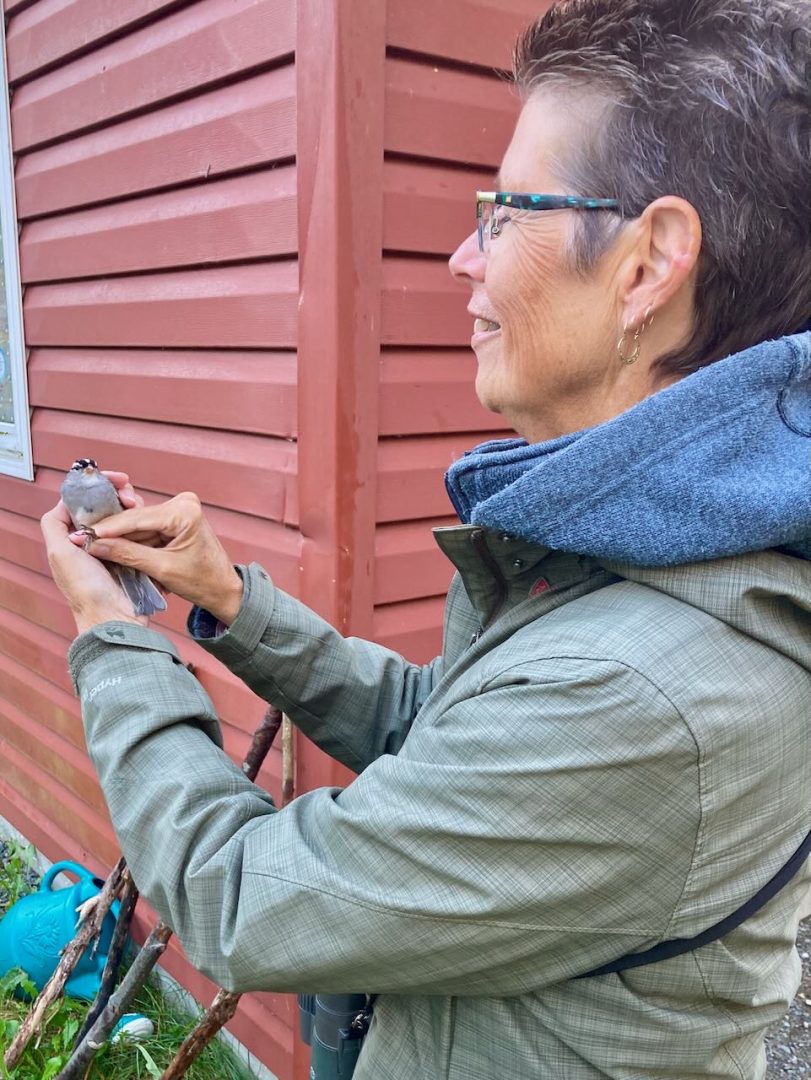
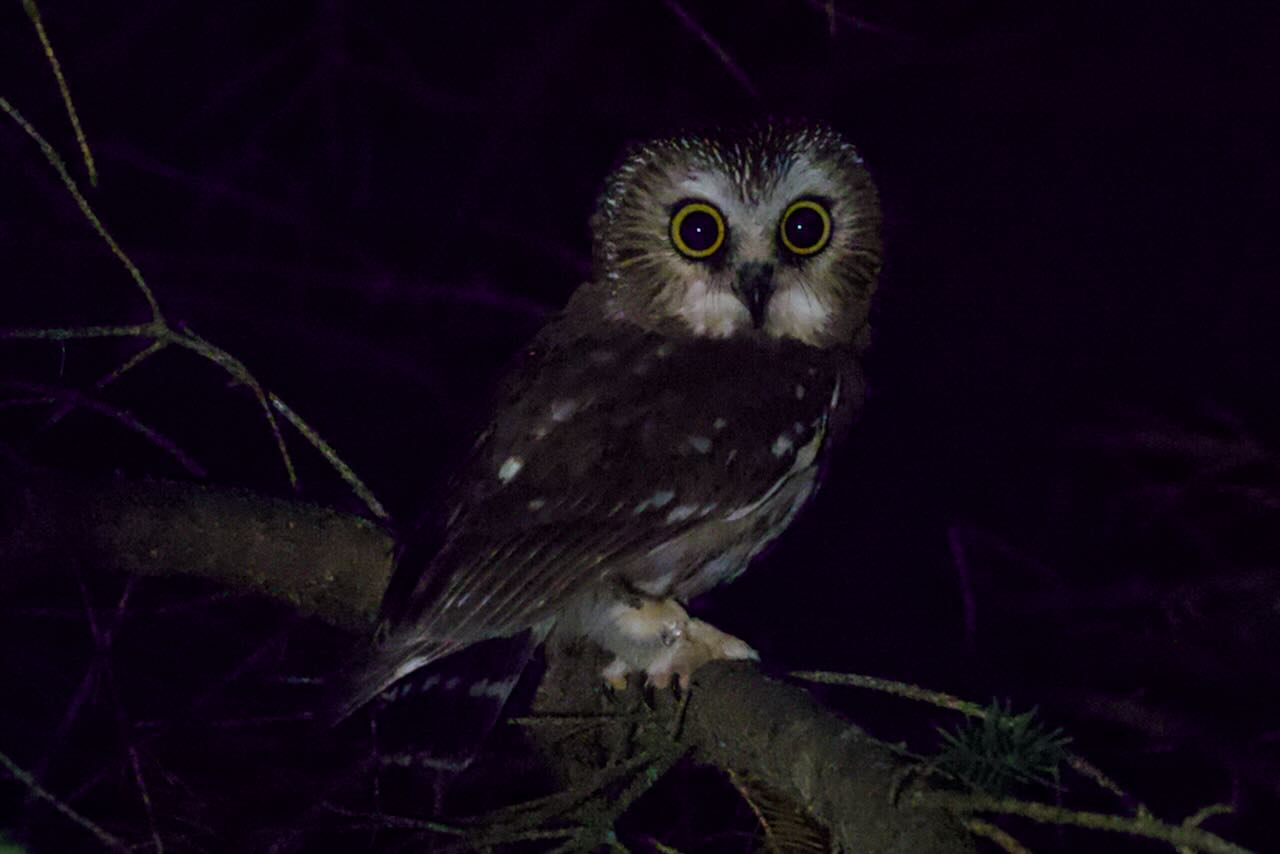
Friday night we were privileged to attend the owl banding at the centre. They band Northern Saw-whet Owls, which we have only heard this year and Boreal Owls which we have not added to our list yet. The weather was a bit warm and apparently owls prefer to migrate in cooler temperatures but they were hopeful we would get at least one owl. The first net check had 2 Saw-whet owls and we were very happy to see these tiny owls, watch the banding process and then the release. The banders work quickly but allow for some photo ops and then a quick release outside where the owls are placed in a tree until their eyes re-adjust.
The banders then headed to the nets and area where they were calling for Boreal Owls and we waited and waited. A longer wait is a good thing, as it usually means they are carefully untangling owls from the net. When the volunteer banders arrived back they entered the room triumphantly carrying four!!! bags! We have seen a Boreal Owl only once before and the view was not great so it was a fantastic experience to see one close up, take pictures and then both Jerry and I got to release an owl back into the wild. Such a fantastic experience!
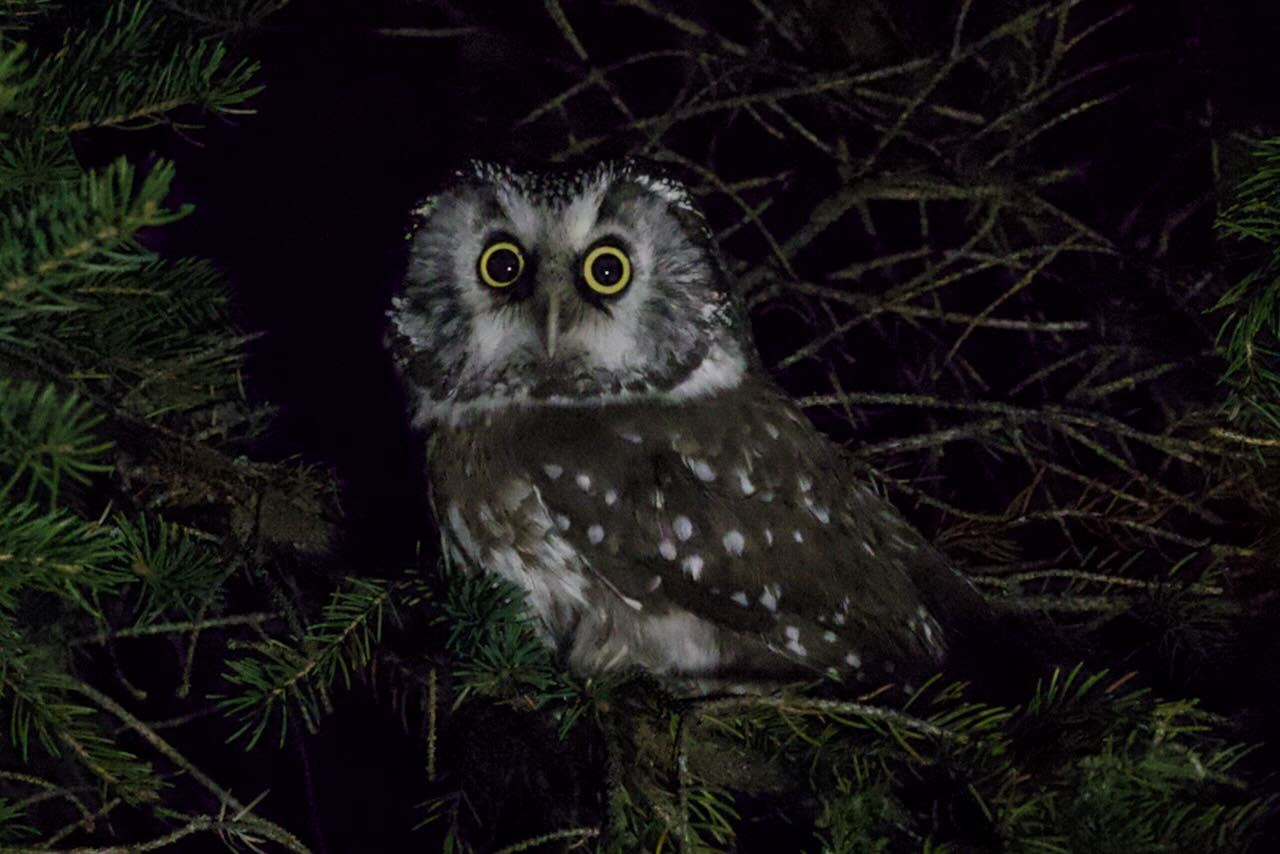
I need to talk about my decision to add this species to my list because it will be controversial to some birders. Generally, it is frowned upon to add birds that are seen while being banded to your list as your list should be only birds that you or others find in the wild and while they are being banded they are “captive”. The question is when do they technically become wild again? Some birders use the rule where they won’t add the bird while it is being banded but once it is released then it is technically “wild” again and they will add it then. Some will say they have to see the bird fly some distance away or re-find it later to count it and others won’t care either way. The ABA (American Birding Association) suggests the bird not be counted while it is “under the influence of captivity” so the initial release would be part of that. There will be lots of opinions, just as there are lots of birders. Ultimately, it is my list and I have decided to add these wild Boreal Owls that happened to spend some time in human hands but then were released back to the wild in my presence. I plan to still take another trip north in December and will try to get a Boreal Owl to respond to calls that would also count in an effort to satisfy every opinion. Bird #323
Hilliardton Marsh Research and Education Center gets no government funding so they rely on private and corporate donations. Please check out their website https://thehilliardtonmarsh.com/ and consider becoming a member and/or making a donation. The daily bird banding is open to the public in the spring and fall and the owl banding has to be reserved for a fee and is sold out very quickly each year. We have become members and will be making yearly donations.
Saturday we attended more OFO outings and did a bit of a private drive on our own hoping to turn up a Boreal Chickadee that is still on our list as a “heard only” but the forests were pretty quiet. Sunday we headed home early and stopped at the Powassan Lagoons again but did not find anything exciting. In the end the trip up north was the right decision, there were no rarities found at the southern conference at Pelee and the Kirtland’s was never refound but we added two birds to our list.
Next week we will be targeting two more expected species – Nelson’s Sparrow and Black-legged Kittiwakes.
Week 39 2 species added #323 species J&E