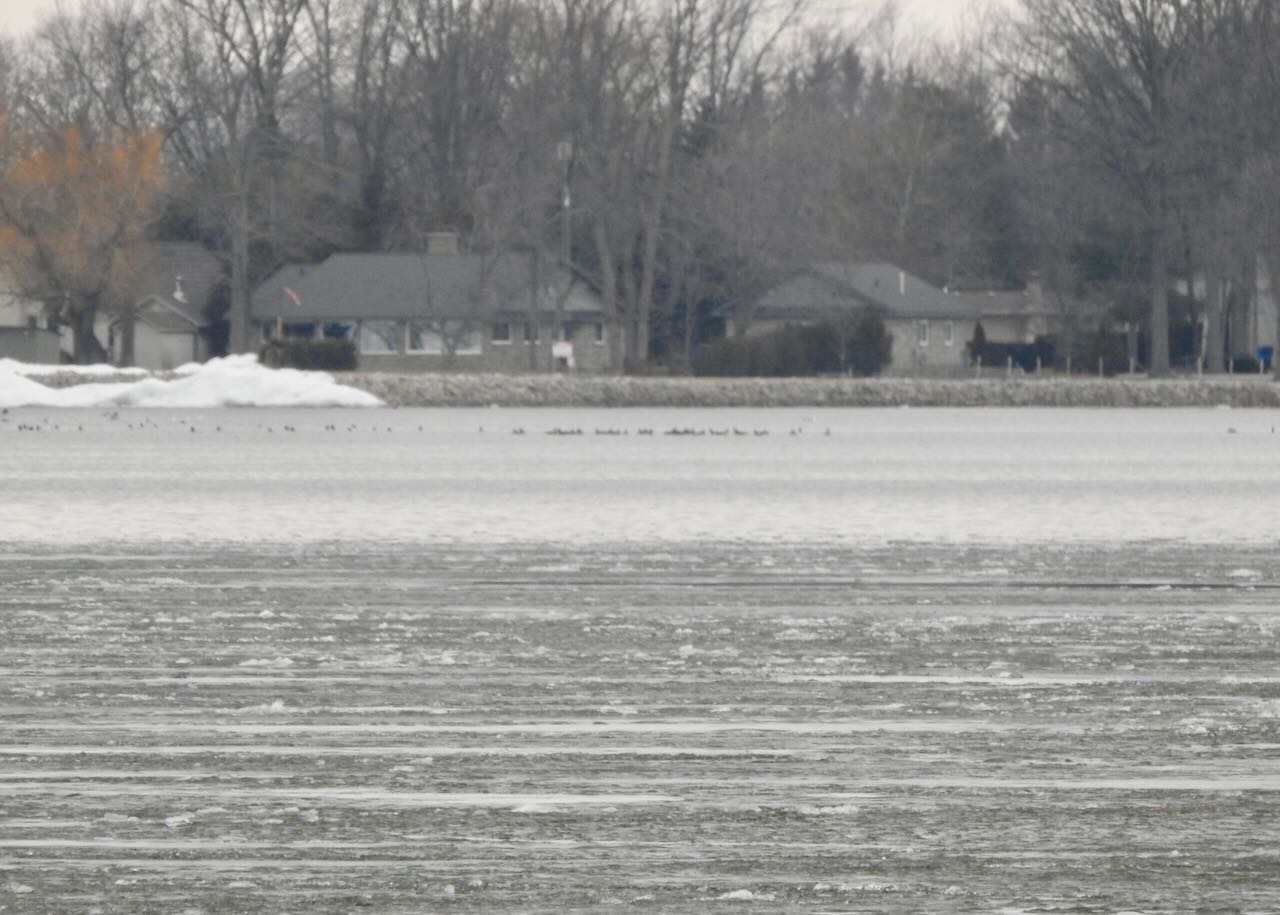
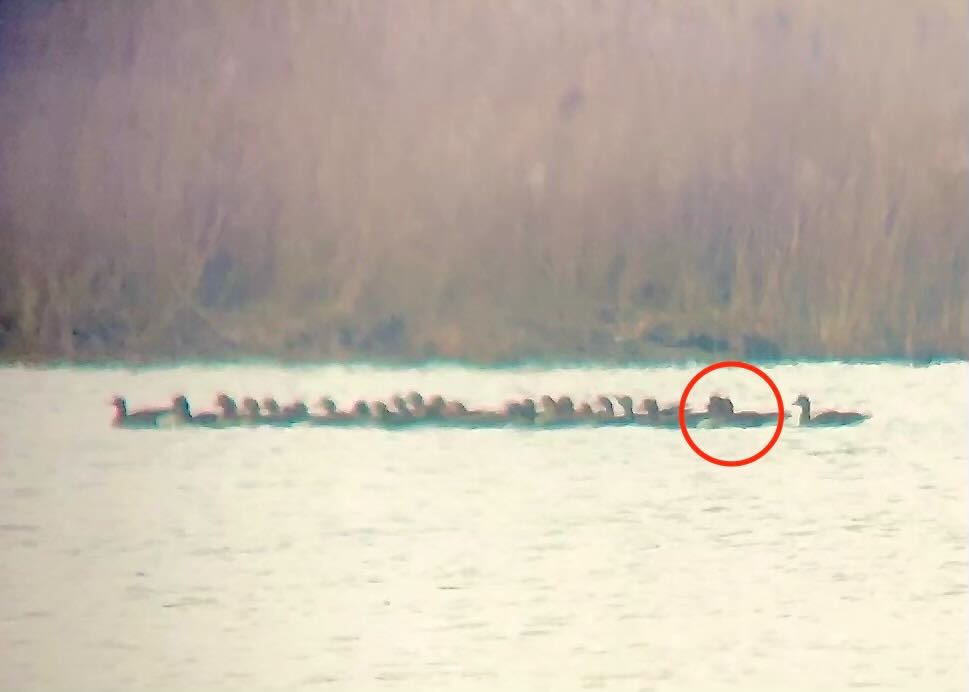
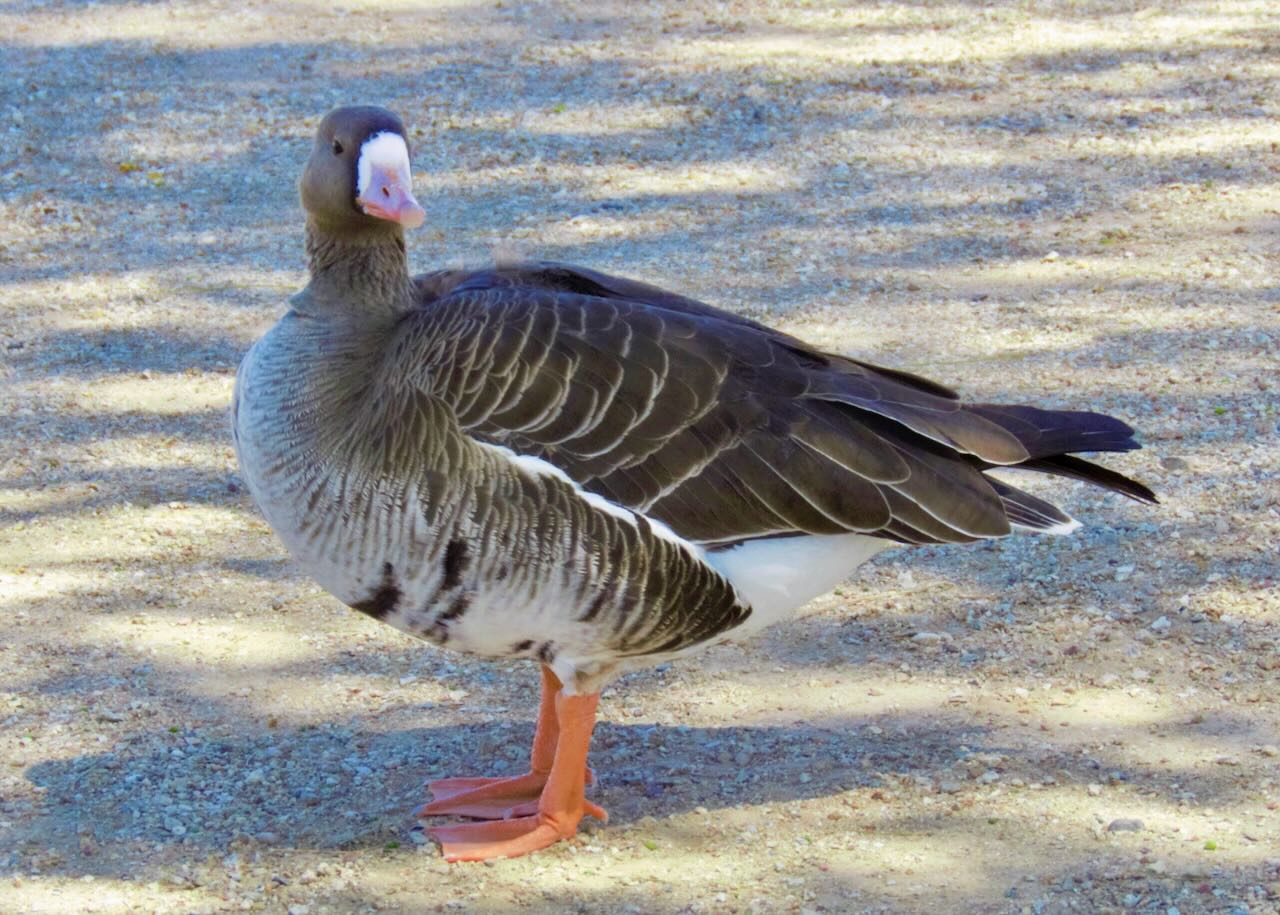
We started the week with a drive into Middlesex (west of London) searching for a Golden Eagle that has been reported a number of times but had no luck, I am pretty sure I will see one during migration but its nice to get as many birds on the list now. We then headed down to Rondeau Provincial Park and searched the bay for a group of Greater White-fronted Geese that was reported the day before. The view was horrible, they were on the other side of the bay but using our scope we could identify the orange/pink bill and when the lighting was right the white patch around the bill. With the naked eye the geese were not visible at all. The first picture shows the geese from Jerry’s camera at full zoom. The second pic is a digiscope picture (our iphone held up to the scope view) where you can kind of see the orange bill with white around it on the goose in the red circle. In this situation, without a clear view you determine first they are bigger than the ducks around them so they are geese, they are not Canada Geese, no black heads, they are not Snow Geese (all white) and Greater White-Fronted were reported yesterday with a similar number so they are likely the GWFG. But we still scoped until we saw that identifying orange bill to clinch the identification. Bird #134. Hopefully we find another one and get a better picture. I’ve added a picture from 2017 so you can see what they look like.
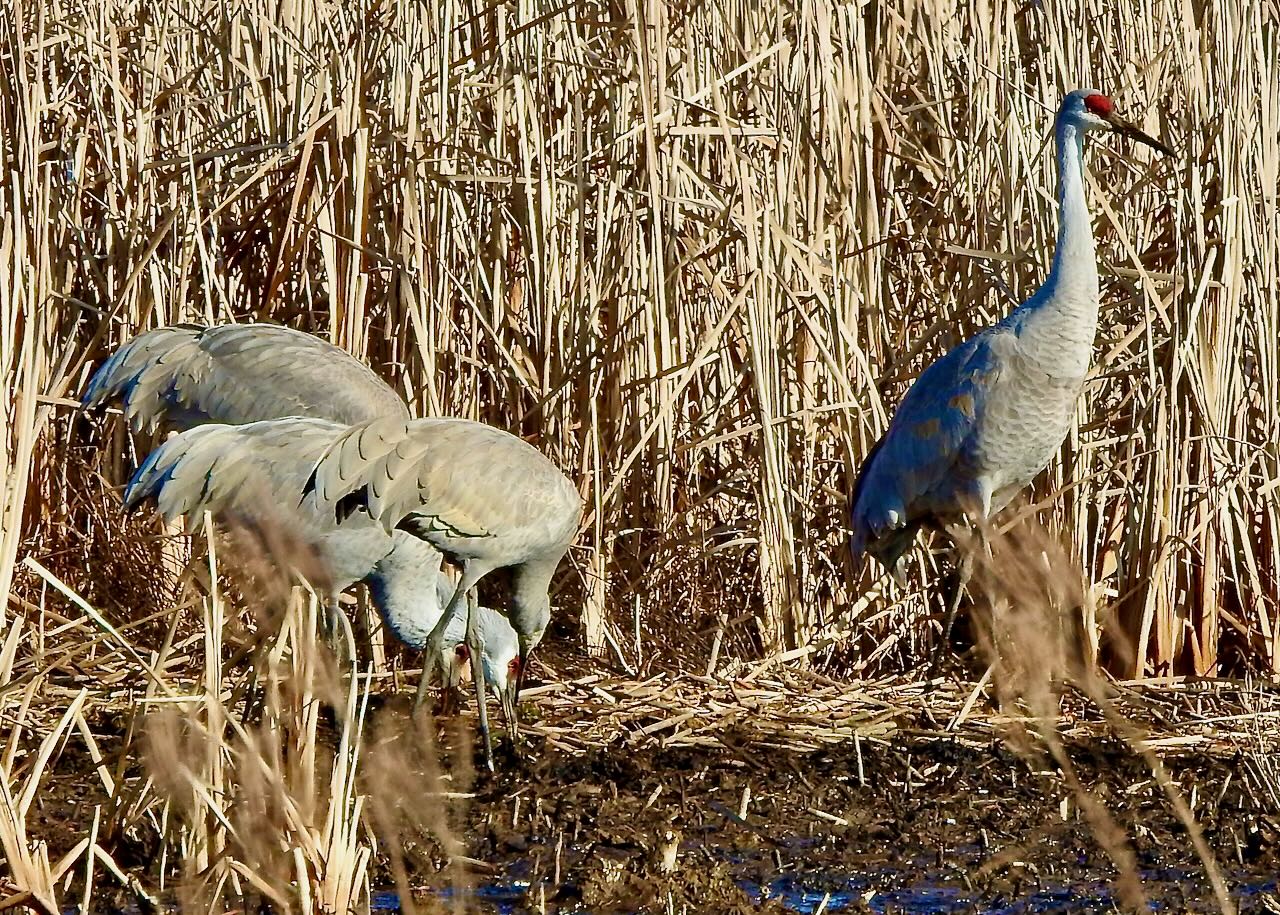
After birding Rondeau for a bit we only added one more new bird, a White-crowned Sparrow and then headed over to Long Point Provincial Park. We found some Sandhill Cranes along the way, expected, as this is a wintering area for them. We have Sandhill Cranes nesting in our community and we often have them in our backyard so not a bird I needed to add to the list but hey, I’ll take them anyway.
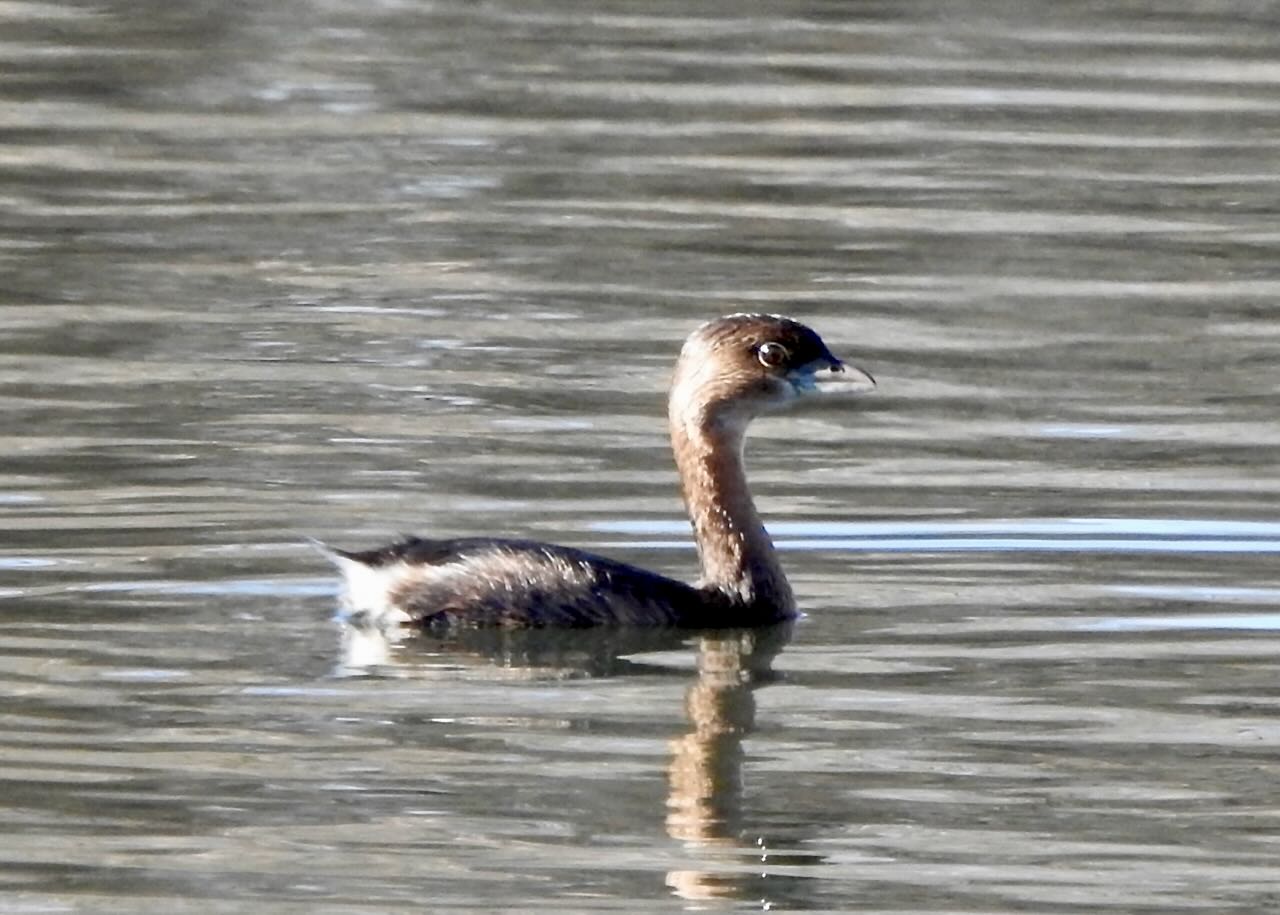
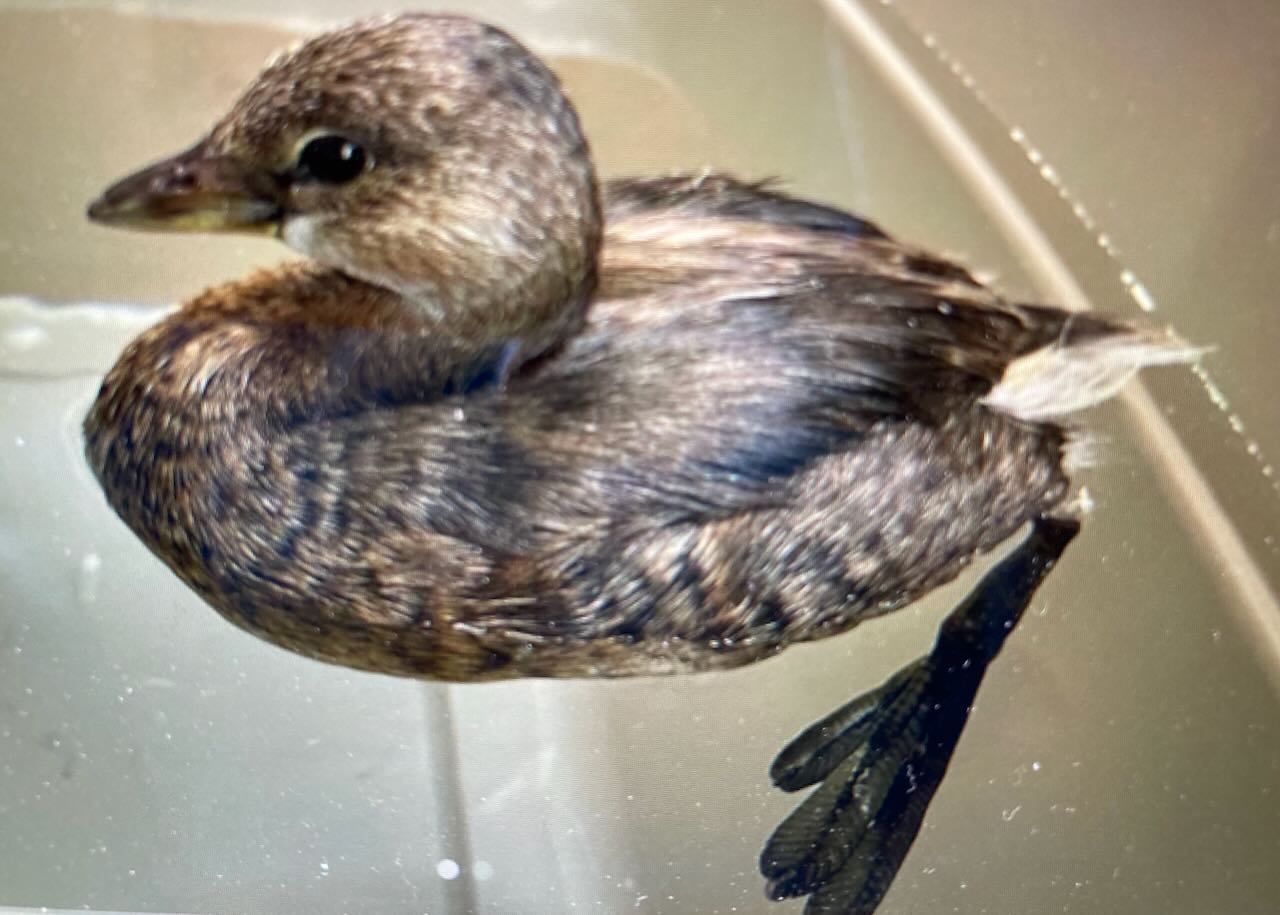
We birded locally for a bit on Tuesday but did not see anything new and on Wednesday made a quick stop in Dundas on our way to Jerry’s mom and picked up a Pied-billed Grebe in the Desjardins Canal. Grebes legs are attached so far to the back of their bodies that it is impossible for them to walk so they remain in the water all the time. If they do land by accident on land they require human help to get back to the water. First picture is Jerry’s picture and the second I found that shows how far back the feet are. Crazy huh!
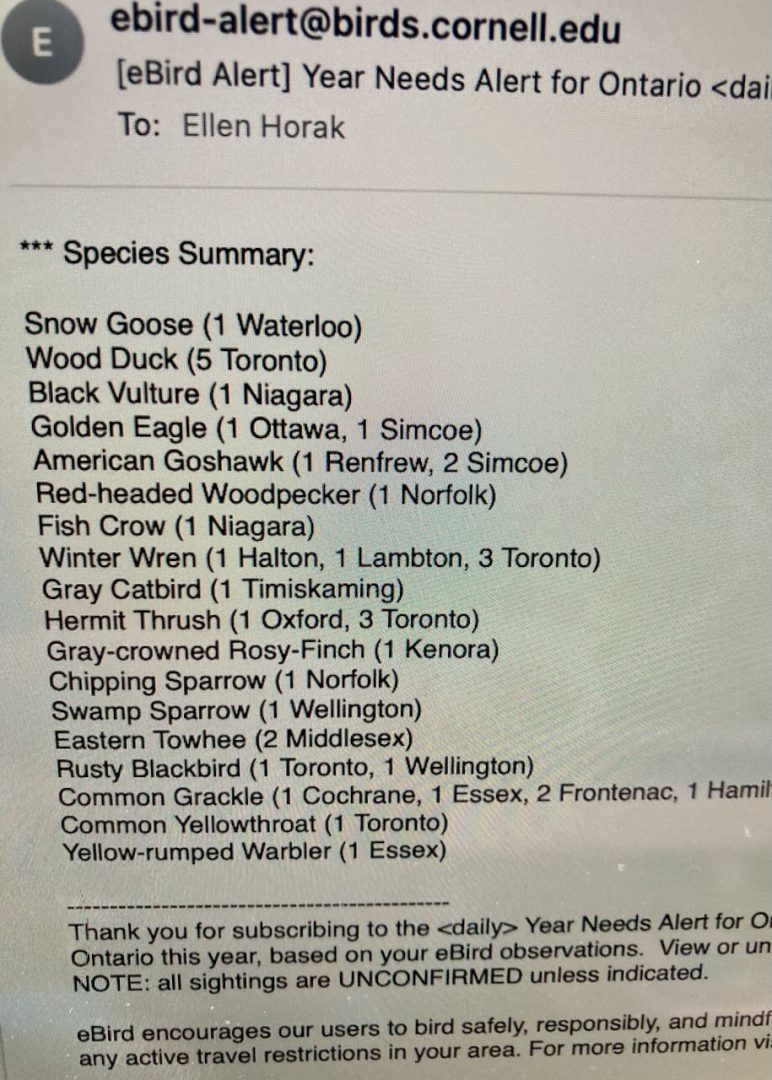
I get daily alerts for what birds I need for my Ontario list that are being seen somewhere in the province and that list is now below 20 with only about 4 being birds that are rare enough to consider chasing. A Prairie Falcon was found twice and would be a fantastic bird to add to the list but it is over 6 hours back up north, as is a Gray-crowned Rosy finch, where I was a week ago so I made the decision not to chase it. The 10 rarities I already have gives me the ability to make those decisions. If I was trying for the record then of course I would have had to go for them. The other 16-18 birds on the alerts are more common birds that have arrived early or over-wintered and I will get them in the coming months so I’m not going to chase down a Common Grackle or Wood Duck. Both will show up in my backyard soon enough.
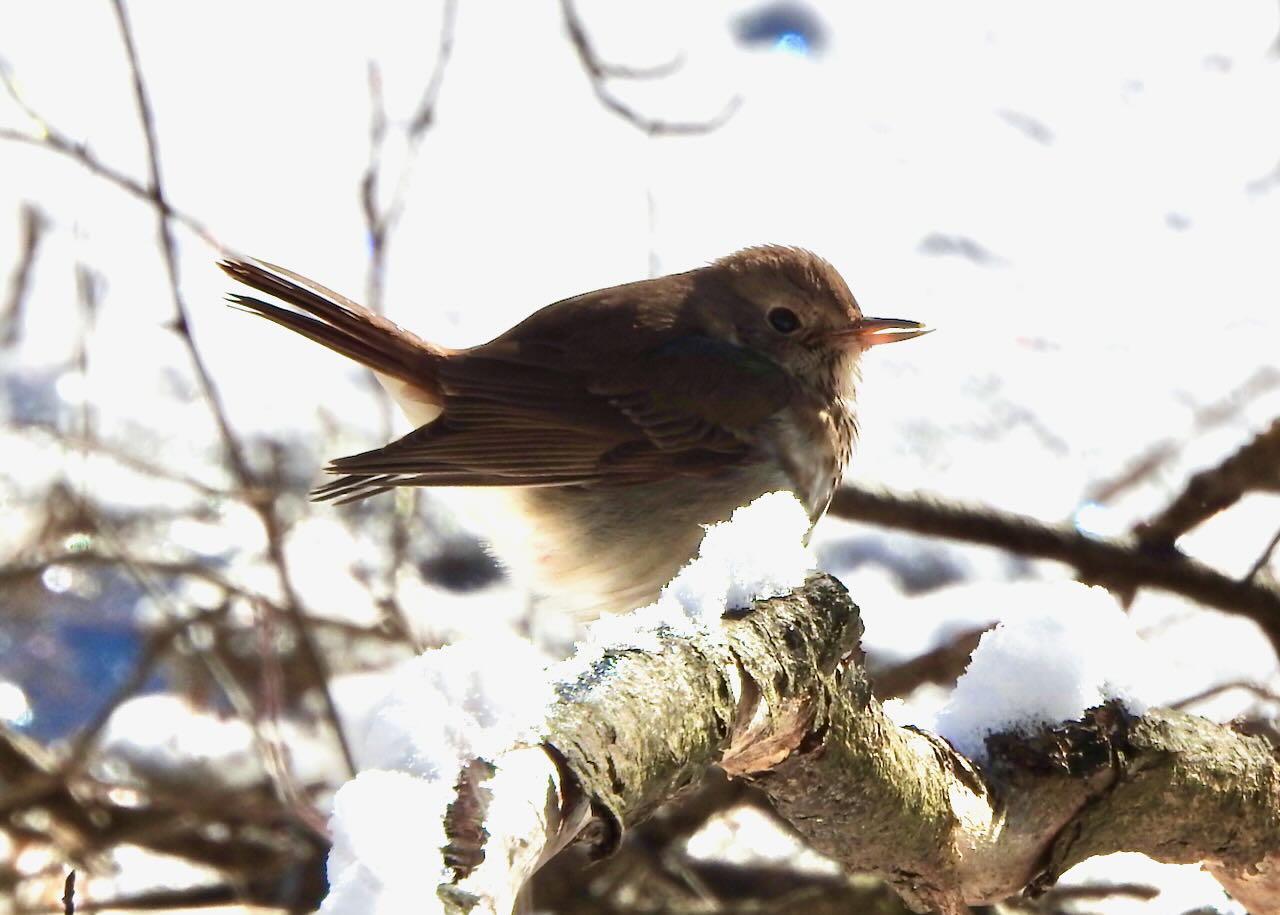
We took a few days off from birding but it was the Global Big Backyard Bird Count weekend (Feb 16-19) so we had to participate. Saturday we birded some trails locally just to get out into sunshine and for exercise. We found an overwintering, drab Hermit Thrush for bird #138.
Sunday Jerry had to do some things for his Mom so we didn’t get out again as we had planned. I spent the time looking at Canada birds for our Canada 400 year. I’ve already got quite a bit done and am monitoring what birds are around in the winter in neighbouring provinces that we might visit next year. This will be an ongoing process that I have to fit in around this big year so that we are ready for next year. Have to take advantage while things are quiet.
Week 7 10 rarities 5 species added 138 species for the year