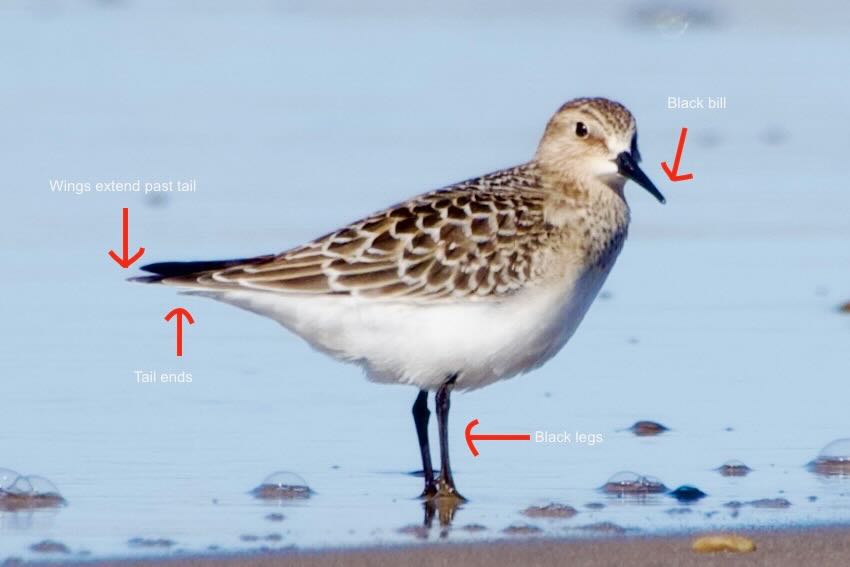
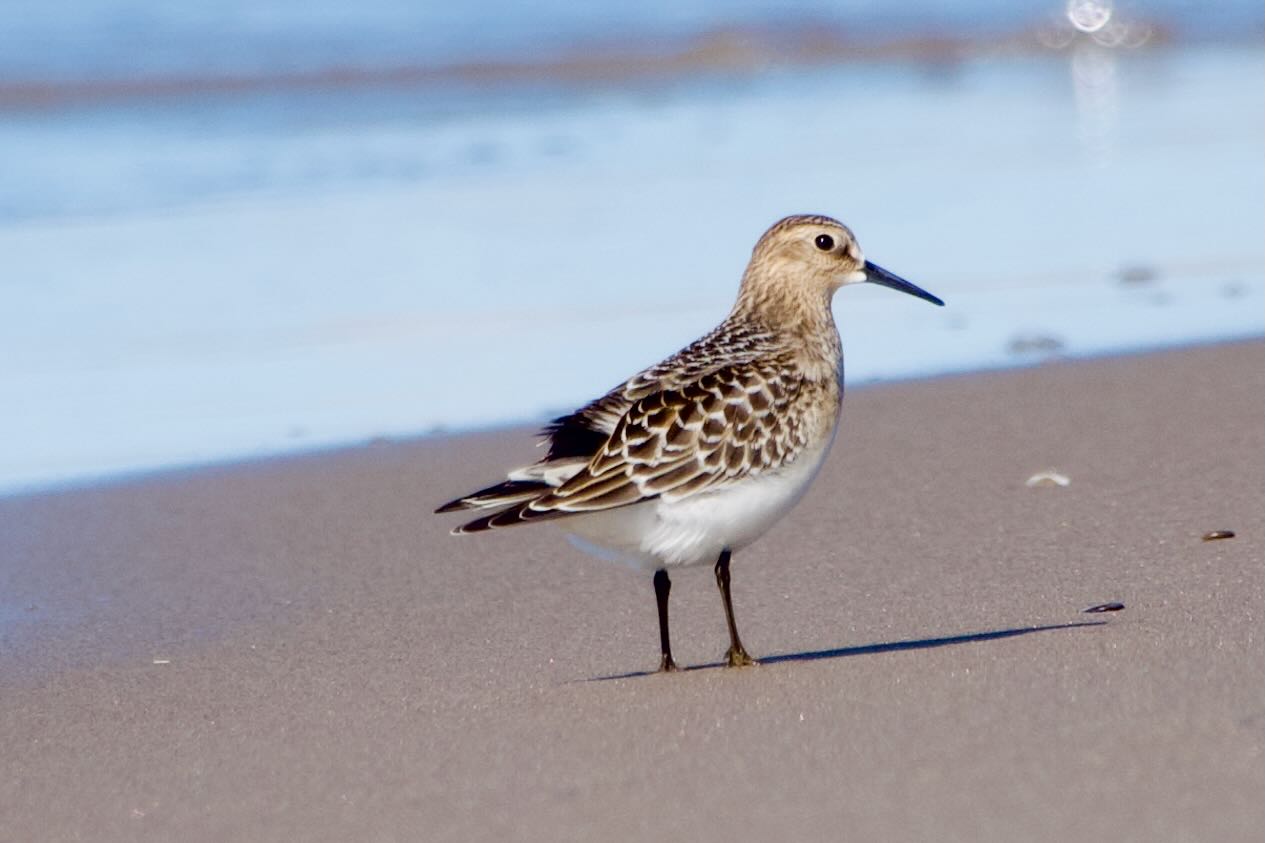
On Tuesday we headed down to Long Point for the day. A report of a Buff-breasted Sandpiper had come in late Sunday and it was a long shot that it would still be around but it was a nice sunny day and there are always good birds at Long Point. We walked a lot of the beach in the campground and day use area and saw a very nice Baird’s Sandpiper that we added to our Ontario List. Last year we had a tough time finding a Baird’s and an even tougher time trying to ID them but this year they seem to be everywhere and we seem to be able to pick them out more easily. The differences between sandpipers can be very subtle and in the case of Baird’s you are looking for wings that extend past the tail, black bill and black feet.
Baird’s SandpiperBaird’s Sandpiper
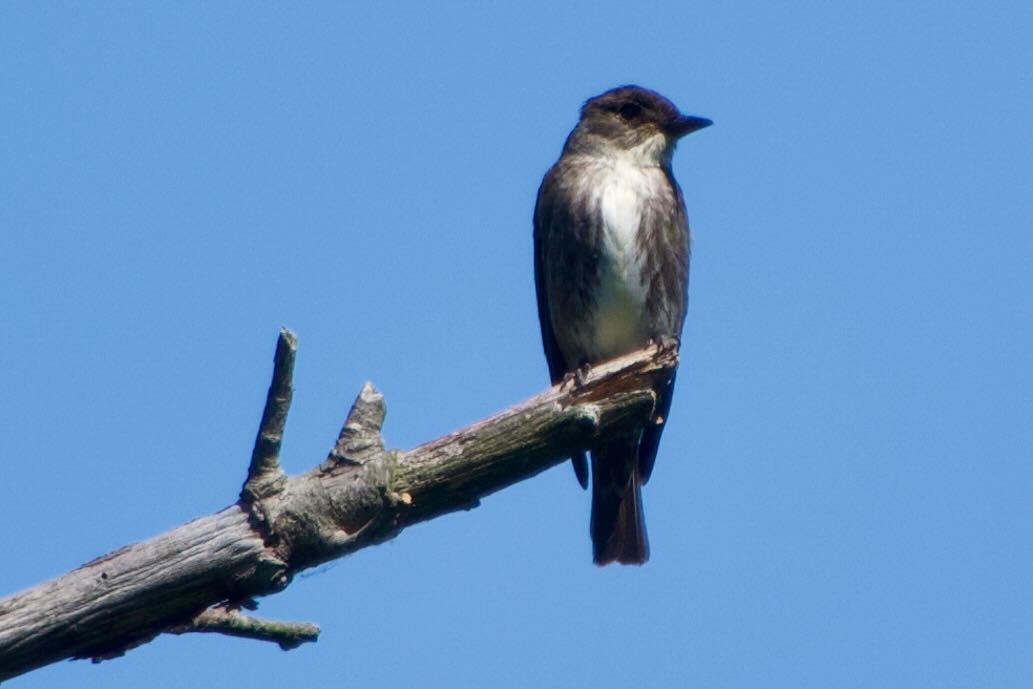
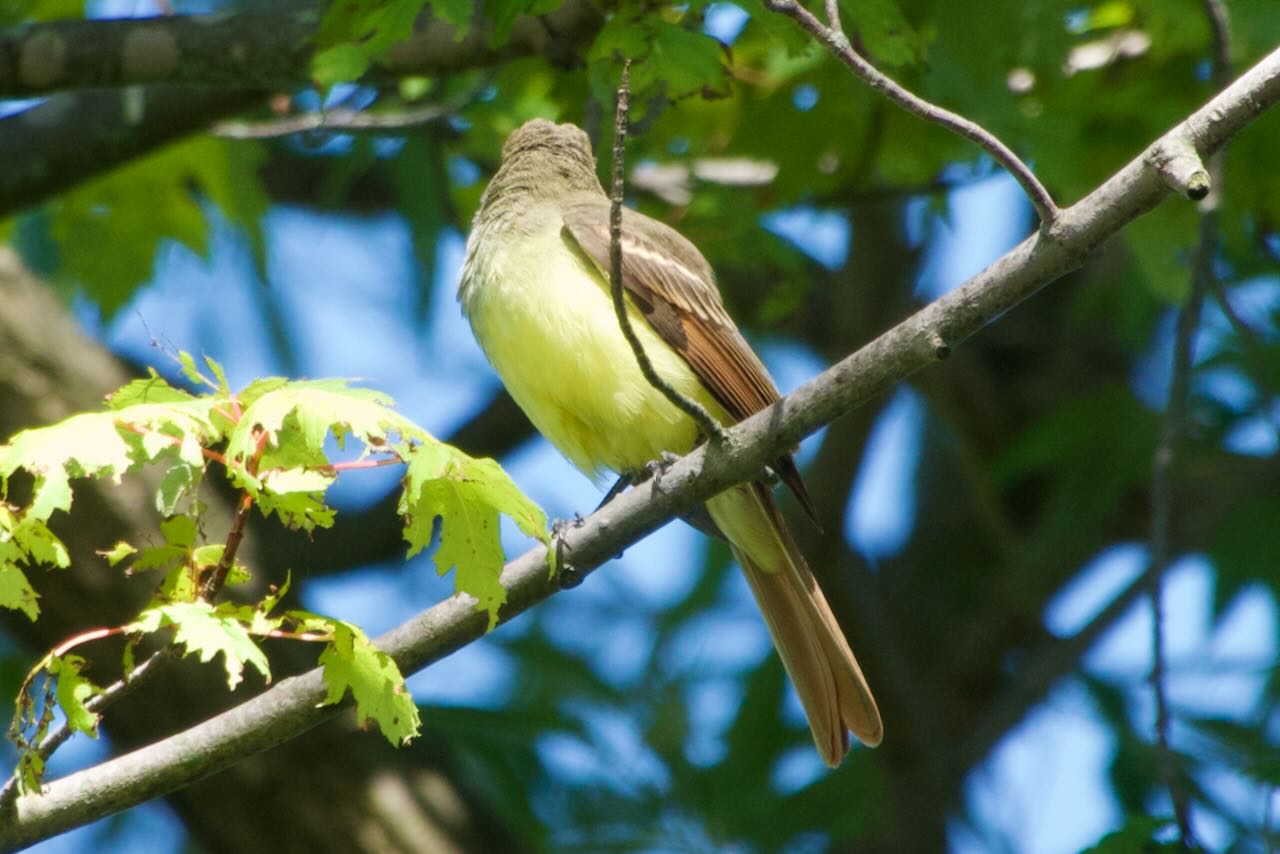
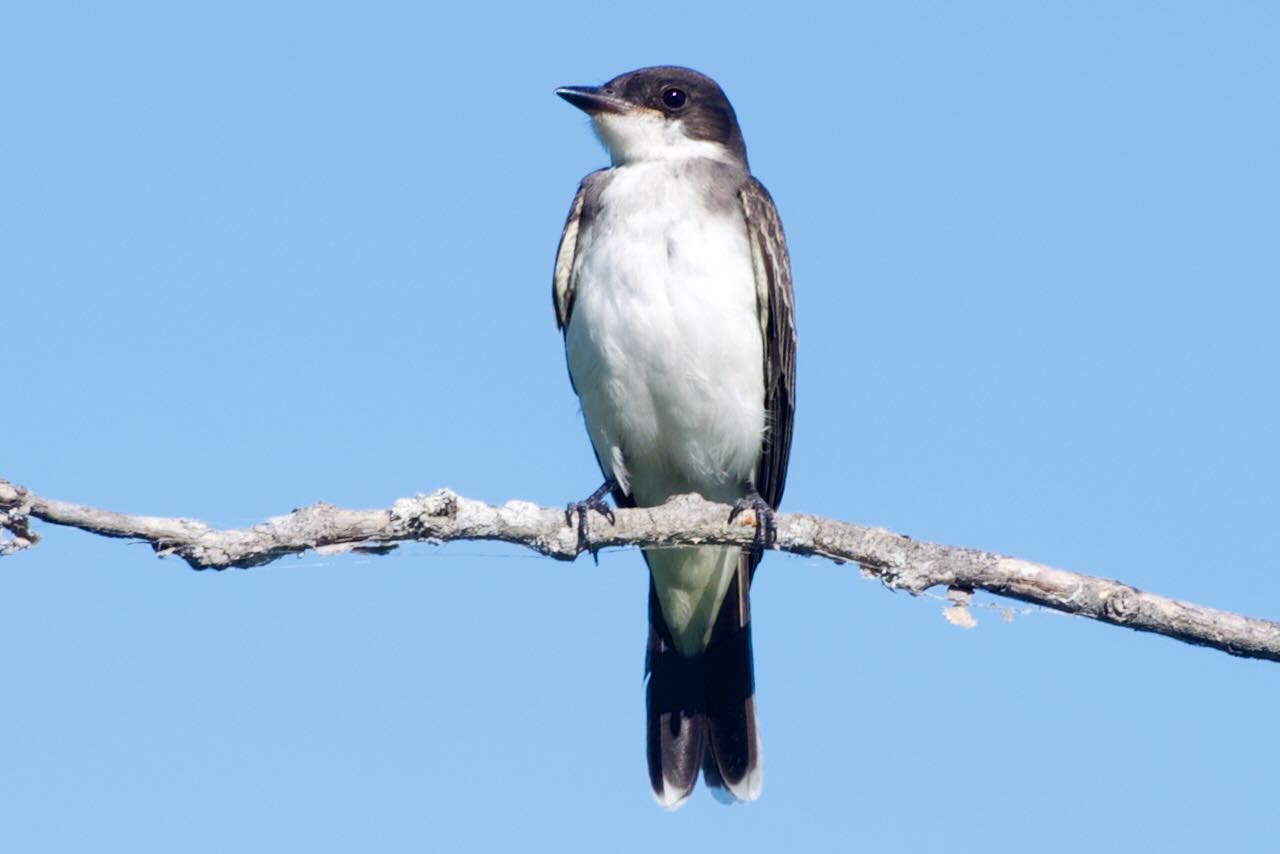
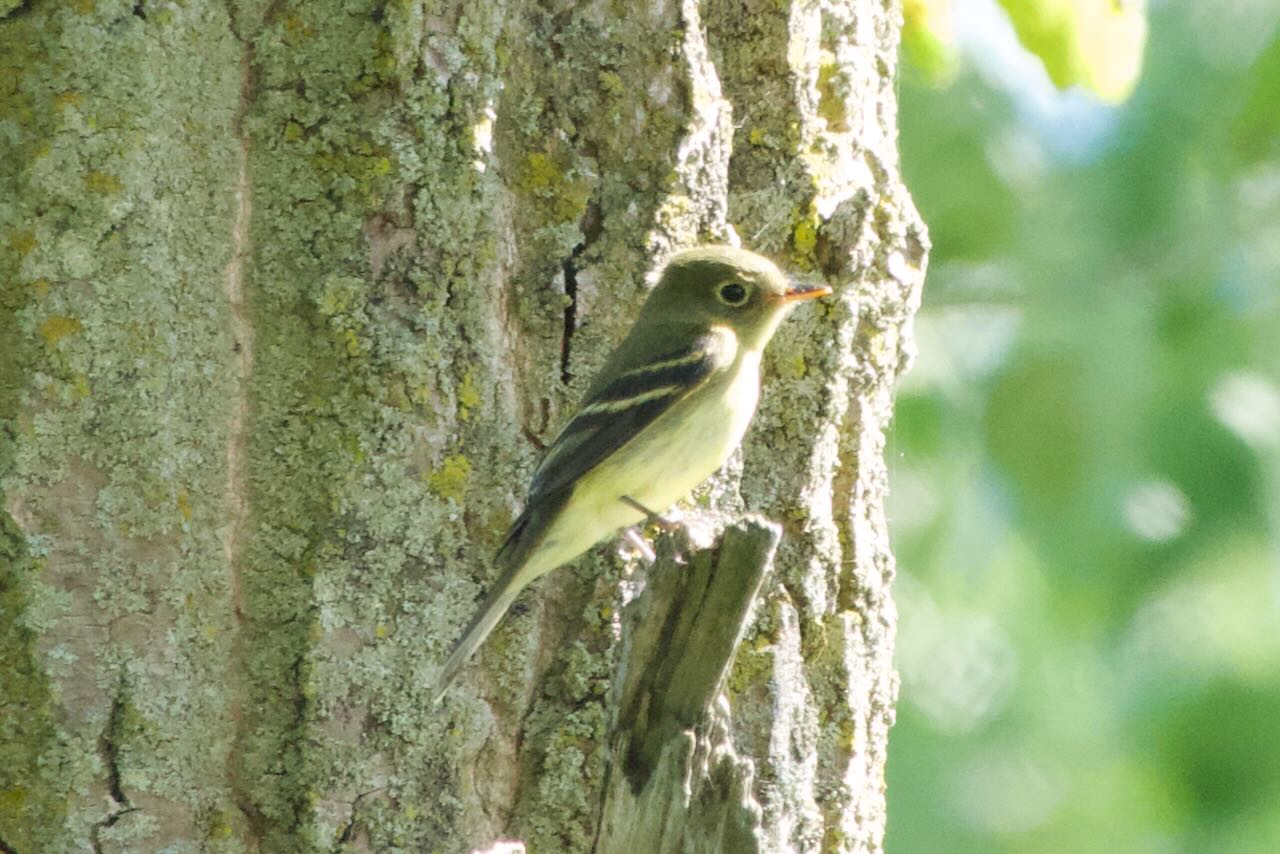
We then headed down Hastings Drive to check out the beach at the end but it has been signed no admittance with heavy fines if you are caught there. This is a rest stop for migrating birds and we (birders) are always careful not to disturb birds but people allow their dogs to run free along the beach and people will use it in summer and leave trash around. We had a Buff-breasted Sandpiper down that beach a few years ago and so we are sad that it is now off limits. I wish that government agencies would converse with stakeholders before making these decisions to see if there could be work arounds for access. We scoped from the edge and then walked back along the road bordering the Important Birding Area marsh. In a short 10-15 minutes we had 6 of the 10 species of flycatchers in Ontario. Migration for flycatchers was happening!.
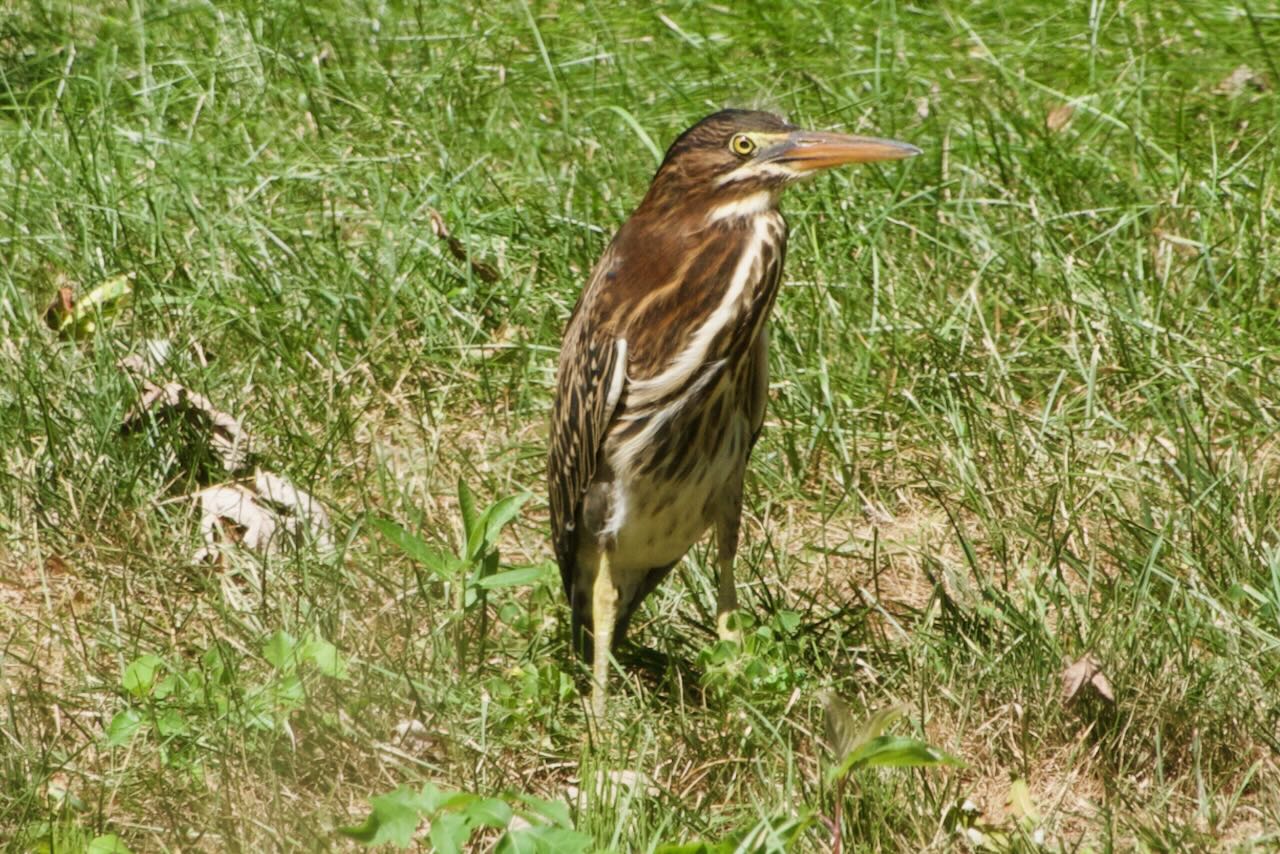
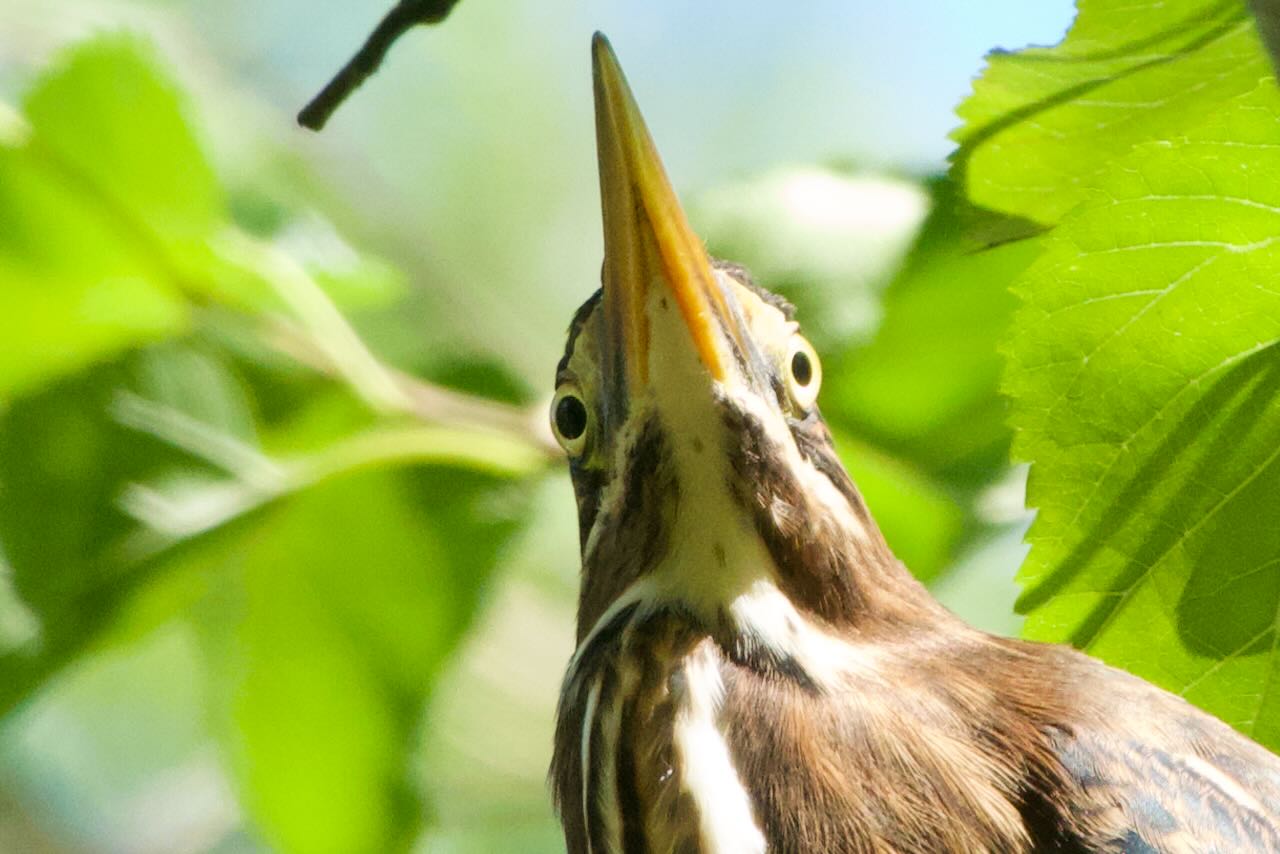
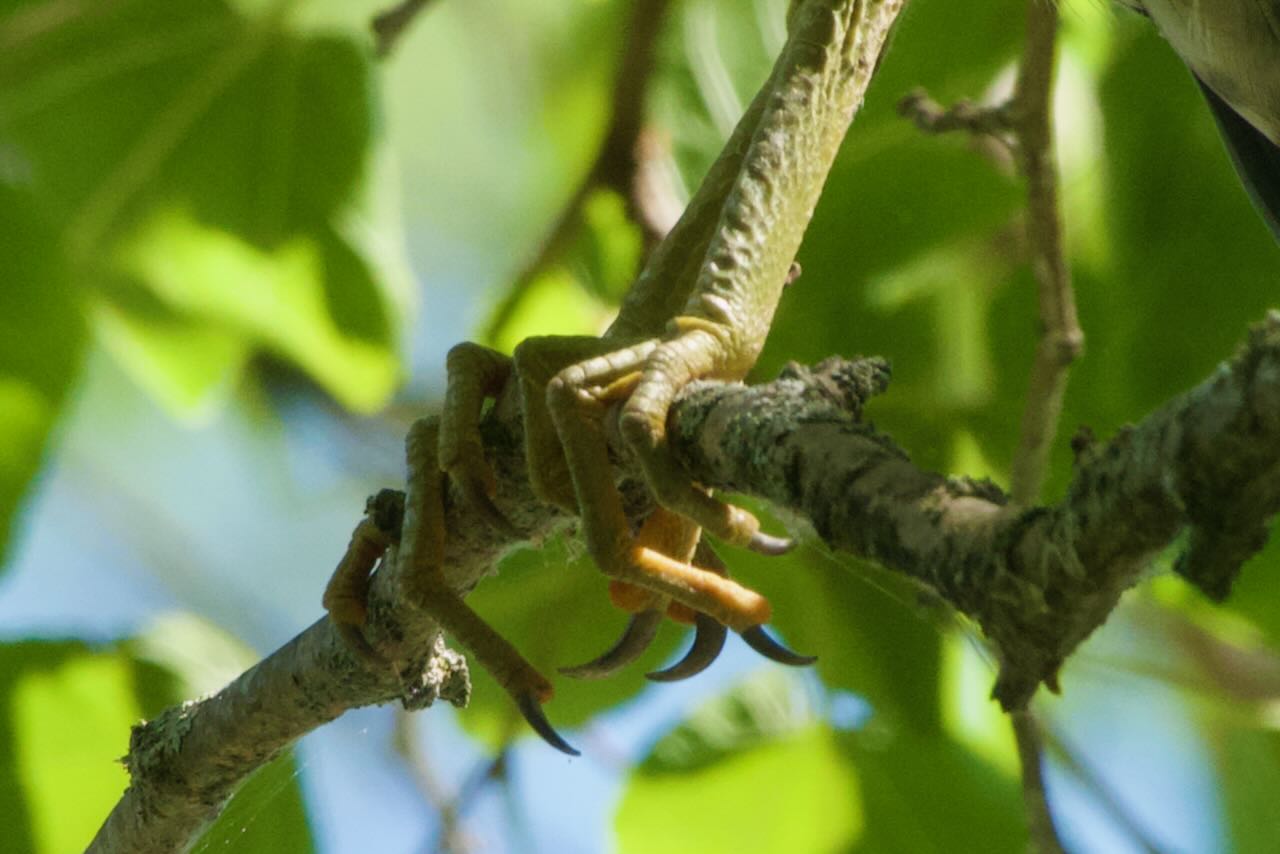
We then headed to Old Cut, the bird banding spot at Long Point and did a walk around the property. It was quiet but we did see two Green Herons just hanging out on the grass and tree of a cottage allowing Jerry to use some of his camera skills.
Green HeronI seeeeee you!Someone needs a pedicure!
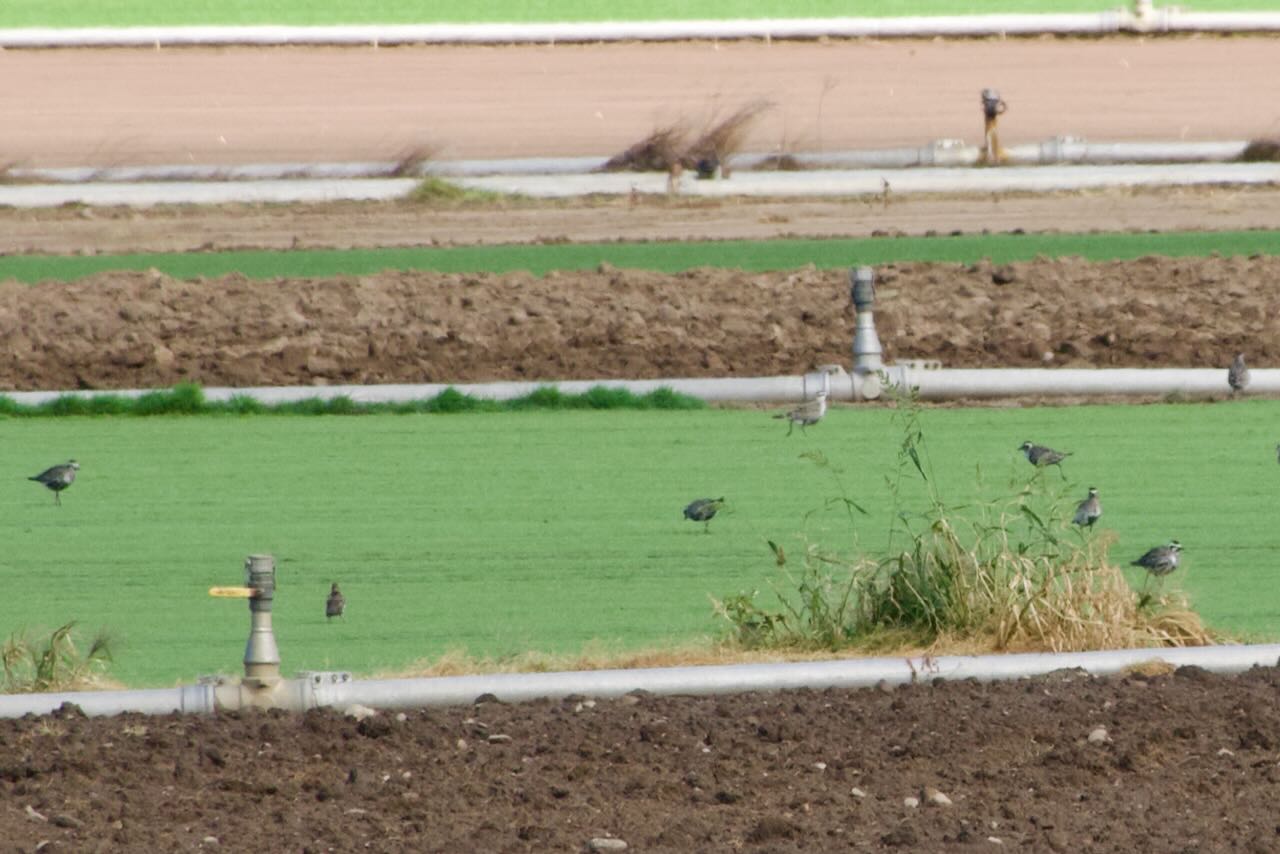
We did not see a Buff-breasted Sandpiper but it was a great birding day with plenty to look at. Margaret had checked out Beeton Sod Farms, the traditional spot for Buff-breasted and not seen anything but she did find 2 up in Collingwood on Wednesday. Unfortunately, we had the grandkids for two days so the earliest we would be able to go would be Friday. On a long weekend, driving north. I silently hoped that we would not be forced to make that trip. The birds were not found on Thursday and so late Thursday after dropping the kids off we headed for our first pass of our local sod farms near Burford. It was raining and I could see Plovers huddled down with a few standing. I assumed Black-bellied but when I got out to quickly scope I saw a few that looked Golden on the back. Jerry scoped and didn’t agree so I left it and put them in as Black-bellied. We scoped for any shorebirds but saw nothing else. We headed home for dinner and as we finished eating we got a text from Bill that he had a Buff-breasted at the spot and the Plovers were American Golden Plovers. Sheesh! I felt stupid! Rookie mistake not taking the time to really figure the birds out earlier. And where was that Buff? Had we missed it? Or did it just fly in? We got back in the car and drove back out and met up with other Brant birders also hoping to see Buff-breasted. The rain had ended, the lighting was much better for about 15 minutes and I could clearly see the Plovers were Golden. Six of us scoped and scoped but the light was fading fast and we were only seeing a few Baird’s Sandpiper. As the sun went down we made plans to come back out in the morning and search again.
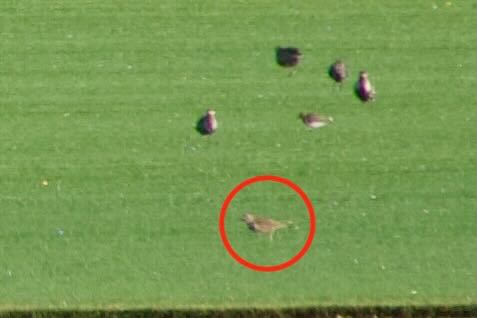
We were back at the sod farms at 7:30, Robert was there and had not seen the Buff yet and had to leave but Grant and Lindsay arrived shortly after. We scoped for a bit and suddenly I had what looked different – taller, buffy, small head, small bill – we all got on it and called out the ID features, Jerry got a scope view and confirmed and then got a few quick snaps and then the bird flew with a number of Plovers. Oh, how I hate that! I would have loved to have more time to study and watch the bird. We scoped again, and again. Was that it?, nope, Was that it? nope. Other birders arrived and we continued to scope but could not refind it. There were many hills, valleys and dirt piles for the bird to be hidden from us and it was an excruciating process. I always like to get everyone on the bird and for the next few hours a few birders had the good fortune to see it momentarily as it fed but it remained elusive for many. It was really lousy views and an even lousier picture but maybe we will be lucky enough to see one out East for a better view and pic.
Buff-breasted SandpiperAmerican Golden-Plovers
This is technically bird 400 for us, although ebird still shows 399. The split with Warbling Vireo will not happen on Ebird until sometime in October so until then on ebird we sit at 399. But inside, we are celebrating that we have hit 400! We head East on Monday where we will hopefully add many more birds – or at least 10?
On Monday the winds were still favourable for Jaegers so we planned to be there for the afternoon and Jerry suggested we check Niagara once more for the Black Vulture since we would be half-way there anyway. If you recall I had said I would not go back until the leaves are off the trees as right now it is so difficult to see the river with all the trees in full leaf. We had a bit of a tiff over it and I relented and we went to Niagara. After a few hours up at the lookout I suddenly saw a vulture way off in the distance that immediately looked different. Both of us got bins on it and noted it looked flatter, not the V shape of Turkey Vultures and the wings appeared shorter and more compact. Jerry noted a short tail. We were pretty sure we were viewing a Black Vulture but the bird was a long way away and quite high. We could not make out if it had the white tips to the wings underneath or not. We got in the car hoping we could chase it down a bit and get closer but we could not find it after stopping at 2-3 places along the road. We discussed how sure we were about the ID and decided that we would not put it in even though both of us felt pretty sure, we just didn’t have 100% confirmation. And so we will need to go back again but this time it will not be until we are back from our East trip.
We headed to Van Wagners Beach and met up with a few other birders scoping for Jaegers. It was gusty, the winds were from the NE but 3 hours went by and not a Jaeger seen. There was one seen by someone off the lake in Oakville but sadly the bird did not make it to the end of the lake where we were. We consoled ourselves with fish and chips at Hutch’s.
Tuesday the winds were NE again but with lots of rain. We had intended to go but looking at the radar in the afternoon we could see that there would be quite a bit of rain falling so we stayed home. Jude was out there for a bit but again no Jaegers.
Wednesday the winds continued and we planned to head in earlier after seeing Babi. We had just said goodbye and got her seated for her lunch at noon when there was a Discord report from Rowan that he had 2 Long-tailed Jaegers (probable) go past at a distance away. We arrived an hour later and had just missed a second pass from the birds but still too far out to nail down the ID. This is always the difficulty at Van Wagners. The birds often are only seen at a great distance and the differences between juvenile Parasitic and Long-tailed Jaegers can be subtle so it is not always possible to report birds to species. And they don’t count until they are reported as a species. Rowan had to leave but we took up the watch. It was even gustier than Monday and as more birders arrived there was a sense that we would see something.
Three hours and 20 minutes later – nothing, except James had seen a Jaeger very distant that remained distant. We headed home feeling quite wind blown with headaches from the wind and scoping. The quiet of the car was wonderful after the constant howl of the wind. Thursday was once again NE winds but we had little hope there would be something seen. In the past it has always been suggested that the best viewing at Van Wagners is from 3:00 on but over the last few years I have noted that birds are often seen in the mornings or around noon. We had a lunch date on Thursday with friends so we knew we could only go later in the day. There was a report of a potential Parasitic that was seen in the morning and that was it. When we left our friends after 3 we made the choice not to drive in again and nothing was seen by birders that were there into the evening.
It is a tad early for Jaegers, the numbers will increase over the next few weeks but we only have next week and then we will be East. We do have the chance of seeing Jaegers out East and even when we come back so the door is not closed on this species yet. Plenty more time for action and lake watches.
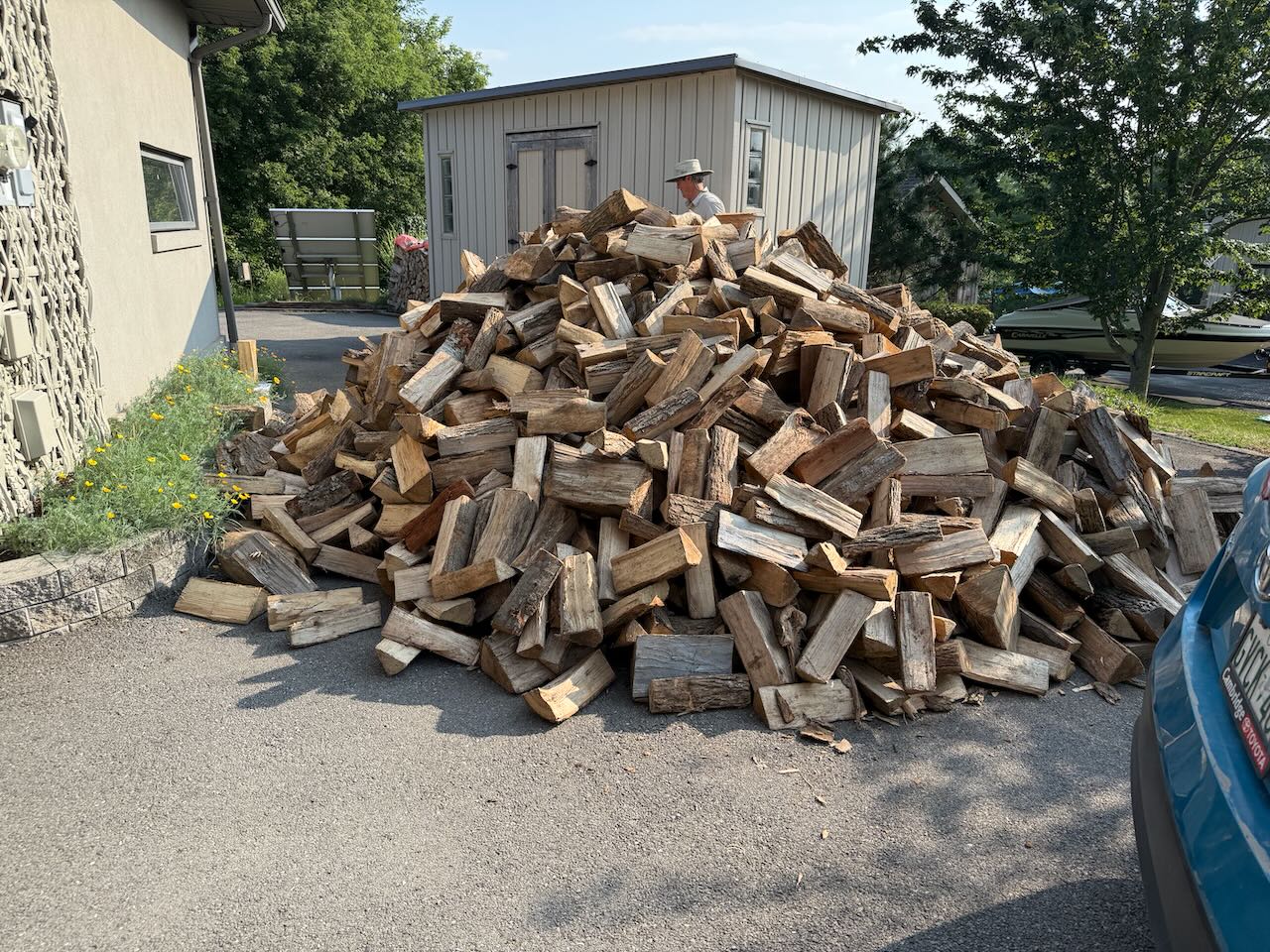
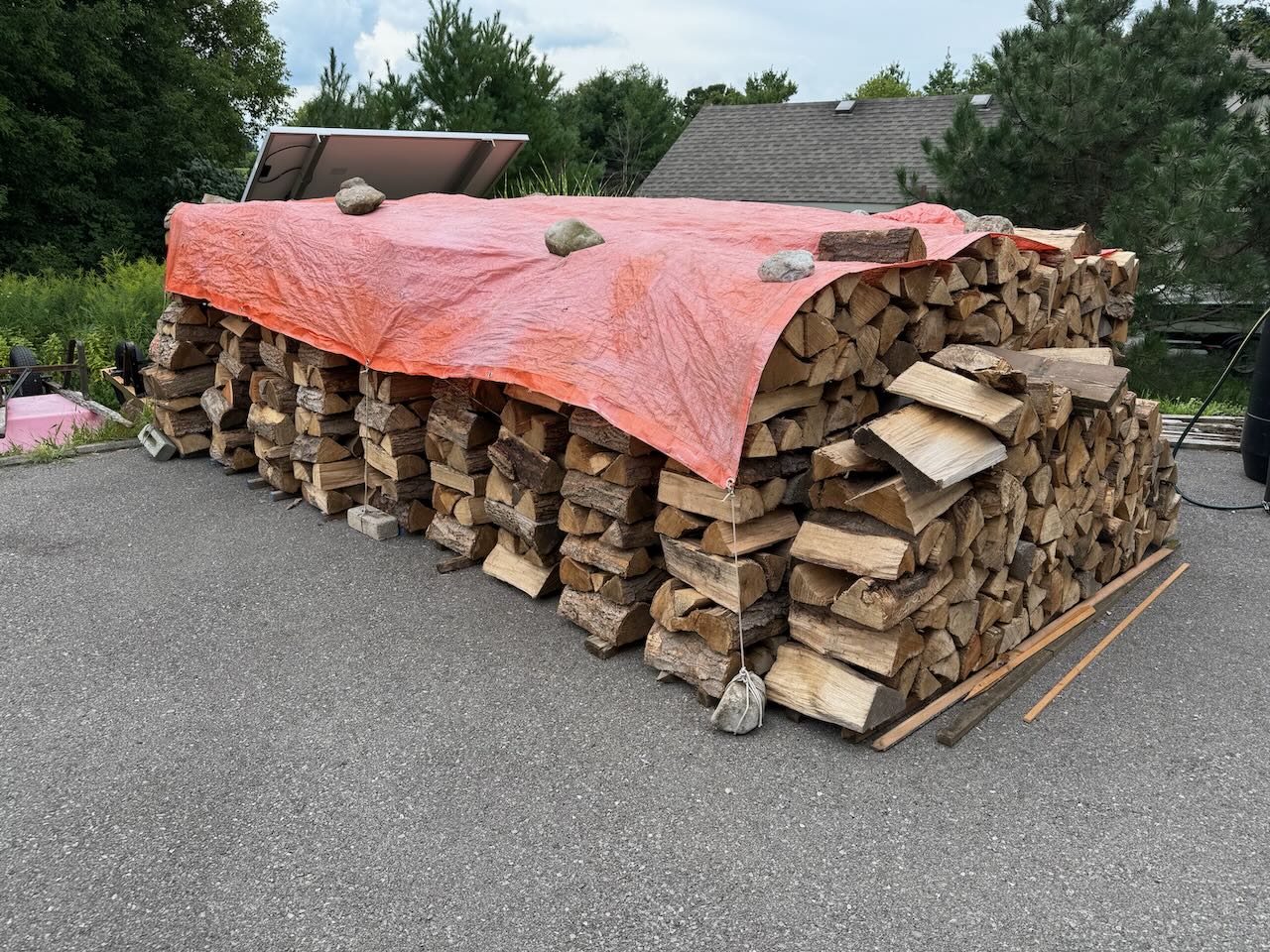
In the meantime along with the birding we have been spending time on house chores, we had our yearly wood arrive to keep us warm this winter and had to stack that. In November those lovely stacks will be re-stacked on our porch for quick access to the house. Double the work but Jerry wants the wood as dry as he can get and so stacking it twice is worth it.
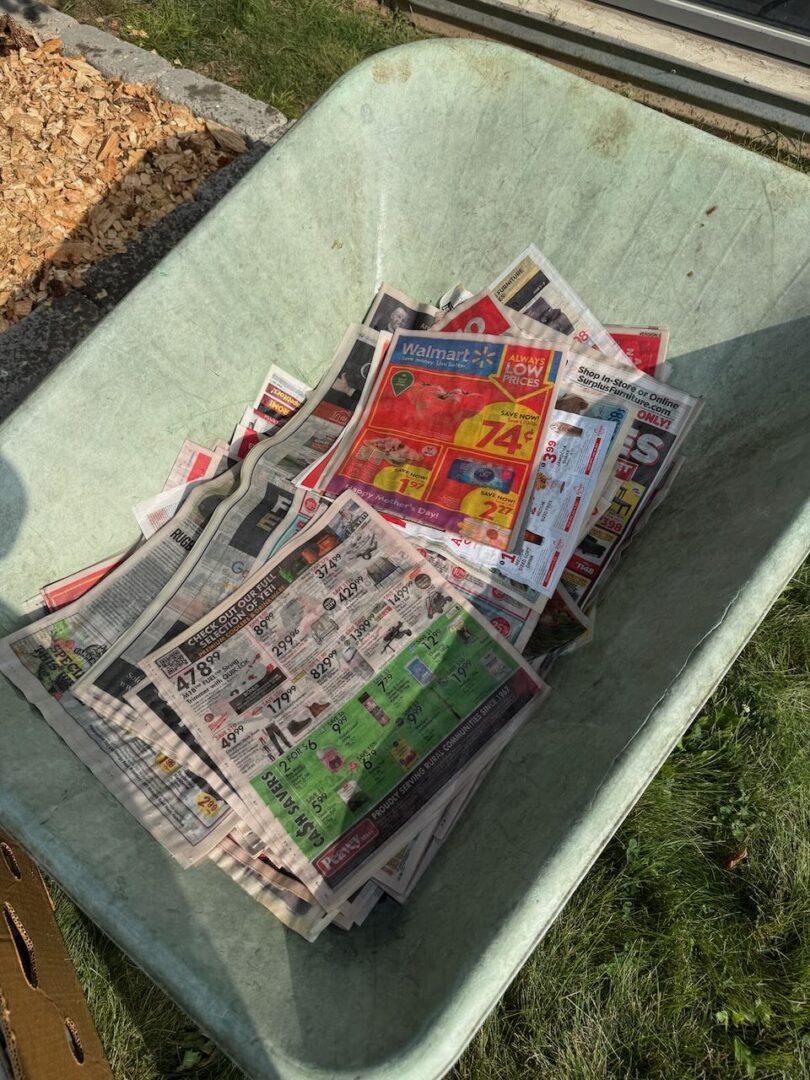
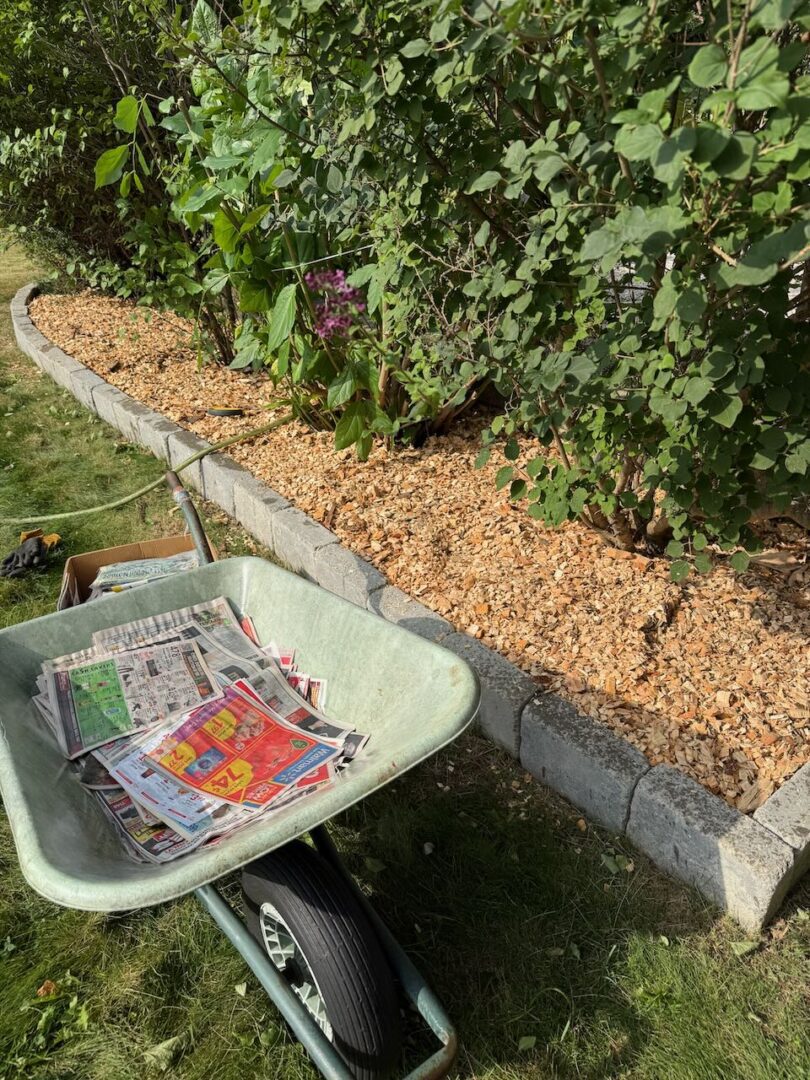
We have been working on our much overgrown gardens and trying to trim things back, weed and mulch. I have been working towards maintenance free gardens and planting but there is always something that still has to be done and it takes me double the time it used to. My tried and true gardening tip is to use inexpensive wet newspaper under the wood chips to keep things weed free much longer than just adding the wood chips. We get newspapers thrown on our doorstep weekly for free so we always have a supply to use.
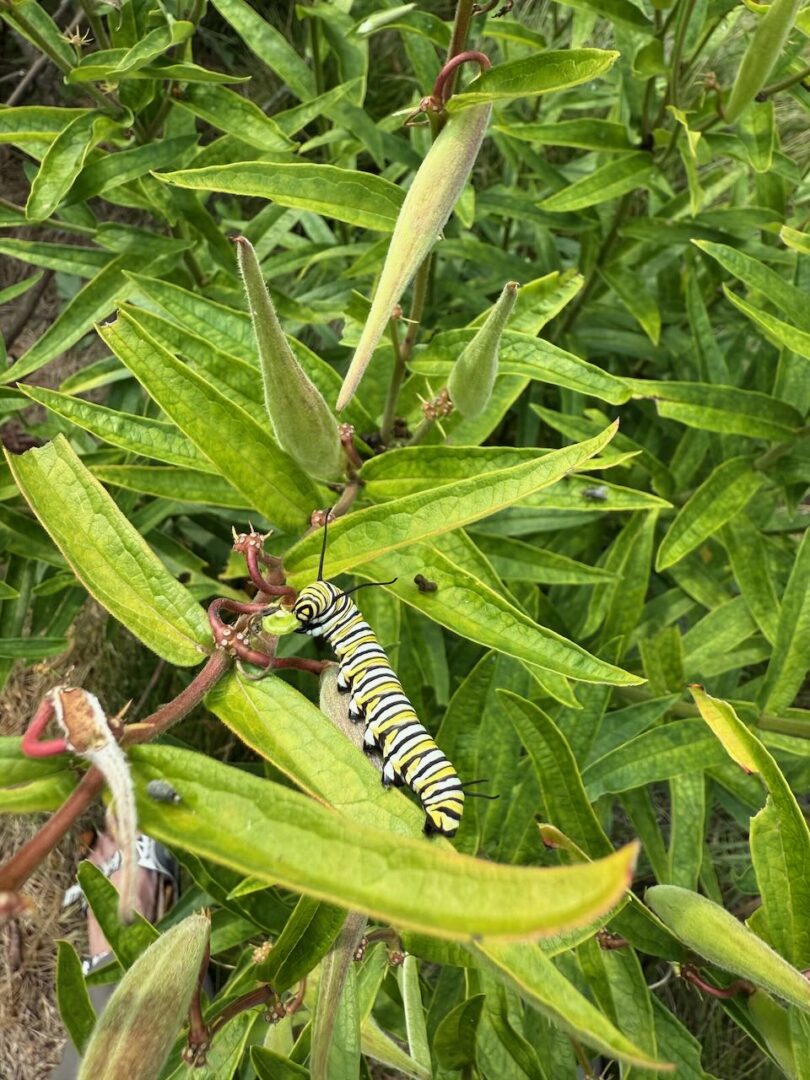
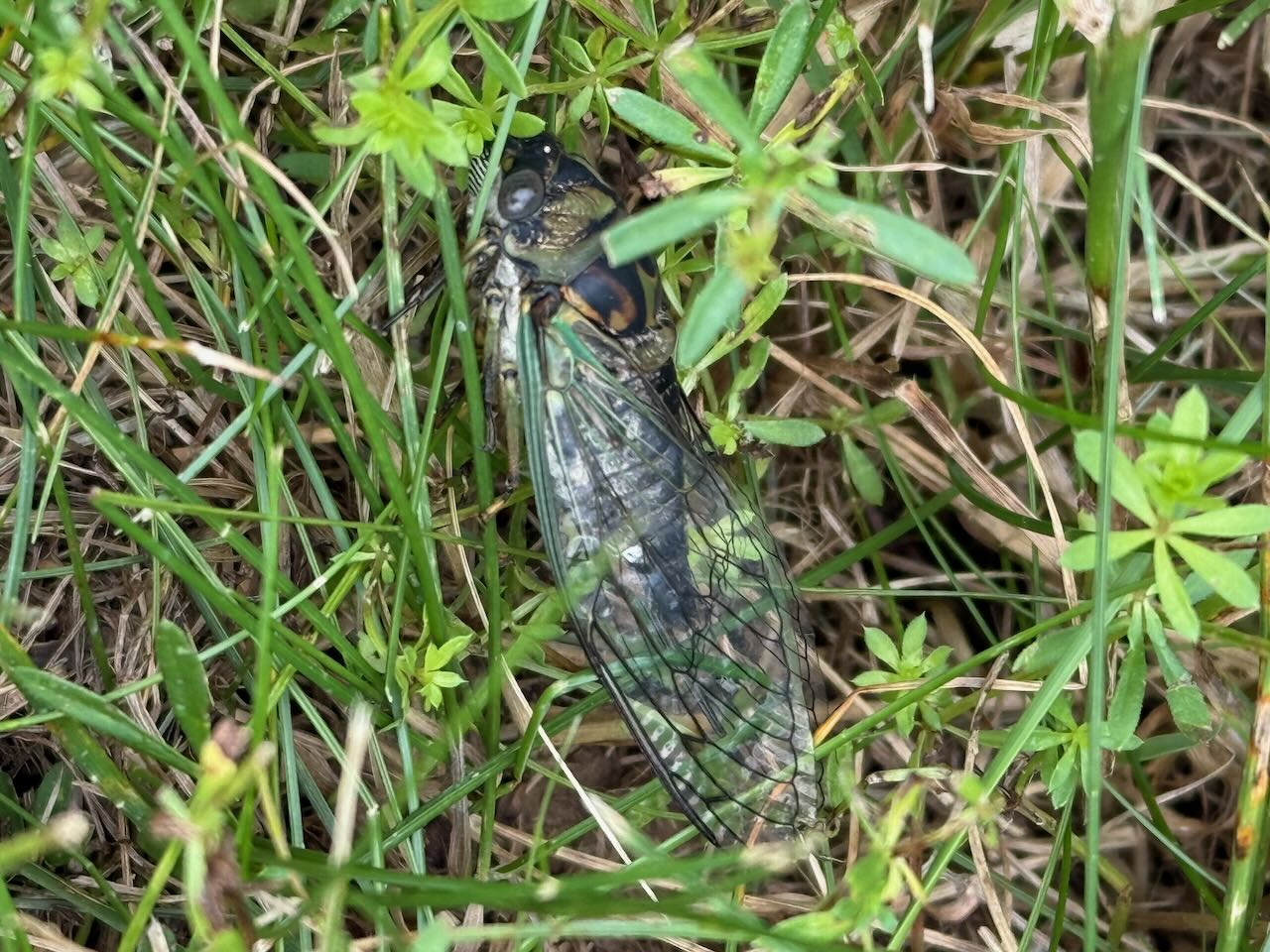
While we have been working in the yards we have heard both Black and Yellow-billed Cuckoos and I have found a few Monarch Butterfly caterpillers and a Cicadas.
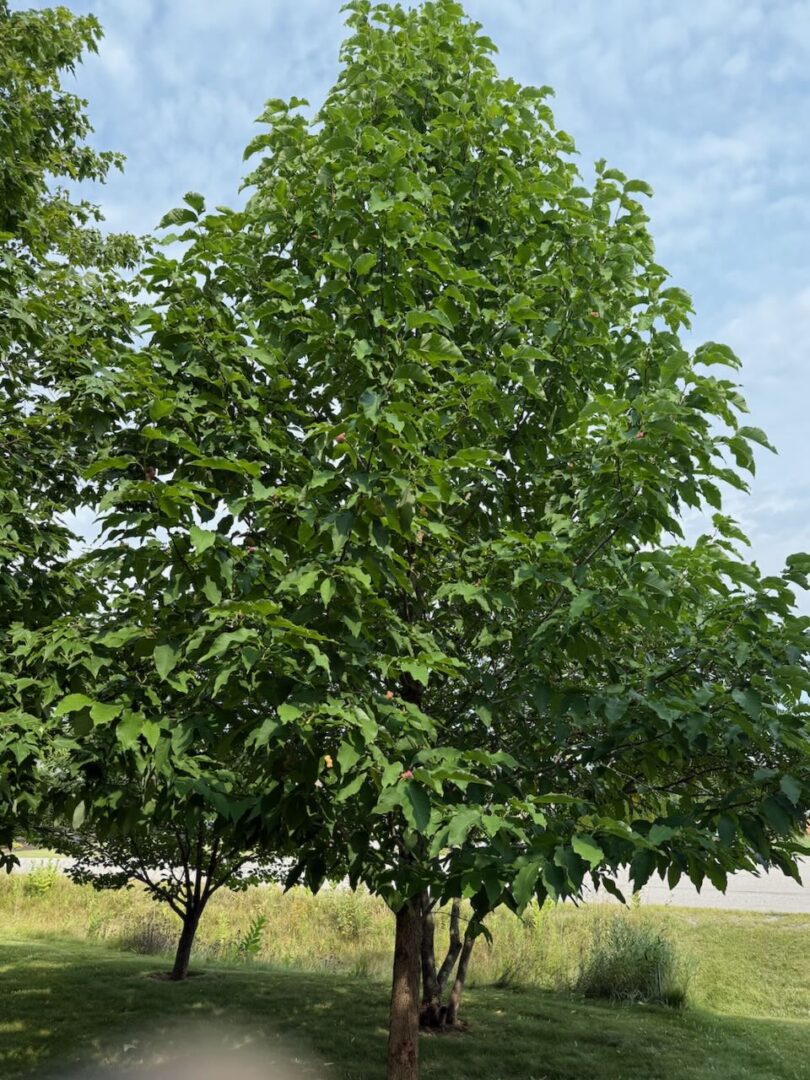
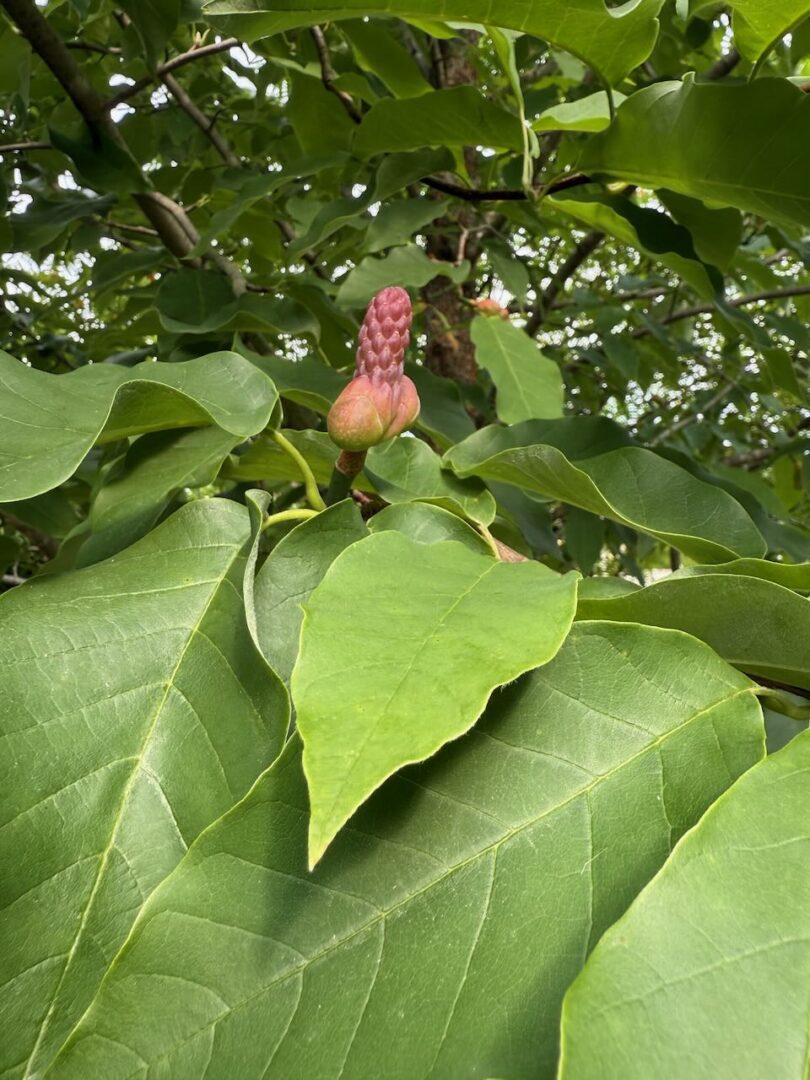
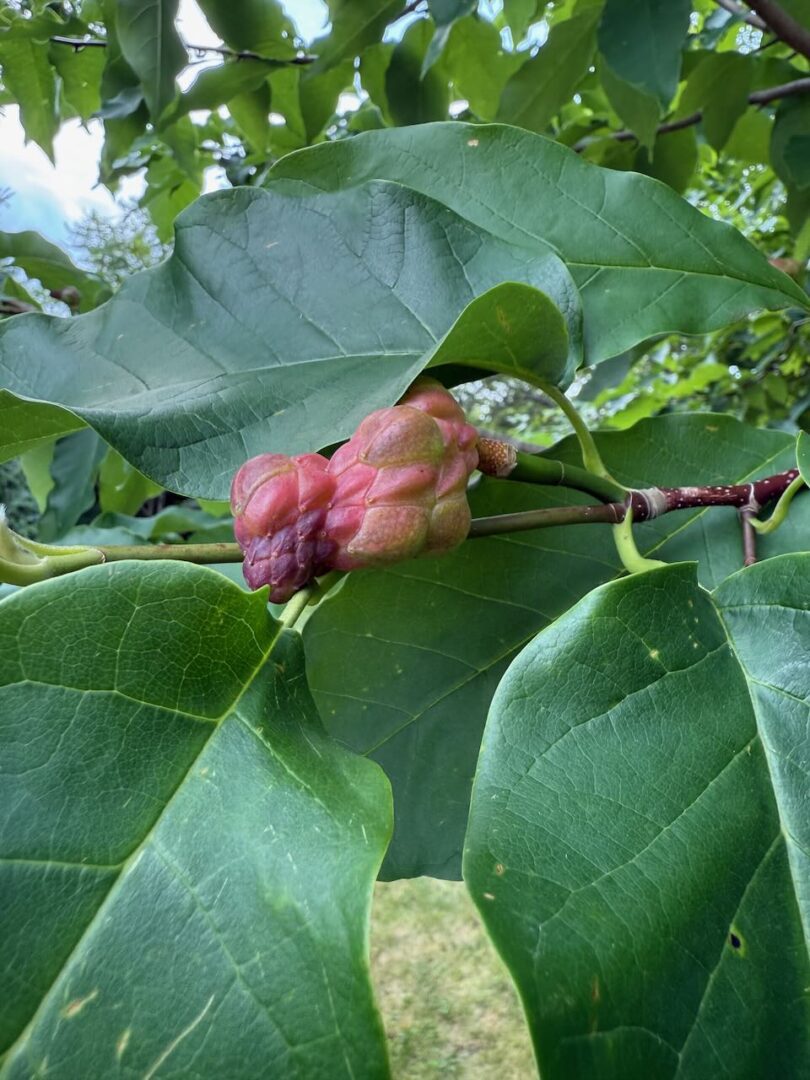
We have a Cucumber Magnolia tree in our yard. It is a rarity in Ontario and is the only native Magnolia to Ontario and is found in the Carolinian Zone.
Cucumber Magnolia
I missed it flowering in the spring with being away and birding so much but the flowers have given way to the “fruit” from which it gets its name. Although I’m not sure this reminds me of a Cucumber LOL!
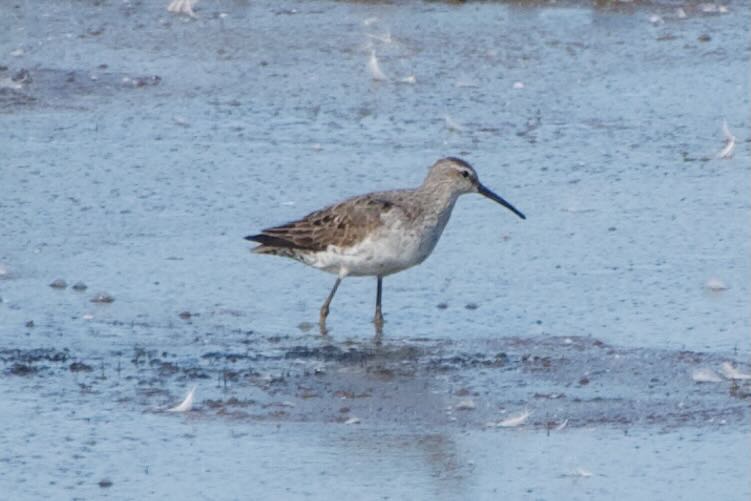
On Friday we added a Stilt Sandpiper to our Ontario list when we dropped into the wetland where the Redshank was seen last week. Stilt Sandpiper was added to our Canada year list when we saw them out in Alberta. I’m not actively trying to see birds in Ontario that I have seen elsewhere but this was 15 minutes from home and on our way running other errands so we did a quick stop.
Stilt Sandpiper
The weekend was spent enjoying family gatherings and finishing the gardens. Late Sunday I saw a report that a Buff-breasted Sandpiper had been seen at Long Point so I think that will be where we start our week…
Week 32 ended up being a week without one checklist entered, not even from our backyard! The heat was still punishing and we had family things that took up our days and evenings so we just opted to take a break and regroup. I’m spending quite a lot of time every day sifting through “needs alert checklists” from all the Eastern Provinces including Quebec to see what is being seen and where it is being seen. I finalized most of our travel plans and now we wait. It is frustrating as all the birds we still need are being seen out east right now but we committed to family things in August so our trip has to wait until September when some of these birds will likely not be around, certainly not in the numbers they currently are. It was another decision we made early on in the planning so that we would be available to help with our grandkids this month.
On Sunday I decided not to put in a blog with nothing to report and also forgot to post about not putting one in. We were supposed to have our grandkids on Monday but plans shifted and we had the day off.
Week 32 0 species added 397 species J&E
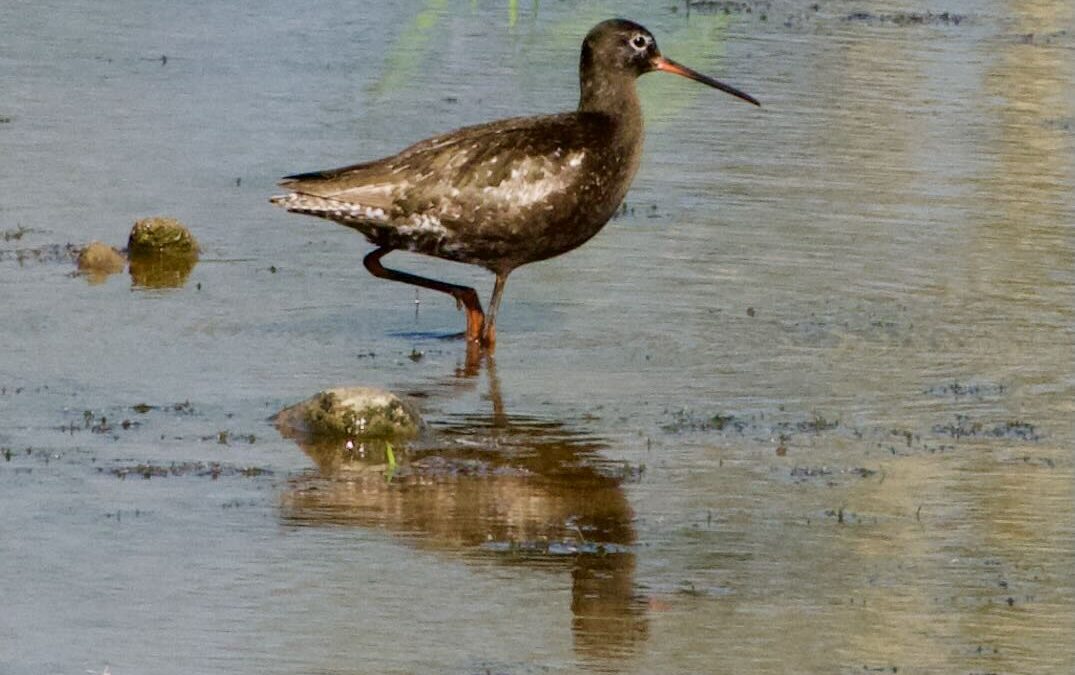
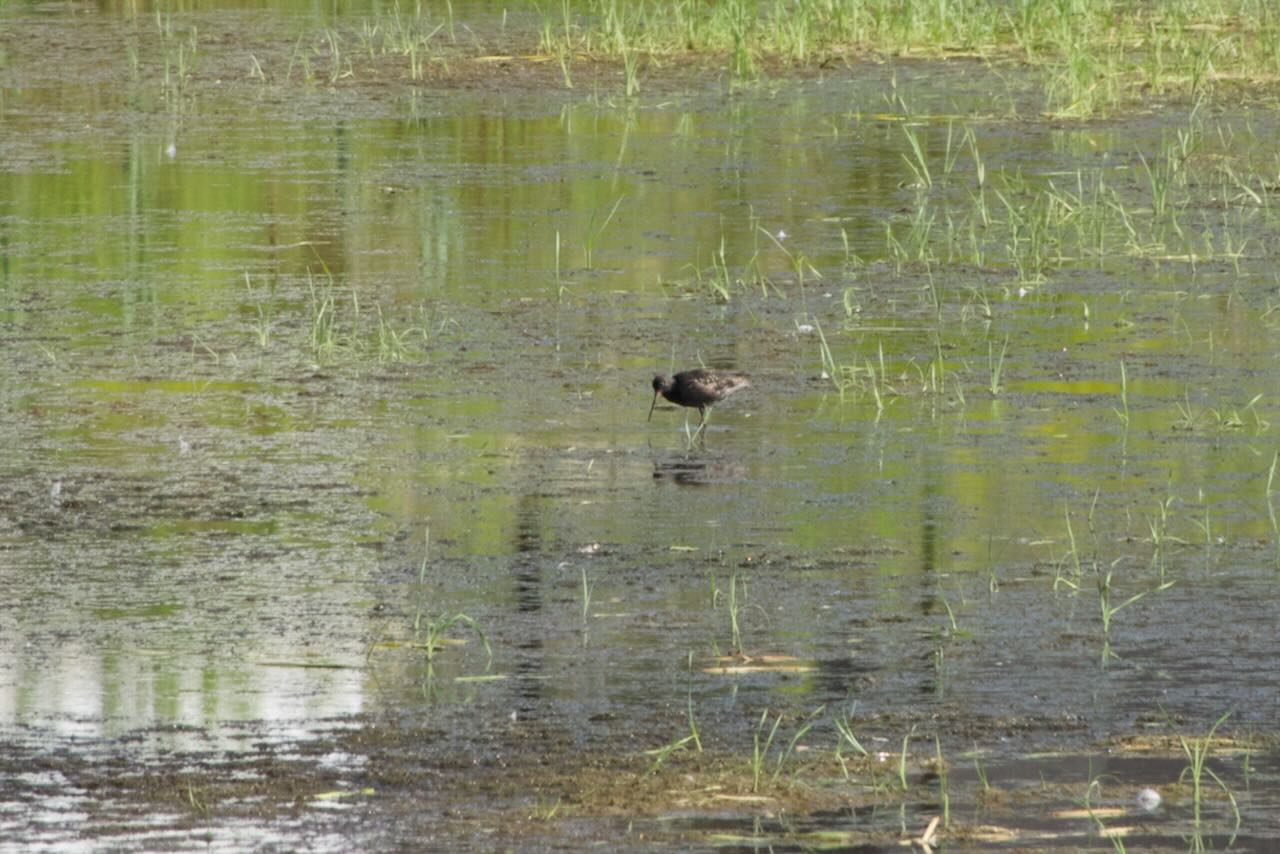
Monday morning we were lazy and still lounging in bed having our tea at 7:44 when the Discord chime came in on both our phones. I glanced down quickly at the notification and only saw Redshank and Cambridge. I jumped up saying we have to go, now, and Jerry jumped up asking me what was happening and I could only say something good, lifer, and then he asked where while already pulling on clothes and I said Cambridge but I don’t know, lets get in the car, the pin will be coming I am sure. We were out the door in about 10 minutes and we were 15 minutes to the bird. I started our checklist at 8:10 when we arrived and were looking at the bird. One of our fastest chases.
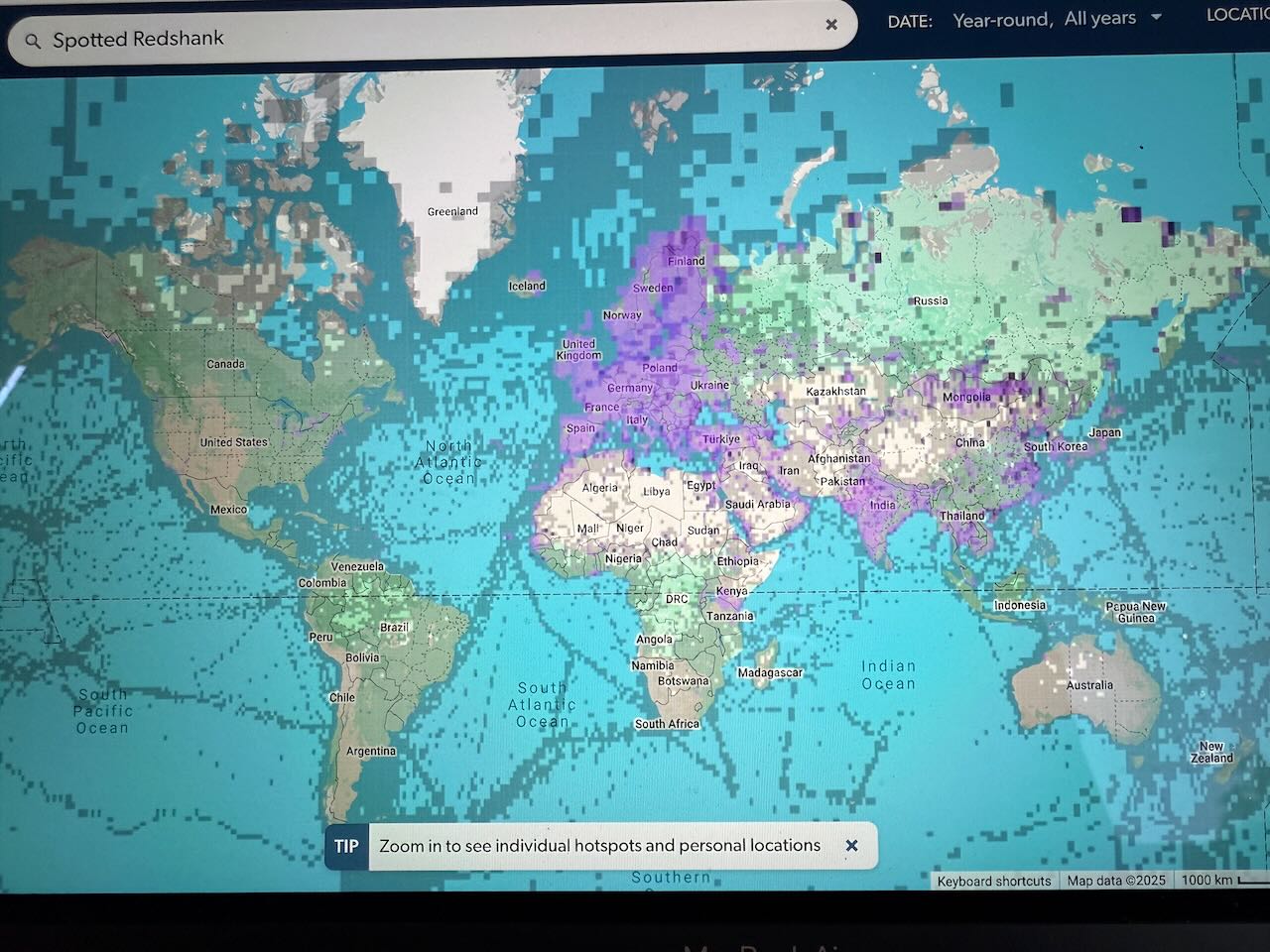
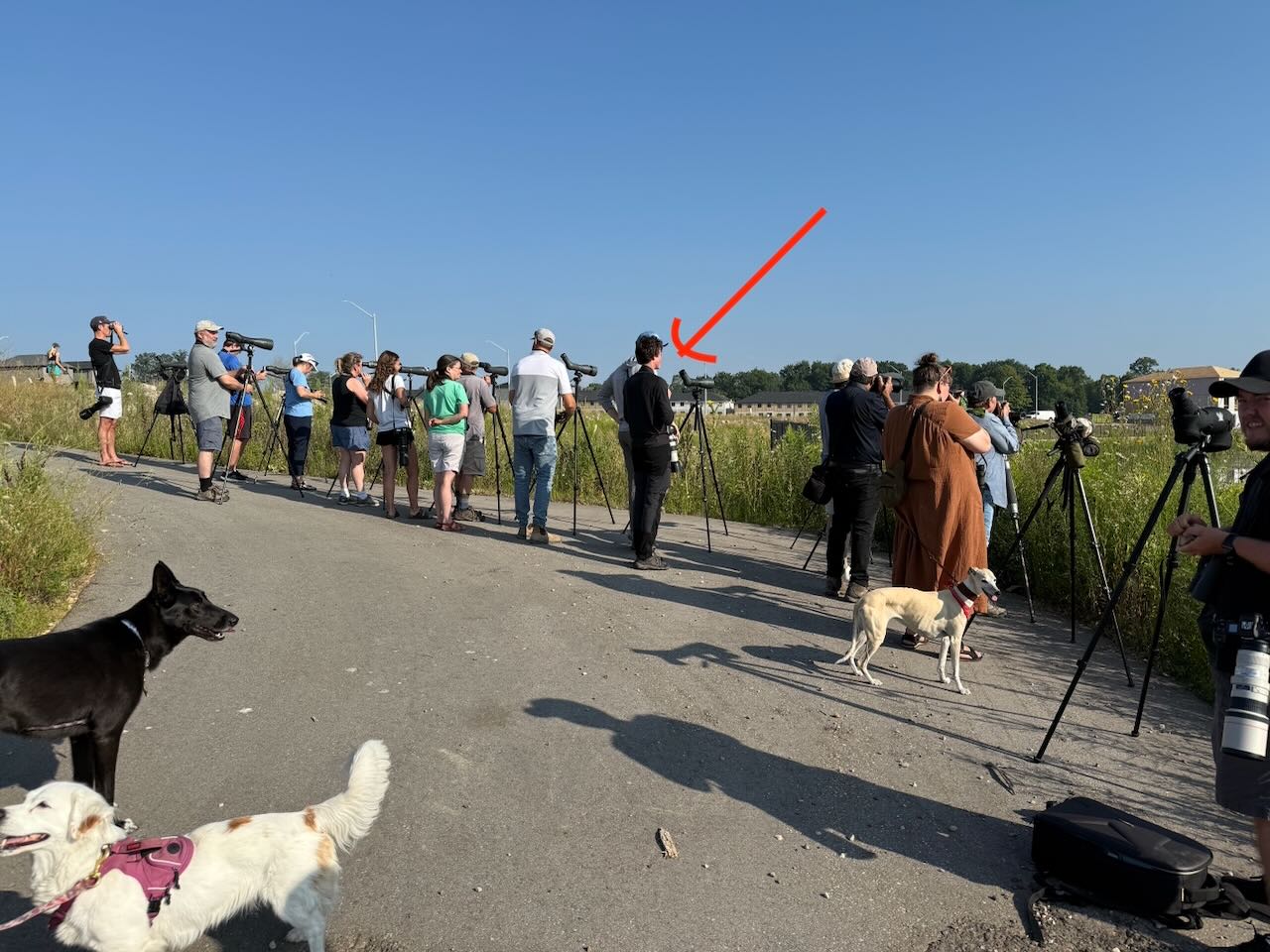
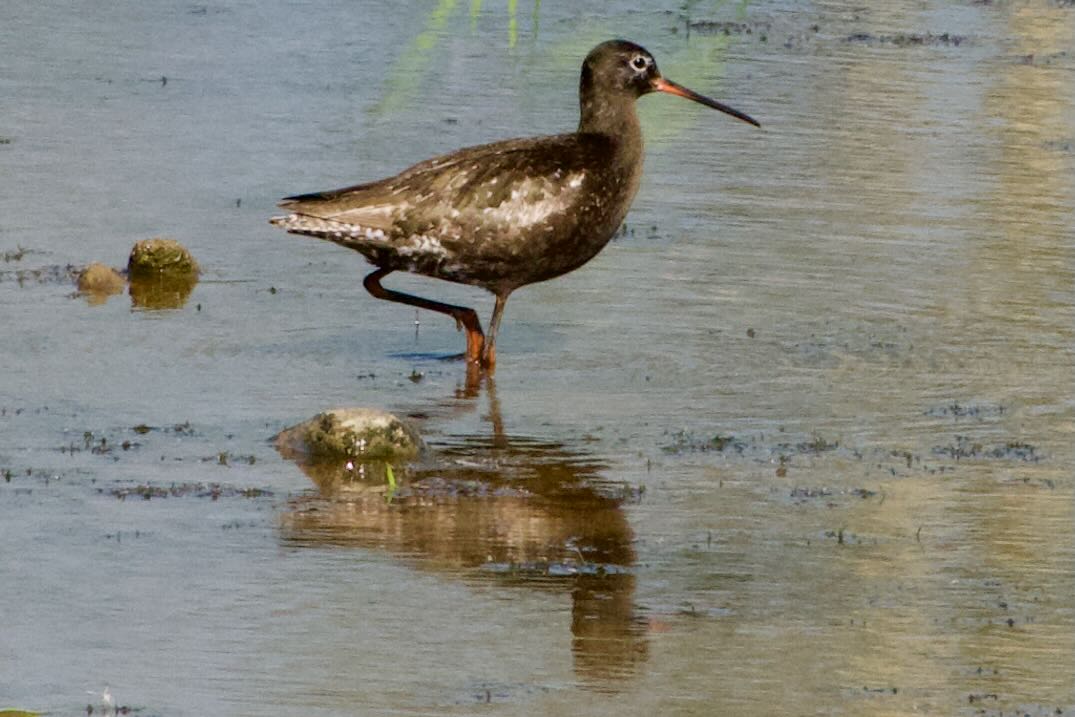
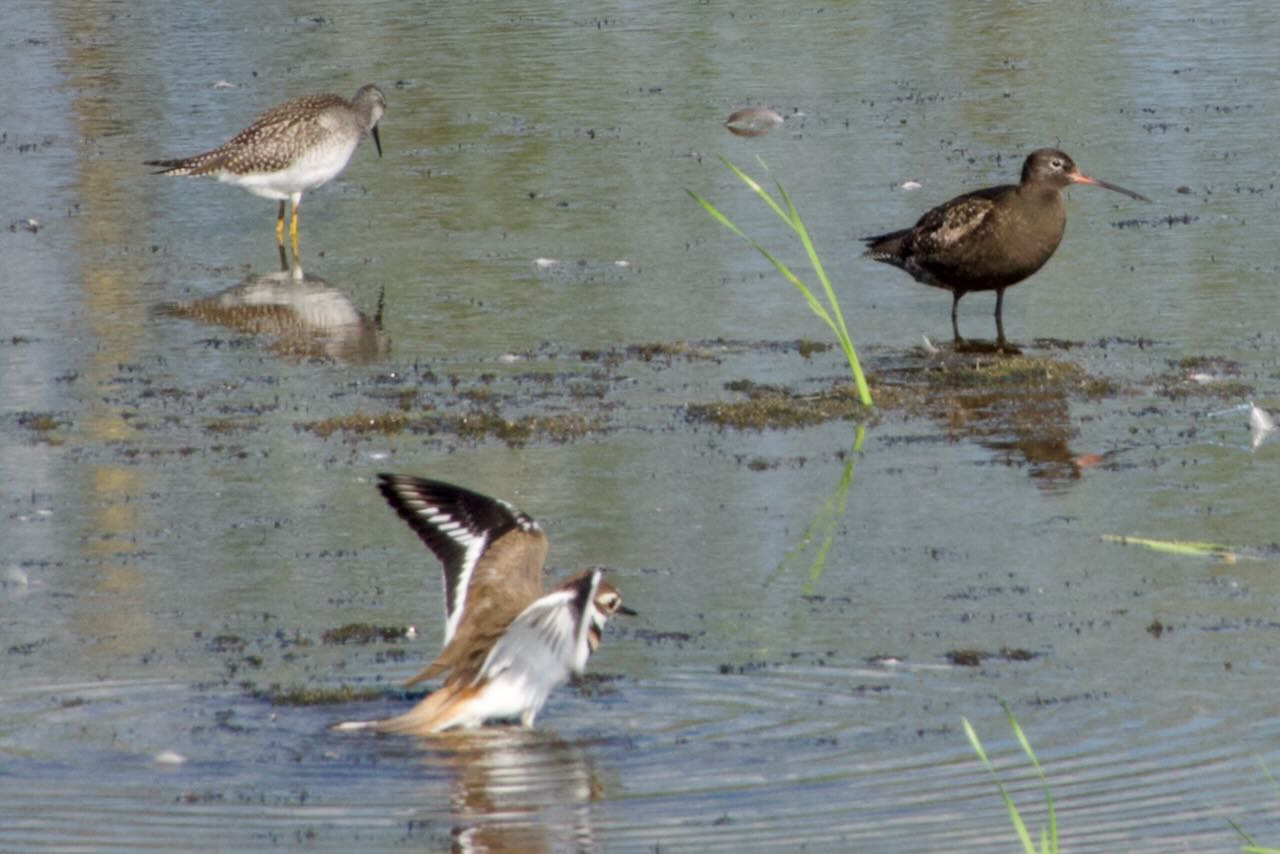
Nathan Hood, a young local birder was checking out a newish storm pond in a new subdivision Monday morning when he saw a shorebird that was very dark. Once he took pics and noted red on the bill and red legs his hands started shaking, he knew it was a Redshank, he checked ID pictures and realized it was a Spotted Redshank, a Eurasian species that breeds in the Arctic and travels across Europe. It is a major rarity with only 3 records in the last 10 years in North America and the last report in Ontario was 1998.
Range for the Spotted Redshank
It was a World lifer for us and added, of course, to our Canada, Ontario and Hamilton Study Area Lists. Beyond exciting! For many birders it would also be a lifer. By the end of the day a few hundred birders had come to see the bird and submitted checklists. Many more would want to see it if it stayed.
Spotted Redshank – first viewingThe first birders on the scene with Nathan, the finder, at the arrow
Those of us there first in the morning stayed well back from the actual pond, up on the walkway so the bird was quite distant, none of us wanted to move closer and risk having the bird flush knowing how rare it was and how many people would want to see it. We stayed for almost 2 hours as more and more people arrived. It was very hot but it was a party atmosphere as we all shared in the excitement of this find with Nathan, the finder and Jude, #326 for his Ontario Big Year, Isabel her Lifer 400 in Ontario, bird 398 for our Canada Year, and many more just happy to see the bird and get pictures.
In the late afternoon we stopped in again on our way to Burlington and people had moved closer to the bird at some point without it flushing or showing signs of stress so we were able to get better pictures and video then we did in the morning.
Sadly, the bird was not found again the next morning and so many birders missed seeing this incredible rarity. This will likely be the “Bird of the Year” for Ontario and depending on whether we get to see the Steller’s Sea Eagle, another Eurasian species, out in Newfoundland, it might be our bird of the year too. The next three days we had all four grandkids with us so no birding took place again.
On Wednesday Jude had a Yellow-crowned Night Heron fly past him at Windemere Basin, a rarity that we tried very hard to find last year in August during our Ontario 300 Year. We were free Thursday afternoon after taking the grandkids home so we headed to the Basin and checked the canal edges and trees along the canal carefully in hopes of refinding the Heron but we did not. We checked out a few spots in nearby Confederation Park where we often see the expected Black-crowned Night Heron but we did not even see any of them. It was very, very hot and the birds might have been happy to be tucked back into the shadows. We hope the bird Jude saw might still be around and perhaps with a bit of cooler weather over the next week, it will be refound.
The ABA ( American Birding Association) has released their yearly revisions listing splits and lumps for various species and it would appear that we will get one “armchair” species this year. That means we will get a bird added without having to leave our armchair since we have previously seen both subspecies. If you recall last year we “lost” a bird when they combined Common and Hoary Redpoll into one species, Redpoll. This year they are dividing Warbling Vireo into an Eastern and Western species so we should get Western Warbling Vireo added to our list sometime in September or October since we saw them in BC numerous times this year. This will, of course, mess up the order of our birds seen and “change the numbers” but at this point it doesn’t matter except for the total. Technically we are 1 bird more than what I am currently showing but I will wait until ebird makes it official and the changes to my list are made.
Early next week is looking good for a lake watch and hopefully some Jaegers and the Buff-breasted Sandpipers should be making their way down from the north as well. It would be nice to head East with 400 species achieved.
Monday we headed towards Rondeau to see if we could find a Dickcissel. They had been reported singing in a field outside of Blenheim. The Dickcissel is a striking, sparrow-like, grassland species that is generally found in the US but can be found in Southern Ontario most years in the summer in small numbers. We arrived at 8:25am and it was already almost 30C. We set up our scope hoping to be able to see birds sitting on the top of grasses further back in the field. We also turned Merlin on so we could make sure we did not miss its singing with other birds also making noise. The flies were relentless and biting ankles and hands. After about 10 minutes Jerry wandered farther down the road and a few minutes later my Merlin picked up the song for Dickcissel where I was scoping. I did not hear it but started scanning the field again with the scope. I had some suspect birds back farther but could not quite make out the details with the sun also shining from that direction. Jerry made his way back and then scanned the far fence line and saw a bird he thought looked good. We scoped it and were pretty sure it was a juvenile Dickcissel. Another call was picked up by Merlin but with so many other birds around we had a hard time figuring out which call might have been the Dickcissel. Jerry got pictures and then I scoped further over and found a beautiful male sitting on the top of a bush and we both had very nice views and Jerry took pictures. He is not happy with the pictures but the birds were a long way away. Bird #397 was confirmed!
Dickcissel
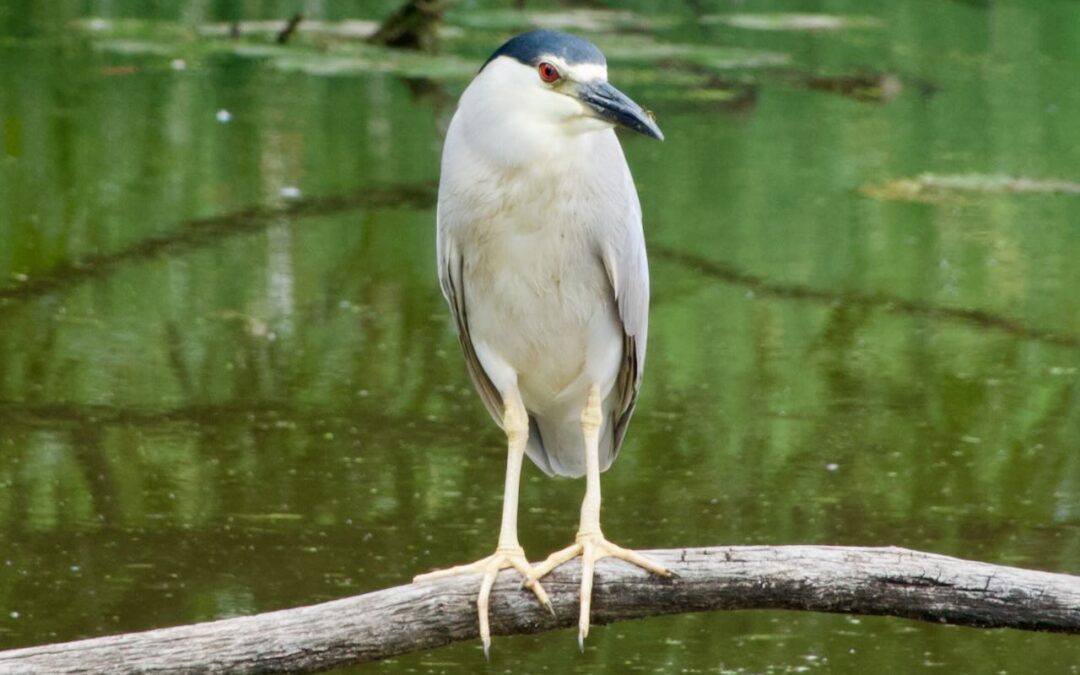
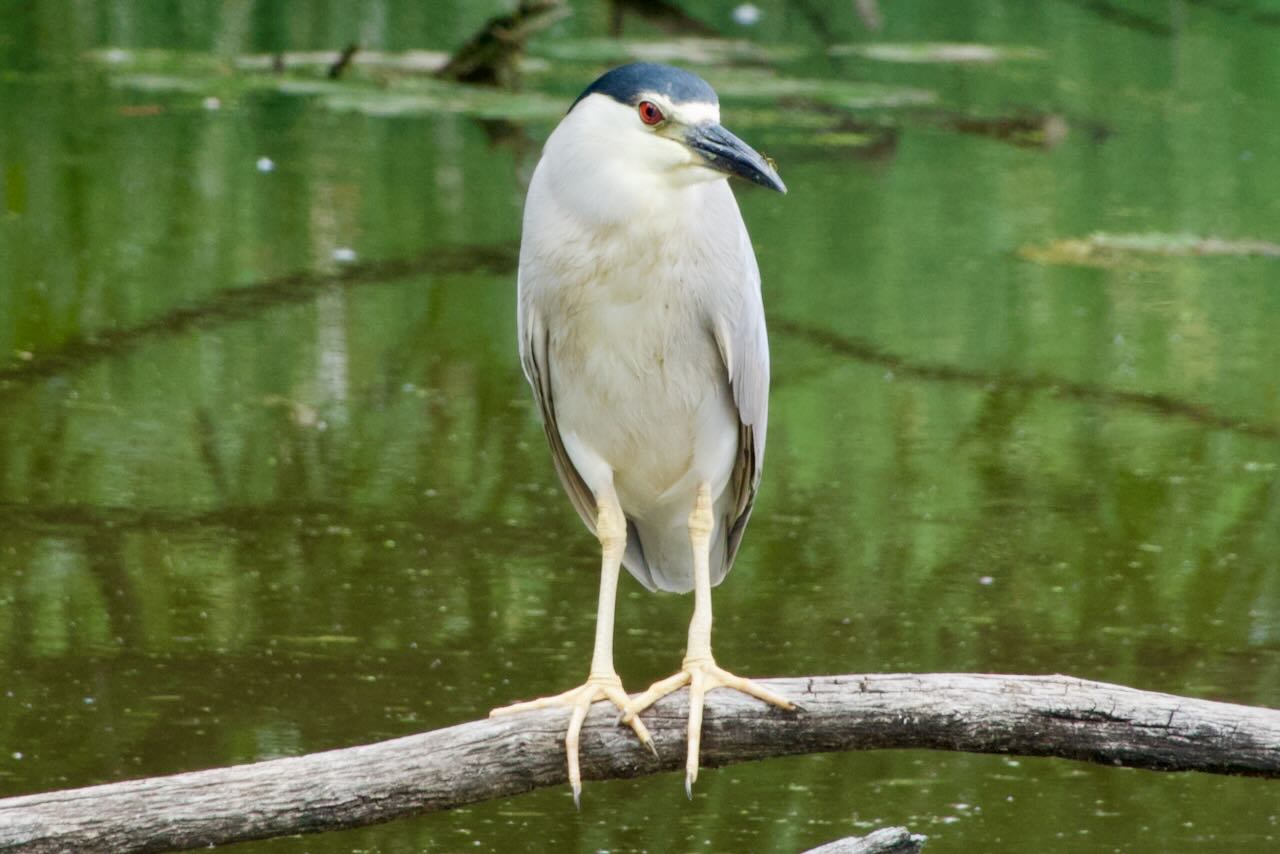
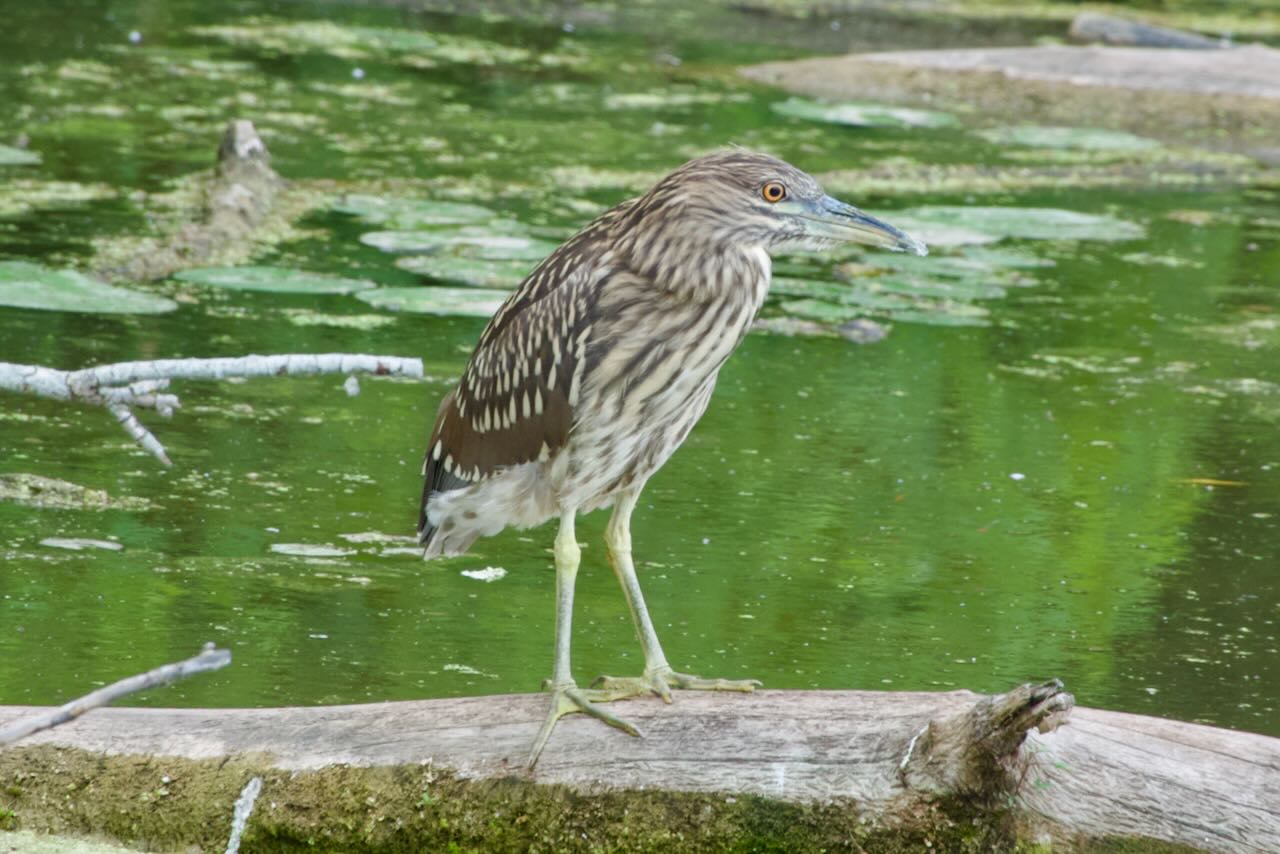
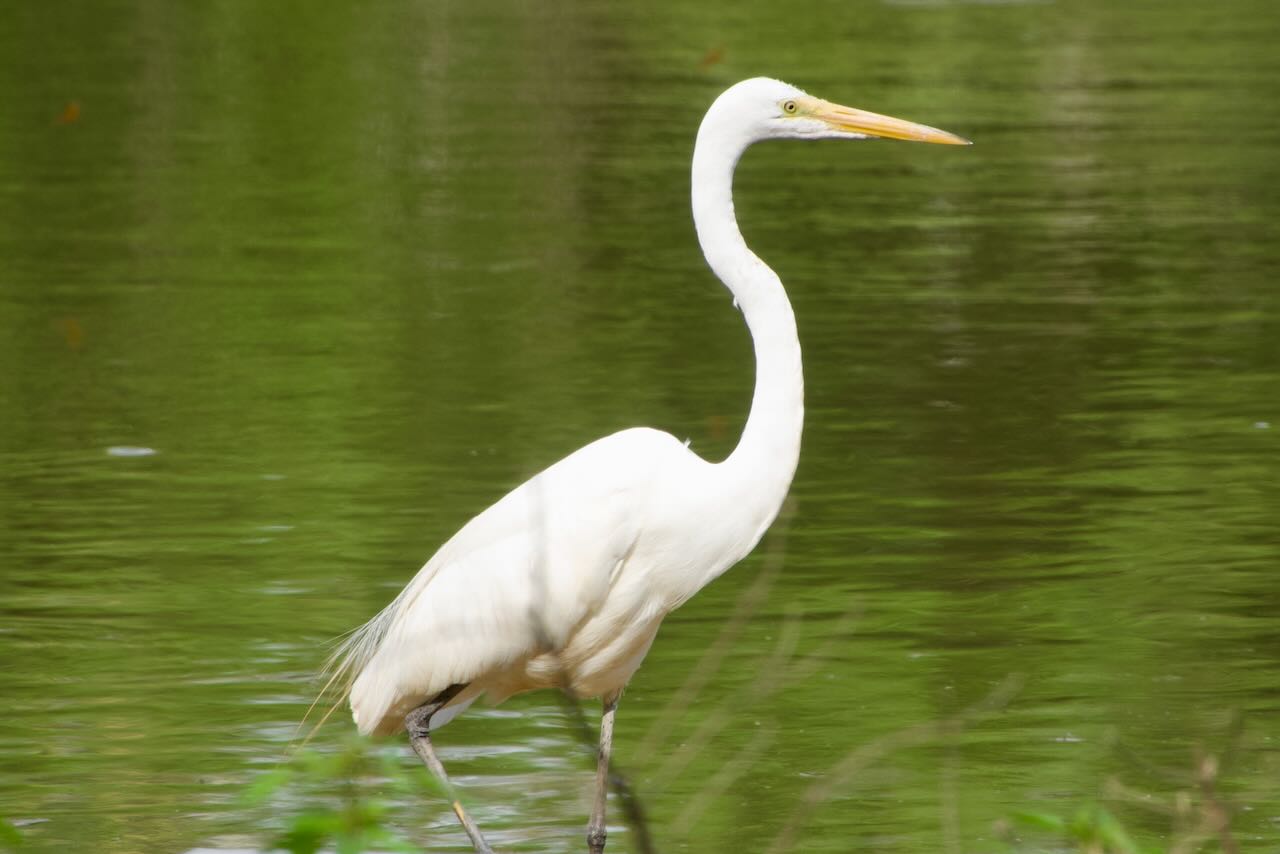
The heat wave settled back in and we had family things that kept us busy the next few days. Wednesday we stopped at Valley Inn after running errands and had some nice views of Egrets and Herons.
Black-crowned Night HeronBlack-crowned Night HeronGreat Egret
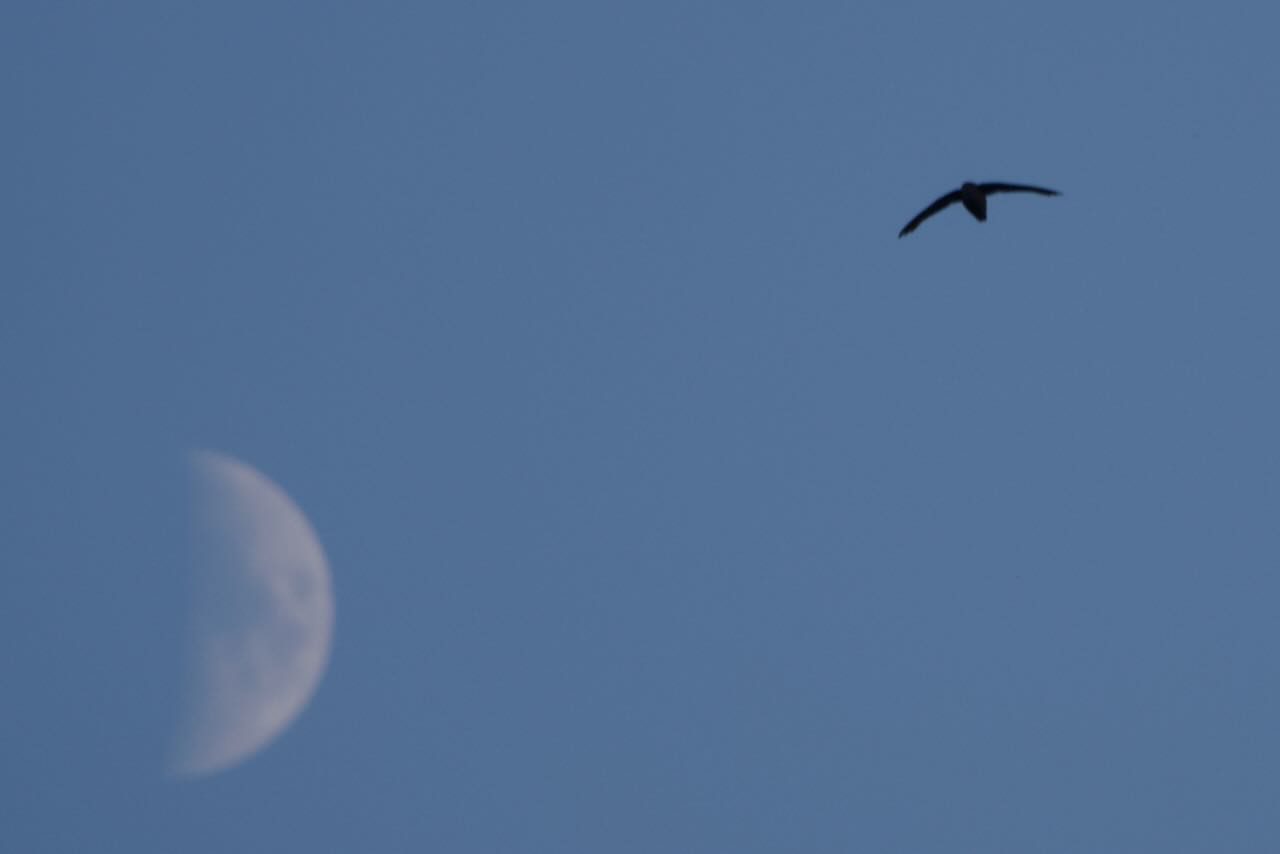
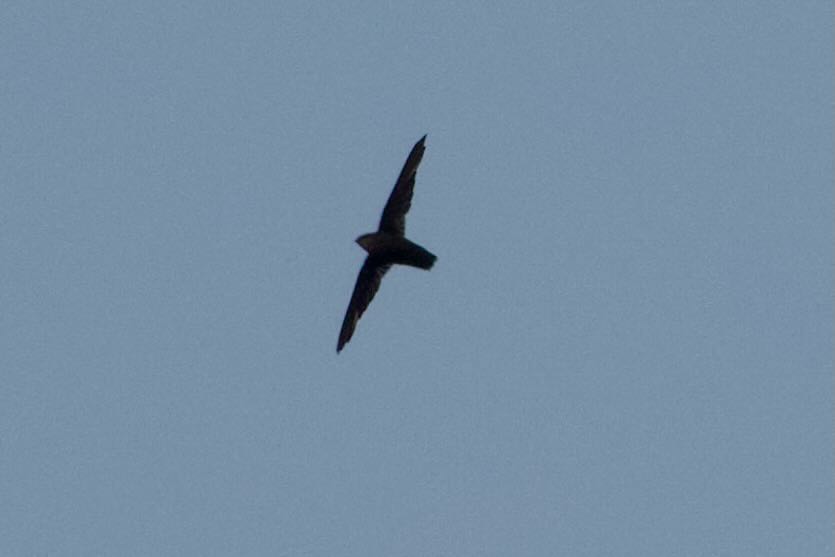
Jerry went into Paris and got some nice pictures of Chimney Swifts, a species that we did not have a picture of yet. With this down time we will be trying to get some pictures we are missing.
Chimney Swift
Thursday and Friday the winds in Hamilton were from the NE and that means lake watches. In the morning we went to Niagara-on-the-lake to see about that Black Vulture we still need to check off the list. I think this is about the 5th time and at this point I think we really do need to wait until fall/winter to get the bird. With no leaves on the trees it will be easier to track vultures flying down the river or roosting in trees. If we happen to be down there for other birds then we will try for it again. We then headed to Van Wagners Beach on the way home but the east winds were very light and we did not expect any Jaeger action. We stayed for a bit and then headed home.
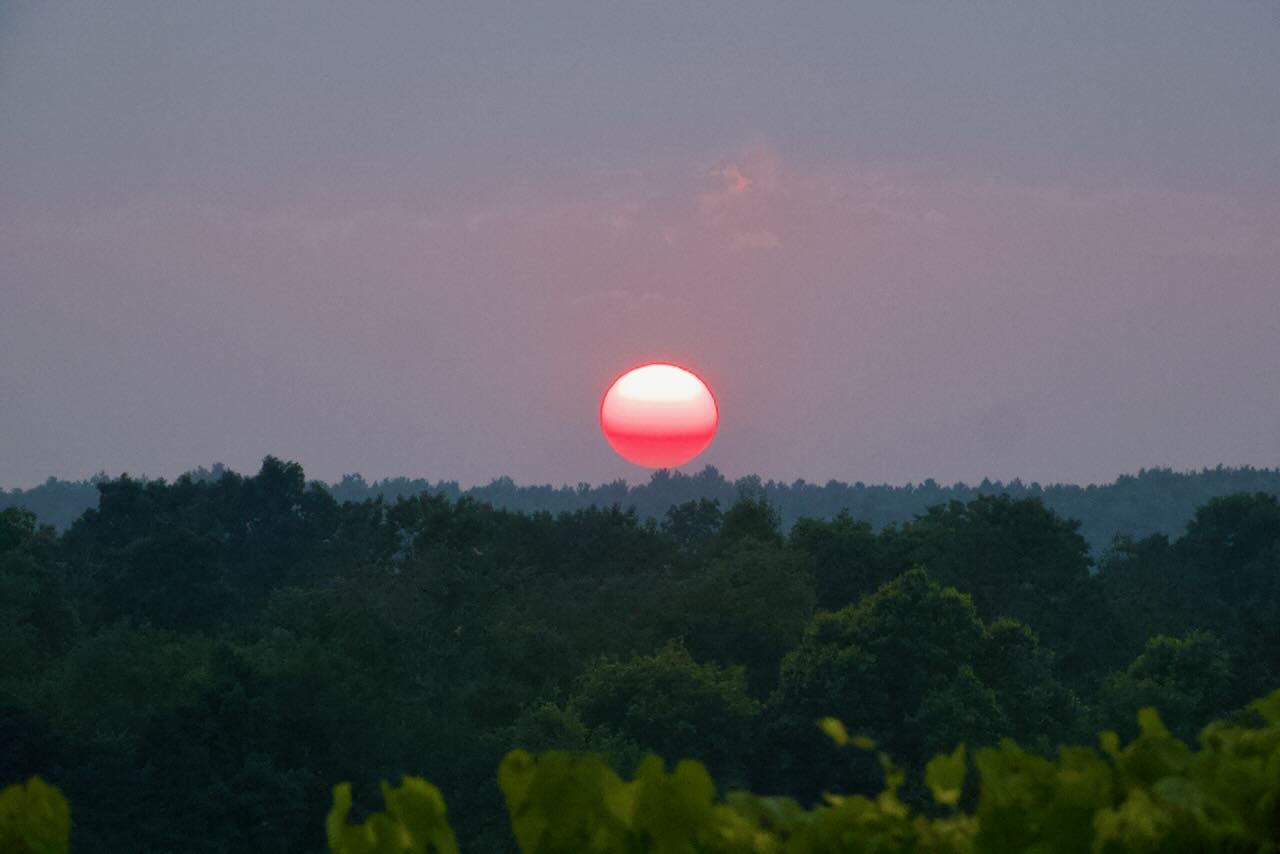
With family events over the weekend it looks like the Dickcissel will be our only addition this week. Hope you all had a great long weekend! How cool is this picture Jerry took at sunset the other day?
Monday and Tuesday were long driving days with no time to stop for birds. We were anxious to get home having been gone for 7 weeks. A very early Pomarine Jaeger was being seen at Van Wagners Beach in Hamilton and we considered stopping on our way home to see if it was still around but we were soooo tired and the highways for once were really moving well so we opted to get home earlier rather than battle commute traffic if we stopped. The Jaeger was seen that evening of course. I might regret that when we are in miserable conditions in October trying to find one, but there is also a chance to see one out East in September.
Oh, it was good to get home! And the heat was nice too after so many cool blustery days. We spent Wednesday and Thursday doing all the chores necessary after a long trip – groceries, laundry, clearing spider webs. We saw half of our family and visited Babi. Some of you have asked about Jerry’s mom. Babi did reasonably well with us gone, she contacted us many days and we had conversations with her while driving through mountains, on top of mountains, hiking in the woods, walking beaches. Cell service is truly a miracle. She did have a number of falls from not using her walker but with no serious injury so far. Thankfully in her mind she thinks we were away “for a few days” and she usually thinks she has just arrived at the place she is at. We were happy that she was safe and secure and well looked after and that we could travel without repercussions to her health.
Since this is a slow week I thought I would post some things from the trip that did not get into the last blogs.
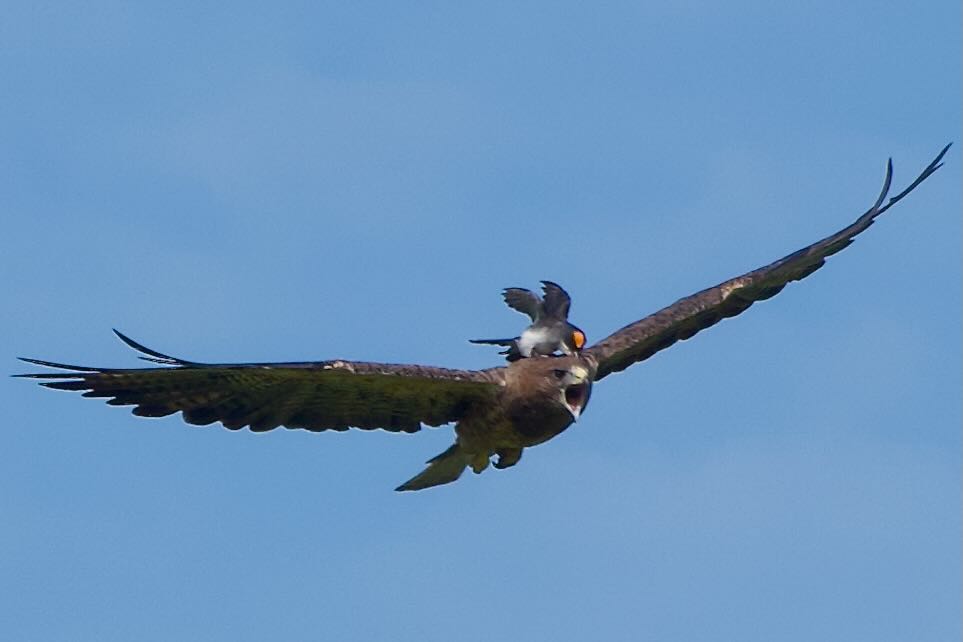
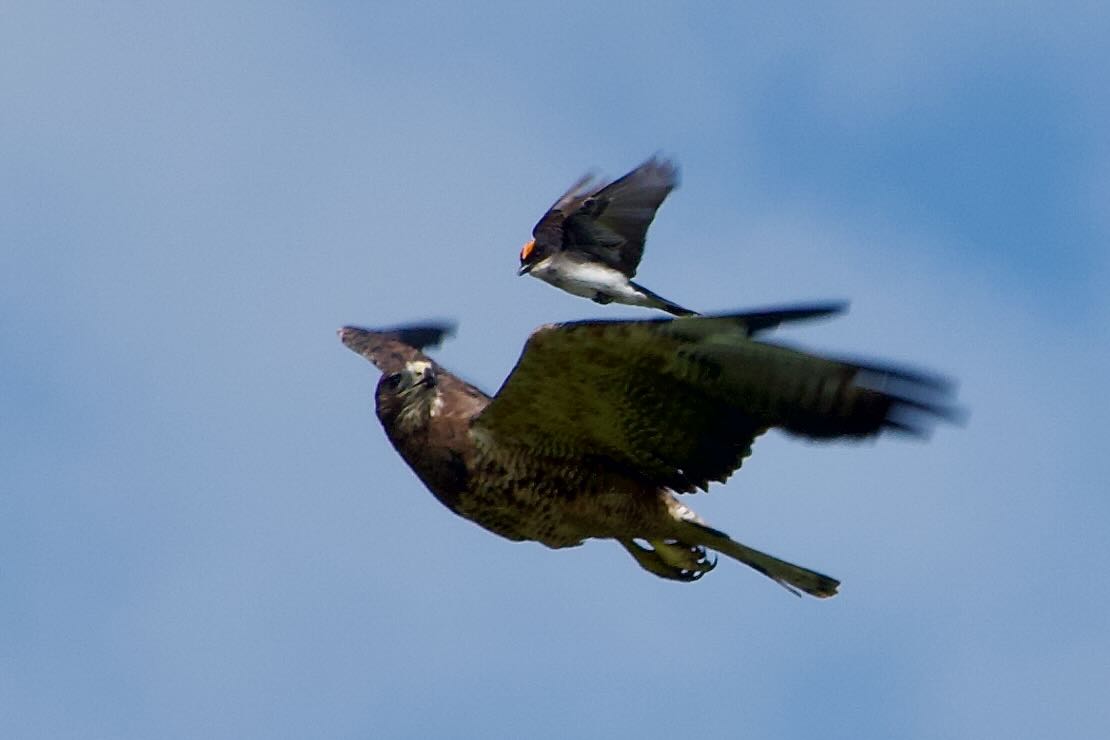
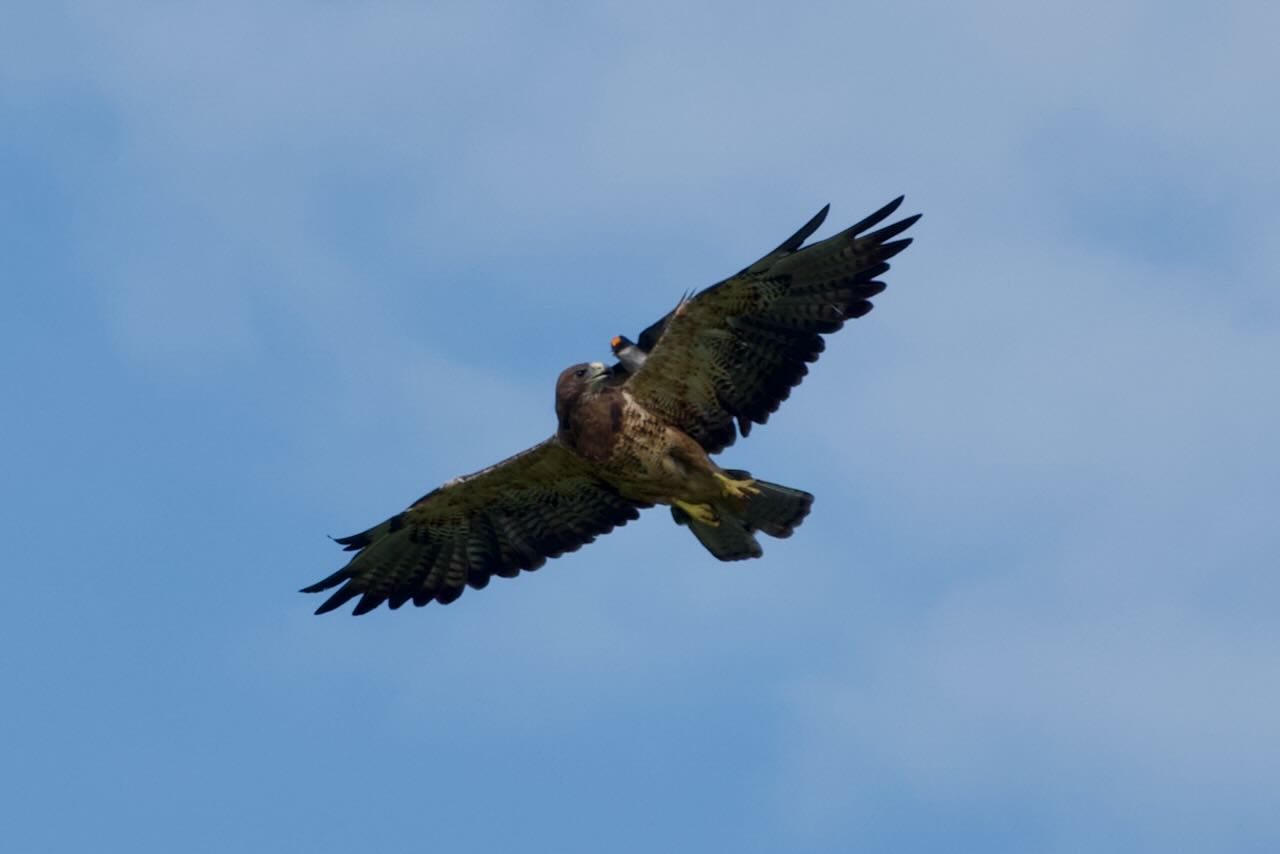
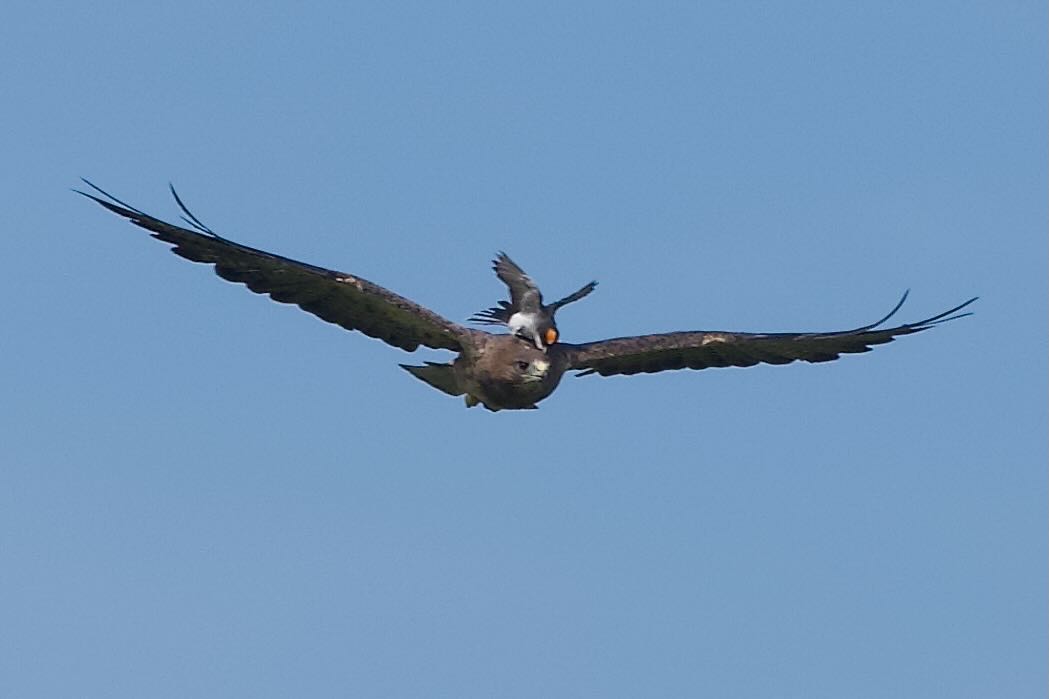
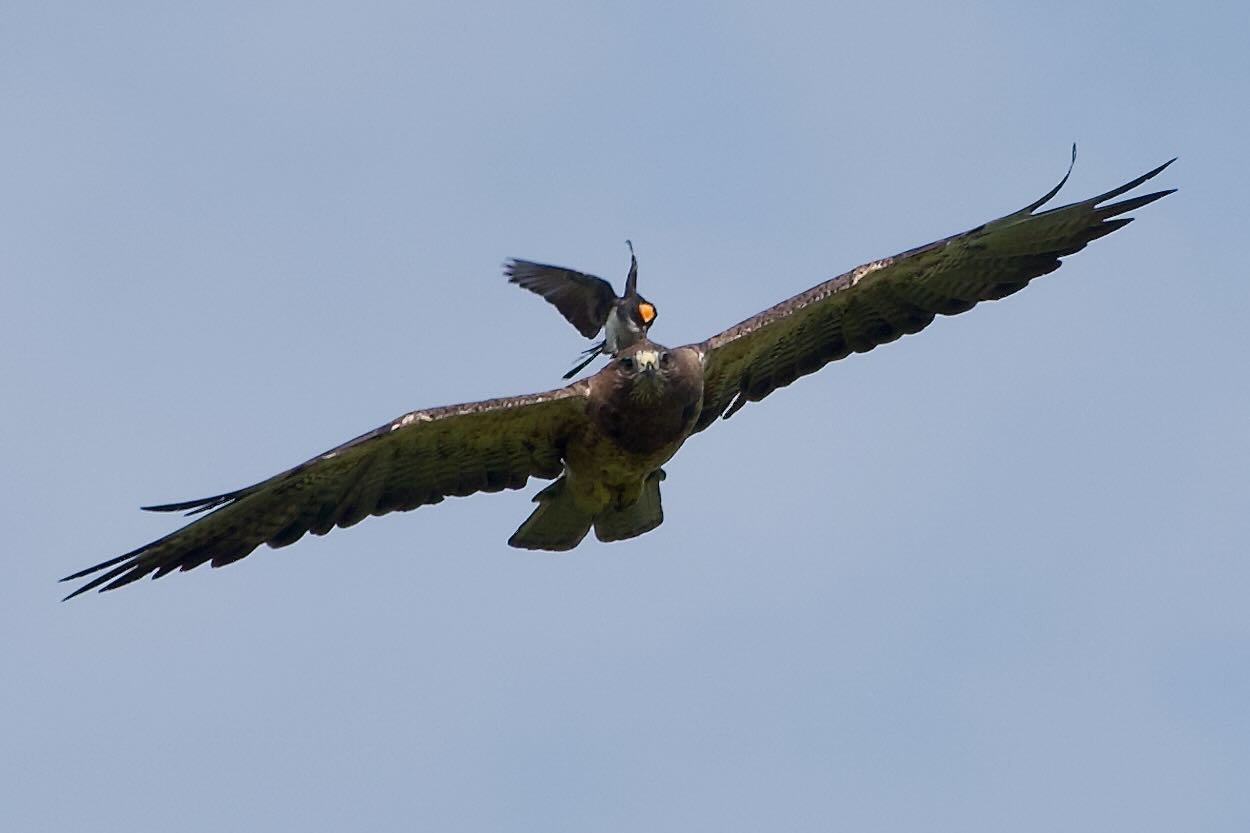
Outside of Calgary we had this wonderful experience with a Swainson’s Hawk and an Eastern Kingbird. The Kingbirds clearly had a nest near by and perhaps so did the Swainson’s as neither would leave the area. The Kingbird, showing the red/orange crown that is rarely seen attacked the Hawk over and over, landing on its neck and pecking it’s head again and again. The Hawk squawked loudly with each peck and tried flying further but the Kingbird pursued. They went around and around above us for a good 5 minutes or more and Jerry just kept snapping.
The Icefields Parkway should be on everyone’s bucket list and is still the most spectacular way to experience the Rockies. Here are some videos of the drive down the Icefields Parkway to Calgary that still do not adequately portray the true immensity of those mountains.
So we sit at 396 and there are still many species yet to see. We have now seen all 217 of the #1 ranked birds, the common species in Ontario, and we have seen all but 5 of the #2 ranked birds in Ontario. The 5 left are Black Vulture, Redpoll, White-winged Crossbill, Bohemian Waxwing and Dickcissel. I expect to see all of these but the Boreal species might have to wait until the winter months. I still have 14 species to see of #3 ranked birds with most of those being Eastern birds. Some of those we will likely miss because it will be late to see them in September. There are still 12 #4 ranked birds, birds that require a special trip to see or find in Ontario or out East. These #4 birds include the three Jaeger species, Sabine’s Gull, Buff-breasted Sandpiper, Shearwaters and Boreal Owl. I also still hope to see some #5-6 ranked birds like the other two Ptarmigan species out East and any rarities that show up in Ontario. The potential is there for another 20-30 birds which sounds crazy to me.
We caught up with the rest of the family and friends over the weekend and will be ready to get back to birding next week. I’ll leave you with a video of our Dusky Grouse “Lifer” that did not make it into the blog last week.