Week 29 ended up being a non-birding week with only one backyard checklist added to ebird. We enjoyed a few days looking after our grandkids and we had a few caretaking tasks for Jerry’s mom. It was also the week of rain and floods so I was not interested in trying to bird under those circumstances. It continues to be quiet on the birding apps but there are trickles of birds starting to move down from the north. When will something good arrive?
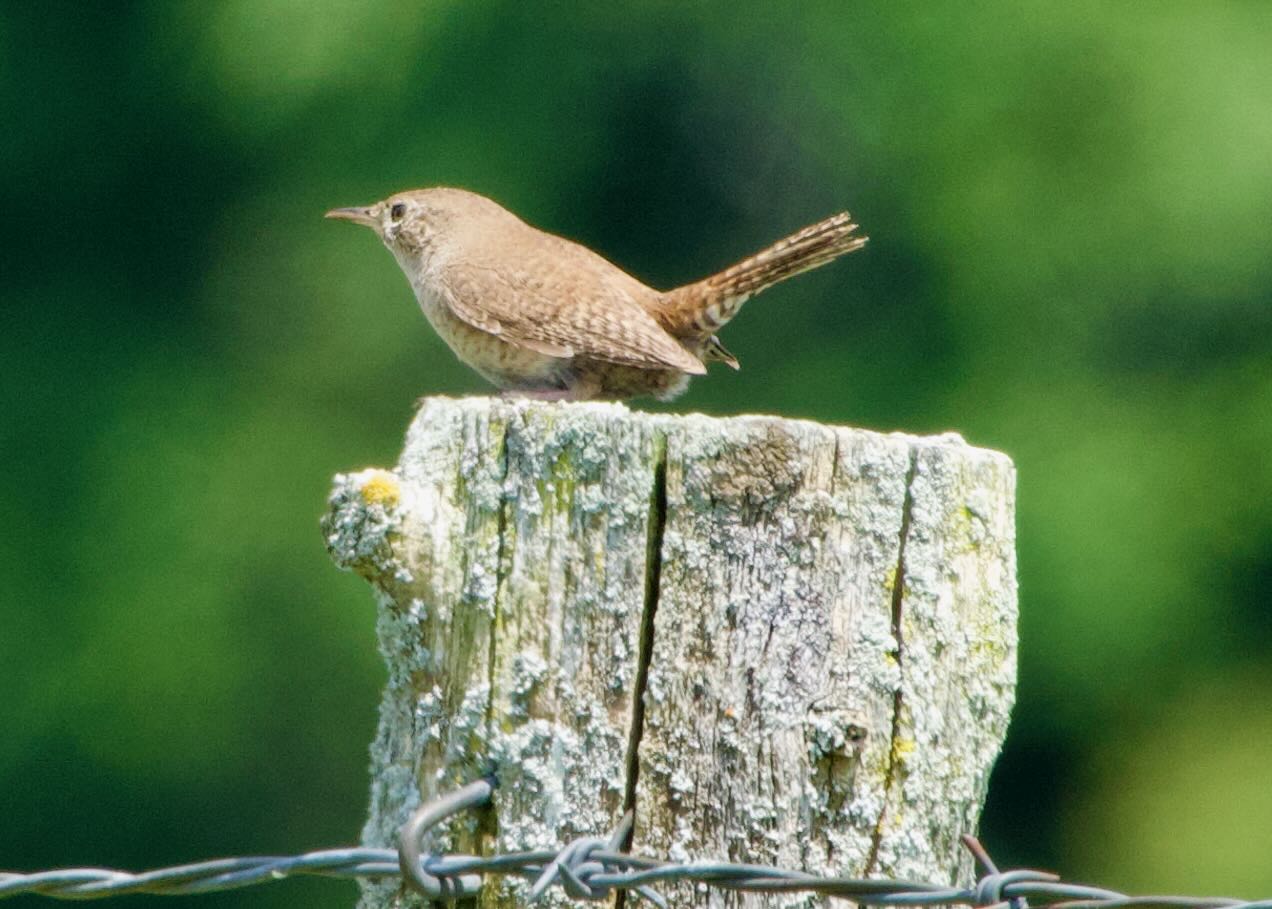
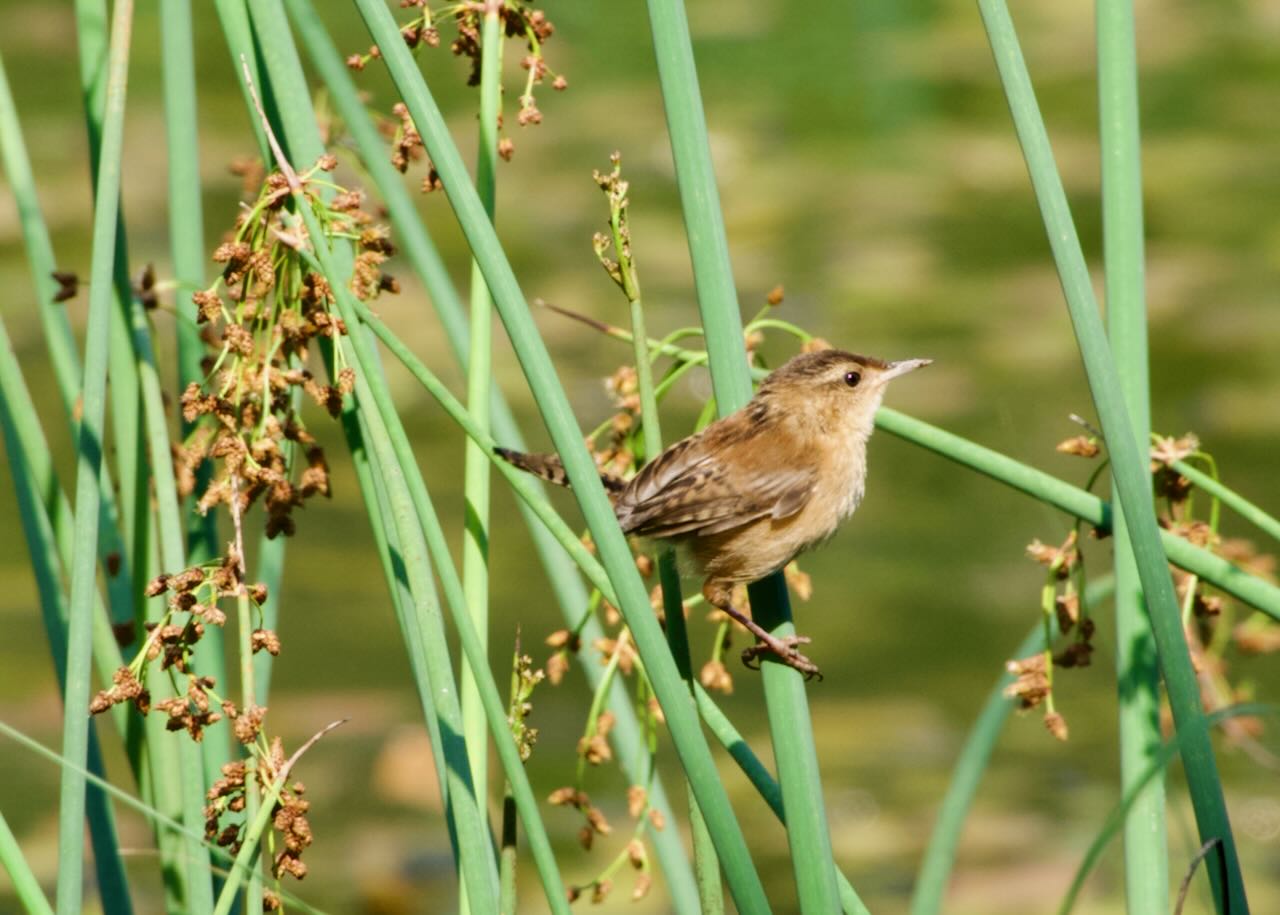
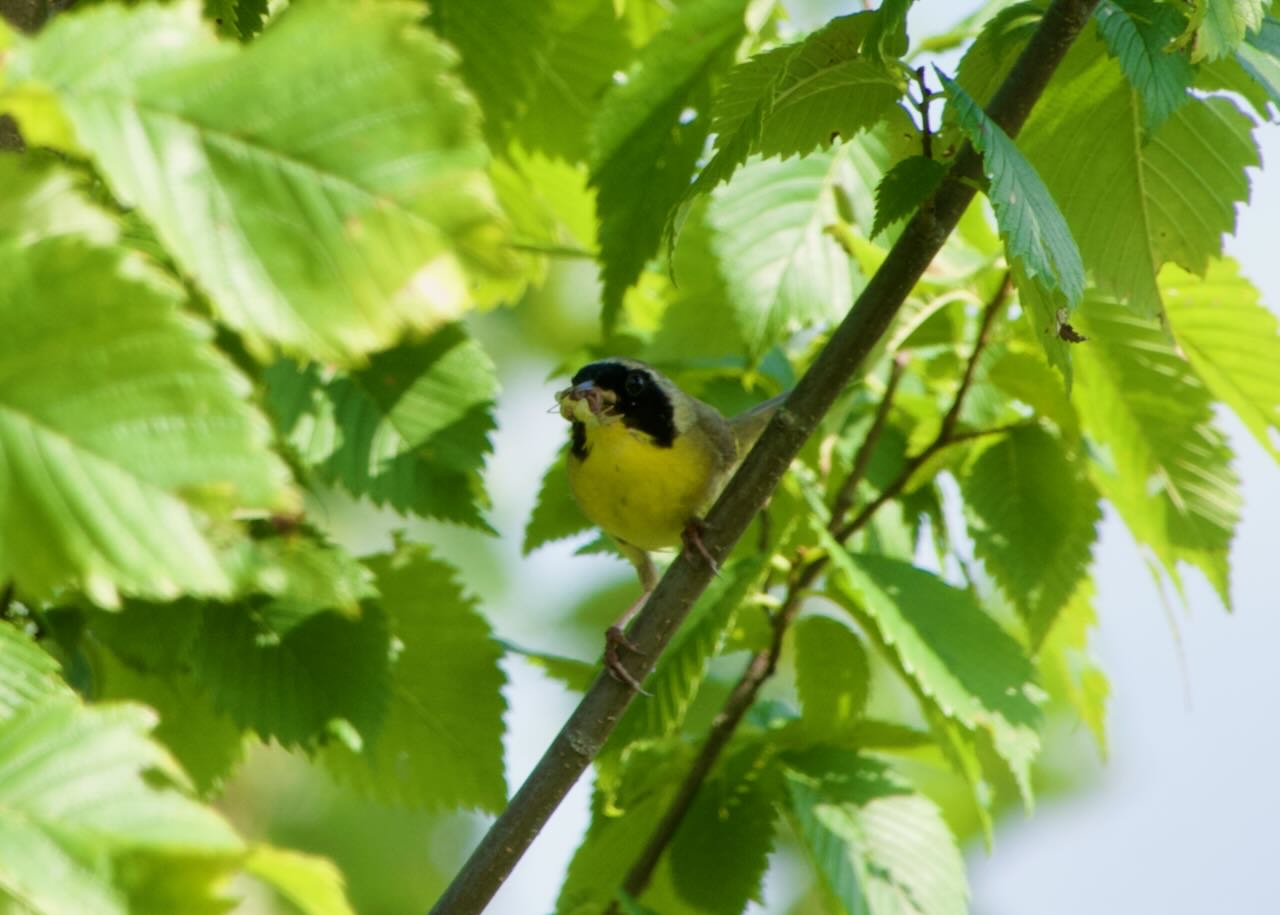
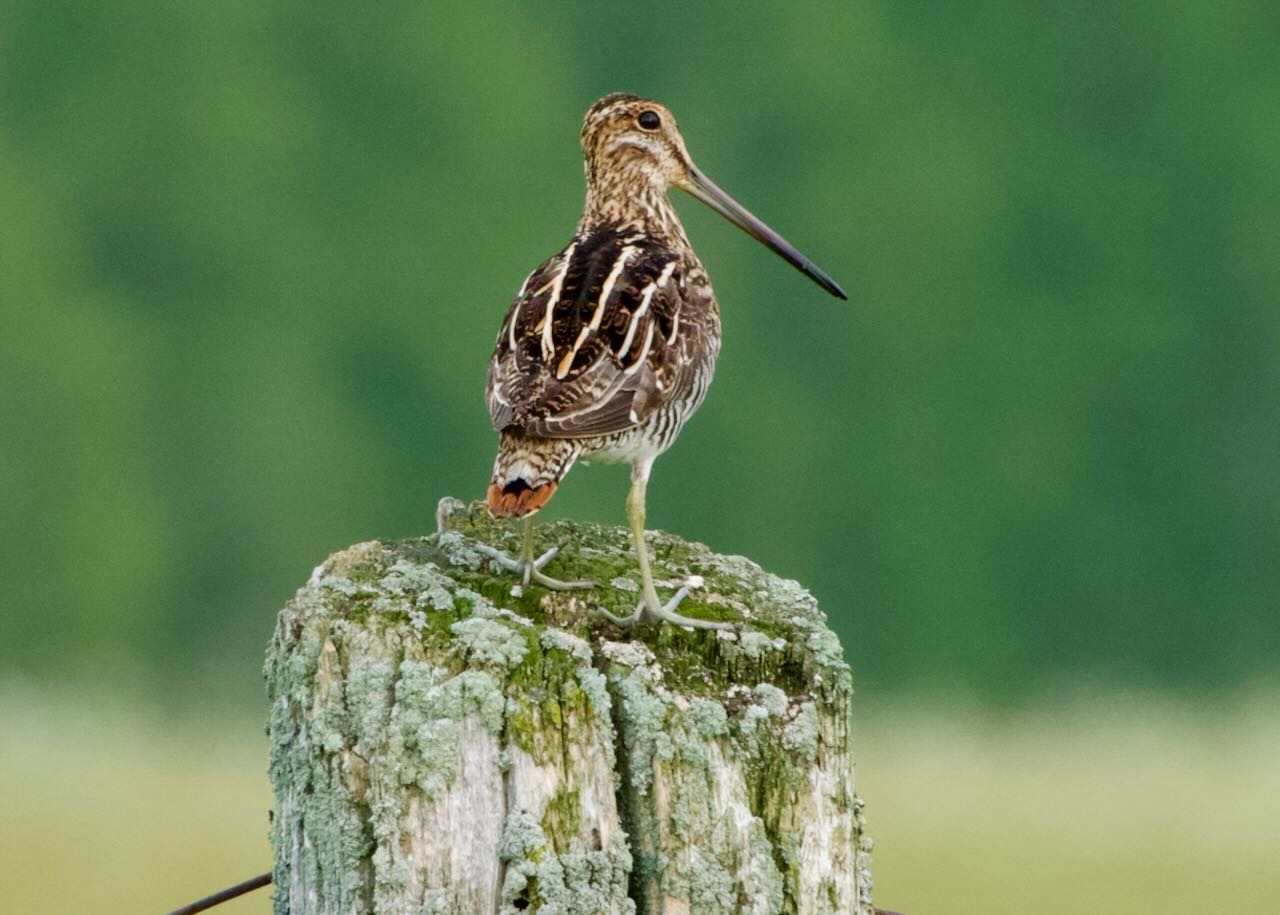
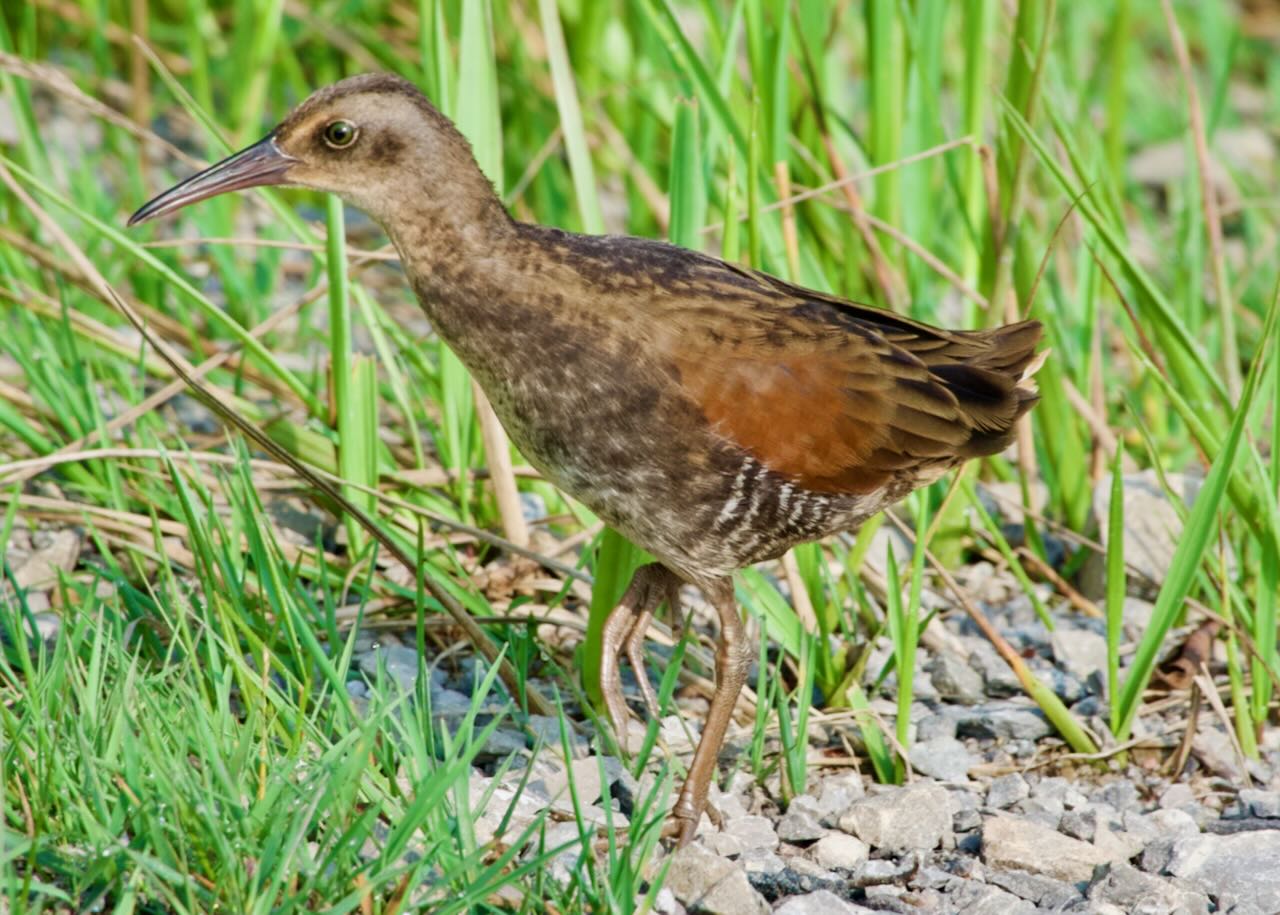
On Sunday, the last day of week 29 we headed up to Carden Alvar in hopes of running across an American Goshawk or, at the very least, getting better pictures of birds on our list. Carden Alvar is a magical place for birds. Alvars are naturally open habitats with little to no soil over a base of limestone or dolostone that set the stage for natural communities that don’t exist any where else. Carden Alvar is one of the largest in the world. We arrived at 7am and by 9 we had seen 44 species of birds. Upland Sandpipers, Wilson’s Snipe, Bobolinks, Meadowlarks, Various Sparrows and the endangered Loggerhead Shrike all breed in the Alvar. Yellow and Virgina Rails, Bitterns, Soras, Sedge and Marsh Wrens breed in the nearby marshes. Jerry managed to take many great pictures and I got some nice video of a juvenile Virginia Rail as it walked along the road undaunted by our presence. I’ve included a video of an Upland Sandpiper we came across a few weeks back as we didn’t get pics and video at Carden.
House WrenMarsh WrenCommon YellowthroatWilson’s SnipeVirginia Rail
On Wednesday, with Discord still silent for new species, we birded locally trying to add some species to our Brant County list. An Acadian Flycatcher had been heard singing by a few birders but we did not manage to hear it. The wetland and forest area where it was heard is bisected by a very busy road with trucks traveling at 80-100km so it is very difficult to hear anything and there is very little shoulder to walk on. I am always nervous there but it is an excellent wetland with lots of species of birds. We managed to add a few birds to our Brant list and packed it in early as thunderstorms rolled in.
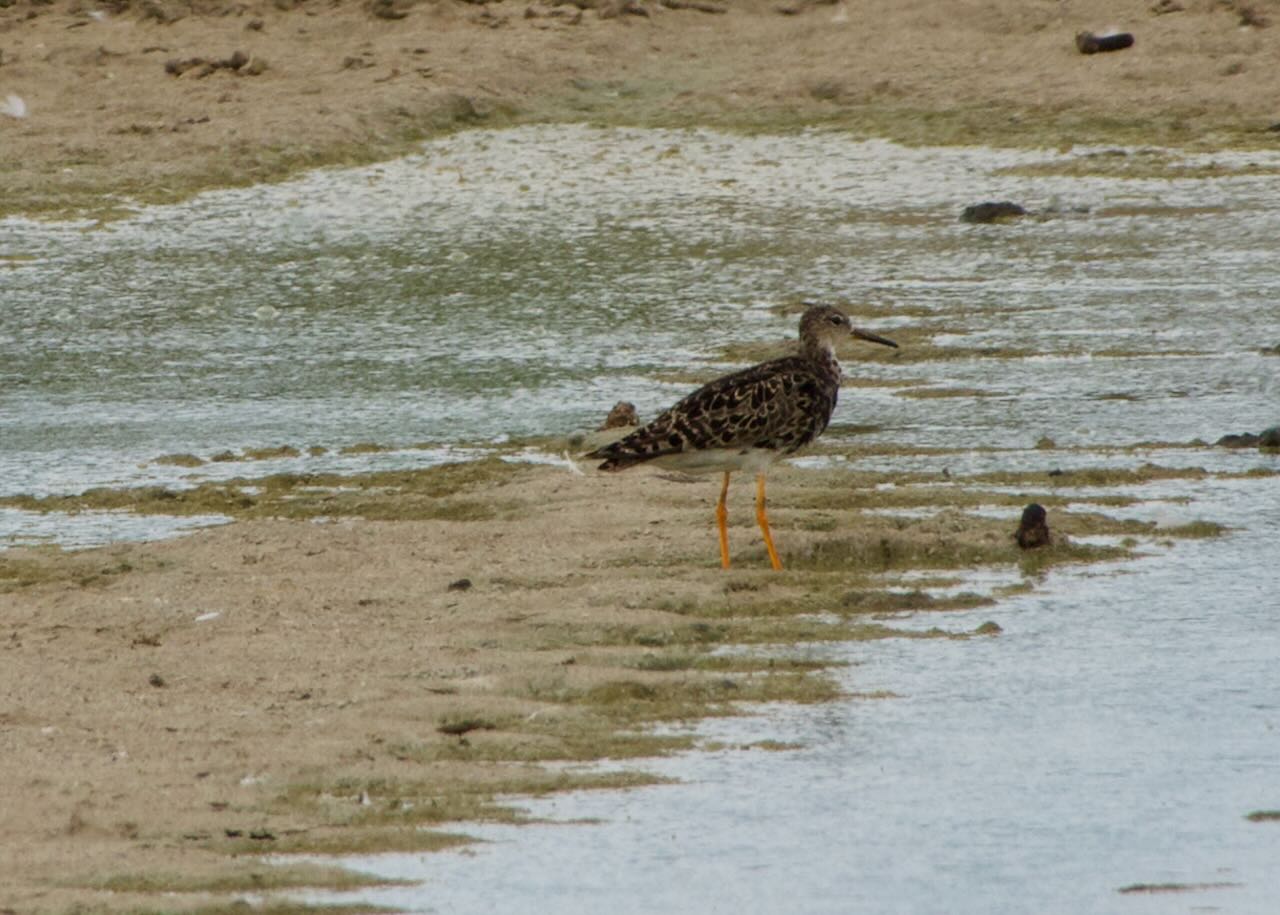
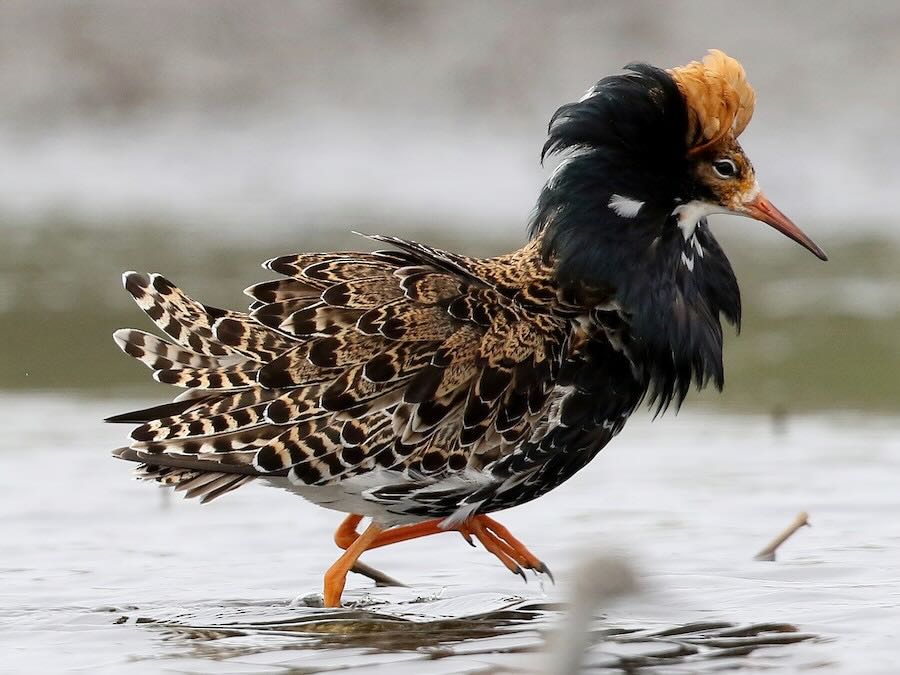
On Thursday I opted to head to Lake Erie to check out Rock Point PP. We have not been in many years but we know the rocky shore is good habitat for shorebirds. I wanted to scope it out for later in the season and it was a gorgeous summer day for a beach walk. We had nothing else to do. As we left Rock Point that familiar ding was heard – Ruff at Blenheim Lagoons! Of course, 3 hours west of where we were! GRRRRR! If we had stayed home it would have only been 2 hours! It seems I have not been able to ever be in the right place LOL! Anyway, we drove. Again. The 4 or 5 single lane construction through London on the 401. The inevitable trucks trying to overtake another truck at the excruciatingly slow speed of 105km! We arrived at Blenheim Lagoons to hear that it had flown 10 minutes before we got there but it had done that a number of times that day. We waited. There were many other shorebirds to amuse us, including FIVE Stilt Sandpipers, the bird we had been chasing two weeks back. After 45 minutes the Ruff made a brief appearance, Jerry got a decent look, I was just getting the scope on it when it flew again but managed a brief view of the orange legs in flight. Trish, who had arrived after us managed to get a quick look too. A few minutes later it returned and this time we could all rejoice with great views and pictures. It was a LIFER for Trish! It was bird #312 for us! A nice rarity to get!
Ruff we sawRuff in Breeding Colours (we never see here)
The weekend was filled with family and social gatherings, catching up with friends and so we close out week 30 with 312 species seen.
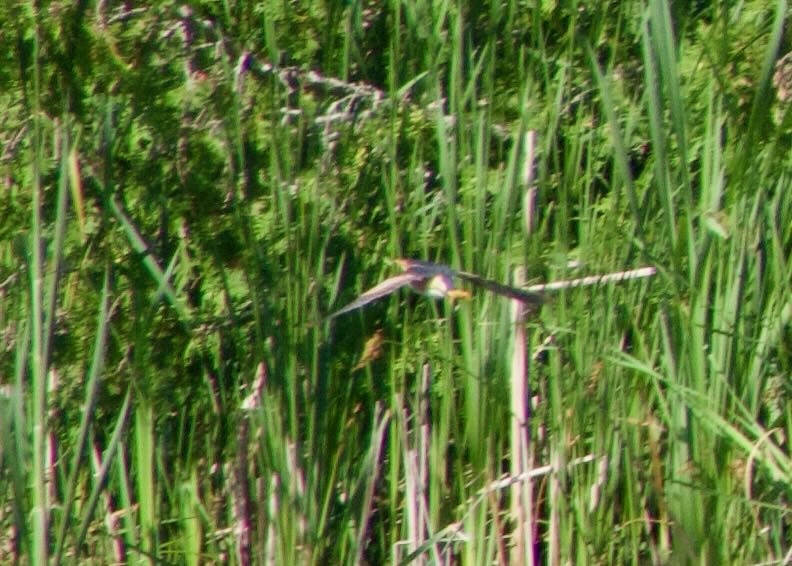
Canada Day we were at Confederation Park in Hamilton to cheer on our our daughter’s family as they ran 1&5K races to raise funds for McMaster Children’s Hospital. We did a bit of a Lake Watch at Van Wagners afterwards to just practise our skills at identifying birds at a distance with the scope. Starting in August we are going to have to spend quite a bit of time at this spot hoping to get Jaegers and rarities coming in. The rest of the week we looked after grandkids and then on Friday headed up north for a weekend with our kids and grandkids at Viamede Resort. We left early Friday and stopped along the way with the goal of seeing and getting a pic of a Least Bittern. We did not see a Bittern at our first stop at the Darlington Waterfront Trail but further north we stopped at Duoro Park in Peterborough. We saw nothing in the actual park but decided to check the river from the road bridge beside the park. Jerry was taking some pictures of a Green Heron when suddenly a Least Bittern flew almost eye level over the bridge. It was only seconds before we got across the road but the bird had disappeared on the other side. I had a fantastic view of it and Jerry missed it. We scouted the area and then decided to go back into the park for a different view of the area we were sure it must have landed in. We scoped for a bit and then it flew up out of the reeds we had been scanning and went down river back to the other side. Jerry managed a crappy shot but we achieved our goal and saw a Least Bittern and got a picture.
Least Bittern in flight
We put in a few lists over the weekend with Loons and Warblers all the while really hoping an American Goshawk would fly over the resort but we were just not that lucky haha! We birded in a few more Counties so our new goal of birding every ebird County and District this year now stands at 41 with only 9 more to be birded.
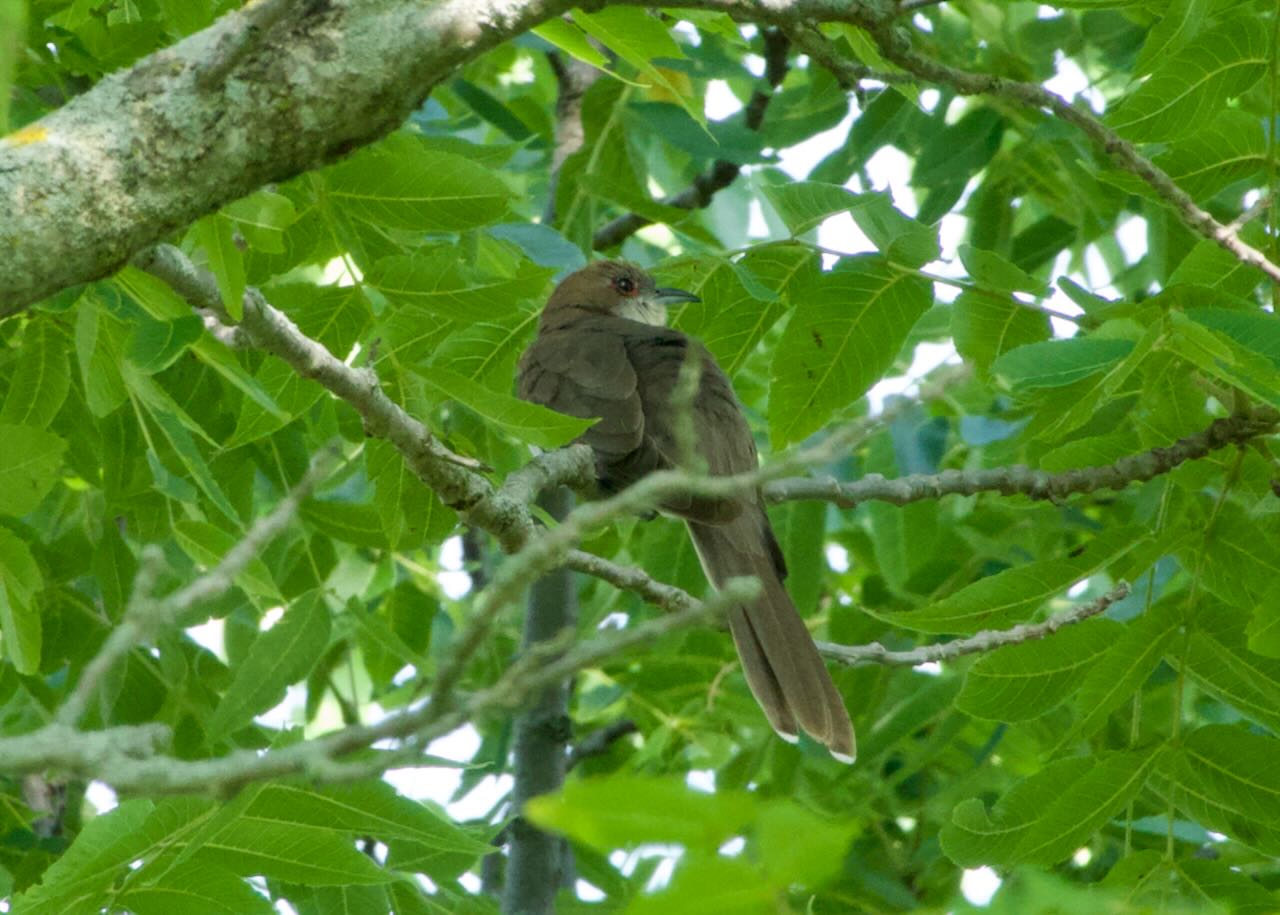
On Monday we birded locally checking some of the storm ponds. Shorebirds are the first migrants to start back and a few are starting to be reported. While we were at the Paris Stormwater Pond Jerry saw a Cuckoo flying from the field to the trees along the road. We have only heard a Black-billed Cuckoo so we hoped this bird was it. We headed out to the road and paced back and forth keeping our eyes on the trees and then heard that distinctive song of cu-cu-cu-cu-cu meaning it was a Black-billed! We waited, we watched, we looked and at long last I saw it hop onto a branch. Jerry ran over and it flew a few trees away, he managed a picture and then it flew to another tree and then flew out towards the field. We scrambled through the scrub and trees and got back out into the field and waited again. In a few minutes I saw it fly between trees and we finally had a clear look at it and Jerry was able to get some good pictures showing its black bill. Another “Heard Only”bird changed to “seen and photos taken bird.”
Black-billed Cuckoo
We now have 8 “Heard Only” Birds left on our list and I hope we can still remove a a few more in the coming months but I know that we will not remove them all.
Week 28
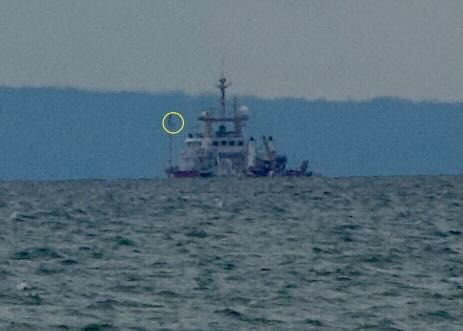
Late Monday, Marcus in Hamilton saw a mega rarity out on Lake Ontario just before dusk. A Common Murre is a first Ontario record! His sighting was not long, just a few minutes, and although the bird was a long way out they are pretty distinctive birds from the East and West Coasts. We decided to do some lake watching on Tuesday in the hopes of seeing this bird and started at the spot Marcus had seen it. We then worked our way towards Toronto stopping to view and scope the lake. We did not find the Murre and planned to head out again on Wednesday or Thursday to work our way from Hamilton to Niagara. Late Tuesday, (why are the great reports always minutes before dark?) a report by a crew member on a Coast Guard boat in Lake Erie was put on INaturalist that a Brown Booby, another mega rarity, was sitting on their boat offshore. With Hurricane Beryl making its way up from the US on Wednesday there was an expectation that some rarities would arrive here before, during and after the storms. So far there had been a Roseate Tern, the Murre, and the Brown Booby. None that were easily chased. But Wednesday around 11 the rain lessened and we headed down to Long Point to canvass the shoreline for the Booby or a Stilt Sandpiper that had been reported a few days before. We met two birders, Jax and Jack at Hastings Drive and birded there for a bit moving on to check out Turkey Point and Port Dover. Before we left Long Point I handed my business card to the guys. At 5:19 my phone lit up with a report from the guys who were still at Long Point that they could see the Coast Guard boat and what looked like a Brown Booby on it. We jumped in the car and headed back, 30 minutes away. The guys texted (thanks for that help!) and we had a quick discussion regarding the boat direction and made the decision to get down to the beach at Long Point east of where they were. By this time the original reporter of the bird had confirmed that the Brown Booby was back on the boat so we knew all we had to do was see “a bird” on the boat for it to count. We flew out of the car and I could see the boat, grabbed the scope and got the scope on the boat. The view was horrible but we could see a shape that looked like a bird on the front mast! Number 310. Whew. We only spent about 5 minutes there and decided to drive further east into the provincial park for maybe a better view. The boat was further out but more sideways in the water so the shape of the bird was marginally easier to see. This will undoubtedly be the worst view and the worst picture of a bird this year. I am glad that it was not a lifer for us. The last Booby hung around in Hamilton for a number of weeks so there is hope that the bird will eventually roost where it might be more easily seen. The reality though is, it will not survive up here on a fresh water lake, it belongs in the warm southern oceans and will die sooner rather than later.
Yes there is a Brown Booby in that circle! LOL
On Friday we headed to Alymer Wildlife Management Area because there had been reports of Stilt Sandpipers the last couple of days. When we arrived a birder told us that he had seen one but the lighting was horrible. The viewing is limited to permanent wooden stands and so we were facing east to see where the birds were with the sun in our eyes. In those conditions the birds are all black silhouettes but when they move you can pick up some detail. After scanning for a bit I was sure I had the Stilt – I could make out a bird with a heavy eyebrow that was dark on top and underneath. Jerry had a scope look and then tried to get pictures. We felt confident we had the bird and put in a checklist and decided to continue birding and come back in the late afternoon when the sun would be behind us. We checked out other lagoons and wetlands down near Rondeau and then headed back to Alymer in the late afternoon. I had a migraine most of the day and it was getting worse as the day got hotter so I was not as focused on birding as I usually am. We met up with another birder, Dorlisa at Alymer and searched for the Stilt to no avail. I was beginning to have second thoughts that we had seen it in the morning. We went home and looked through all the pictures and all we had were many Lesser Yellowlegs that are somewhat similar to the Stilt Sandpiper. We removed it from our list.
I am always aware of the cognitive bias’s that all humans have and the ones that can affect a birder when we are deciding on an ID. Expectation Bias happens when someone tells you a bird is there and then your brain finds what you are looking for even if it is not there. I think that is what happened with the Stilt – we were told it was there and so we found a bird that had close to the characteristics we were looking for. Authority Bias can happen when an accomplished birder announces an ID and everyone else goes along rather than consider the bird themselves. Everyone makes mistakes, even the best birders, and so it is always important to try and confirm an ID yourself. Today, with most people taking pictures and posting them quickly there are less chances of these bias causing major mistakes but back in 1988 in England a major birding mistake became the hallmark story for these bias. You can read the detailed version here. https://www.birdguides.com/articles/general-birding/phantasms-and-fallacies/
The shortened version is a rare warbler was caught and banded, pictures were taken and the bird was released. The bird was supposedly “refound” and 600 people traveled to see the bird over the week and the people that had banded the bird often were the ones showing the bird to the others. Everyone went home happy. The author of the article, a teen at the time, thought the bird did not check the boxes for the rarity but didn’t question the experts. The next day the bird started to sing and it was a common warbler that looked a bit weird from the norm, not the rarity at all! Those bias’s had clouded all of the 600 people seeing that bird, even the original bander who had held the real rarity in his hand!! Crazy right?!
I read about these bias’s when we started birding and I am acutely aware but even with awareness you still find yourself falling into the trap of them. I often second guess myself after seeing a really good bird because I don’t want to make a mistake so I often talk myself out of an ID rather than be wrong. I’m glad that Jerry takes pictures for proof that I really did see it. I hope the more we bird the better we will be at avoiding these bias’s.
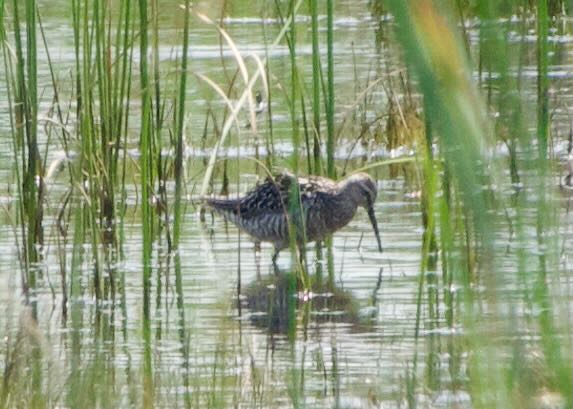
On Sunday morning we headed to Long Point where Stilts had been reported on and off for over a week. We spent a few hours on the beach off Hastings Drive but no Stilts. We then headed over to Crown Marsh, then back to Hastings and then decided to head home but first I suggested we head back for one more stop at Crown Marsh. We walked down the trail and Jerry found a Stilt in with some Lesser Yellowlegs. We had great scope views and this time there was no doubt that it was a Stilt! Heavy barring underneath, a prominent eyebrow, a thick black bill with a bit of a downturn, a bit smaller than a Yellowlegs. All the boxes checked, we had Bird #311 to end the week.
The weather was the story during week 25. A heat dome covered most of Ontario bringing temperatures in the 30’s feeling like the 40’s. We had caregiving duties at the beginning of the week so no birding took place. I continued to work on planning the Canada Big Year when I had time and have made significant headway.
I also took a close look at the species left to see in Ontario and recorded numerous places to see them and when they start arriving. We attempted to bird a few mornings locally but by 10 the humidity, heat and lack of birds made it silly to continue. And so week 25 passed with another week of no new birds added.
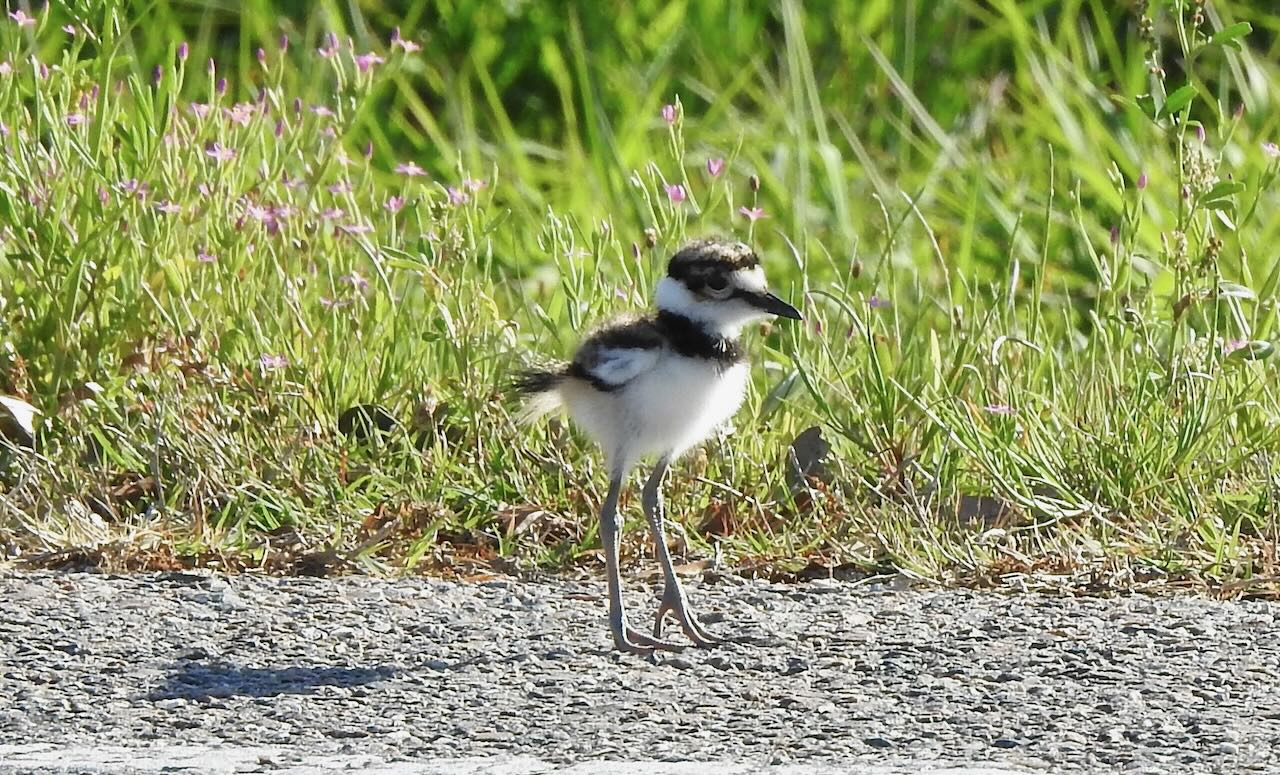
I had hoped to have Killdeer baby pictures to show you but we missed the hatching! They must have hatched late evening on the 18th when I had not checked and then I heard the parents calling as we went to bed. I went outside fearful that a predator was around but I could not see or hear anything and in the morning there was just the empty nest there. Killdeer young are precocial meaning they are born able to run and feed themselves as soon as their fluff dries. The parents move them away from the nest site within a short period of time, usually hours and they also move every bit of shell from the nest site. They will stay with the young in long grass and shrubs until the young can fly at about 40 days. We found a cleaned out nest with no sign of predation and so we can only assume that they hatched that evening and the parents moved and cleaned that night. We hope that is what happened! Below is a picture Jerry took in 2018.
Killdeer Chick 2018
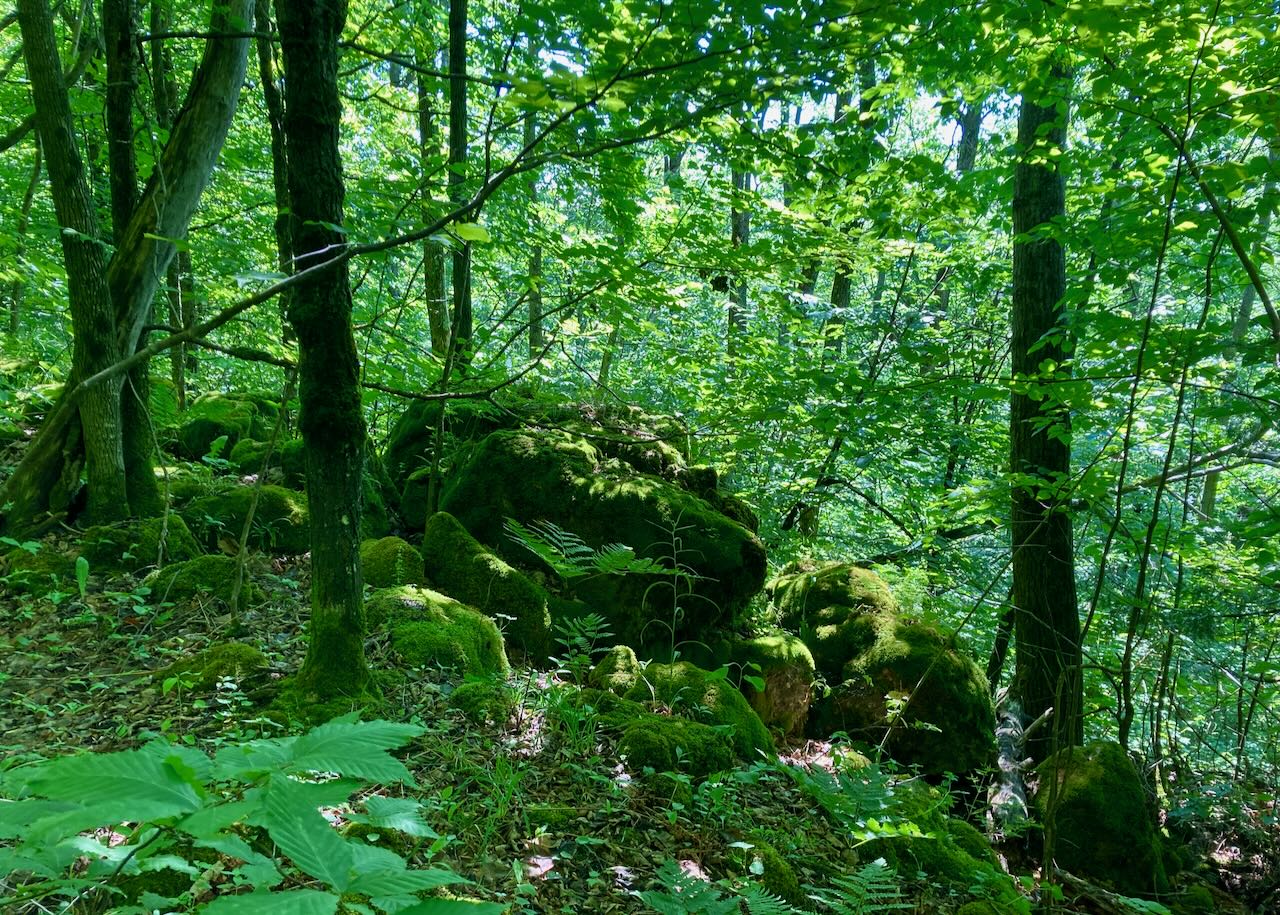
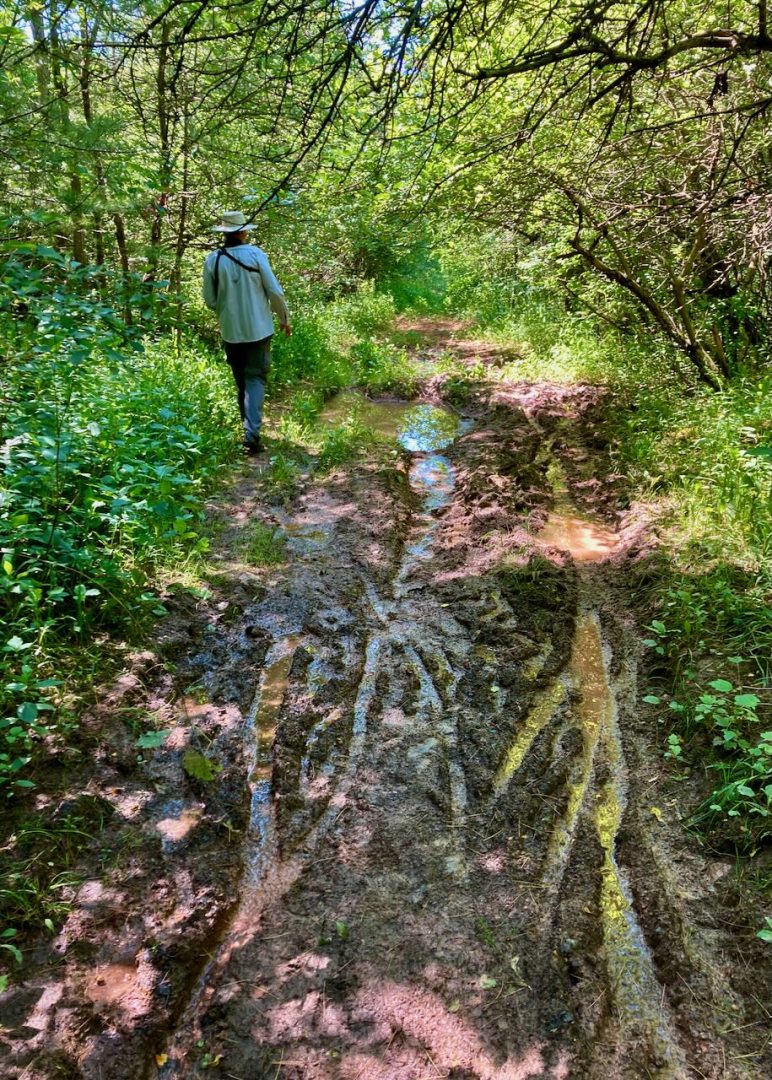
The heat wave broke at the end of the week and so we started Week 26 out birding. We had one County left in Ontario that we did not have a checklist for so we ventured up to Grey County and hiked at Bognar Marsh on Monday. It was a pretty trail, part marsh, mud and forest. Part of the trail loop is the Bruce Trail that runs along the top of the Niagara Escarpment. We managed to see and hear 44 species but alas, nothing new for our list.
Bruce Trail Bognar MarshBognar Marsh
There are 50 ebird Counties and Districts in Ontario and we have now birded, over the years, in each of them. I wondered how many we had birded in just this year and was surprised to find we have checklists in 38 of the 50 so only 12 that we have not been in this year. Do you sense another “goal” coming up? It turns out that at least 6-8 are on the agenda to visit this summer and fall so that only leaves another 4-6 to make an effort to visit. We will see how it goes…
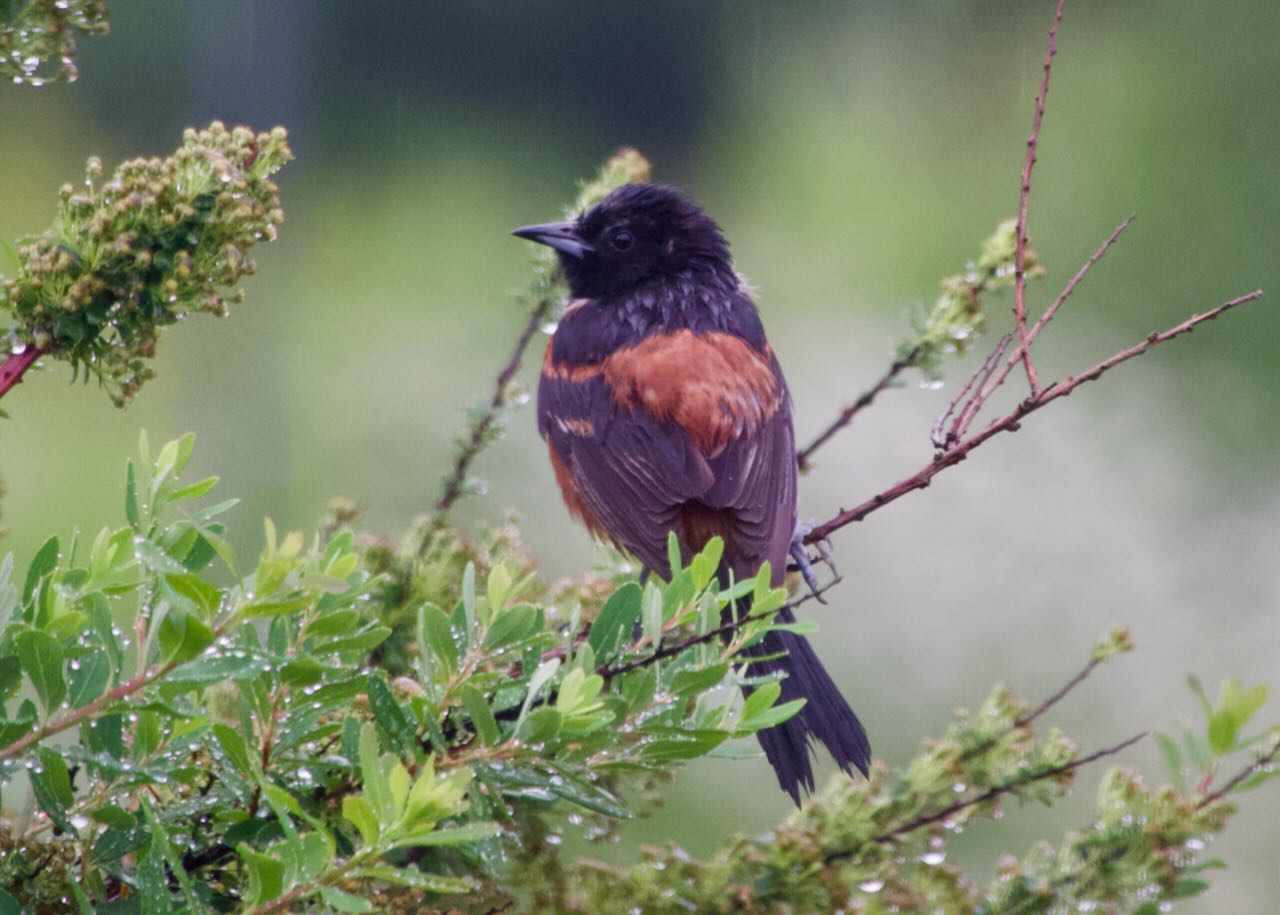
Backyard nesting has been quite successful with many young showing up at our feeders. The young Grackles were the noisiest with their incessant squawking to be fed but it appears they are finally able to feed themselves and things are a bit quieter. We have a pair of Hummingbirds that are nesting and coming to our sugar water feeder. Rose-breasted Grosbeaks are also nesting close by as well as at least two Baltimore Oriole pairs. Robins have been successful nesters as have Song and Chipping Sparrows. Jerry thinks around 10 Eastern Bluebirds and 6 Tree Swallows have fledged from the nest boxes on our property. We had an Orchard Oriole visit as well.
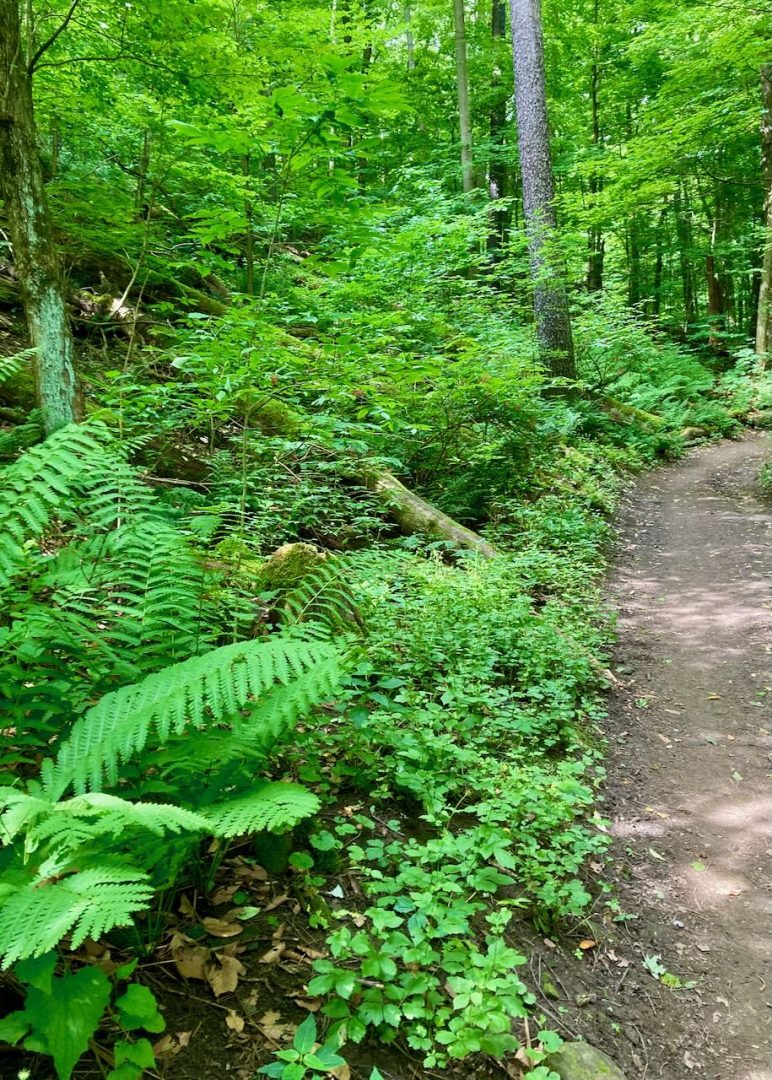
Whenever we head to Hamilton for caregiving we try to bird for a few hours first and one of our favourite spots is the myriad of trails in the Dundas Valley Conservation Area. We have a new appreciation for the numerous trails that wind through that valley. The scenery is gorgeous and the habitat varied which means many species of birds reside there. On Wednesday we took a trail off Artaban Road hoping to get a picture of a Louisiana Waterthrush (not) and then we took a new trail, the Paddy Green Trail, hoping to see a Black-billed Cuckoo as we have only heard it this year (nope). It was no matter that we did not see what we wanted, there were many species to see and hear, the pedometer suggested we did 17 flights of stairs and the trails were beautiful.
Paddy Green Trail DundasPaddy Green Trail Dundas
We are enjoying slower birding where we have the time to stop and really listen to the songs so that we hopefully retain some of this new knowledge we have. We had a Chipping Sparrow and a Pine Warbler singing back to back at the Perched Fen in Brantford on Thursday and their songs are very similar but hearing them over and over, one after the other, gave us a chance to really hear the subtle differences. The young birds are starting to move out of nests so it is becoming easier to see birds in and around the trees. We managed to see most of the birds on our list. Jerry continues to get better pictures for our Gallery.
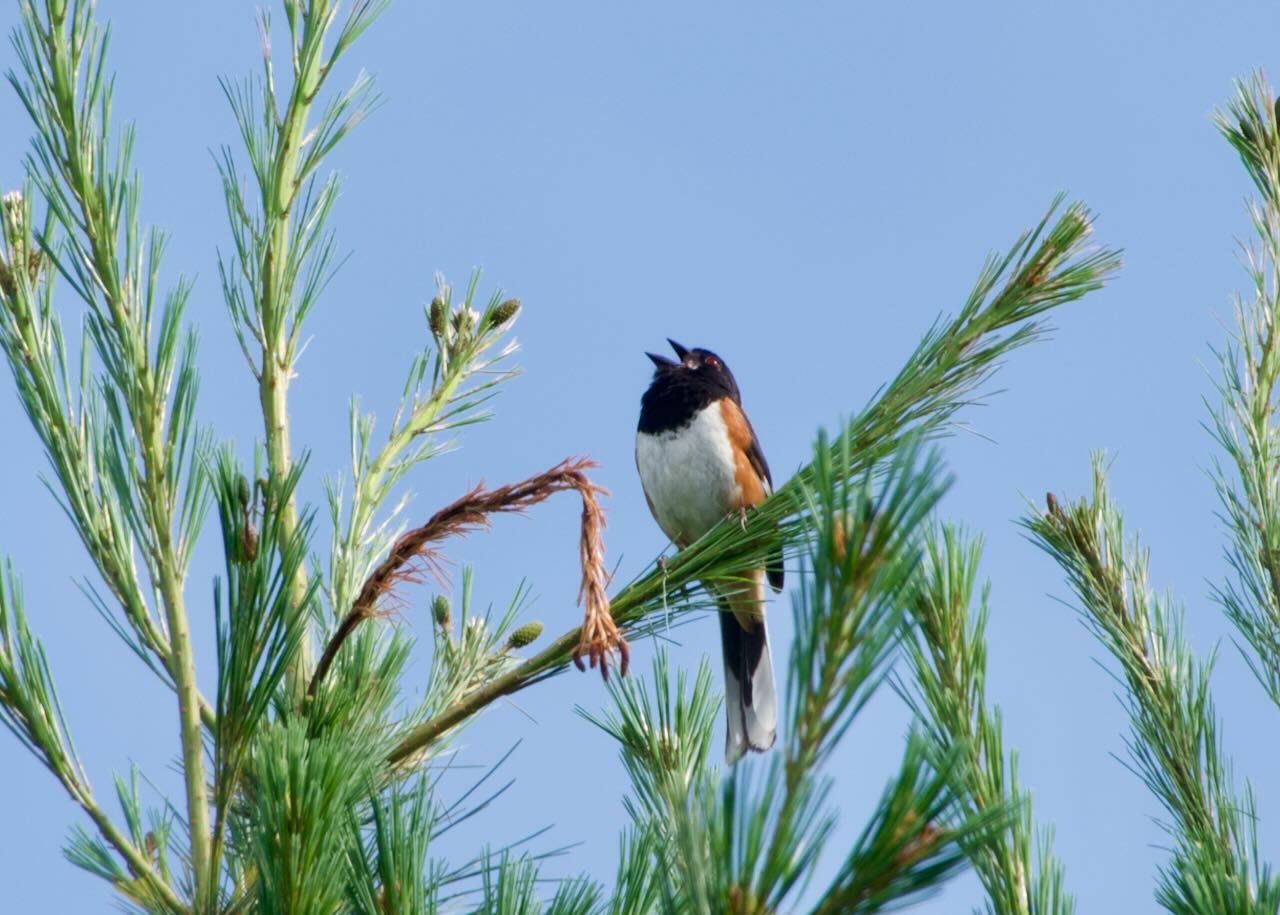
Eastern TowheeOrchard Oriole
This week I started getting a few “needs alert” emails but they are birds being seen up at Polar Bear PP as part of the Bird Atlas Counts and it is a very long way up to Hudson’s Bay. Hopefully, we will see these birds when they start to migrate down in a month. At the end of the week a California Gull was seen at Point Pelee for a brief amount of time but flushed and was not seen again. Gulls are always tough to try and chase. The Lakes will be where we need to hang starting in a few weeks and a few early migrants are likely to start showing up. The downtime has been nice but we are anxious to get back to it and start adding some new birds.
We are officially at the half-way mark of the year! 6 months to go!
On Monday it was very cool out and we just birded locally with no agenda of birds needing to be seen. It was nice to enjoy watching nesting/breeding activity and Jerry managed to get a few nice pics of birds.
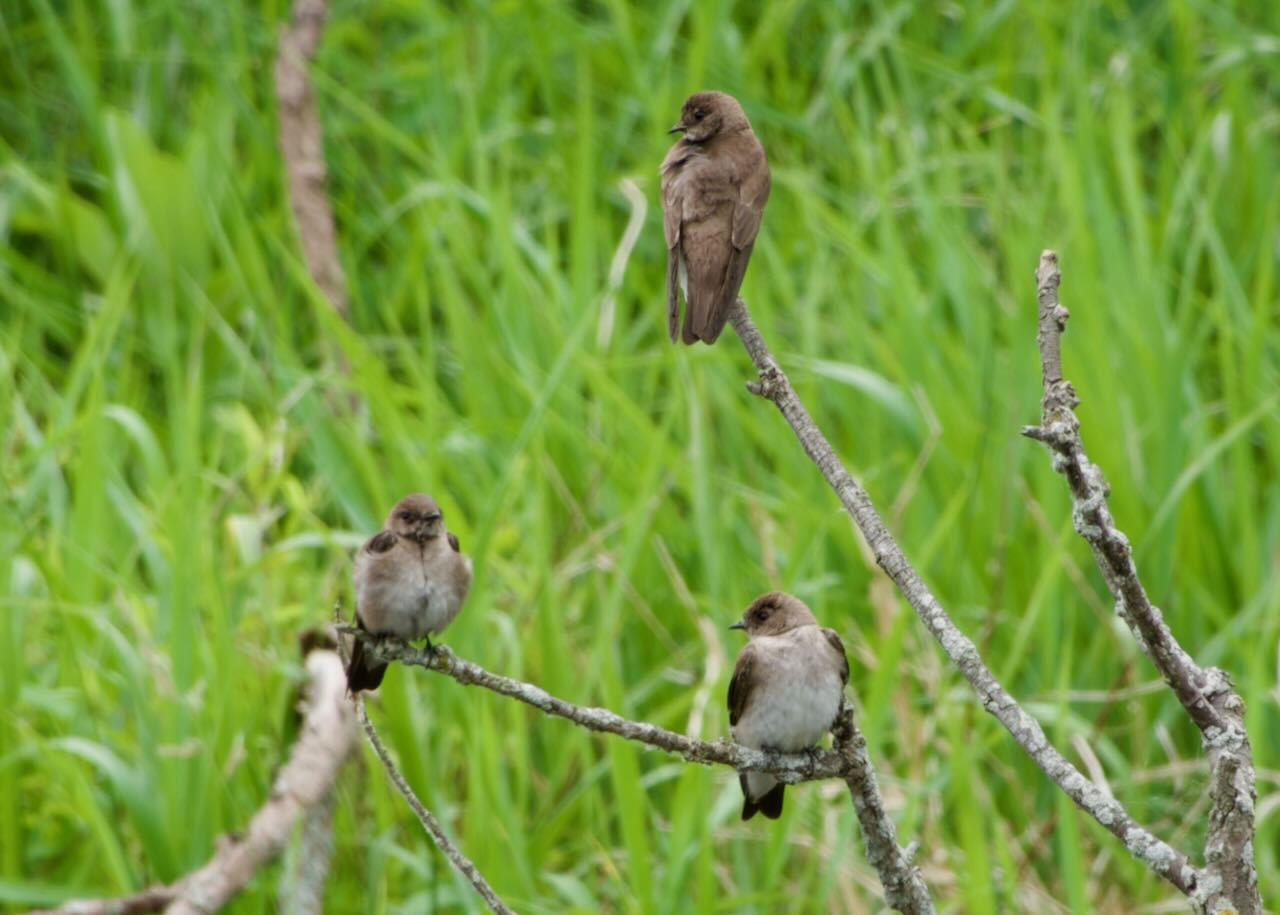
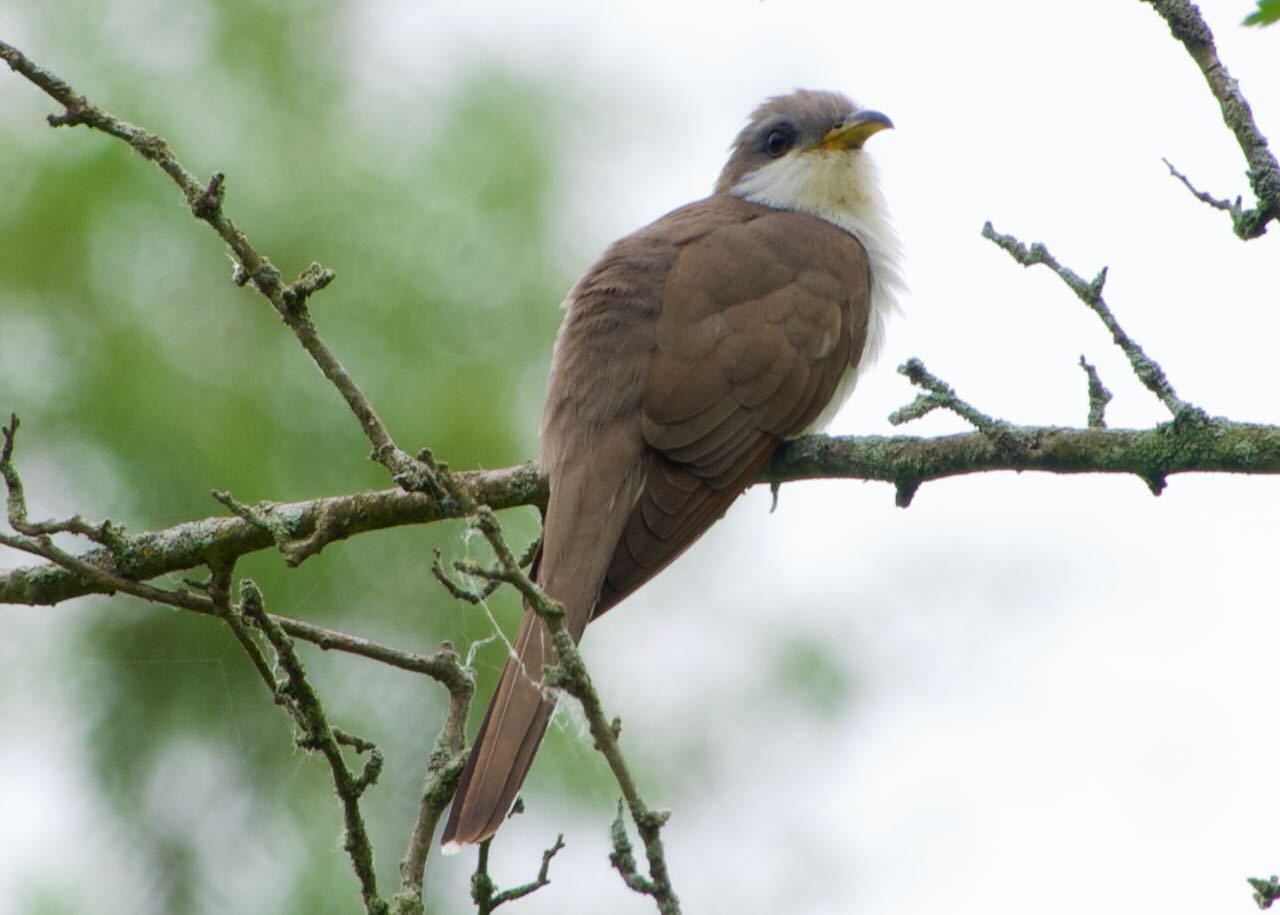
Northern Rough-winged SwallowYellow-billed Cuckoo
Many of the birds were only heard as the leaves are fully out and it is next to impossible to see the bird that was singing. When we first started seriously birding in 2013 we did not know bird songs or calls and we would see ebird reports for a birding spot and go to that spot and only see a tiny number of the birds that good birders saw. We kept thinking, “how do they see all these birds?” We finally realized that many of the reports were “heard only” reports and that good birders knew bird songs and didn’t need to see the bird to know it was there. We tried to learn, Jerry was more successful than I was. The sound all jumbled together for me and I could not tell one bird song from the next in the early years. We had some discs that came with our book and tried with that again with limited success. I slowly learned the common bird songs and managed to remember a few of the common warbler species.
The Merlin Sound ID App launched in 2021 changed everything. It is not 100% accurate, it can make mistakes BUT it can hear bird song and pretty reliably suggest to you what bird is making that sound. You have to use Merlin properly. When it alerts us to a bird song we stop and listen until we hear the song from the bird, then we keep listening, in the beginning we then took the time to find the bird to confirm that it was indeed the bird Merlin had suggested or we would confirm the song using another App Ibird Pro. Only then would the bird be added to our ebird list. Now if we recognize the song and know that it is the song we will add the bird to our list without sight confirmation, but only if we are absolutely confident that we know the bird making the song or call. If Merlin suggests a bird is singing and we do not hear the song or see the bird then it does not go on our list. Over the last few years we have birded with Merlin and stopped to check songs and calls over and over and then I started testing myself by saying what the song was I was hearing before looking at what Merlin reported and slowly I have been adding more and more songs and calls to my knowledge bank. I am impressed with how fast and far I have come with it particularly this year with warbler songs. If used properly, Merlin can help new birders learn the songs and calls a lot faster than discs or tapes ever could. The end result will be better birders IF birders use it as a learning tool. The problem is if birders just run Merlin and add everything that Merlin suggests without trying to learn the songs or see the birds, the ebird data base can be compromised and reports go out for rare birds that are clearly wrong. Some education is necessary so that Merlin is used as a helpful tool and not a “birding buddy”.
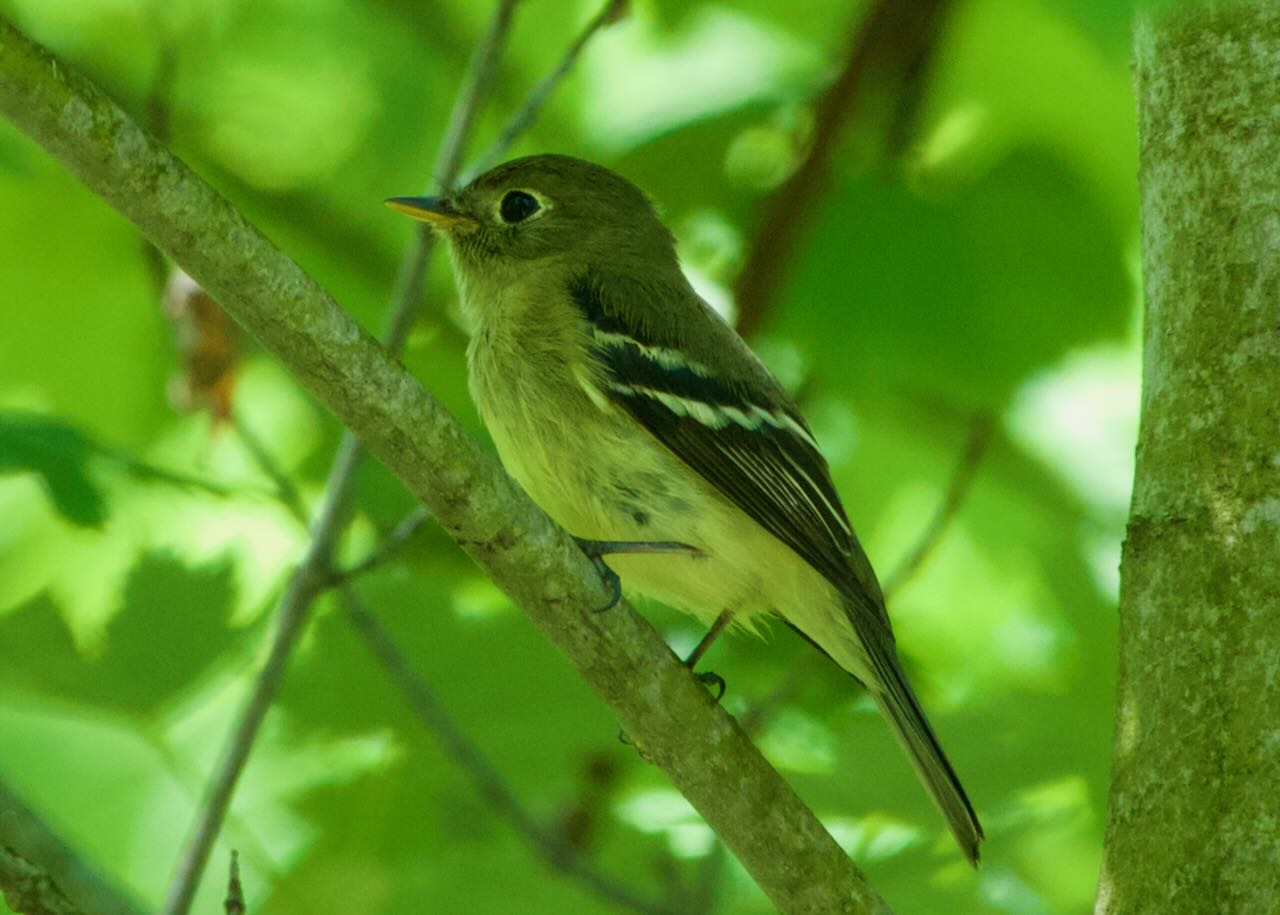
Tuesday we did caregiving again and then on Wednesday we headed down to Erieau and Rondeau. There was a Laughing Gull that hung out for three days last week I was hoping might return but that was not the case as we checked all the local fields and marina for gulls. We walked through some of the trails at Rondeau and had wonderful views of a Yellow-bellied Flycatcher allowing Jerry to get our first photos of this bird.
Yellow-bellied Flycatcher
On the way home we stopped at Komoka PP to see if Jerry could get better pictures of the Blue Grosbeak but it was only singing and not co-operating for photos.
My needs alert emails and Discord continued to be quiet all week with no rarities showing up that I needed or any other birds needed on the list except for a Brant still hanging in Ottawa. I found myself with a bit of “withdrawal” from the constant thoughts of birding. No adrenaline rushes from the chase to find a bird. I had time to have friends over for dinner, to plant some pots with flowers and to set up our little garden ponds complete with goldfish. There has to be more to life than birding LOL. I also managed to get back to the planning for the Canada Big Year and put together a framework of where we will be going and when. The coming heatwave will allow me to complete that planning I hope.
The strategy now is to still bird but bird areas/places that might perhaps yield a rarity or a bird that did not migrate that we need. We will also be concentrating on better pictures of birds we have already seen or trying to “see” birds that we have listed as “heard only”. There are a couple of birds we can try to get on their breeding grounds. Day trips every few days will be the norm for the next few weeks.
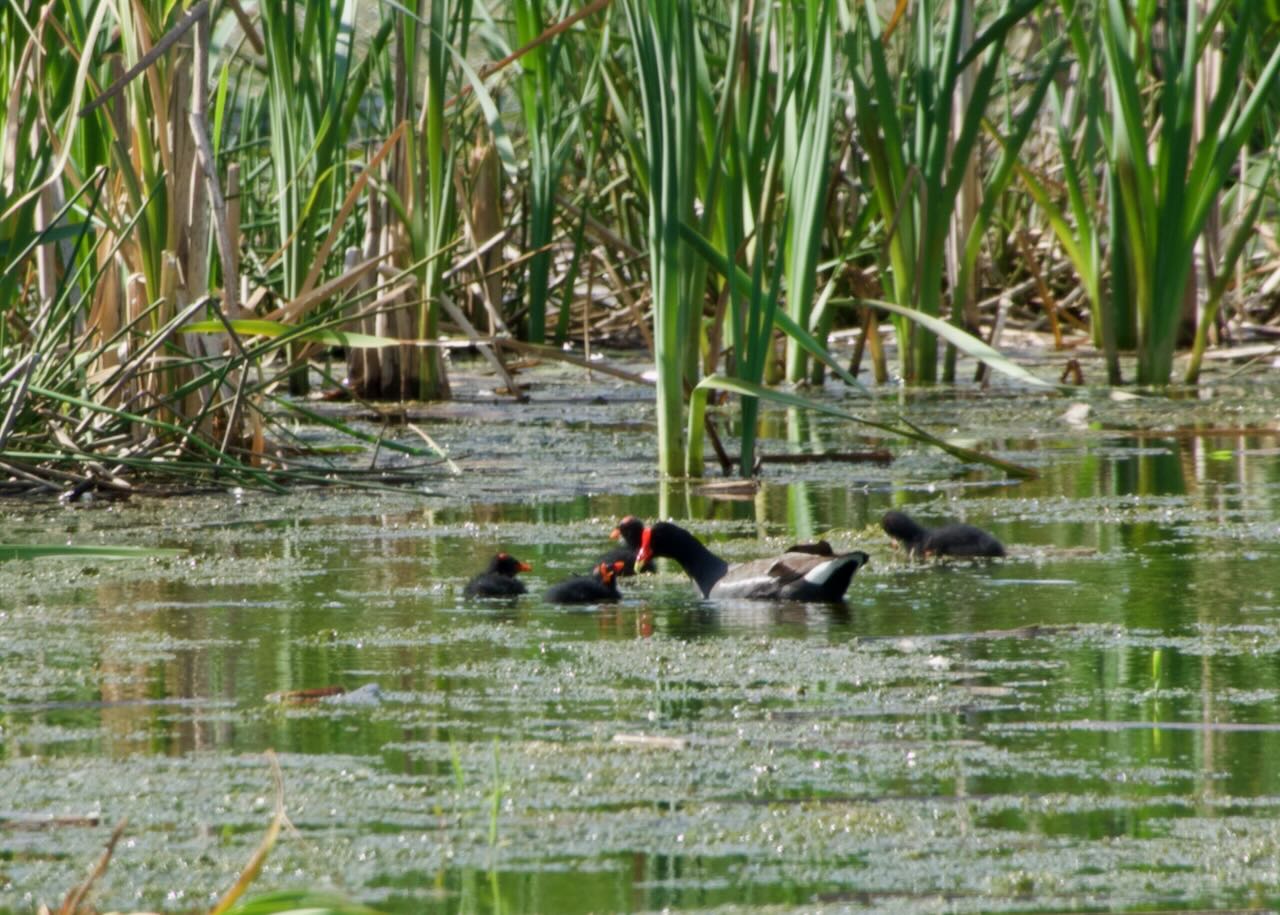
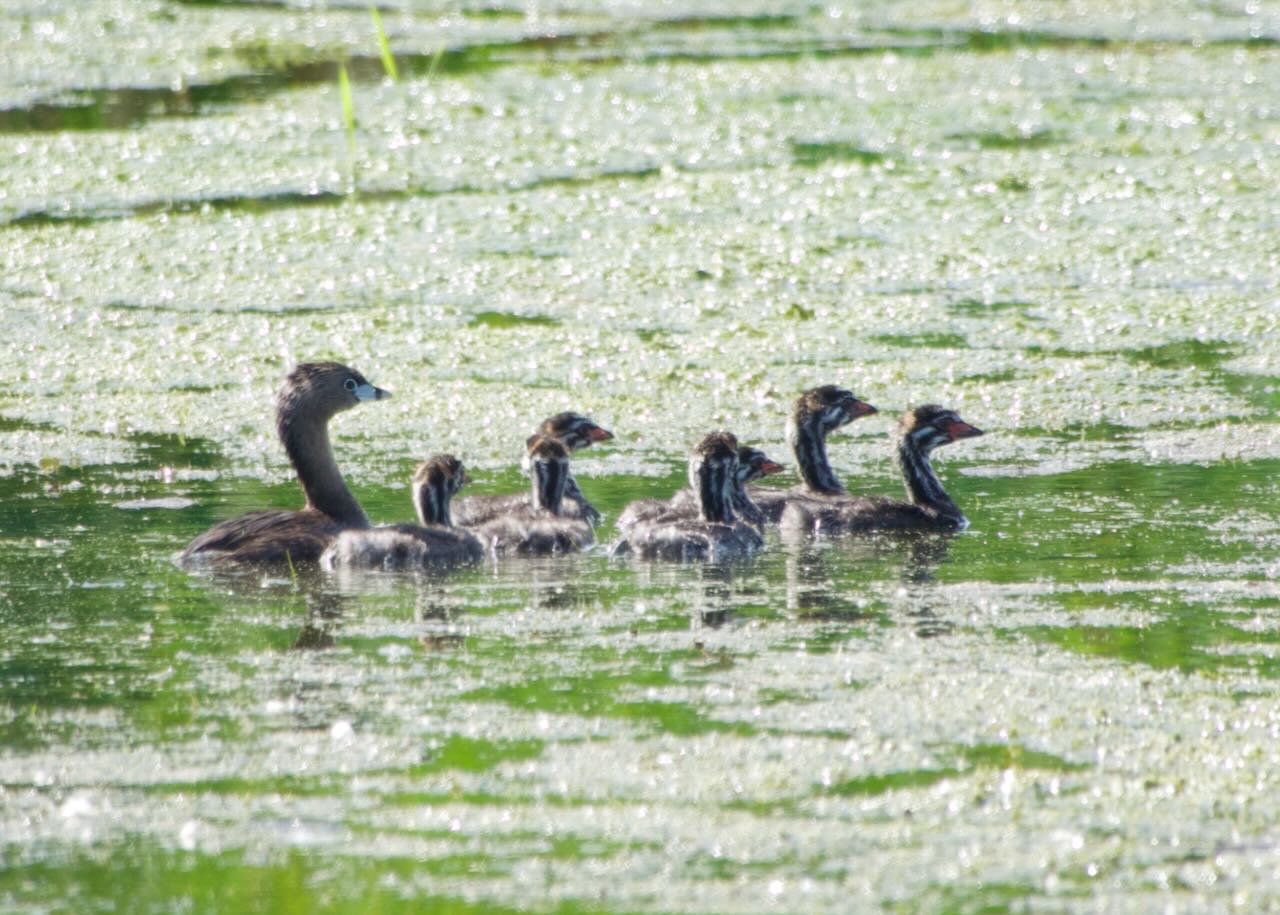
On Friday we made a quick stop at the Glen Morris Pond on our way home from Hamilton and there were chicks swimming about! Seven Pied-billed Grebe chicks with an adult and then ten Common Gallinule chicks with two adults…perhaps two family groups? Soooo cute!
Common Gallinule Chicks fed by AdultPied-billed Grebe Chicks with Adult
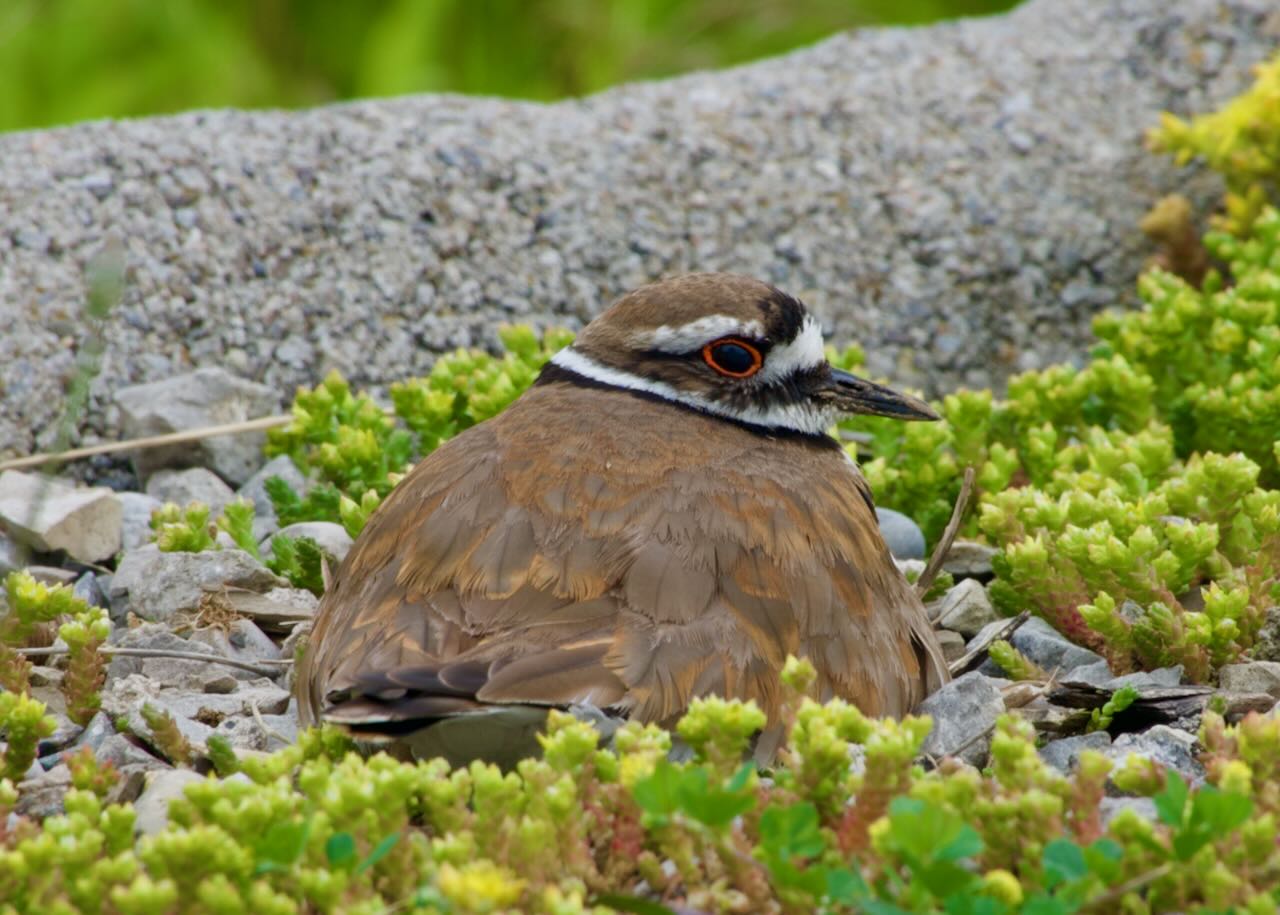
We had Killdeers nest beside our driveway in past years but the last 2 they have chosen other spots. This year they were back and picked the gravel at the side of our driveway. She laid 4 eggs and started sitting on them May 24. The adults have been out there through the storms, winds and sun since then with no protection, calmly switching with each other every few hours. The incubation is between 22-28 days so we started paying close attention on June 14. We have been lucky enough to witness the hatching in previous years so hope to catch it again this year. No hatching yet…hopefully next week I’ll have Killdeer baby pics!
Killdeer on nest.
On Sunday we took a short walk at a local birding spot hoping to see a Black-billed Cuckoo. We have it as a heard only bird at the moment but we always see one, if not in our backyard, at least somewhere in Brant County. We joked that as we were over there looking for one another was probably sitting in our backyard. I did hear one in the evening out further in the forest behind us so hopefully we see one in the next few days.
This is the first week of the year that we have not added a new bird! There will likely be a few more weeks like this ahead. I will endeavour to keep you entertained with all things birding…
Week 24 No new birds added Still #1 ebirders in Ontario 309 species seen J&E
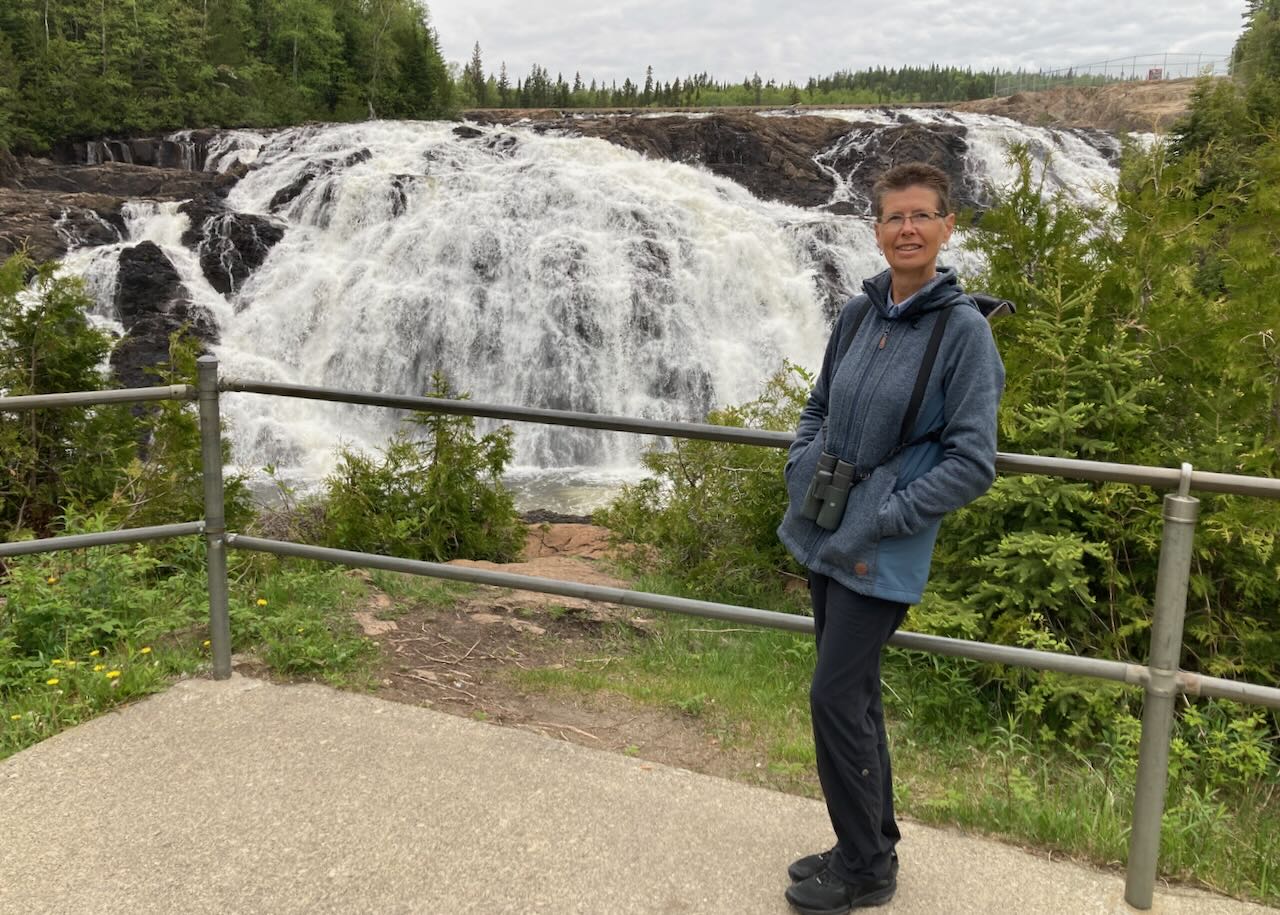
We left early Saturday and drove to Wawa with a couple of birding stops along the way. In Thessalon we looked for Eurasian Tree Sparrows that we had tried for twice in the winter. Its been a few weeks since they were reported and we found nothing at the two known spots. Wawa is a fav spot to stop on our way west and the Mystic Isle Motel does not disappoint. We birded the Wawa sewage lagoons and Magpie Falls.
Mystic Isle MotelMagpie Falls
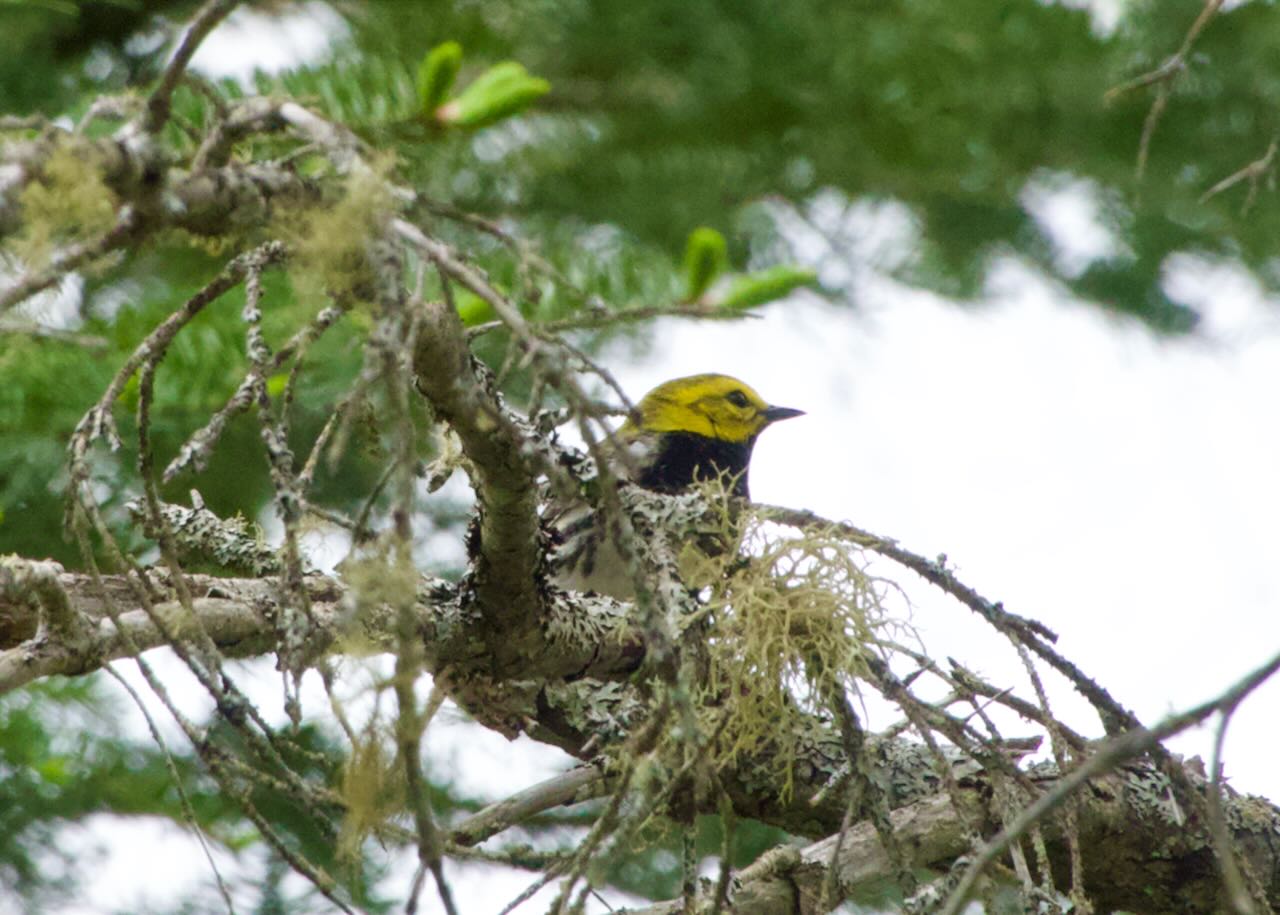
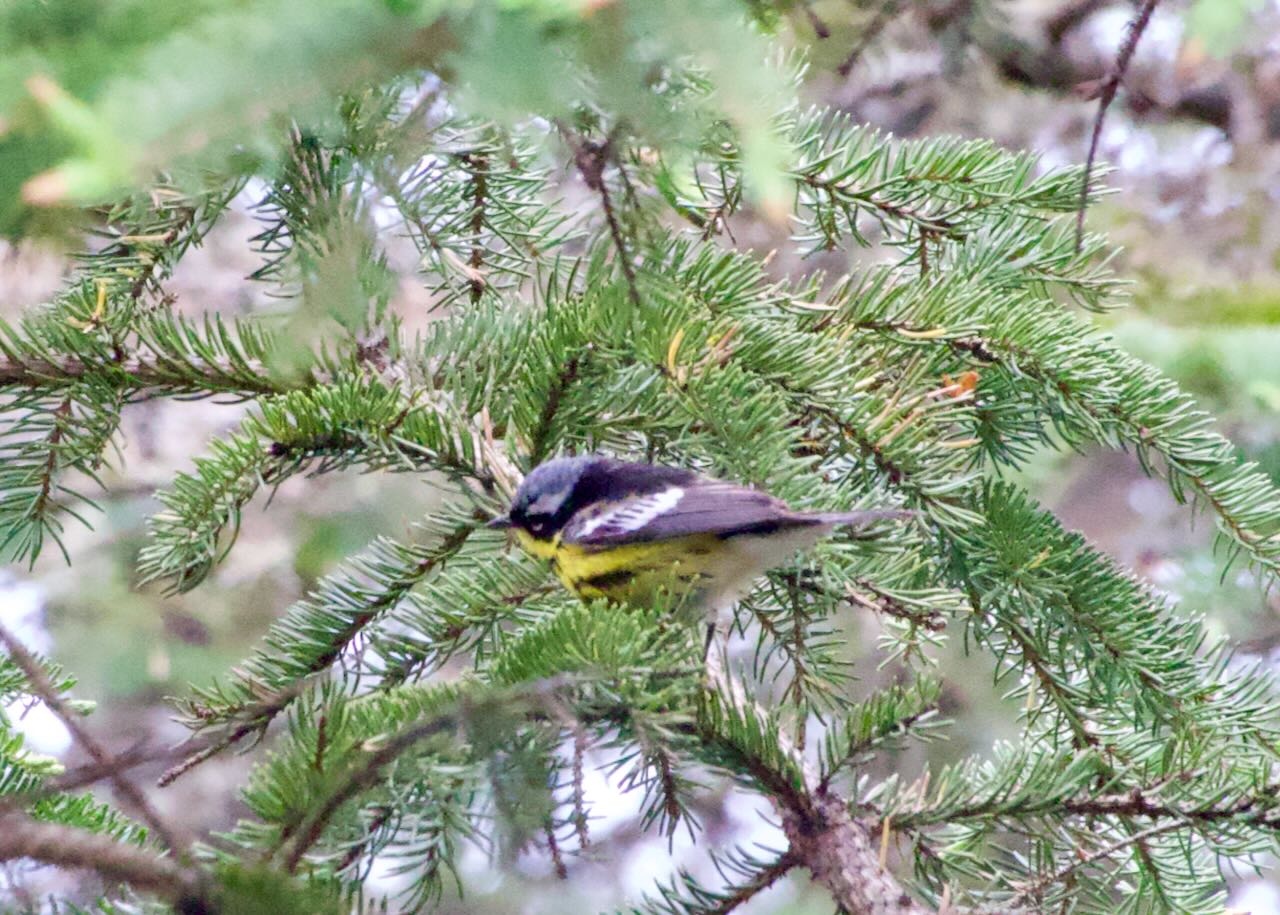
At the Falls the woods were full of warblers and we spent some time getting close eye level views of Black-throated Green, Blackburnian, Magnolia, Northern Parula and Redstarts. We also heard Northern Waterthrush, Tennessee and Black-and-white Warblers. It was lovely to have these views that we missed at Pelee this year.
Black-throated Green WarblerMagnolia Warbler
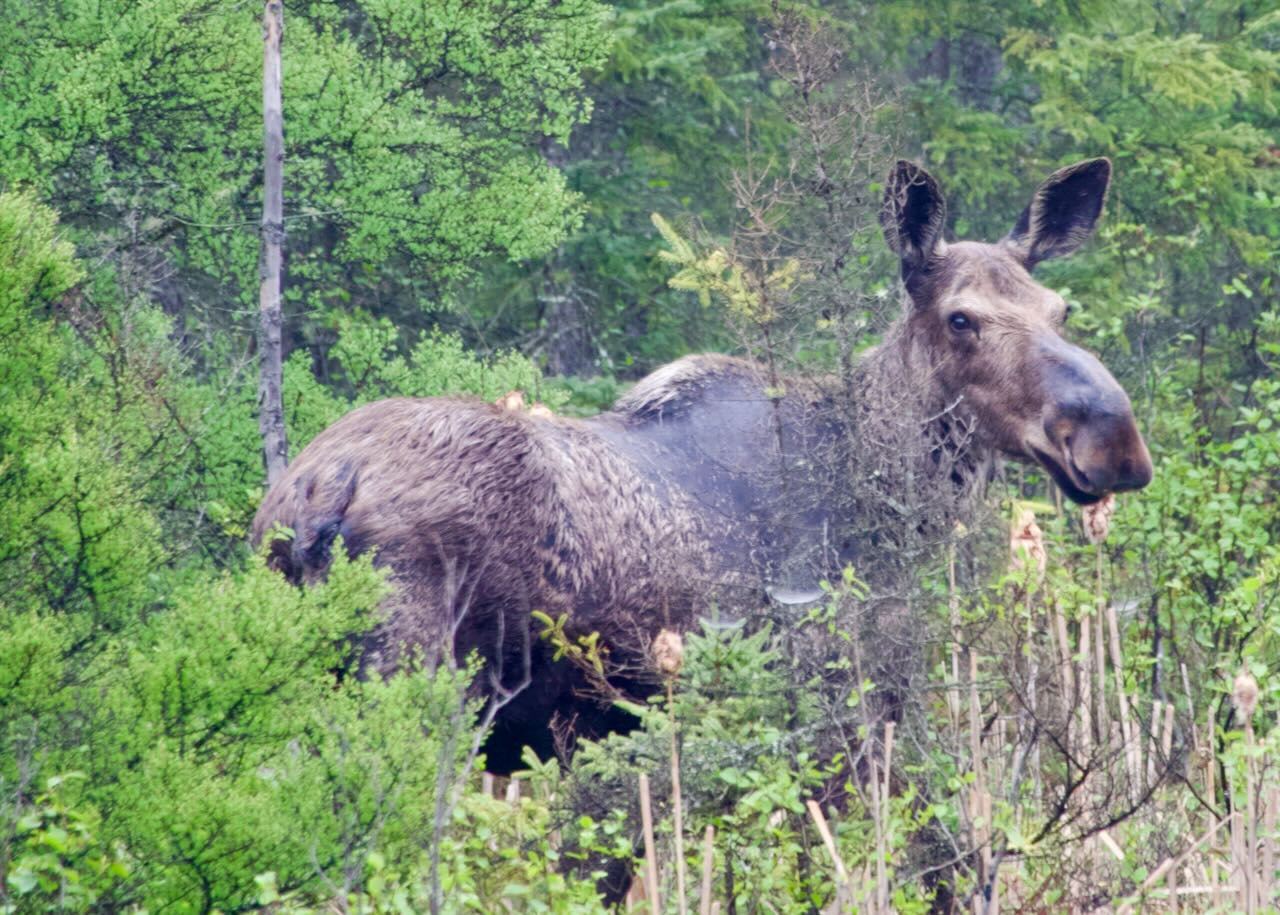
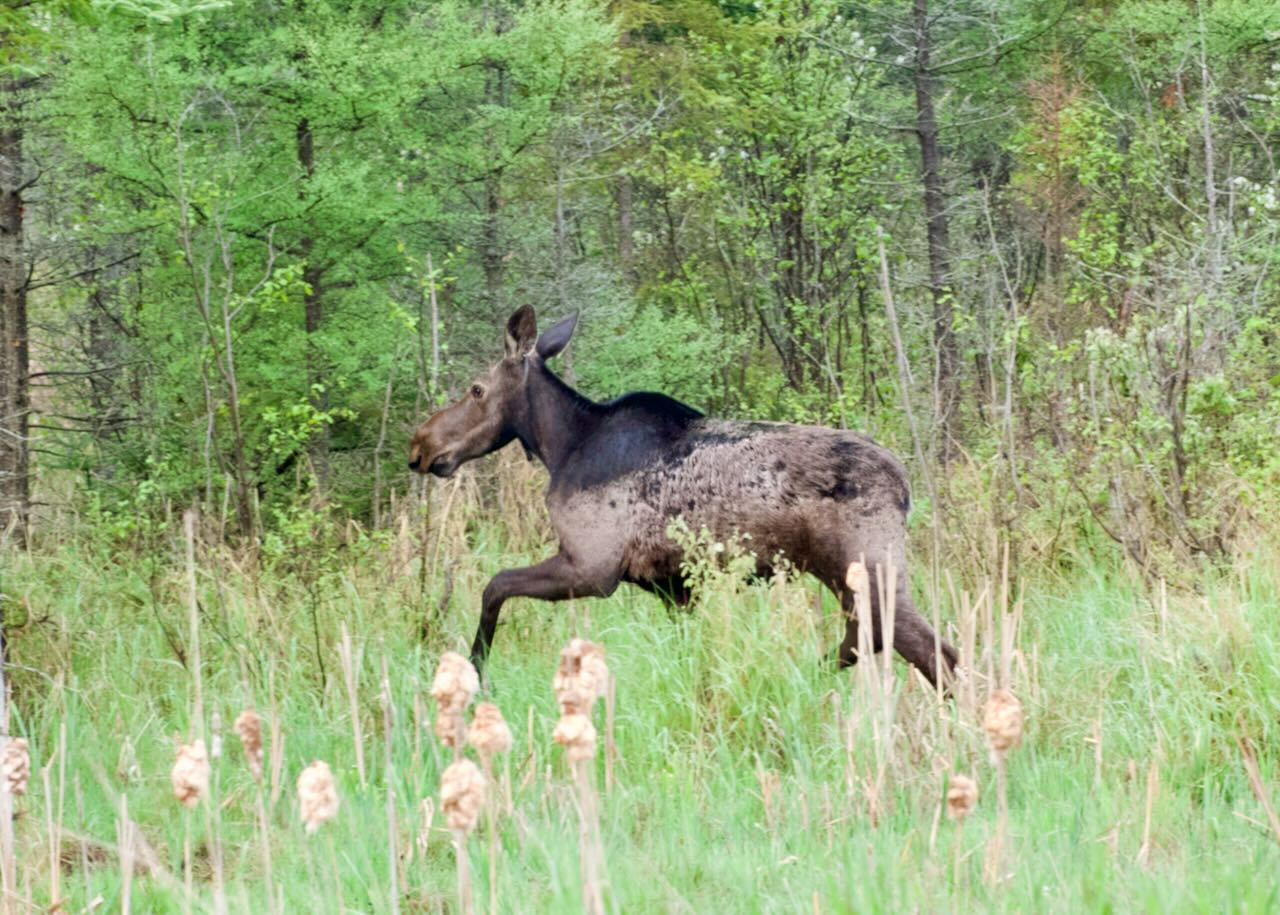
Sunday we only drove 5 hrs to Thunder Bay but birded a number of spots along the way hoping to turn up a rarity. We started the day in fog as seems to happen at this time of year along Lake Superior and as we hit some clearer areas we managed to see 1 moose and then further along 2 more moose and then a beautiful Cross fox (a melanistic red fox with black stripes across its shoulders and back).
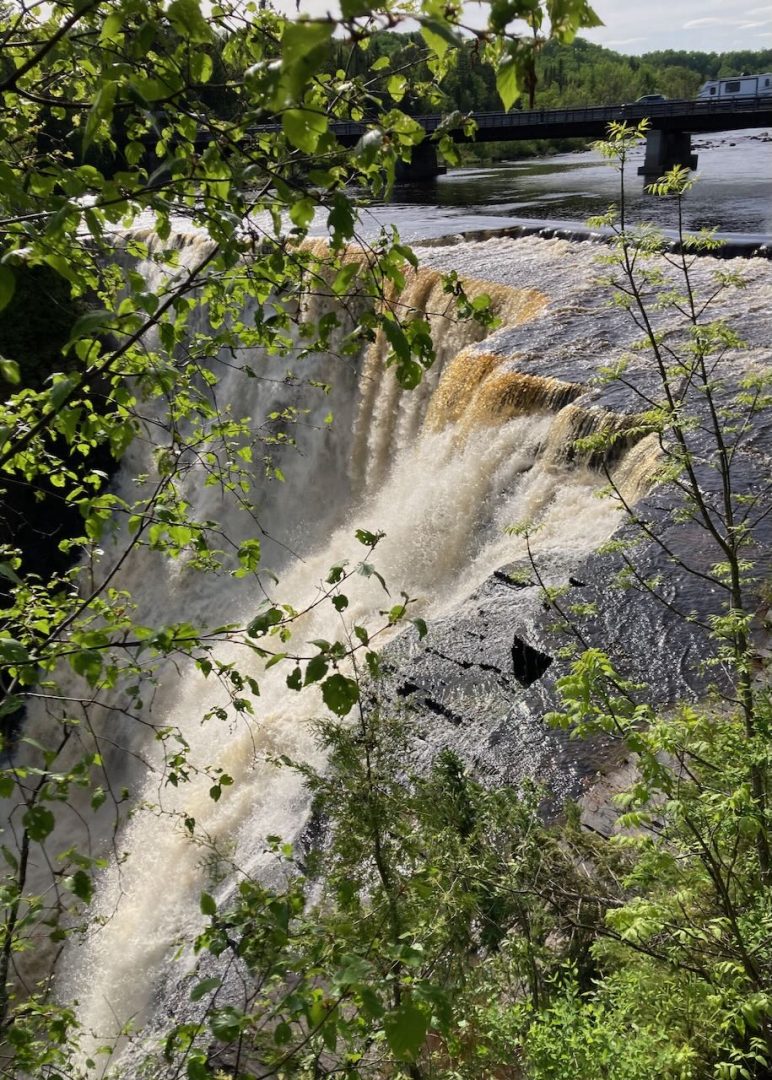
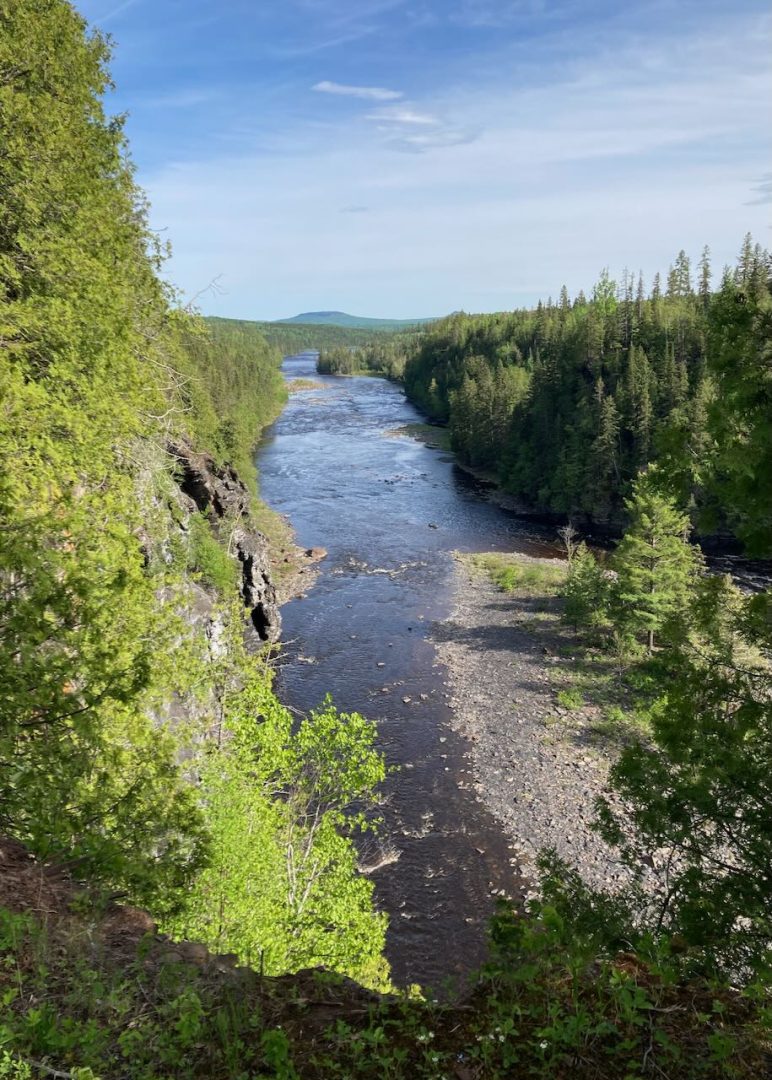
A lucky start to the day, would it result in being lucky with the birds? I spent the time scanning the sides of the road ever hopeful for an Owl. We stopped at Terrace Bay, Rossport, Hurkett Dock and then we visited the McKellar island Bird Observatory in Thunder Bay and stopped in at Chippewa Park. The birding was hit and miss and we found nothing to add to our list. We visited Kakabeka Falls in the evening but didn’t bird the trails.
Kakabeka Falls
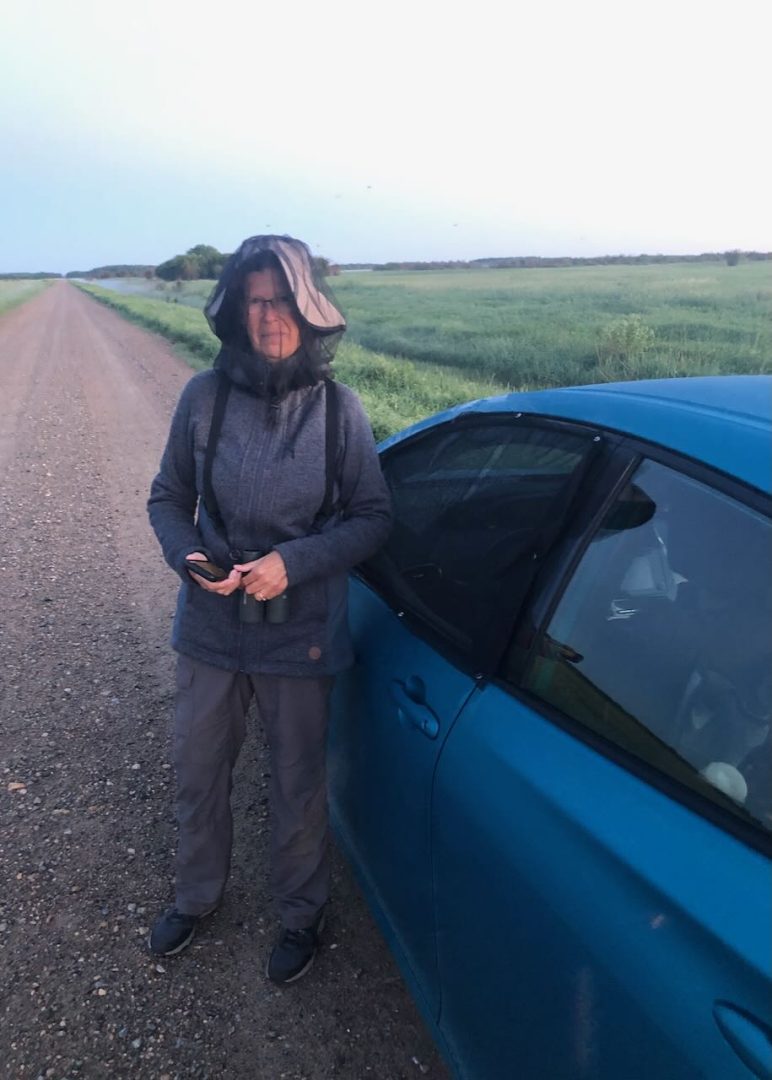
Monday we left early and because of gaining an hour we were in Rainy River by 10am. Along the way I spotted a Black Bear but it ran into the bush before we could get a photo. We stopped first at Spruce Island PP, the area where Connecticut Warblers nest and started a slow drive stopping often to hear warblers singing. The selection was great but most birds were only heard because of the thick forest. We used our car window screens that I made in 2022 for our car so we could listen but keep the hundreds of mosquitoes at bay.
Window Screens attach with magnets!
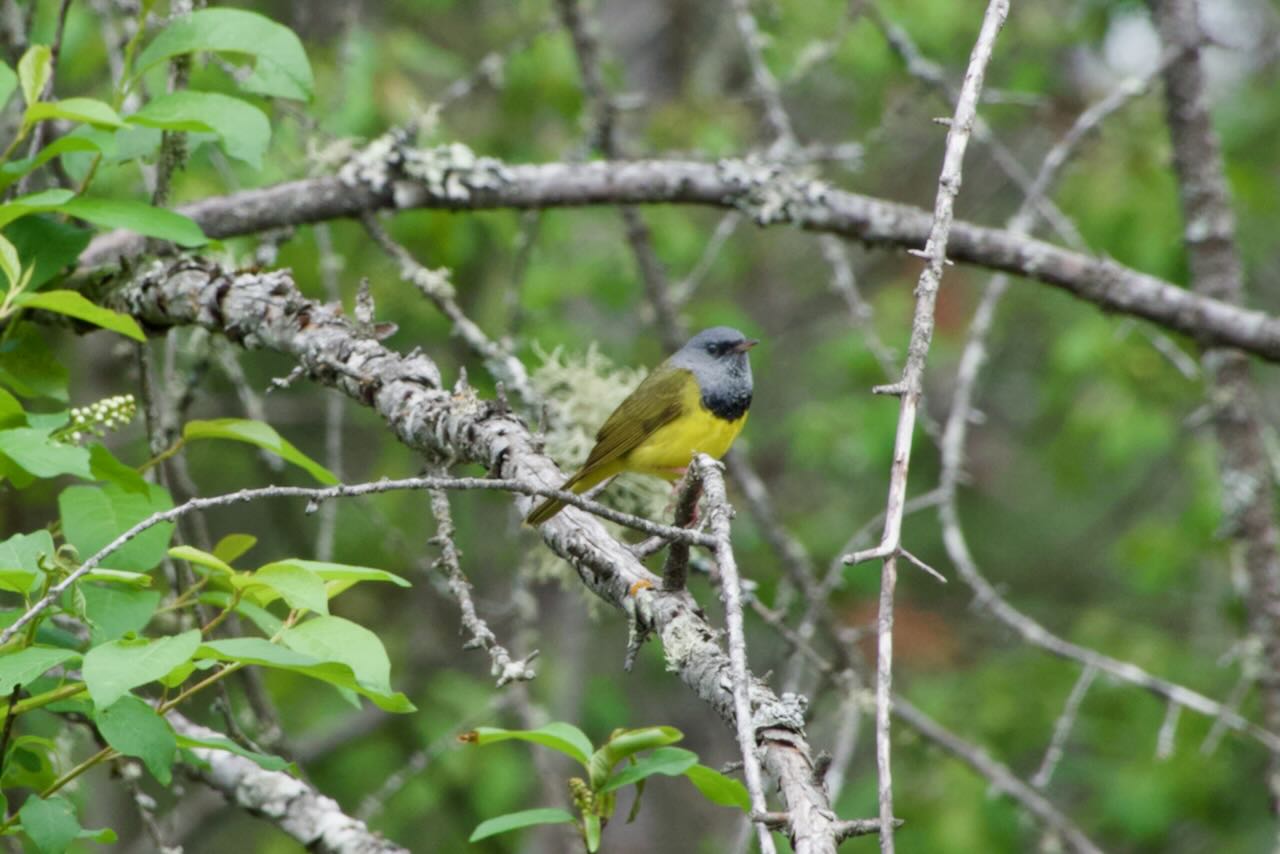
We could hear a Mourning Warbler close to the road and got out to find it singing gustily on an open branch on the edge of the road. Jerry was happy to take many pictures and I managed some video too. It was lovely to have such fantastic views of this often secretive bird.
Mourning Warbler
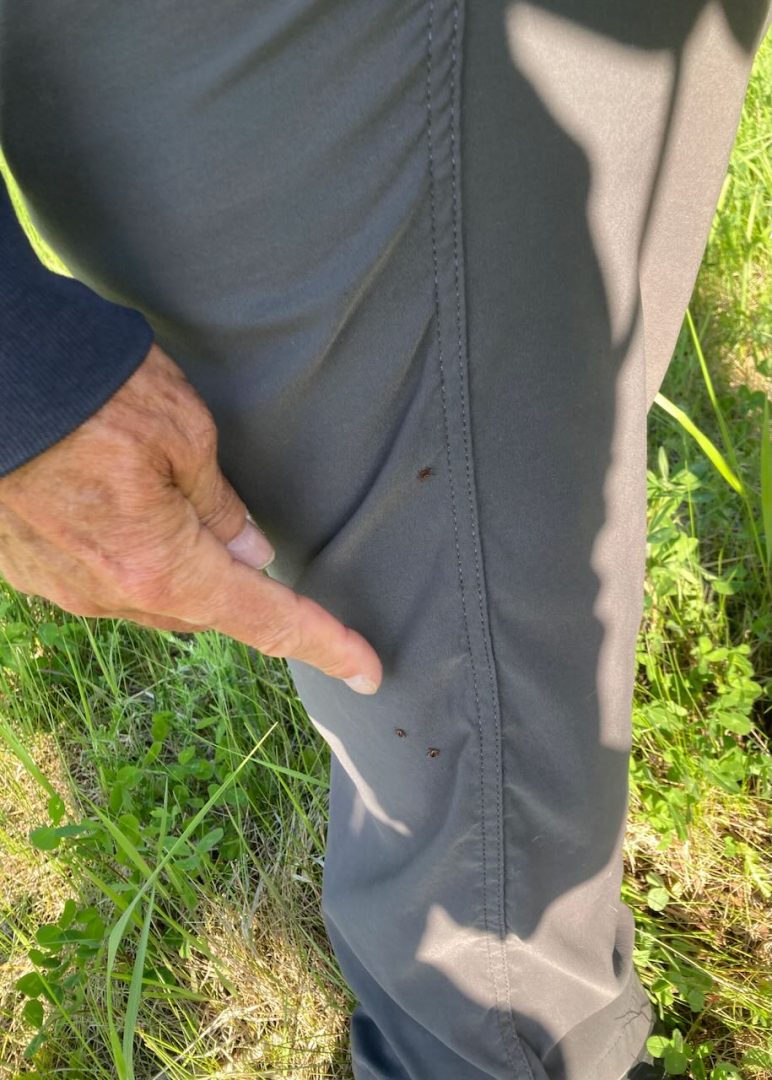
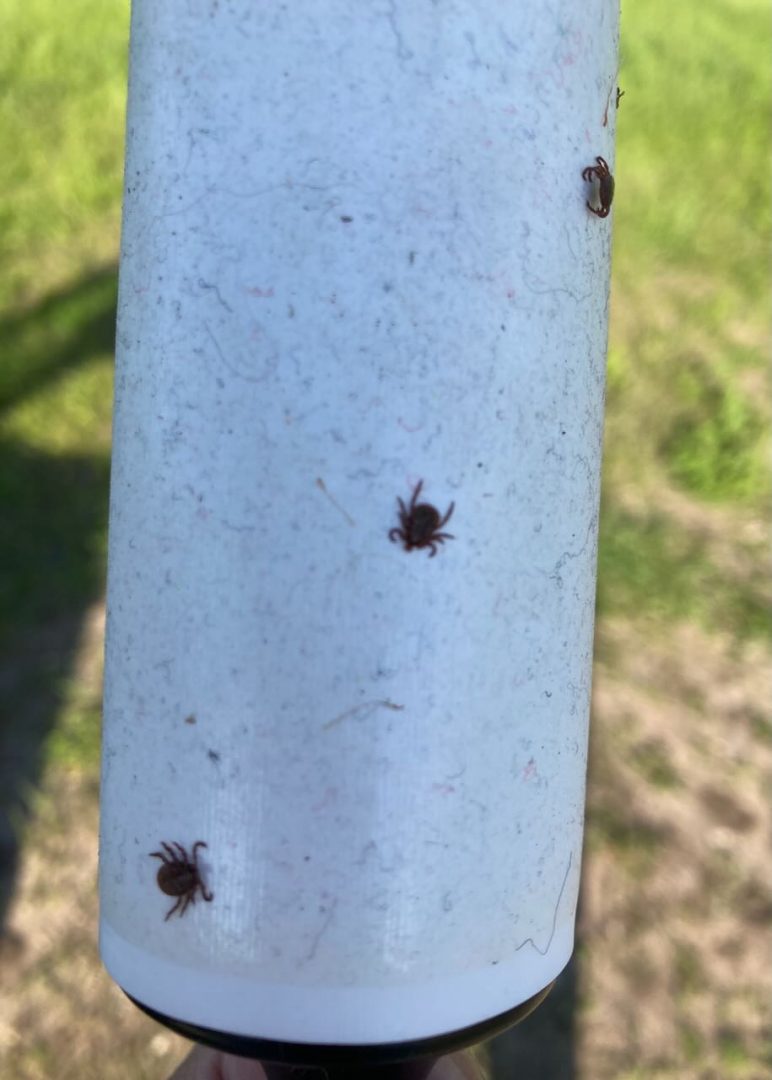
A bit further along we finally heard a Connecticut Warbler. We have yet to see this warbler and it remains on our life list as a heard only bird. We are hoping this trip that will change. Despite walking the road and hanging around listening to it sing we never got it to come closer or managed to see it. We moved on anxious to add more birds to our list and checked out fields where Marbled Godwits often rest but we did not see any. Then we headed to Wilson Creek Road, the known spot for Yellow Rail, Sedge Wrens and LeConte’s Sparrows. We have Yellow Rail already but will try for an early morning to get a recording for our blog and we added Sedge Wren and LeConte’s quite quickly. No photo of the Sparrow as they are another species that is notoriously skulky. We took an afternoon break, had an early dinner and headed back out in the evening to check out the sewage lagoons. I forgot about spraying for ticks and as we walked we could see them jumping on our pants. I must have pulled off 10-20 from myself and Jerry had just as many. We used our lint roller when we got back to the car and it worked quite well. For the next 3 hours we were pulling ticks off of ourselves, my neck, Jerry’s legs, our clothing all while we continued to bird. I cannot forget to spray before we get near any grass out here!
Wood (dog) TicksLint Rollers are awesome for getting them off your clothes!
To end the evening we did a dusk watch again on Wilson Creek Road hoping to hear an Eastern Whip-poor-will. As the sun set we were treated to calls and songs from American Bittern, American Woodcock, the wrens and sparrows. We also heard the hundreds of mosquitoes at our window screens trying desperately to get to us. A few made it in but for the most part it was enjoyable to sit and listen without the whine and bites from mosquitoes. And no I was not drunk but couldn’t get the the right angle for my phone LOL – A videographer I am not!
Just as it got dark we finally heard a far off Whip. We drove down the road and made it to a spot where the song was very loud. We listened and enjoyed it for many minutes before starting the drive home.
I was driving on a narrow gravel road, using high beams and we saw a couple of Whips flying up and around the roads. I was watching for animals coming out, birds on the road and other traffic and suddenly I noticed a small lump on the road. I braked hard, it went into the air, and the car hit it and I knew it was an Eastern Whip-poor-will! I was devastated. We checked on it but it was dead. I felt horrible. We went from the high of adding 5 birds during the day to the low of being responsible for a bird to die because of me being out there enjoying the birds.
We got back to the hotel past 10pm and needed to shower and de-tick ourselves. No way was I wanting any ticks in our bed! We fell in to a deep sleep at 11:30 and the alarm went off at 4:30 so we could get to the Sharp-tailed Grouse Lek in hope of getting some pictures.
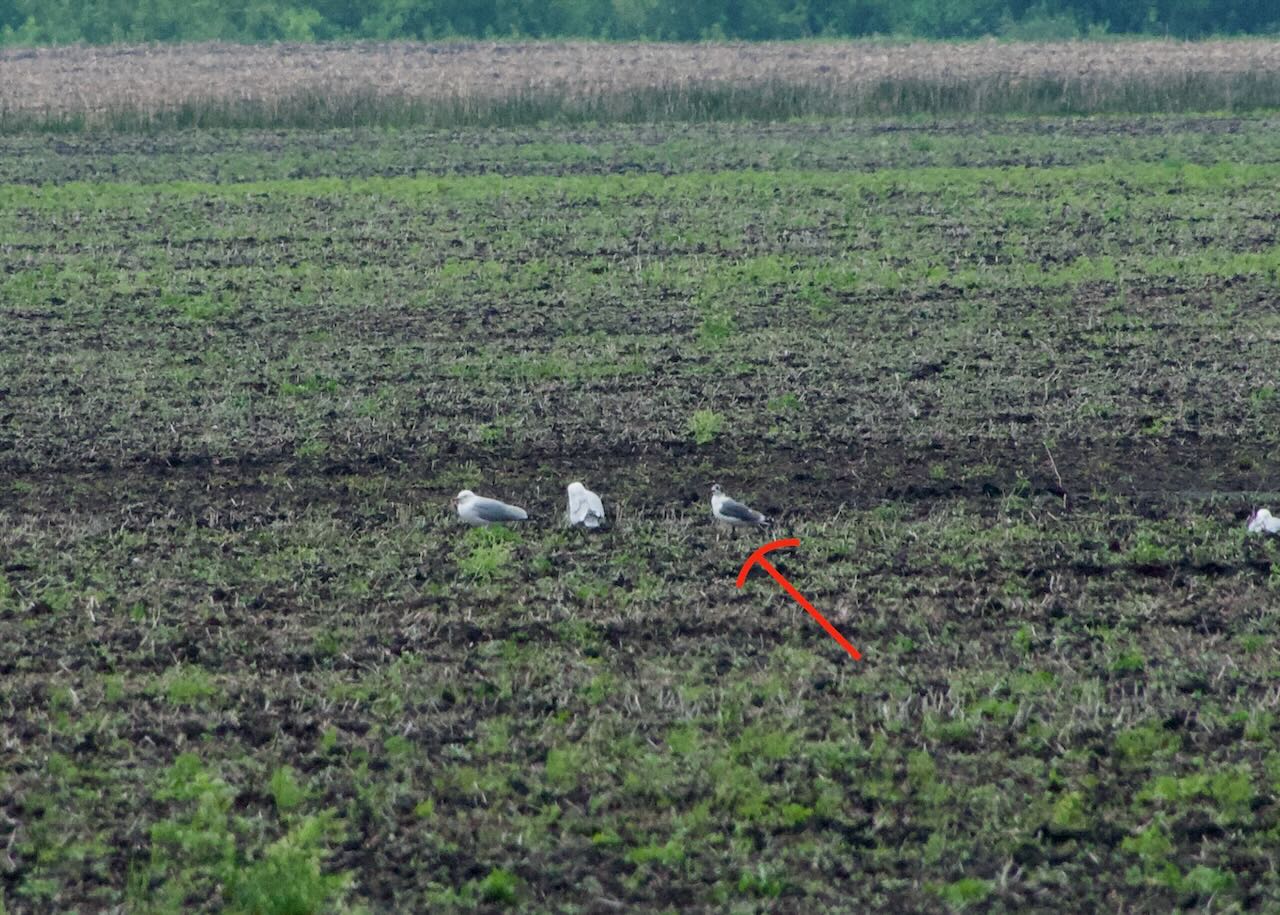
When we arrived at the Lek in the morning there were no Grouse around. Perhaps we were too late as it was light when we left our hotel and we are not sure what time they actually come into the fields. We did see a Western Meadowlark (the only place in Ontario to get this species) and Jerry got some nice photos in the morning light. We then headed up to the Connecticut Warbler spot again but again it was singing but not coming to the road. We are aware that people use pishing and playback to see and get pictures of these birds but we are not prepared to do this especially at breeding time so we will make numerous trips and hope that one day it will appear before us. We had a large bird flush from the trees and fly up the road ahead of us so we moved up the road as well. It landed in a tree quite a ways up and because of the low light (forest on both sides) it was difficult to make out and as soon as we moved the car it flew into the forest. I wondered if it was a Great Gray Owl, it seemed different from a flying hawk but we are not experts and without a pic or better look we had to let it go. It was a day with thunderstorms and rainstorms and so we moved around a bit trying to avoid the areas of rain and still look for Marbled Godwit and then we drove up to an area where you can often find a Franklin’s Gull (another Western species that shows up here). There were a few fields with Gulls but no Franklin’s. With another storm approaching we decided to head back to the hotel but stopped to check one last field. I scanned the gulls looking for the “different” one, one with a black head and smaller and suddenly, there it was in my bins. We quickly got out the scope to confirm that it was a Franklin’s Gull, not an adult but one with a black head coming in. Woohoo! I had a rarity I was hoping to get up here and bird #307. It always feels better when you find the birds yourself. As Jerry took some hurried pics the thunder and lightening started and we just got back in the car when the rain started.
Franklin’s Gull with Ring-billed Gulls
Heavy thunderstorms with tornado warnings continued and we lost power at our hotel for the next 3-4 hours so our birding day ended although Jerry got out for a quick walk later on. I was content to stay warm inside without lights but at least with a book on my phone to read and catch up on this blog.
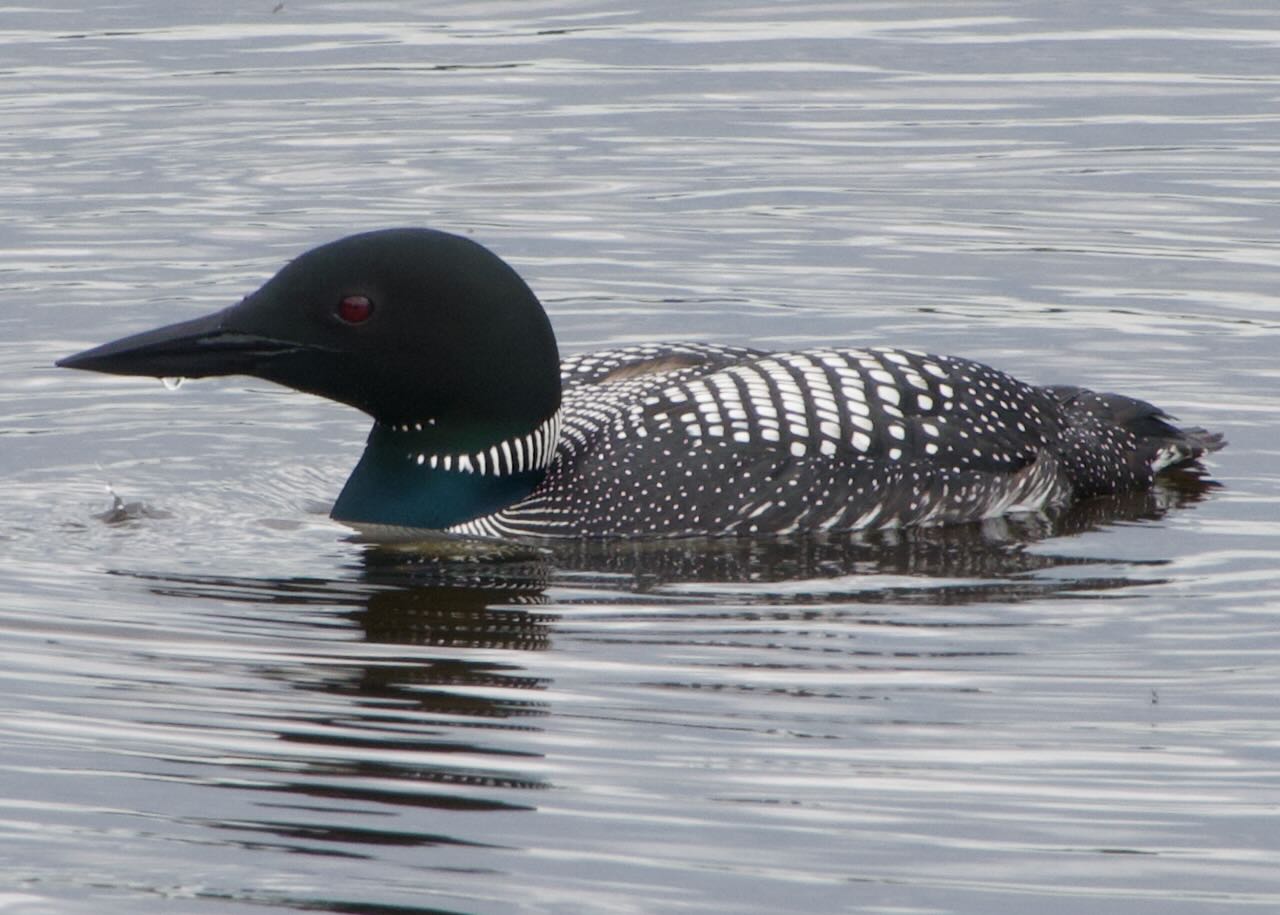
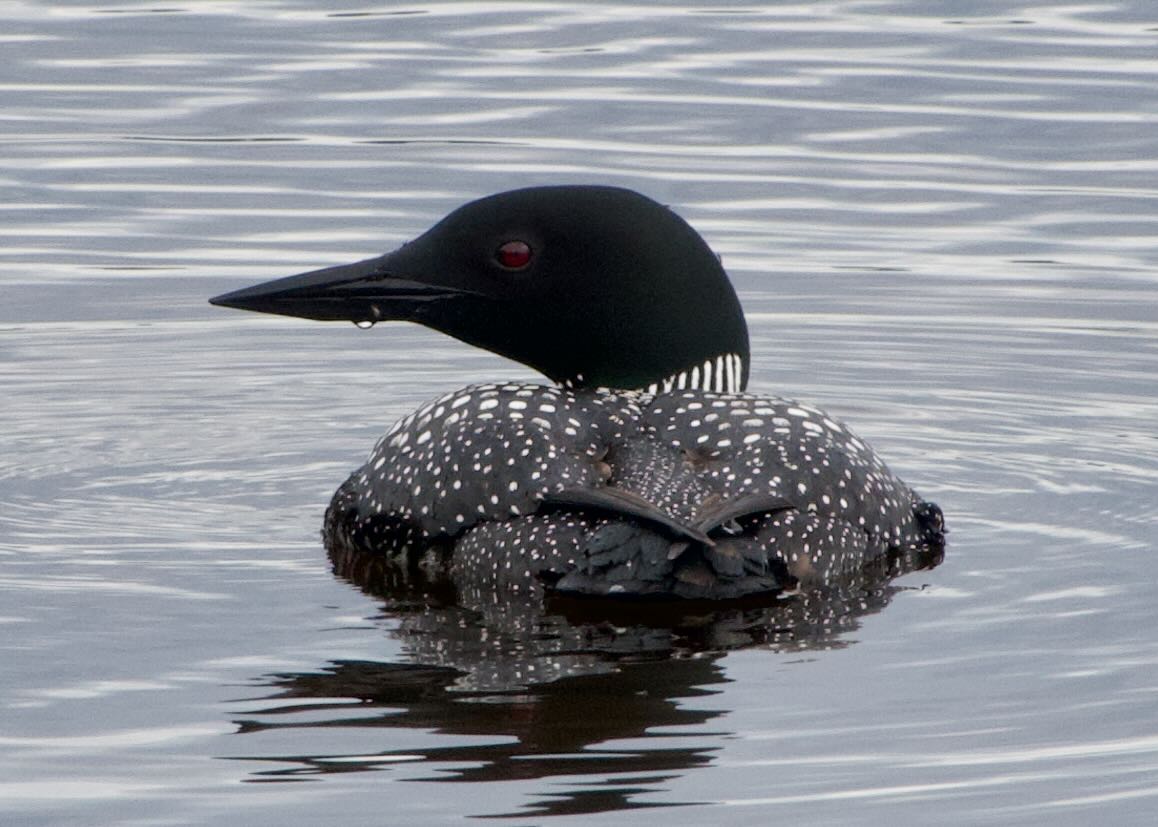
Wednesday we started out as we had previous mornings, looking for Marbled Godwit and having no success. We had decided to head an hour further north so we could finally get a birding checklist in one of the last 2 counties in Ontario we have yet to bird. And we wanted to search for a Great Gray Owl. We drove north scanning the roads and fields for Owls and stopped at Caliper Lake PP. The usual mix of warblers were noted and recorded and we had a checklist for Kenora District leaving only one county, Grey County, left in Ontario in which we have not birded. To clarify not for the year, but for all time. Jerry suggested we head a few minutes further north to Nestor Falls and it was there we had a great encounter with a Common Loon right up against the shore allowing us fantastic pics and video.
Common LoonCommon Loon
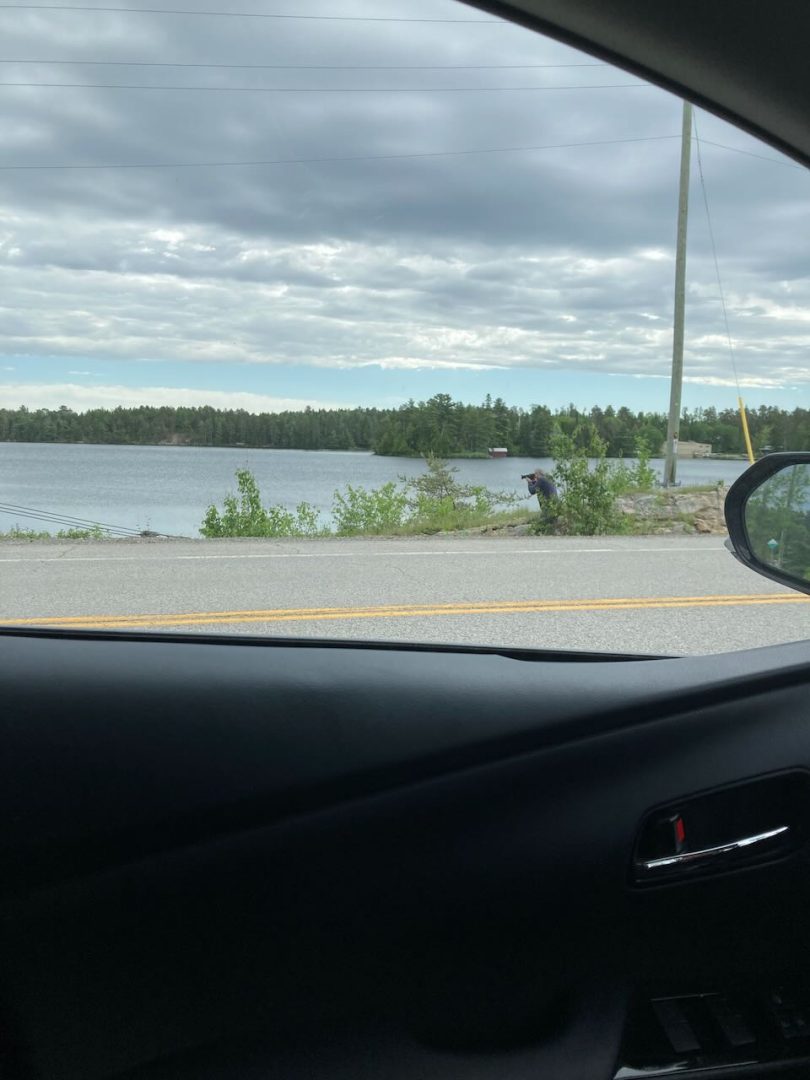
Finding the birds is one thing but then I want Jerry to get a photo of the bird, and not just a record shot but a great photo LOL. I have a list of photos needed and “better photos needed”. I don’t say it often on this blog but I hope I say it to him enough privately, that he is doing an awesome job! He has the more difficult job, of getting out and waiting for the shot, crouching at weird angles, ignoring swarming bugs, trying to follow fast moving birds etc etc. He does not have a high end camera with a huge lens so the fact that he gets the photos he does with a point and shoot is amazing to me. The Big Year was my dream and I am forever grateful that he bought into it and has not complained (much) of the ride we are on.
Jerry sent out for another “better” photo of a Loon!
We headed back and decided to give the Connecticut Warbler another try as it was on our way before trying for pictures of the LeConte’s Sparrow.
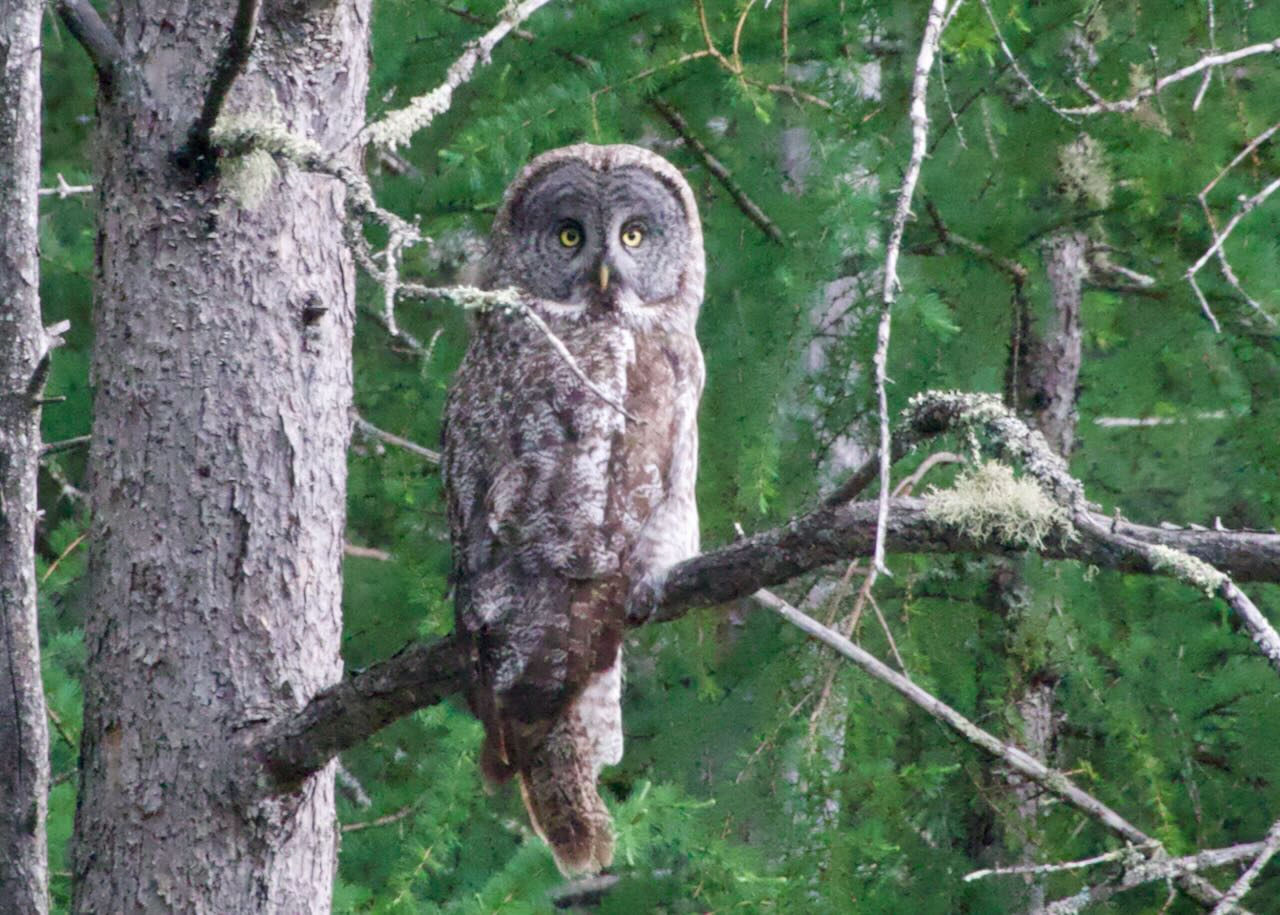
We often talk about the craziness of timing when it comes to birding and what followed was about to be one of those instances – we made the decision to go north for that list, spend the two hours driving north and south again, Jerry suggested going to Nestor Falls, a loon close to shore allowed us great pics and video, we checked for Godwits on our way back to the 619 and we stopped twice and got out of our car to walk listening for warblers and flycatchers hoping to see some to photograph. A thunderstorm was approaching, thunder and lightening could be heard, the wind was picking up and so we returned to our car. Jerry pulled out so I could get in without touching tick infested grass and he drove only a few feet forward at 1:02 pm and a large bird flew out from the left side of the trees and landed in a tree about 40 feet from our car and IT WAS A GREAT GRAY OWL!!!!!!!!!!!!!!!!!!!!!! I could not believe my eyes! My heart was pounding, my hands shaking, we could see it clearly without binoculars but through the windshield. Both of us raised our cameras (thankfully we both had them still on us) and took pics and video and I looked at it through my bins just to enjoy the shear awesomeness of it! It had actually happened! We had our Great Gray Owl! It probably was the bird that flushed yesterday in the same area perhaps nesting nearby. The rain started within seconds of us seeing the owl and within 3 minutes it was a deluge and the Owl hopped deeper into the trees. We sat there stunned and incredibly happy. A three minute encounter we had been waiting 11 years for! The euphoria, the sense of wonder at such a beautiful creature, the thankfulness that we had the opportunity to experience it…there is just something about Owls.
Great Gray Owl through the rain! LIFER #773 for me and bird #308 for the year
Because of the thunderstorms and winds we did not get back out birding again in the evening. We started discussing whether it made sense to stay until Friday or not. The forecast for Thursday was cold, rain and wind again. We had Marbled Godwit left as the bird I still wanted to add and Jerry had not got a photo of LeConte’s or the Connecticut but the chances were slim for both those birds. We decided to do an early morning drive and then decide to stay or leave. A White-winged Dove had been seen in Thunder Bay and I was waiting for an address if the homeowner wanted birders visiting.
Thursday morning we drove our usual route for Godwits but did not see any despite stopping again and scanning every possible field with our bins. It was very windy and cold and the birds for the most part were hunkered down. We opted to head home. I had done some research online for the poster of the White-winged Dove and had sent a message to the homeowner about a possible visit. I heard nothing back as we drove the 5 hours to Thunder Bay where we would have to take a different highway to the Dove. I had an address and we discussed whether we should just show up or not. It was clear the poster did not want people to just show up and I do not feel good about showing up and skulking around someone’s home looking for a bird even if I am on public property. It is a moral dilemma and so we drove on past and headed to Wawa for the night. Hours later the owner contacted me to say the bird was still around so again I probably made a “wrong” decision. It would have added 4 hours or more to a 10 hour driving day and rainstorms might have made finding the bird difficult but still…we probably should have gone for it.
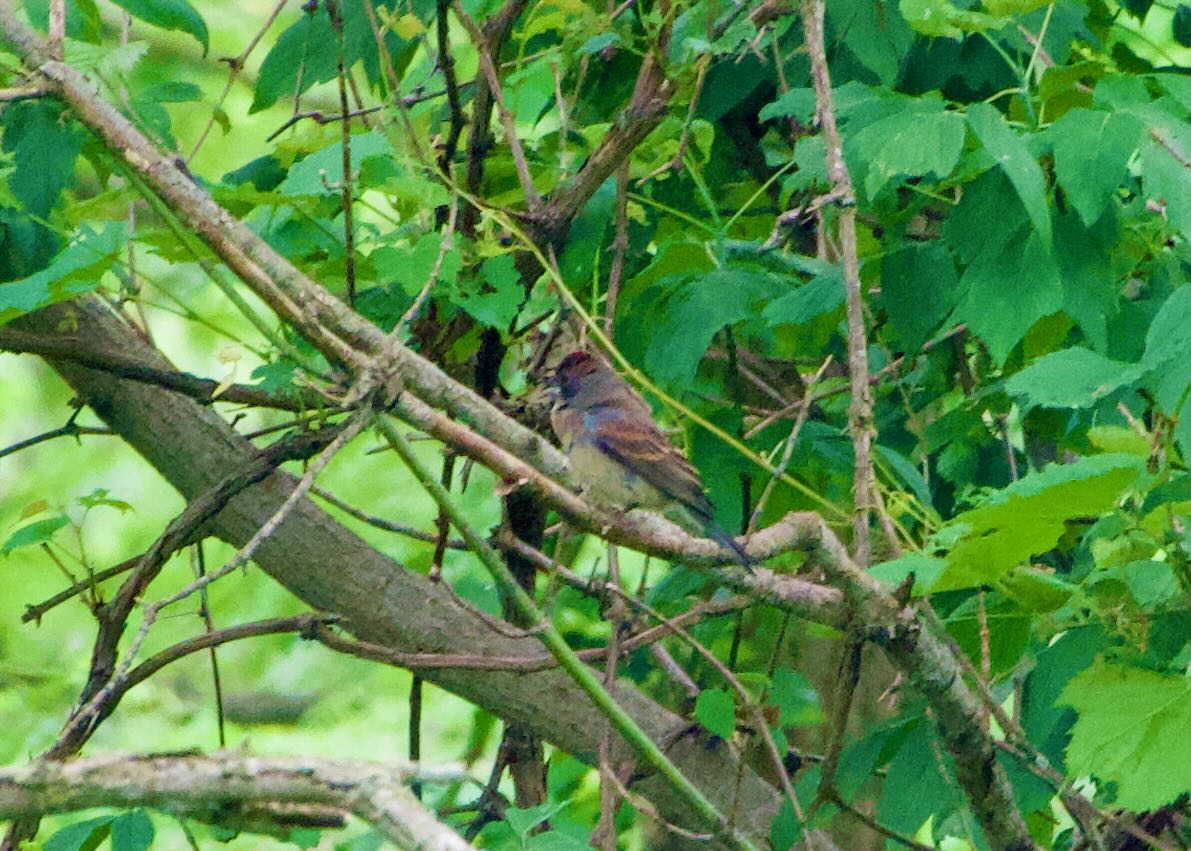
Back last Sunday a Blue Grosbeak had been found in London as we headed north and surprisingly it was still being reported a week later. We decided that on Friday we would head to London first before home and try to add the bird to our list. It was an 11 hour drive through multiple rain storms but thankfully little traffic and we arrived at Komoka PP at 3:54 and had the Blue Grosbeak singing as we got our bins and cameras from the car. So nice when that happens! Bird #309. Seeing it was another story. The bird was in trees in an area behind the parking lot fence with no trail access to the public. We scanned the trees, we looked deep into the trees, we tried to align with where the singing was coming from.
Where is the Blue Grosbeak?
Just after an hour or so of scanning and walking and scanning, I finally had a quick glimpse of the bird as it chased an Indigo Bunting from an area deep in the shadows of the trees. We tracked it a bit and Jerry had a quick glimpse. We continued scanning and looking and over the next hour managed to quickly see it a few more times. Jerry snapped a few photos but was not sure that he had a pic. It was out on a dead tree branch for a bit longer and I had it in my bins but trying to tell others where to look was difficult and Jerry missed that shot. After 2 hours we had to head for home – a very long day and we still had an hour to drive.
When we got home and Jerry looked through his pics he found he had a decent record shot of the Grosbeak! He knew he had a very blurry one but this one was markedly “better” showing the whole bird.
Blue Grosbeak
Saturday and Sunday were filled with caregiving duties, laundry and housekeeping chores. For the first time this year I had no “needs alert” emails on Sunday. I have one sparrow (sensitive species) to see and there is a Laughing Gull I have been trying to catch up with along Lake Erie but other than a rarity, I will probably have to wait until August shorebird migration to add more species. I have 12 birds I expect to see in the fall/winter which will take me into the 320’s. Then it will be whatever rarities show up that determine my final numbers. Still plenty of birding left to do though not at quite the pace it has been.
Week 23 8 more species added, 1 new LIFER, 309 species seen J&E