Background on Pelee: Point Pelee National Park (not the Island) is arguably the best place to bird in Ontario because of the migration of 40 warbler species in the spring and fall and the 400 species of birds that have been seen there. The southern most point of Canada sits at the same latitude as northern California – It’s true, look at a map! It is a mecca for birders in the spring and the Festival of Birds every May is a rite of passage for any birder to experience at least once. We have been every year since 2013 but there are birders who have been going for 50+ years! The stories they can tell of the sheer numbers of birds back in the day. Pelee is packed, it is busy, but it is exciting to be with your tribe, to stop and talk with anyone and have a connection. Some people we only see at Pelee each year but enjoy their companionship and stories. It can be daunting in time and energy. The early tram to the tip leaves at 5:15 now, it used to be 6, so that means up at 4:30, in the park by 5 because that first tram is FULL. Otherwise, it is the 3km walk to the tip, which we sometimes opt for. Then 2-3 hours at the tip and then working your way back up through the park through the day. We usually have an early dinner at 3-4 and then get back in the park for the evening when it tends to be empty of people but some good birds can be found. We often walk 14-20km in a day. Then it is back to the hotel for an hour or two to sort pictures and notes and bed before 10 to get up at 4 the next day.
What birders want more than anything in the spring is south winds because birds want to fly over Lake Erie or Ontario with tailwinds to push them and help them use less energy. Bird Cast is an online migration tool (birdcast.info) that forecasts how heavy migration will be based on those winds and fronts. In spring I check the weather and Birdcast daily. The second thing birders hope for is a “Fallout” situation where migrating birds suddenly hit heavy rain or north winds that cause them to be forced to land, hopefully at Pelee or your backyard. We have been at Pelee for a couple of these events and it is fantastic to witness. Colourful warblers can be just hopping on the ground, landing on people and sitting while they regain strength from feeding. There can be so many birds it is difficult to know where to look. These events are now few and far between though as bird numbers have declined and there are many more days of fewer birds and lots of walking and talking about birds and the weather. Still Pelee is always worth the visit and have the chance to experience birds you would not normally see in your yard.
Week 17
Monday we were getting ready to head to Pelee on Tuesday when a report of a Swallow-tail Kite came in from the Long Point area. While not a chaseable bird we talked about going down and driving the lakeshore and the marsh areas in case it was re-found. Then we thought if we drive there we might as well continue to drive to Pelee so we quickly finished up packing and were on the road by noon. We had a leisurely drive along Lake Erie, stopping at areas with good views and never found the Kite but we did have great views of a Golden Eagle at Port Rowan. I had two target birds for Pelee this week – American Avocet and Willet, both southern shorebirds that show up in Ontario fairly regularly. The Avocets generally in the window of April 21-May 7 with a 53% chance the third week in April. One had crossed over the Tip of Pelee on the 21st but was not seen again. We arrived in Leamington at dinner time and had our usual hotel travel meal.
Not bad for a microwave hotel meal!
Then we headed into the park for the evening. Things were starting to green up a bit and it was lovely to walk some of the trails we had missed on our half day here last week. Pelee is a beautiful park with trails that all have different habitat. Before the birders arrive in the next week we had the place mostly to ourselves.
Shagbark Hickory or Green Monster Foot?
It was pretty quiet, not a lot of birds but we managed to add 3, Chimney Swift, Louisiana Waterthrush and Northern Waterthrush. There are very subtle differences between the two Waterthrushes and although we did not get pictures we are confident in the identification as other birders had them in the same spots and the ID had been confirmed. That left us at 199. What would bird 200 be?
The forecast was for south winds Monday night and Birdcast had predicted low migration so Tuesday morning we were up and in the park just after 6 for the 3km hike to the tip (the tram doesn’t start early runs until May 1) and met up with 2 birders to watch the skies and lake.
There had been no migration that we could see, no warblers, no thrushes, if birds had migrated they had blown right past the Tip which does happen. There were also no shorebirds out on the sand of the Tip which is also why birders head there. The temptation to look and leave is strong, but the rule at the Tip is you start every day there and you stay a few hours because good things can come by at any moment. Lake watching is very boring for hours and then super exciting for seconds so much of the time is spent talking with whoever else happens to be there. While scanning for birds we passed the time talking to Cameron and Keith about, well, birding and weather.
At 7:50 Jerry yelled out and all of us saw a flock of 58 American Avocets fly down the east side, land briefly on the tip and then take off over the west side. Our 200th bird was American Avocet! We were thrilled! We had picked the right day by coming early.
American Avocets
About 20 minutes later they made another pass, coming down the east side, stopping briefly (seconds) and then continuing on across the lake heading west. Now all we needed was a Willet. We waited another hour but nothing else appeared and so we headed into the woods to see if we could find some new birds. The woods were pretty quiet again but we did find a few pockets of birds and managed to add 1 more new bird, a Blue-headed Vireo before it started to rain. Four Avocets had been re-found a bit earlier by Max, who had missed them at the Tip earlier, so we headed to the spot hoping to get better pictures.
The wind was howling and the rain was coming at us sideways but we made it down the short path to see the birds and there in the pond with them was a Willet. It had been reported the day before but we did not have the right directions to look for it. We had both of our targets on the first full day!
Willet -this is not the picture he took in the rain – we went back the next day for this better picture.
I had booked the hotel for the week not knowing how long it might take for these birds to arrive and we had just got very lucky! It was nice after the bit of a mess last week. With the rain coming down quite hard we opted to celebrate getting our targets with the standard go to at Pelee – Freddy’s for perch!
Freddy’s Perch and Chowder – YUM!
Wednesday morning we once again were in the park by 6am and at the tip before 7. It was much colder with north winds and very little was happening. We did add Common Tern for bird 203 and then headed back to the visitor centre through the woods and added Common Yellowthroat as well. We decided to check out Hillman Marsh to see if there were any shorebirds but there was little around. We were hungry and chilled so headed for an early dinner of delicious Mexican food in Leamington and then decided to stop in Kopegaron Woods after dinner. It seemed full of bird calls and birds, more than we had seen at Pelee and we quickly added Nashville Warbler, Black-throated Blue, Eastern Wood Pewee and Swainson’s Thrush. Although we only heard the Pewee and Thrush we know that we will be seeing and hearing lots of them in the next weeks. We also heard Louisiana Waterthrush and hung around trying to find it so Jerry could get pictures. We added 7 new birds on Wednesday!
Gorgeous Black-throated Blue Warbler
Having got our targets and with north winds continuing until Friday we opted to head home Thursday and moved up returning to Pelee to Sunday. We stopped at a few places on the drive home and added Green Heron at Erieau Marsh Trail. Friday we headed down to the Trail Head in Glen Morris to see if the Cliff Swallows had returned and saw 5 of them with some already checking the nests from last year.
I haven’t said much about the Top 100 Birders but we have been in the top spot for quite a few weeks now. I don’t know if we will remain there. Migration can make or break things depending how the rarities fall and where. So, I’m taking the screen shot now so there is “proof” that at one point this year we were quite comfortably in the lead LOL.
We have been in the number one spot for a number of weeks but will we maintain it through spring migration?
There was Hype about the weekend forecast – 4 days of south and southwest winds with rain and some front coming up from Texas – I don’t understand much of it but the keen birders were getting pretty pumped that “something” was happening this weekend and it might be big, or epic, or so-so, LOL. The forecast is rain most of the day tomorrow after south winds and we will not be at Pelee.
Saturday the Discord dings started coming in mid morning not only from Pelee but from Rondeau and Long Point – Kentucky, Worm-eating, Chats, Henslow’s, a Snowy Egret near Chatham etc etc. It was excruciating to continue our caregiving chores knowing that great birds were 3 hours away. We finally left around 12:30 and headed to where the Snowy Egret was. A friend had it about 45 minutes before we arrived and no one was “on” the bird when we got there. The weather had gone from cloudy and cool to 25C and humid and I was overdressed. I paced the area back and forth, sweating and hoping for a sighting of the Egret through the branches but only saw Great Egrets. After 90 minutes we called it and headed to Pelee hoping to get at least one of the target birds that had been reported.
We arrived at Pelee 5:20pm and optimistically thinking we could see the Kentucky Warbler, bounce over to where a Yellow-breasted Chat was seen and then walk to the Tip for the Henslow’s Sparrow. Ahhh, the naivety!! LOL! Seven o’clock and we were still standing on the path where the Kentucky had last been seen, apparently minutes before we had got there because I had stopped to use the washroom! People told us it pops up every 10-15 minutes but it had been 90. Finally around 7:15 Jerry and Cameron saw it on the other side of the path we were all watching and then disappeared again. Ugggh I was trying to control my negativity – Jerry had a bird I didn’t – and a good one! We kept looking, other people had not seen it either, the tension was building and then it popped up, flew back across the road, we all raced to the spot and got good looks of it on a log. Yes! Stunning yellow and black! Jerry did not get a picture as it was too quick but perhaps we will have another encounter. And most importantly he went home with a happy wife! Whew!
I’m including Sunday on next weeks blog as this has gotten rather long and migration means long days and no time to write. Pelee to be continued…
So Week 17 ends with 19 rarities 216 species seen J&E
NOTE: Some of you might have noticed in my list of birds seen there was a question mark at #158. I can now add that this bird was a Varied Thrush we were invited up to Ottawa to hear because we are doing a Big Year. It was coming to a small yard for a number of weeks and the owners absolutely did not want birders coming to the home as there was no access to their yard. A very few birders were allowed to visit an area close by and hear the bird as it sang at dawn every morning. It will remain a Heard Only bird unless another shows up later.
The strategy has shifted a bit in the last week to trying to get as many common and early migrants as possible off the list before Pelee. I’m still not chasing common species but rather birding in local areas that I likely will see one myself. It’s a bit frustrating because it is just the beginning of migration so most birds are yet to come, but seeing hourly reports from hours away makes it tempting to drive and get it off the list. I’m resisting. We have ramped up our birding considerably and most outings we are walking 10-16km in a day. Unfortunately, that often only nets us one or two species. We also welcome some of the rain days so we can rest up a bit. Unlike the 20 somethings that go all out for their Big Years, us older folks need to consider our aging bodies and energy LOL. I spend quite a bit of time on my yoga mat willing my muscles to stretch so I can get up and do it again the next day.
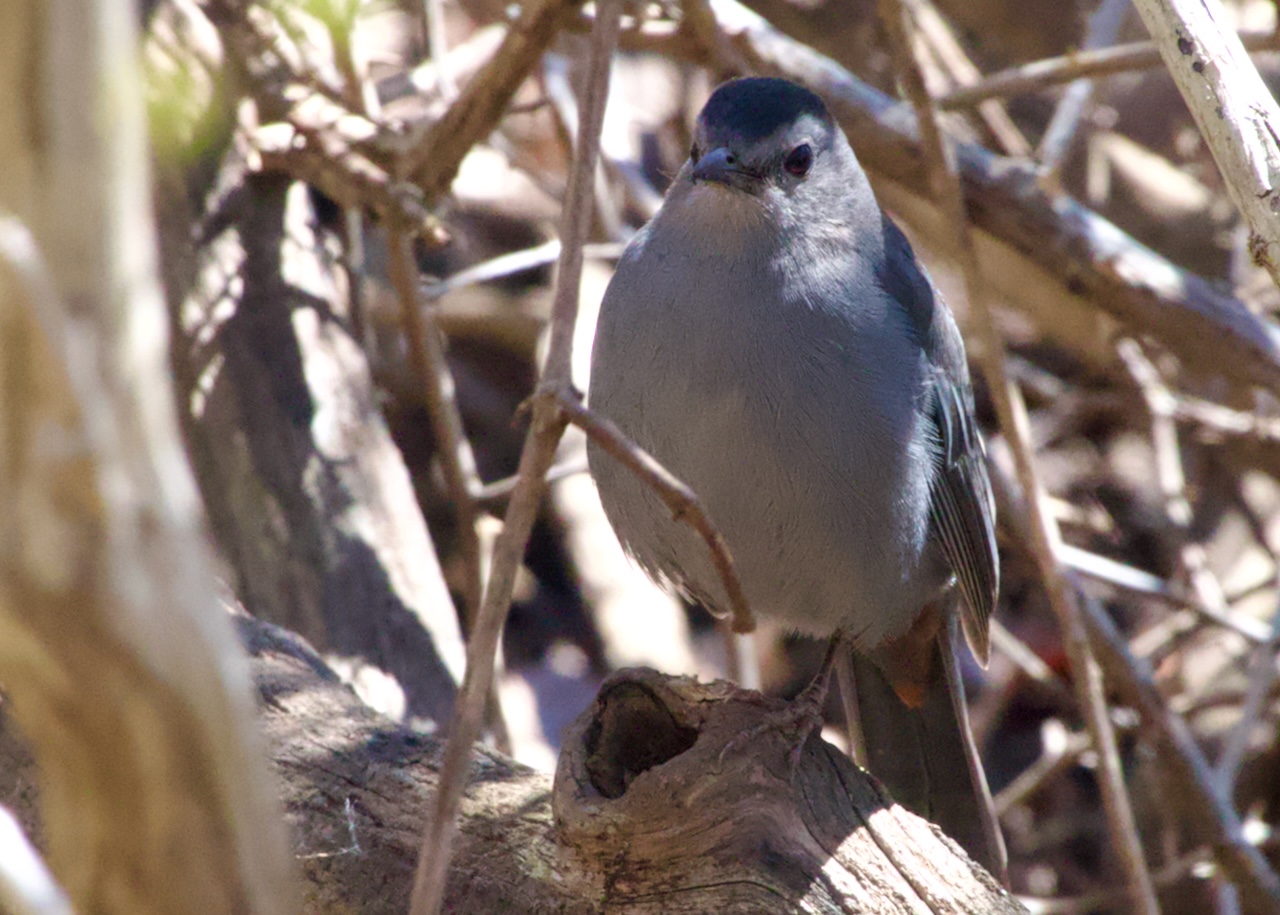
On Monday we checked our local marsh again for Rails but heard nothing. Then we headed into Burlington/Hamilton to check various parks along the lake hoping to catch some early migrants with limited success. We only added a Gray Catbird, so called because it has a “meow” call.
Gray Catbird
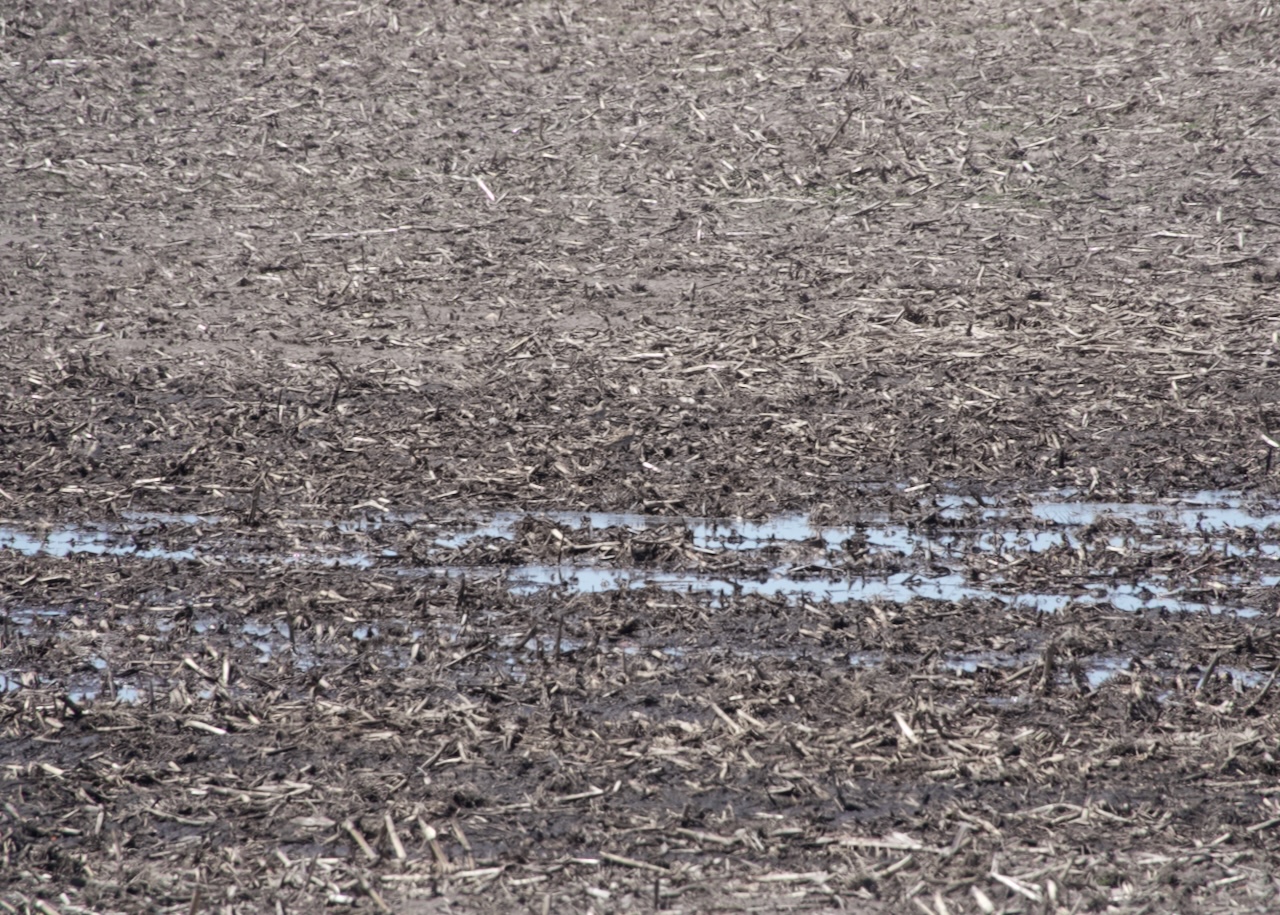
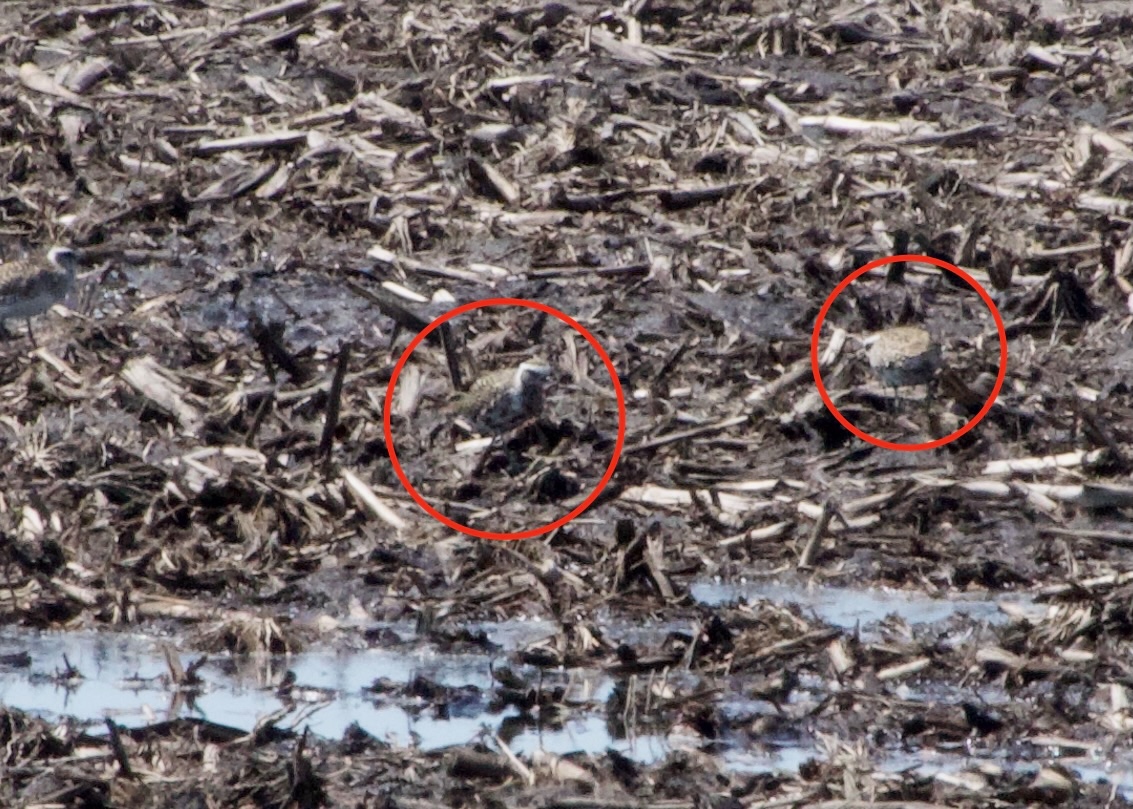
There was a nice movement of Broad-wing Hawks through Hamilton later in the day but we had already headed to Jerry’s mom’s for dinner and missed them. Tuesday we headed down to Rondeau for the day with sun and warm temperatures in the forecast. We hiked far out the Marsh Trail and heard a Marsh Wren near the very end but did not see it tucked in the bullrushes. We will see lots of these in the next months and should be able to get a photo too. I got a text some American Golden Plovers were in a field in Erieau, 10 minutes away from Rondeau, so we headed there and along with another birder re-found the birds in the flooded field. That is a good bird to get as it is not always reliable at Pelee or later in the year. The views were not the best but Jerry managed a few record shots.
Here is the view we saw with the naked eyeHere is the scope or camera view
Wednesday was a bit of a rain day but we we headed out for a quick walk on the trail and watched 100 Tree Swallows feeding just on the top of the river in a steady wind. As they flew upstream into the wind inches above the water the bugs must have been blown into their mouths and then they would swoop up, fly downstream, and then fly upstream again just above the water. It was cool to watch and gave us a great view so that we could pick out the 2 Bank Swallows and the 1 Barn Swallow that were part of their group. In the evening we popped over to our local pond at dusk and heard a Virginia Rail calling with it’s kid-dik, kid-dik call. Listen to the call below…
Thursday we started our day back at the marsh hoping to get a pic of the Rail, we had it fly across the road and back but did not manage a picture. Then we headed into Hamilton for care-giving but stopped for a few hikes along the way. In a flooded field in Flamborough I spotted a Broad-winged Hawk flying over a field so we added another bird for the year. Friday we just checked some local marshes and then called it a day.
I wasn’t sure where we should head on Saturday, we had considered birding in Toronto, or visiting the Hawkwatch at Beamer for their 50th year celebration or we could head to Pelee and hope to re-find some Willets (rarity) that had been reported late Friday. For some reason I was stressed with the decision and feeling like whatever I chose would not be the “right” one. I have been pretty chill so far with the birding decisions made but the decision kept me awake Friday. Because both of us were awake at 4am we opted for Pelee.
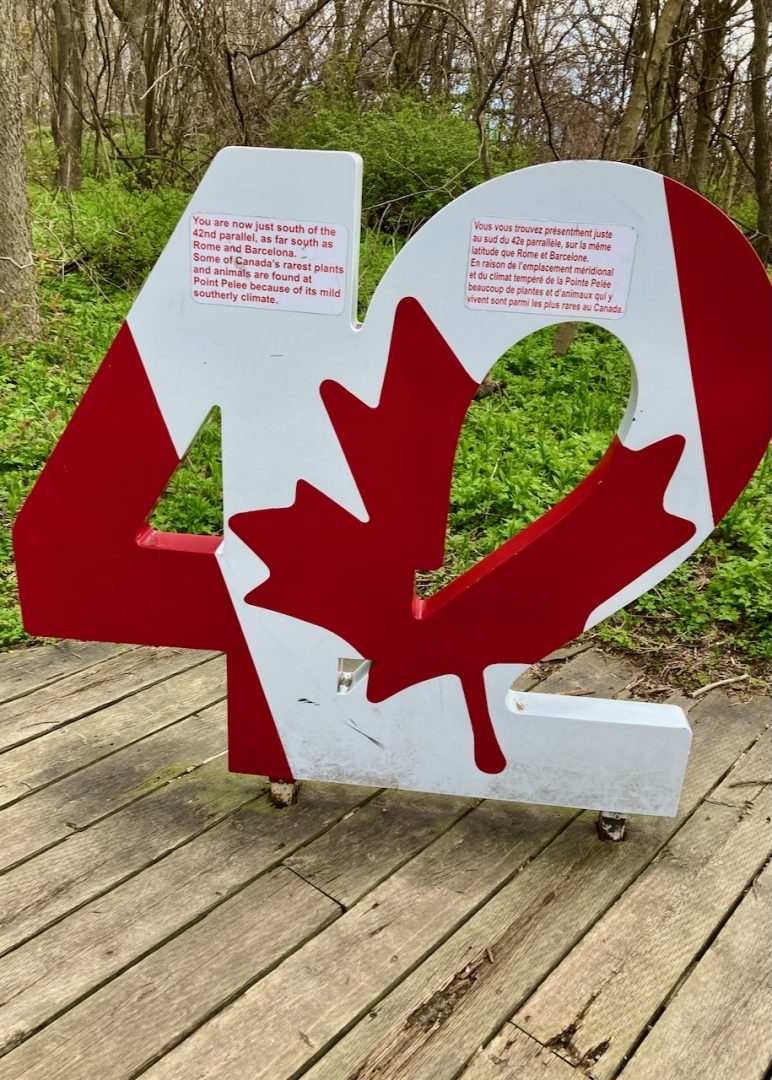
It did not feel like a mild southerly climate!
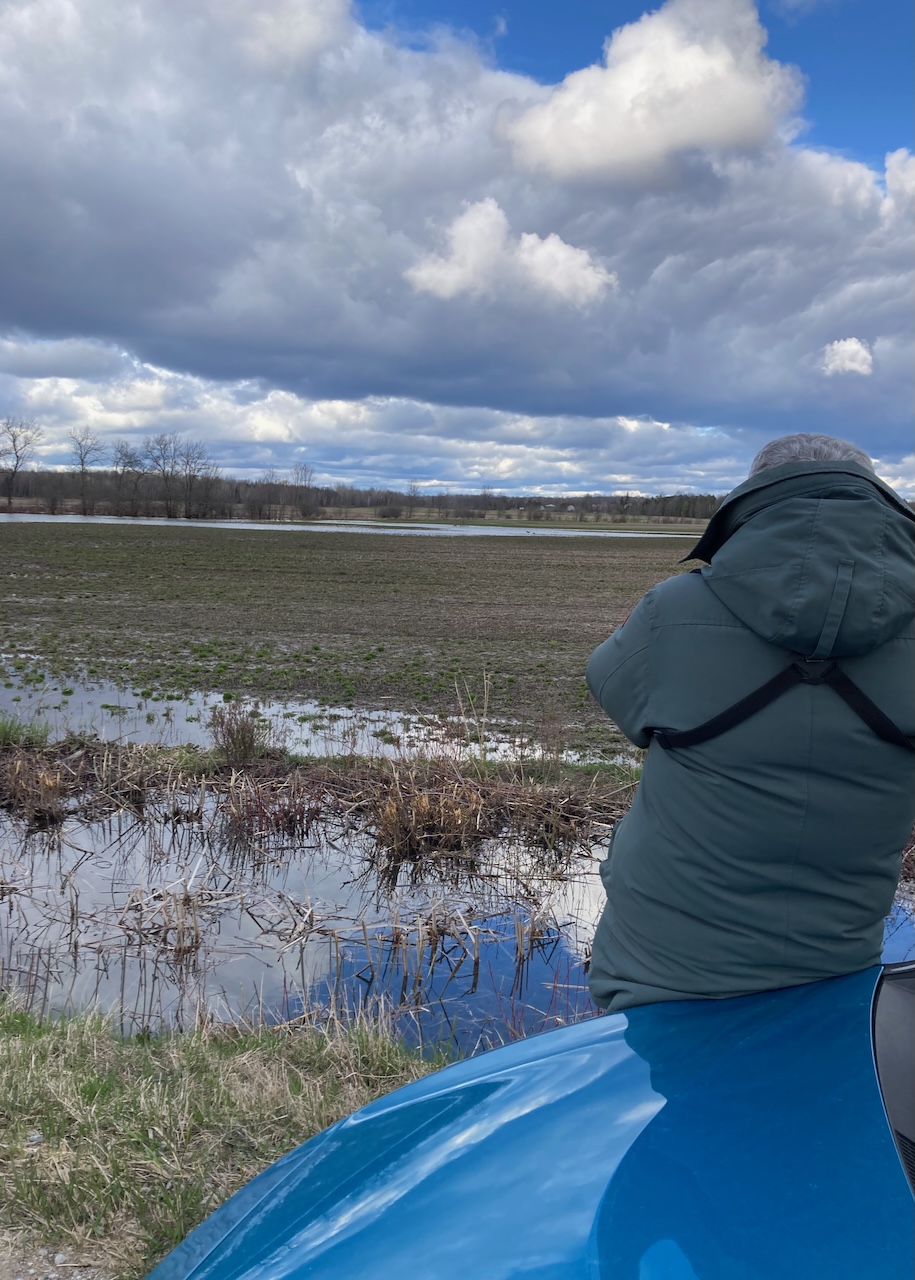
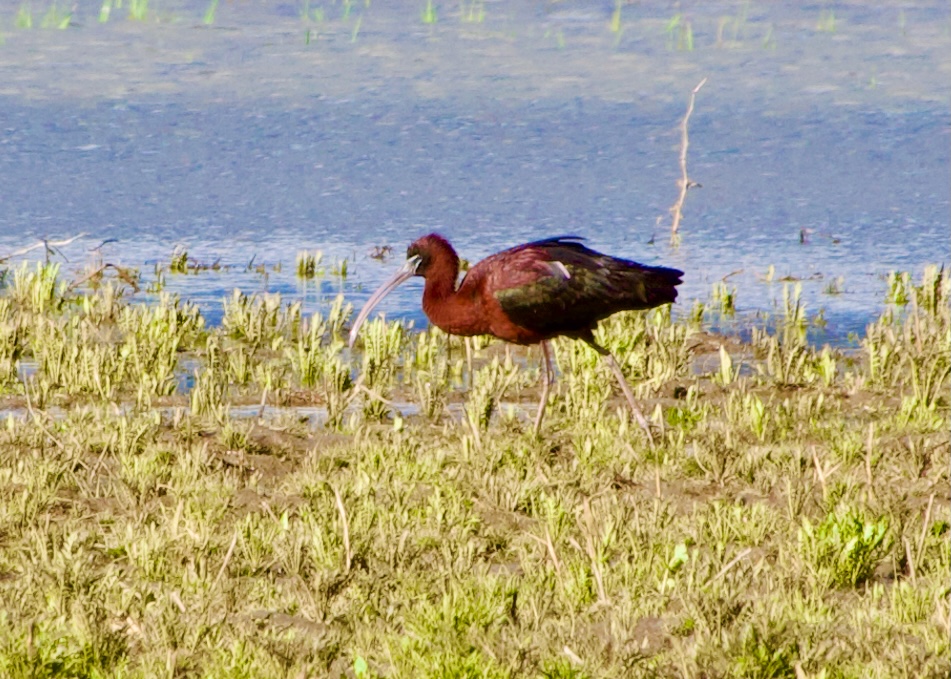
We didn’t find any Willets at any beaches or marshes so we went into the Park and enjoyed seeing small groups of migrant warblers making their way up the east side of the park. We added 2 common species and then I heard the Discord ding…Glossy Ibis, Orillia. I wanted to leave right then, Jerry wanted it confirmed. It was confirmed 40 minutes later and we were on the road from Pelee. UGH!, why had we not opted for Toronto? With still 2 hours till we arrived another DING!… it had flown. Now things got a bit heated in the car. What to do? In bumper to bumper traffic, will the bird be found or do we turn around? We were both tired and hungry and our ETA was 5:30. We opted to keep going, once you commit you have to follow it through, the bird could return, or be re-found. Ten minutes later it had been re-found! One hour to go! When we finally pulled up there was a birder, Rick, pulled over at the spot and we could easily see the bird from the road without bins (always the happiest when that happens). We spent about 30 minutes watching, taking pictures and video and just enjoying the dopamine buzz of GETTING THE BIRD!
A country road and a great bird!Glossy Ibis
We had started our day at 4:30am, drove 10 hours, hiked 8.6 kilometers and were back home at 8:30 with only 3 birds added. Not very efficient but the Glossy Ibis is a rare visitor from the south and you gotta do what you have to do. Of course, Sunday morning at 7:57 there was an American Avocet at the Pelee tip! Seems I am always a day early LOL! Not likely to stay in the park but I hope it heads to Hillman Marsh and sticks around a few days and some of its friends also show up as we will be at Pelee soon. At 1:45 a text came in from Barb to check the ‘Whats this Bird” in Discord. Pictures of a Yellowlegs that did not really look like a yellowlegs and could be a Eurasian rarity had been posted for help with the ID and where was this bird? back up in Simcoe County where we had just been yesterday for the Ibis! We got in the car at 2:30 and arrived at 4:30. Many birders were there with scopes trained on a field of grass with 200 Greater Yellowlegs looking for the one that looked paler and not patterned. Most of us did see that paler bird but it never got close enough for definitive looks to positively ID the bird. The thought was it could be a Common Greenshank, a huge rarity and a lifer for us but after 2 hours of scoping, pics taken, experts weighing in, the consensus was maybe just a Yellowlegs. If photos can be found from one of the birders that can change that opinion then at least we have seen it. So for the second night we arrived home late, tired and hungry and this time with no bird to show for it. It happens…
Week 16 1 rarity added 17 total rarities so far 8 birds added 196 for J&E
Reminder! Keep checking the 2024 Gallery as we are continually adding and updating pictures as Jerry takes better shots of birds we had in the winter and finally gets pics of birds he missed earlier.
With the eclipse on Monday we birded locally in the morning before heading to watch our grandkids so their mom could go to work. We did another drive past Paris Plains Church Road and saw and heard a Vesper Sparrow but no chance for a picture. Then we walked the TH&B Rail Trail off D’Aubigny Rd, one of our favourite spots in Brant County. We quickly added an Eastern Towhee that we heard and then after some effort, found singing away in the shrubs. We had super views of a local Peregrine Falcon cruising over us doing lazy circles and Jerry managed a few pics of it in flight.
Peregrine Falcon
The clouds moved aside so that we had great views of the eclipse with our grandkids and then after the sun came back out we headed to Safari Road Marsh in the evening to see if we could hear American Bittern and Common Gallinule that had been heard that morning. This marsh area along Safari Road near Valens has been flooding across the road for a few years now so the city blocks the section of road from traffic which, we the birders, absolutely LOVE! It used to be you took your lives into your hands to see the speciality marsh birds there when traffic was still allowed. Now it is a birders paradise to get the marsh species. We met up with Mourad, an excellent Hamilton birder, and we passed the time talking birds, waiting for dusk and listening for either of the species. And nothing! Maybe the eclipse messed their schedule but we ended up “dipping” (birder slang for missing a bird) on them. Just as it was getting dark a large number of swallows appeared and among them was a larger, all dark bird giving us our FOY (first of year) Purple Martin. Some consolation. All three of us also saw what we all believe was a River Otter in the marsh!
Tuesday morning we headed to Long Point. The forecast was sun and heat and with south winds during the night I felt it might be a decent day to pick up some early common migrants and hoping for some cool rarity. The Long Point Bird Observatory has been banding and studying birds since the 1960’s and is a spring ritual for most birders. At the Old Cut Research Station you can watch birds being banded. If you have not been, it is worth a trip, the station bands spring and fall from 9-12 each day.
Golden-crowned Kinglet in netCommon Grackle getting banded
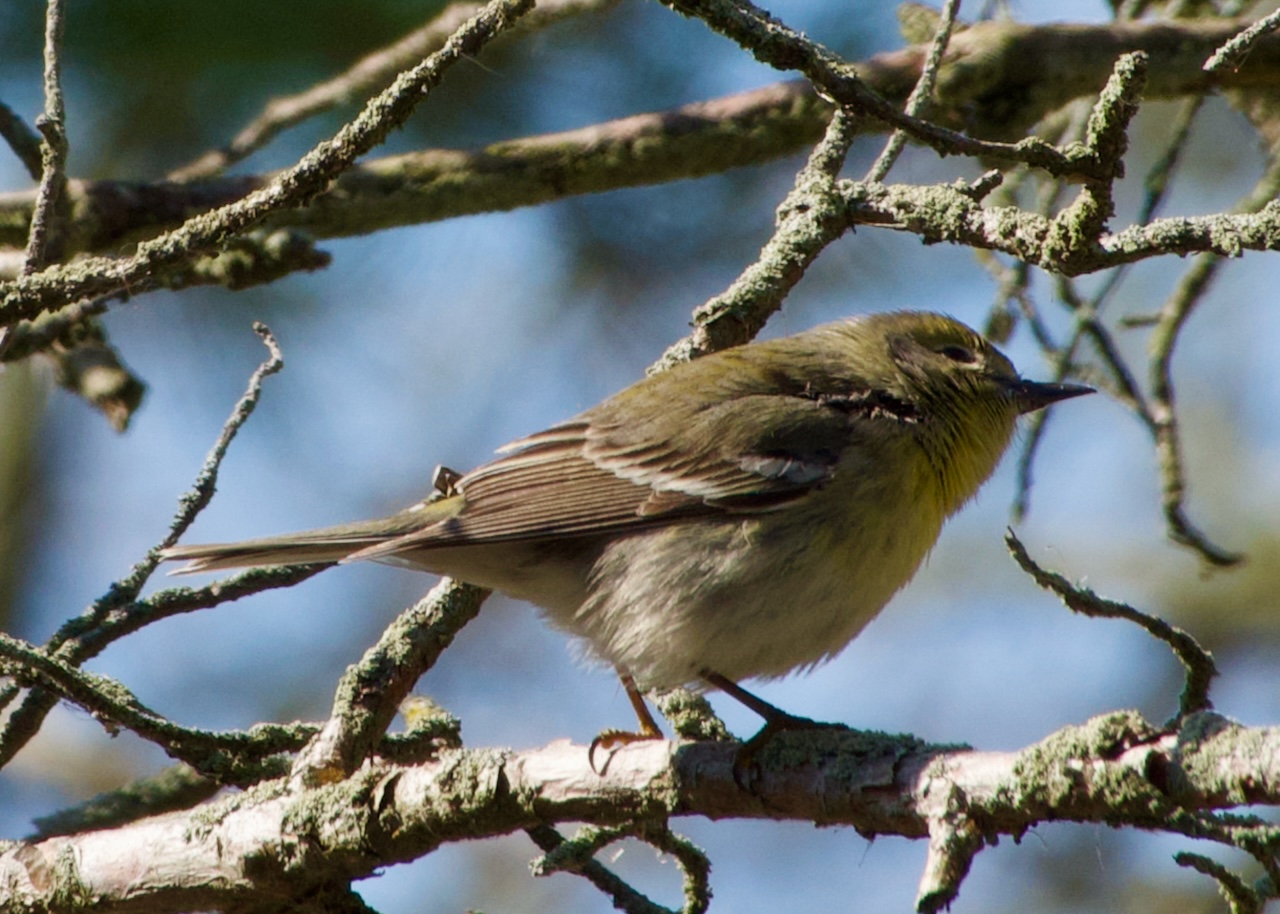
We walked the paths and quickly saw birds that while not new for the year were giving Jerry the opportunity for pictures, numerous Eastern Towhees were scratching at the ground, Winter Wrens were moving low, Kinglets were flying past and we soon added Ruby-crowned Kinglet for the year. From Old Cut we checked out the nearby neighbourhood and saw our first Pine Warbler. Not in full breeding colours but a welcome sight anyway.
Pine Warbler
We then checked out the campground and saw numerous Thrush, Towhees and Sapsuckers offering us great views and photo opportunities. This Golden-crowned Kinglet was only interested in finding sustenance and ignored me walking beside.
A bit further along we found a FOY Brown Thrasher. Didn’t get great pictures as they can be a skulky bird but Jerry did get his eye!LOL
Brown ThrasherEastern Towhee
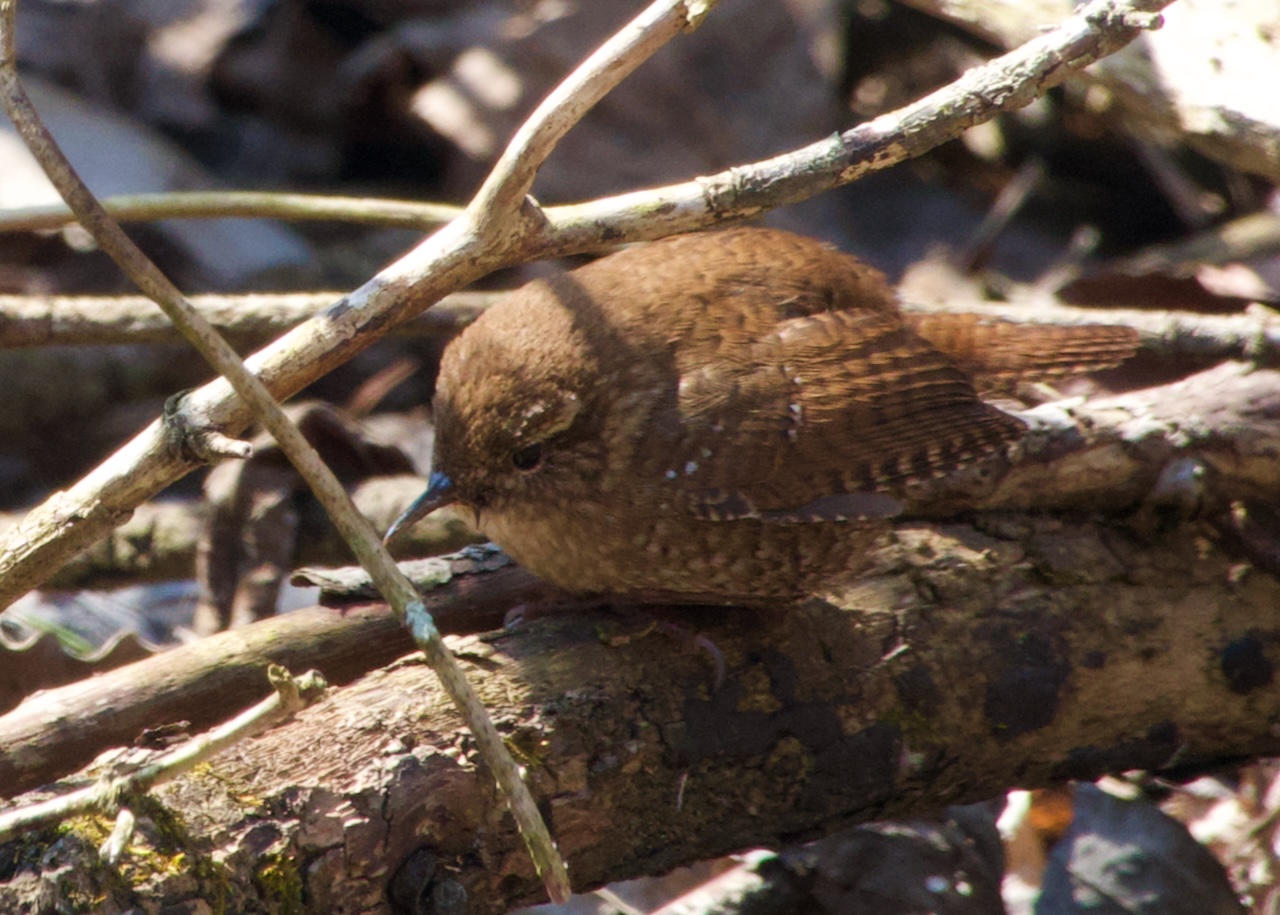
At the end of our walk we were standing in a campground when a tiny brown bird flew in front of me and behind Jerry just a foot off the ground. It was a Winter Wren, a bird we went weeks without seeing and had just heard on Sunday. At 4″ long and weighing only 0.3 oz these tiny birds have huge voices with a wonderful song. I managed a video (audio muted as we were talking) as it moved along and then it curled up on a branch for a bit of a rest. I suspect that it was exhausted from its flight across the lake as they generally are not that still around people.
Winter Wren
While we were birding a report came in that a Black-necked Stilt was at the Strathroy Sewage Lagoons. The Stilts are a southern species that are rare to Ontario but nested at the lagoons last year and had a successful brood. It was only 1.5 hrs away so we headed to get the rarity even though it and others perhaps will be there all summer. The rule for a Big Year is always get the bird as quickly as you can.
The wind was picking up when we arrived but Trish, a London birder, (thanks!) gave us quick directions where to go and we found the Stilt without too much difficulty. It is a bird that is difficult to mistake with its long bright pink legs! It was a distance away so not a great picture but a record shot at least. We also saw a Spotted Sandpiper (the first reported in Ontario) and then heard a Sora on the way out.
Black-necked StiltSpotted Sandpiper
Trying to be efficient as possible we decided to stop on the way home for pictures of a Great Horned Owl family that is nesting at a cemetery we were going past. Normally, we do not worry about getting pics of all the birds and especially bothering nesting birds but we are trying to get a pic of every bird seen this year so we stopped and spent all of 7 minutes at the site just before dusk.
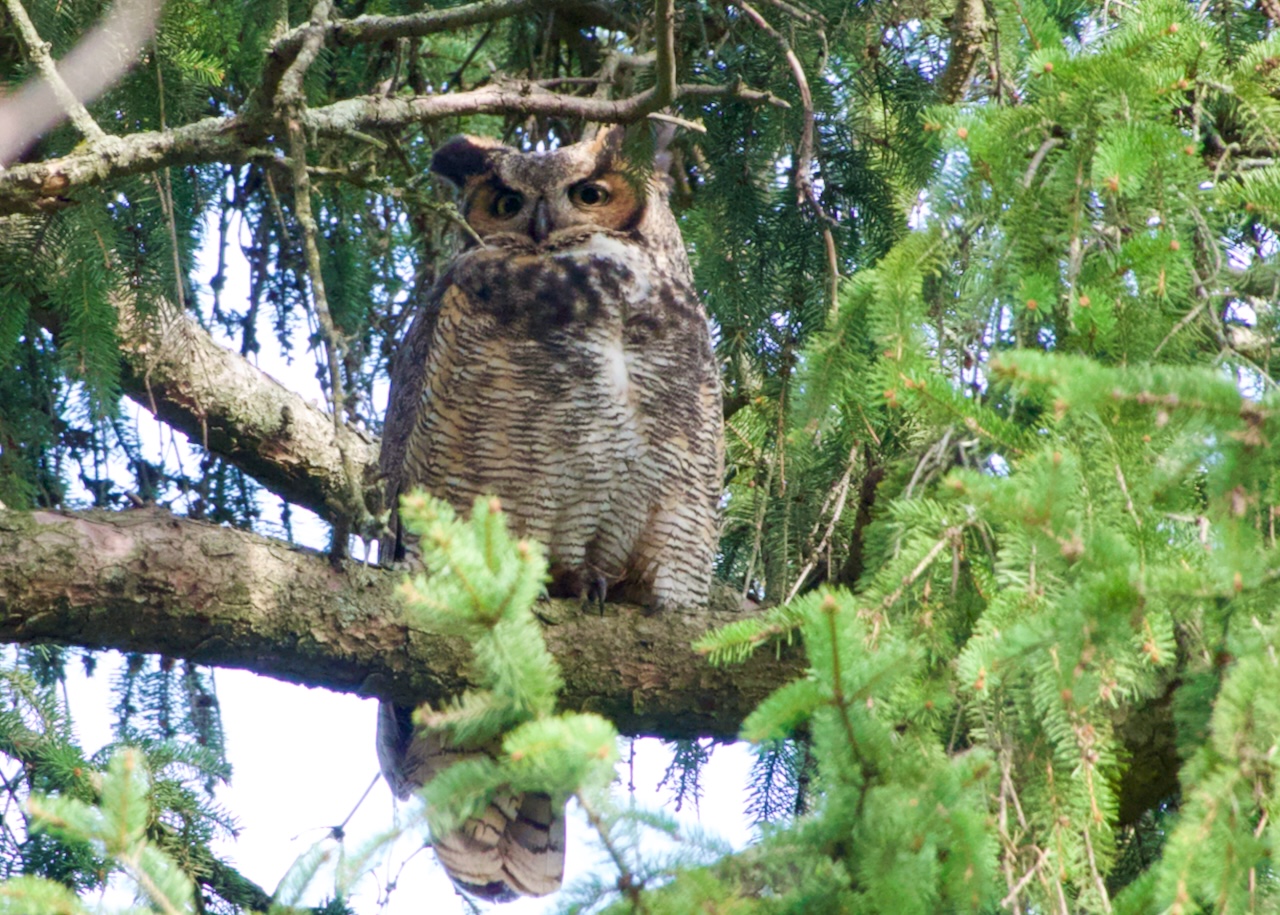
Great Horned OwlGreat Horned Owlets
We arrived home at 7:10 and were eating dinner at 7:45 and in bed by 10. I was tired having only managed to sleep 4 hours the night before and suffering from acute allergies. But we were back up at 6am Wednesday to head to Safari Road determined to hear the Bittern. This time we also remembered our rubber boots so we could wade down the road. We heard and saw Common Gallinules right away and then walked back and forth until we heard the strange oong-KA-chunk sounds of the Bittern. Google that call – it is one of the weirder bird calls. With not many other species around and the temps hitting 20C we headed home to do a house chore – putting more Feather Friendly dots on the rest of our windows.
We live in a solar passive house with lots of southern windows and we have had our share of bird hits and deaths – in the early years we used those big decals with limited success but a few years ago we found out about the dots and we did all the major south windows that got the most bird hits. With the dots up not one bird has hit those windows. Last year Jerry drew lines of soap on the other windows and that worked reasonably well. Most hits come during migration time as it seems our resident birds have figured out the perimeter of the house. Last week we were devastated to have two birds chasing each other hit our bedroom window and both died. One was a Junco and the other was a Purple Finch that Jerry had just photographed. We ordered more dots the next day.
It’s a two person job on wide windowsAbout an hour to do this windowNo more bird deaths!Please consider these dots if you have windows that birds hit.
After completing the windows we headed out in the evening to our local marsh, Grass Lake to see if any rails had returned but all was quiet. This is the spot where Sandhill Cranes nest too. It will be a regular spot for us to check over the next few weeks to try and see and hear the marsh birds and it is only 5 minutes from our house.
Thursday was a rain day and gave me time to start on this blog, hence the length of this blog, lots of time on my hands!
Friday was another rainy, windy day and we were in Hamilton to watch our grandson play in his hockey championships so in between games we walked along the lake at Confederation Park and added Northern Rough-winged Swallow and then we HAD to stop at Hutch’s for fish and chips! Then we headed to Valley Inn and found a Great Egret had arrived before heading back to another hockey game.
Great Egret
Sunday morning, prime time to bird found us yet again at the hockey rink as Benson’s team played the final and won their Division Championship! Go Bulldogs!!! We then headed west to Backus Woods near Long Point. It is a new spot for us and hosts Louisiana Waterthrushes every year. A few have been reported in the last few days around Ontario so we took a chance that an early one might be visible or heard at their prime territory. NOPE! But it was a lovely hike through beautiful scenery and we now know where to go in the next weeks when they will surely arrive. We then checked out Long Point again to see if any new migrants had arrived but again dipped on adding any new bird. On the way home we stopped at Port Rowan Wetlands and saw 2 Bank Swallows, finally a new bird and a quick stop at Turkey Point gave us our FOY Dunlin so we managed to add two more birds in the last hour of our birding day. A good week for mid April! the 15th week and 15 birds added.
Week 15 1 new rarity for a total of 16 rarities 15 new species 188 species seen J&E
Monday, we headed to Niagara Falls to try for a Black-legged Kittiwake and make a concentrated effort for a Black Vulture. We have been in the Falls 3-4 times this year to visit friends and family so our time has always been limited to quick stops hoping to catch sight of one. The vulture that is most common in Ontario is the Turkey Vulture and the Black Vulture is a southern species that is very rare in Ontario. It just happens that a very small population reside in Niagara Falls New York and so any birder in Ontario who wants to add Black Vulture to their list heads to Niagara Falls Ontario and hopes to see the US birds in Canadian airspace or some count them for Ontario if they see them in the US but are standing in Ontario. Because this is a Big Year I wanted to make sure the birds themselves were in Canada.
We arrived at 8am and between scoping for the Kittiwake and looking for the Vulture the time passed. By noon I decided we had to stay the whole day and just keep trying different areas and trying back and forth for the two birds. We made 3 attempts for the Kittiwake, scoping about an hour each time and feel confident that we did not miss it. Basically, we were looking through 40 Bonapartes Gulls for one that looked identical but had a black collar on the neck. Not an easy thing to see with waves and wind but by late afternoon it was very calm and we still could not find a Gull with a black collar. We will have other chances for that bird in the fall and winter. While standing at the Queenston Heights overlook for vultures we had our first Osprey fly over but did not get a picture. Bird #168
Everyone knows the key places to see the vultures, at the Overlook and the Locust Picnic Area, but we were not having any luck so we stopped at a picnic area by the Lewiston Bridge and walked along the river as we had seen a few Turkey Vultures in the area. We saw 6 Turkey vultures on the cliffs of the river and then on the way back to the car I saw a smaller black vulture flying downriver with just the silver tips on the wings. We raced back along the path trying to keep up with it and get pictures. The bird was along the river and hard to determine if it was in Canada or the US. We decided to head back to Locust Grove Picnic Area as we know they roost there and see if it might have tucked in again. No vulture but I suggested we sit for a minute and check what other birds were around and it had warmed up. After sitting for a bit, as we got up to go, a man was moving quickly with a camera through the area and as we watched him a Black Vulture appeared in the picnic area – in Canada! Much excitement, the birder had seen it down where we had and was trying to get pics too. Jerry managed some more pics and suddenly a second Black Vulture appeared as well as another local birder who told us they have seen as many as 6-9 Black Vultures at a time. We were very happy to see two.
Black VultureTurkey Vulture
And then Tuesday to Saturday was a combination of bad weather, caregiving, spreading wood chips on our garden areas and some social time with our granddaughters and the family. Few new birds were arriving so I felt comfortable to wait it out knowing these are birds that I will eventually come across. Have you all heard that enough over the last 3-4 weeks? Are you all silently yelling at me, “Get out birding!”?
It cannot always be about birding!
Saturday after brunch with our kids we did a quick drive to Paris Plains Church Road to view the Lapland Longspurs that migrate through each year at this time. We added them to the list a while back but Jerry wanted to get better pics if he could and of the males in breeding colours. There were many birders on the road watching and the birds were not too far away giving nice scope views. Camera pictures were still a challenge as they blend into the corn fields extremely well.
Lapland Longspurs Males in breeding colours
Sunday was a gorgeous day with temps hitting into the high teens and we decided to do a birding blitz before dinner with his mom. We wanted to focus on areas where the birds that have arrived might be. Fields for sparrows, forest for Wrens and Towhees, water for Terns, Egrets and Herons. We started with another trip to Paris Plains Church Road (10 mins from home) for new sparrows and quickly heard a Savannah Sparrow, bird #170, near the spot we had been viewing Lapland Longspurs late Saturday. We searched for a Vesper Sparrow but came up empty again. We know they are there, reports have been coming in, so next time we are by hopefully we see it. We then headed to Dundas Conservation Area on the way to Hamilton and walked the 4km main loop trail that winds up and down the valley giving me 17 floors on my pedometer. It is a gorgeous, strenuous walk. We finally added Winter Wren! It was singing very loudly from some scrub near a stream but we could not see it. Wrens are tiny little birds with big voices and they blend extremely well with the branches they love to sit amongst. Hopefully we will catch up with another one so Jerry can get a picture.
Dundas Valley Conservation Area
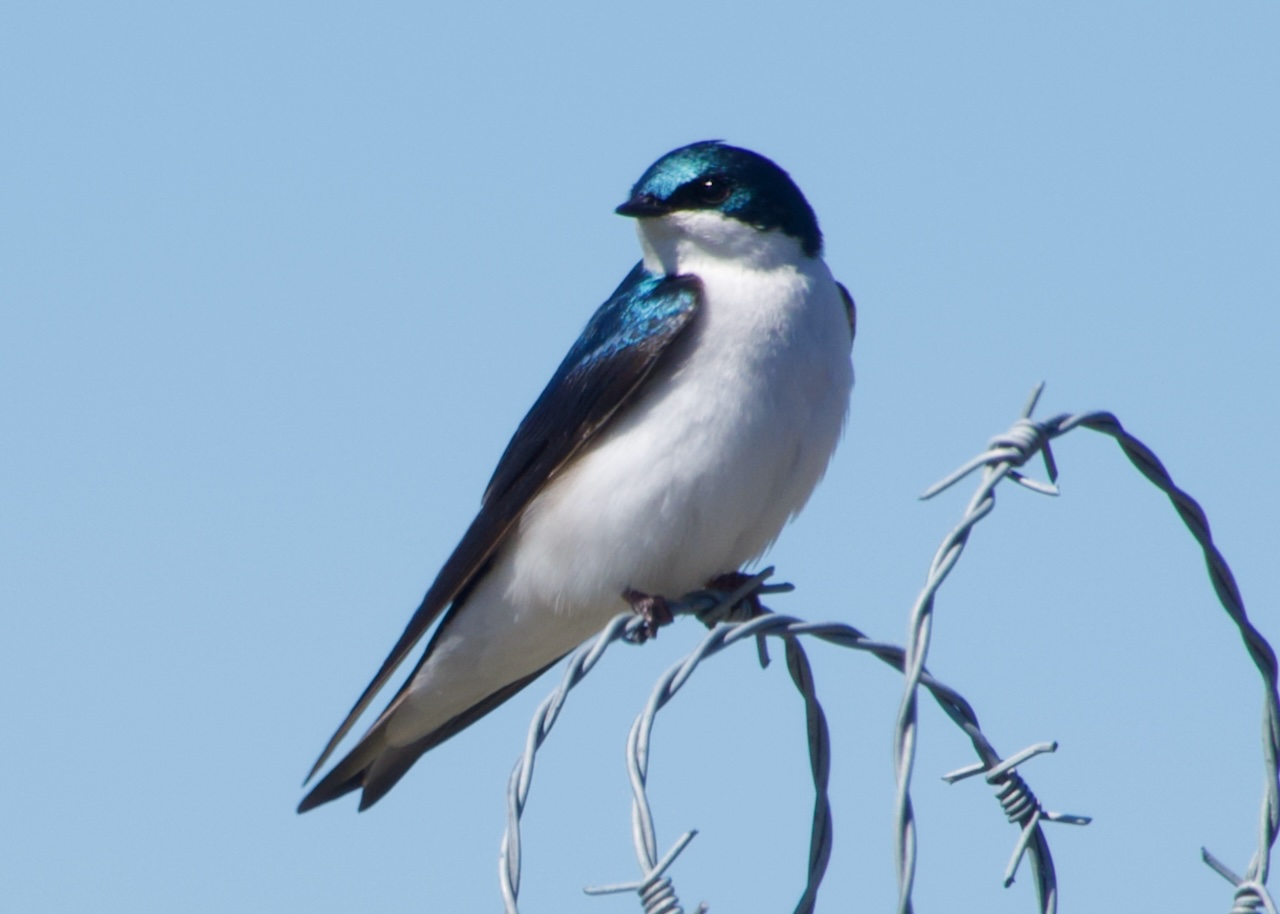
After shedding some layers as the day warmed we headed to Windemere Basin, a water area known for Terns, Egrets and Herons but came up empty. Jerry did get some nice pics of the Tree Swallows that have just arrived and were already choosing nesting boxes.
Tree Swallow
Next stop was Princess Point where we walked around the water area and had a Caspian Tern fly past – Jerry got a quick pic and then we noticed some swallows and realized that one of them was not a Tree Swallow but a Barn Swallow with its forked tail and dark underbelly. Another new bird! We walked back into the forest around the Point to an area we often have seen Eastern Towhees but they have not arrived to that spot yet. All in all a pretty good blitz day, adding 4 more birds for a total of 6 for the week. Only two real days of birding, one at the beginning and one at the end – bookends.
Next week is a full on birding week, with local birding of marshes and wetlands, Long Point and maybe even Pelee or Rondeau or both near weeks end or weekend. Things are picking up nicely and we are going to be very busy…
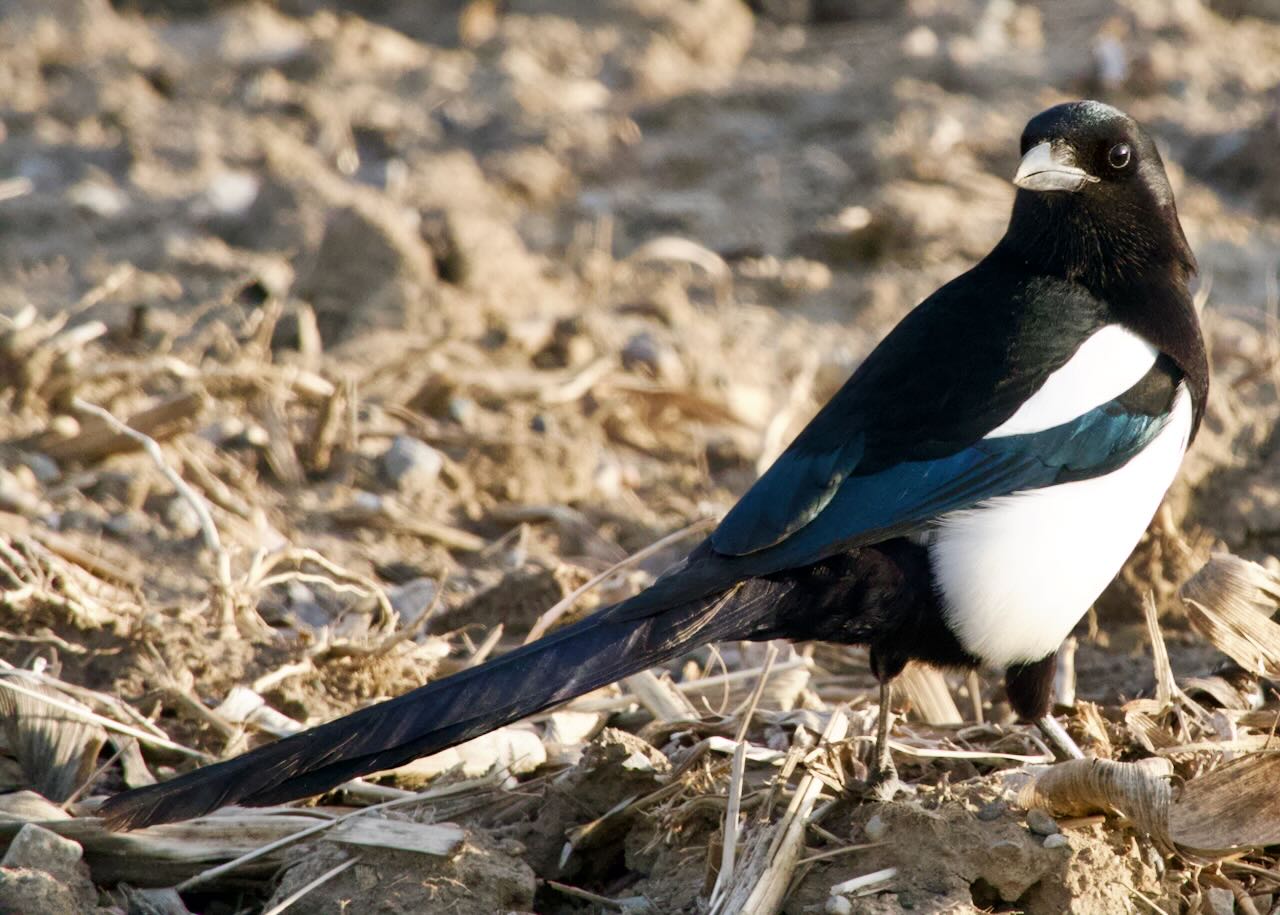
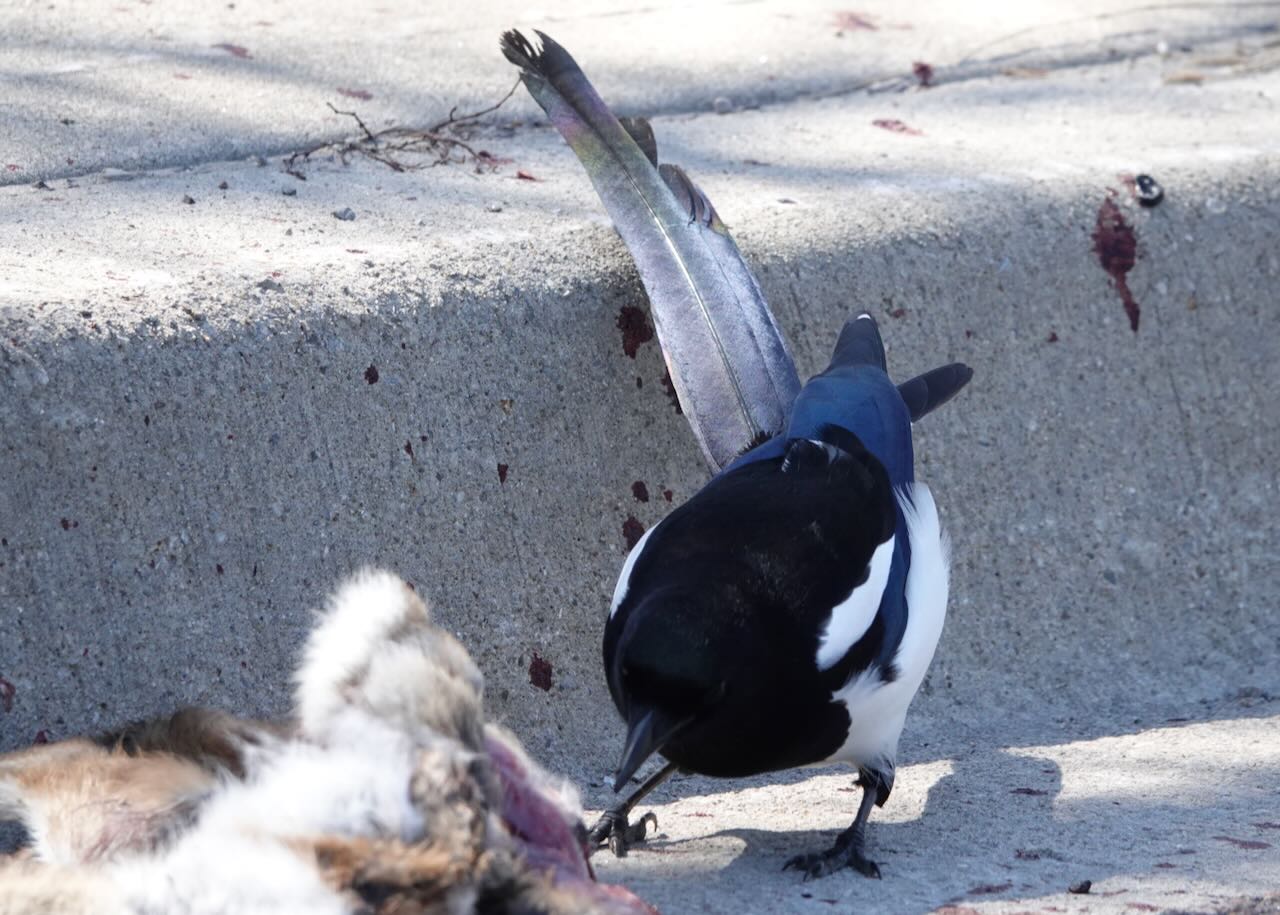
The forecast for Monday was sunny and warm so we headed to Rondeau for the day and finally added 6 birds to our list! Blue-winged Teals were the last common duck species needed on the year list. We also had our first Eastern Phoebe and Field Sparrow along the Marsh Trail at Erieau. We then stopped to see the Black-billed Magpies that appear to be nesting close by. Black-billed Magpies are a beautiful bird not usually found in Southern Ontario. There is a population north of Thunder Bay that is countable on lists and they are a common bird out west but they are a non-migratory bird so any birds seen in Southern Ontario are often presumed to be escaped birds and not countable. This is another record that will be heading to the OBRC for a decision. I am not worried about this sighting as I know that I will see a Magpie up north in June that will count if this record is not accepted. Last April I was shocked to see a Black-billed Magpie on Governors Road in Dundas while driving to Jerry’s mom’s. I posted to Discord and many local birder’s came out to see that bird. We are still waiting to hear if the record is accepted. A few other Magpies were seen in the same week last year and then two nested outside of St. Thomas and had at least 2 successful young fledge from the nest. This pair near Rondeau is building a nest and it may mean this is the start to a population of Magpies in Southern Ontario!
Black-billed Magpie 2024Black-billed Magpie I found in April 2023
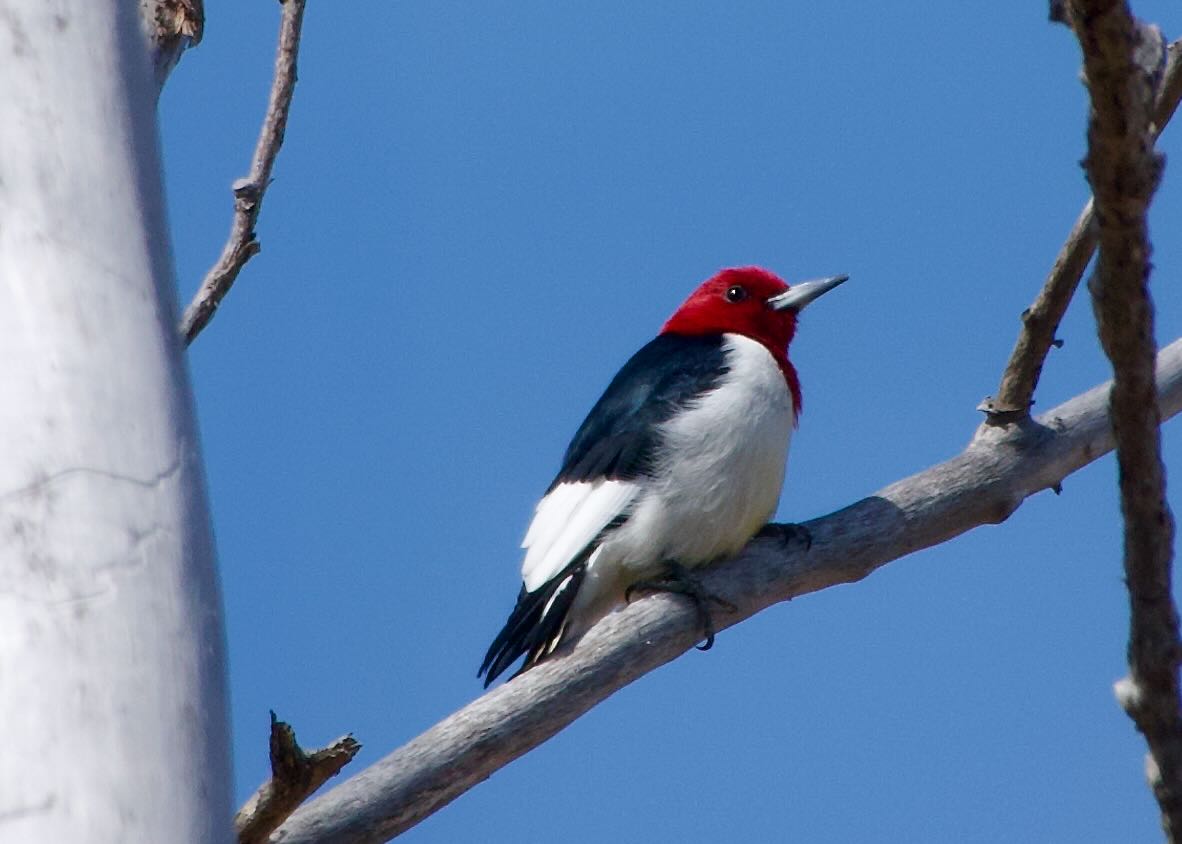
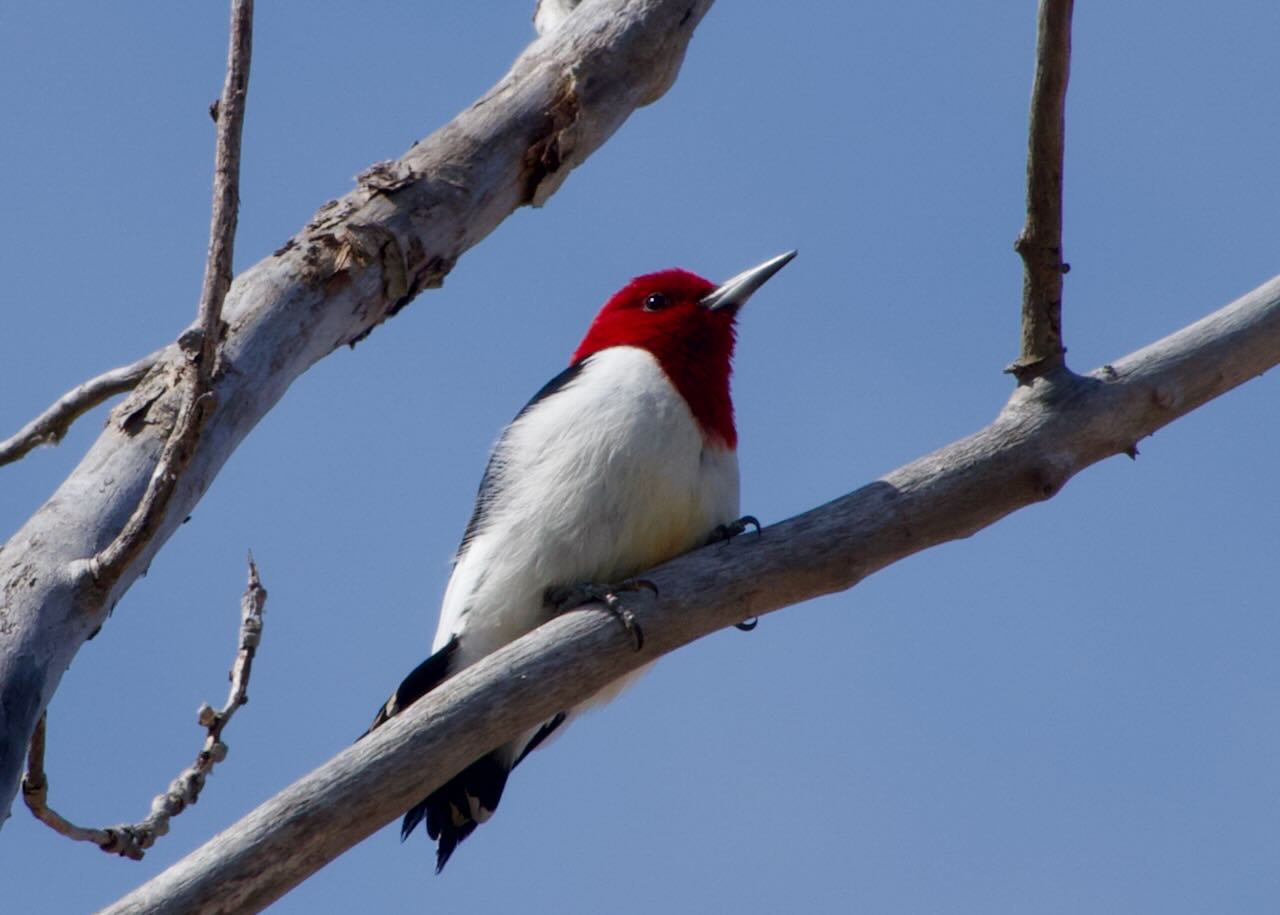
A Red-headed Woodpecker over-wintered at Rondeau and we have missed it on each of our other visits so we took some time to again walk around the area where it has been seen. We didn’t see the bird in the morning but stopped again on our way out of the park. Minutes later I saw it fly into a tree at the corner where we got some great shots and video of this stunning bird.
Red-headed Woodpecker
We finished the day adding a Chipping Sparrow for a total of 6 new birds and hoped the trend would continue. The best part of the day was the fact that we were out walking! for 11.8km! It felt so good to be out of the car and enjoying the trails and forest.
The trend sadly did not continue for the rest of the week but we did get out and walk another 10km on Wednesday and 4km on Thursday without adding any new birds. It was a frustrating week as I read my hourly “needs alert” for Ontario each day and could see reports for Osprey, Towhees, Winter Wrens, Purple Martin, and Black-crowned Night Heron but when we went out we found none of those birds. I KNOW I will see all those birds but it is SO tempting to want to get them on my list NOW that you start to consider “chasing” them. And my mantra is not to chase common species! So I had to put up with feeling a bit of “birder envy” LOL. And Jerry has had to put up with some whining this week. I lost my “zen” a bit.
On Saturday, with renewed optimism, we headed down to Long Point hoping to catch a few more early migrants. We added Forster’s Tern at Turkey Point and then Pectoral Sandpiper at Long Point but the other species that were being seen did not show up for us, a few hours later other birders reported them again! That is the fickleness of birding, sometimes they move, fly, are quiet and what one birder sees, the next birder does not, sometimes by minutes.
On the way home we stopped at some local flooded fields where Lesser Yellowlegs were reported yesterday and yes, there were 5 in a pond way back in the field. Whew! At least the day ended on a high note. I only need to see 42 more common species out of 143 and we have started adding to my spring migrant list. While the floodgates have not opened wide there are new birds slowly trickling in. Next week is supposed to remain cool so I imagine it will still be a bit slow but the birds are coming…and I will re-find my Zen.
UPDATE: Western Tanager – the lovely Western Tanager that caused us so much grief at the beginning of the year sadly died this week after striking a window in the area it was wintering in. The bird was first found in November and has been fed by Ottawa birders since January. Sadly, window strikes kill over a million birds in Ontario each year and likely a billion in North America. The group FLAP has a bevy of volunteers whose job it is to collect all the birds at the base of buildings in Toronto during migration. Toronto is considered one of the deadliest cities for bird strikes. Check out their website for more information at flap.org.
Window strikes in Toronto photo by FLAP/Kenneth Hrdy
We use Feather Friendly dots on our windows and since installation we have not had one bird die on those windows. We still have some windows not covered and we have been drawing lines with soap on those windows in spring and fall migration to prevent the birds hitting those windows. Eventually, all will have the dots. Lee Valley sells the tape with the dots and you can also buy them from their website featherfriendly.com. Please consider putting them on your windows if you have birds around.