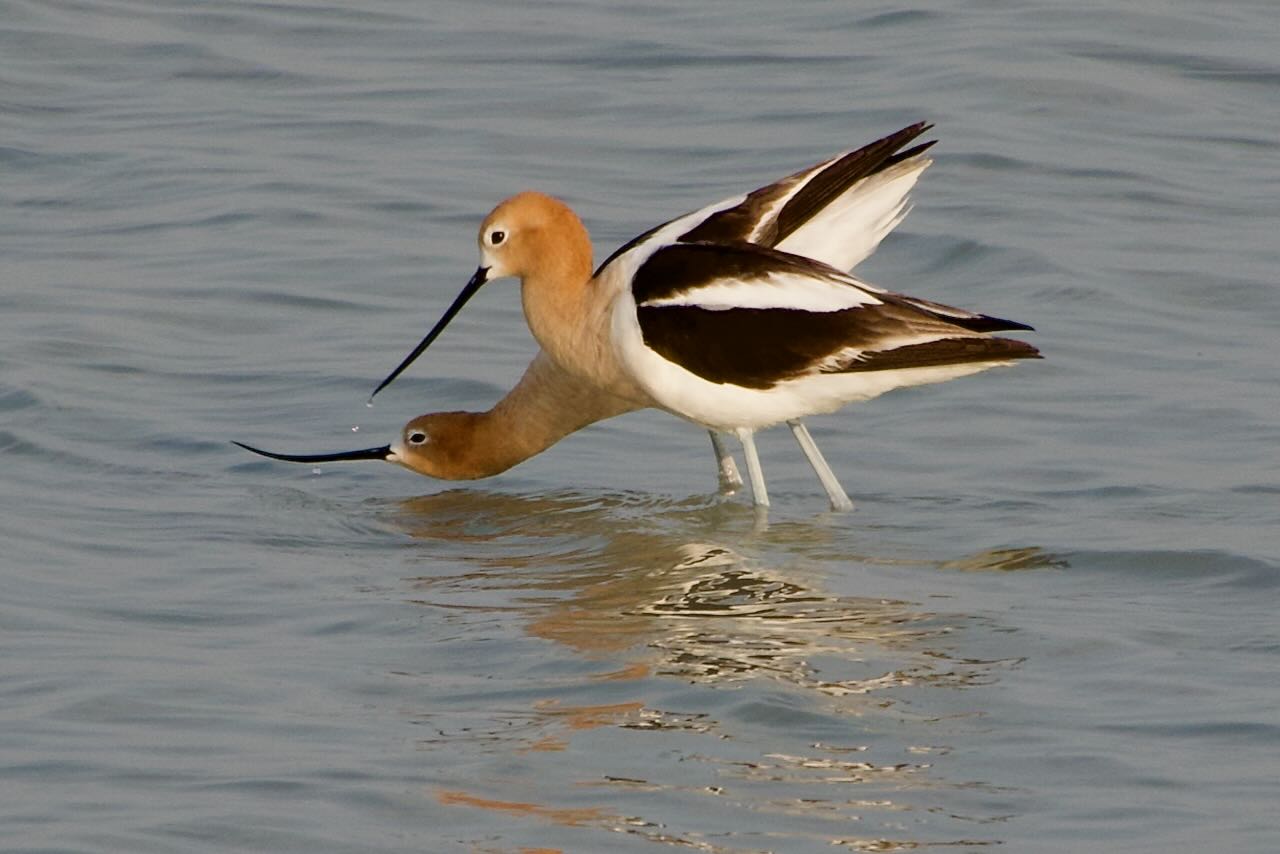
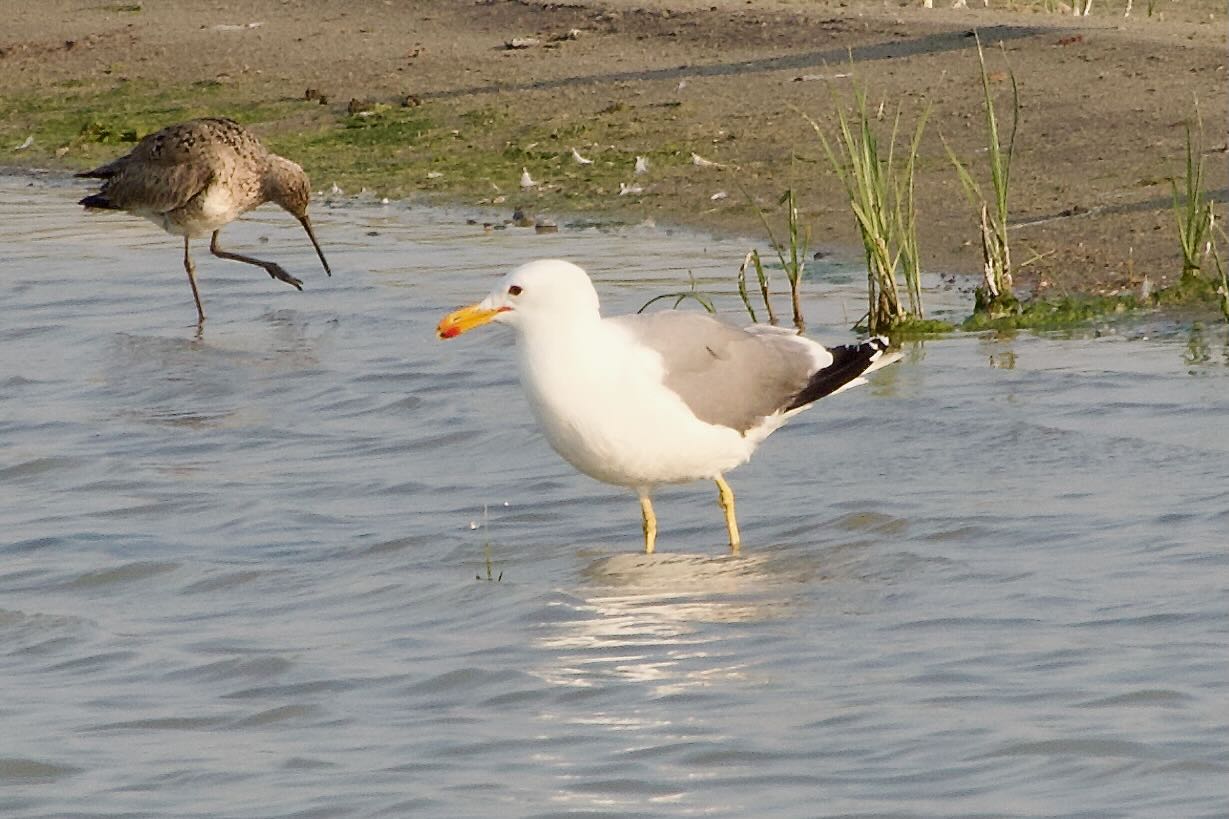
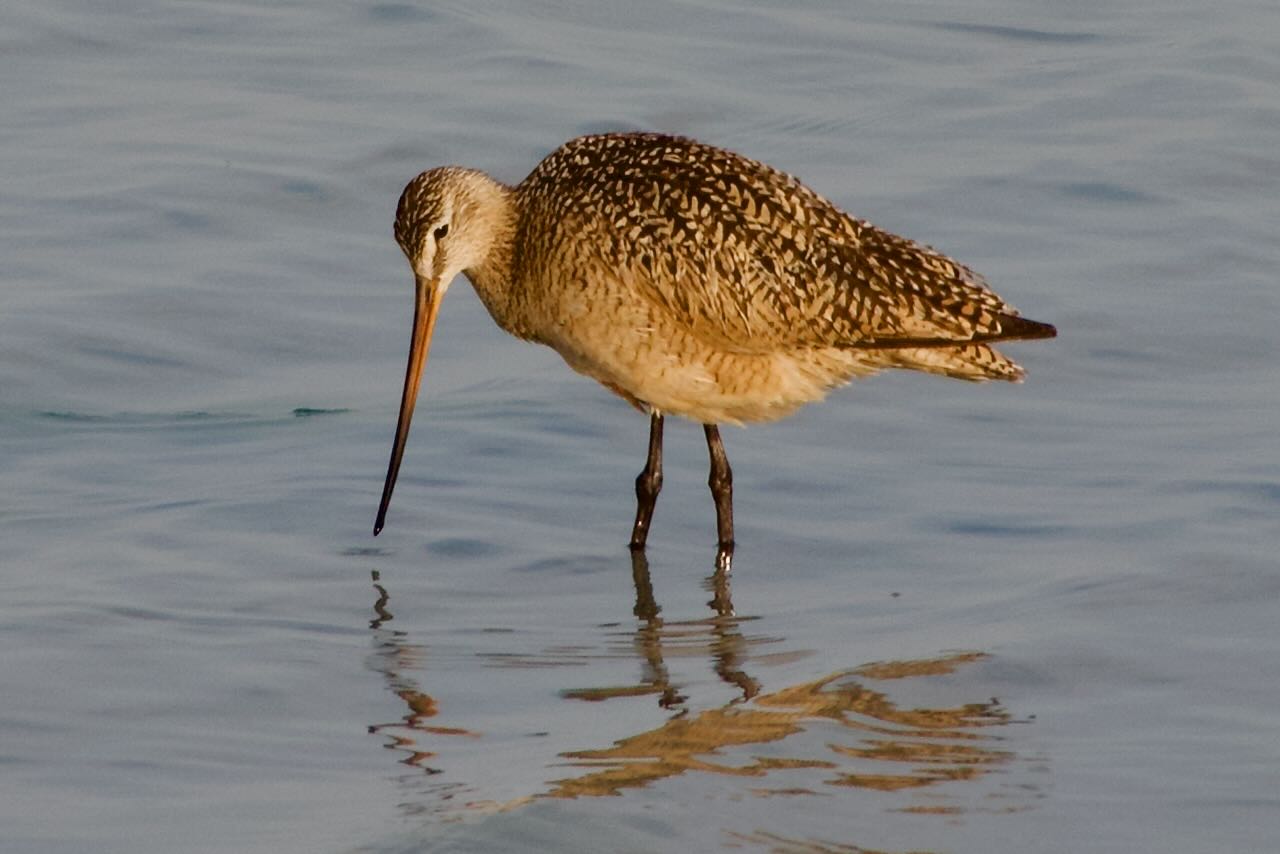
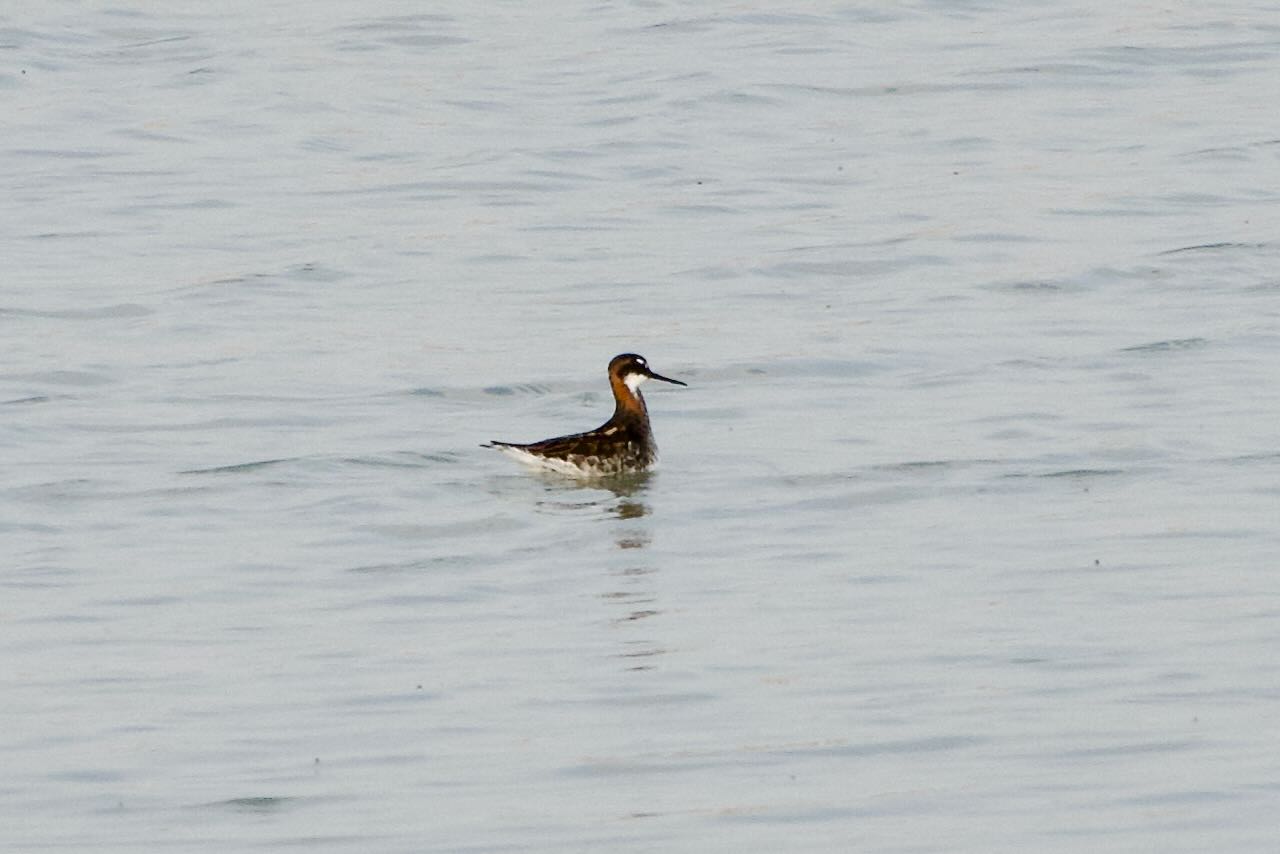
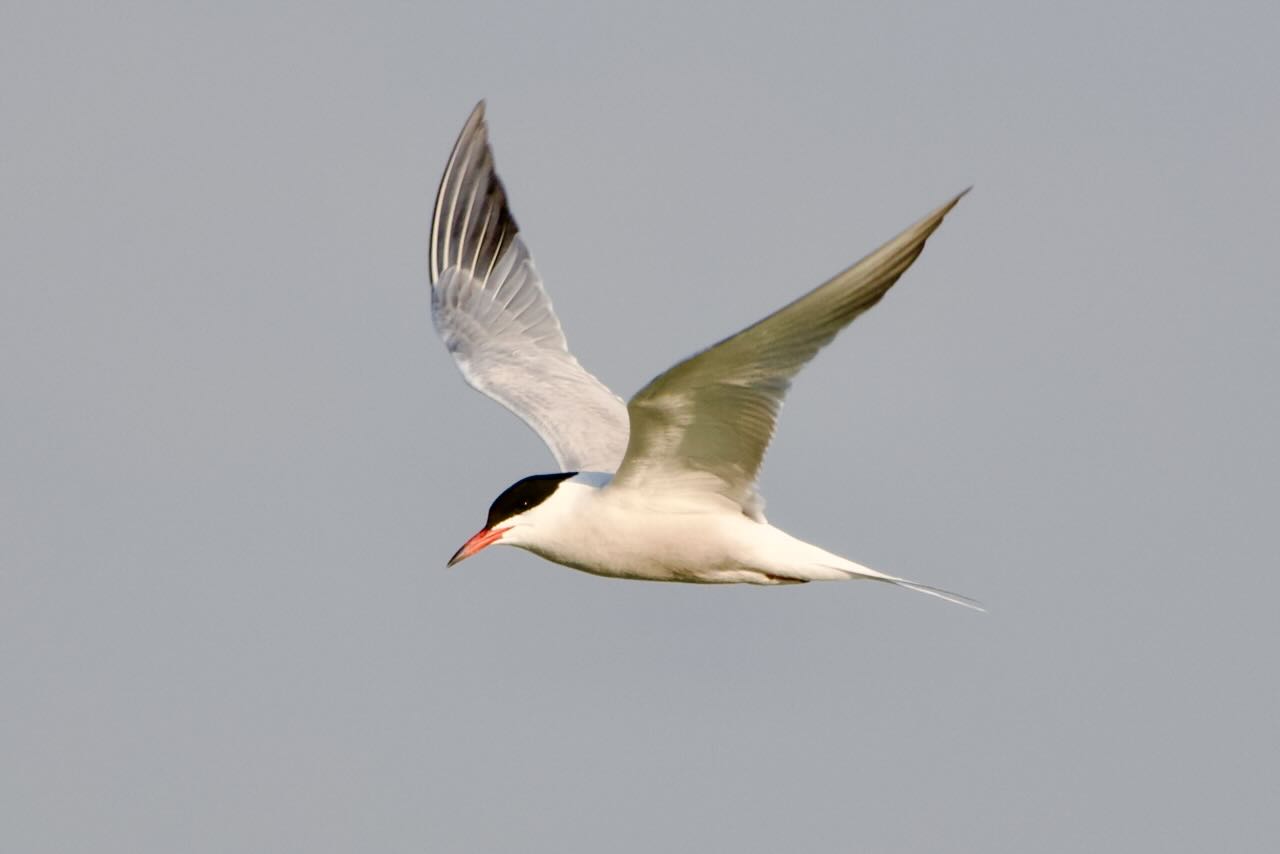
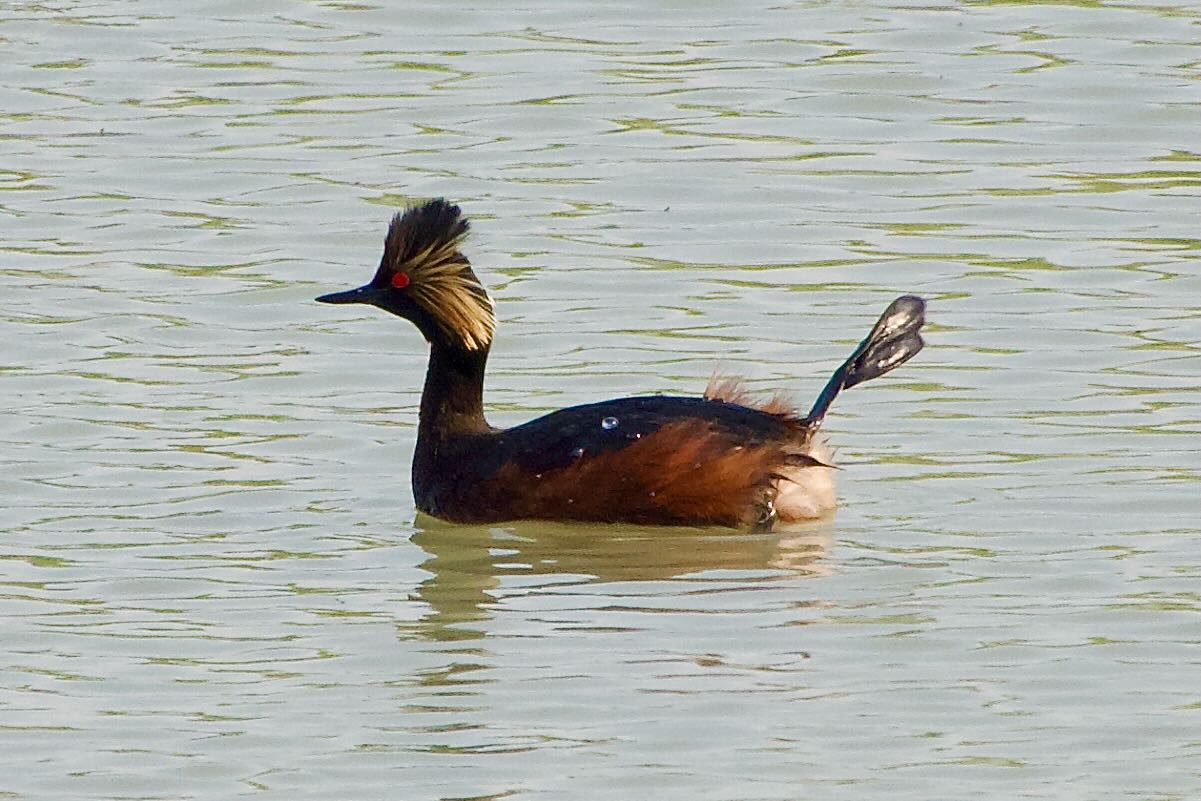
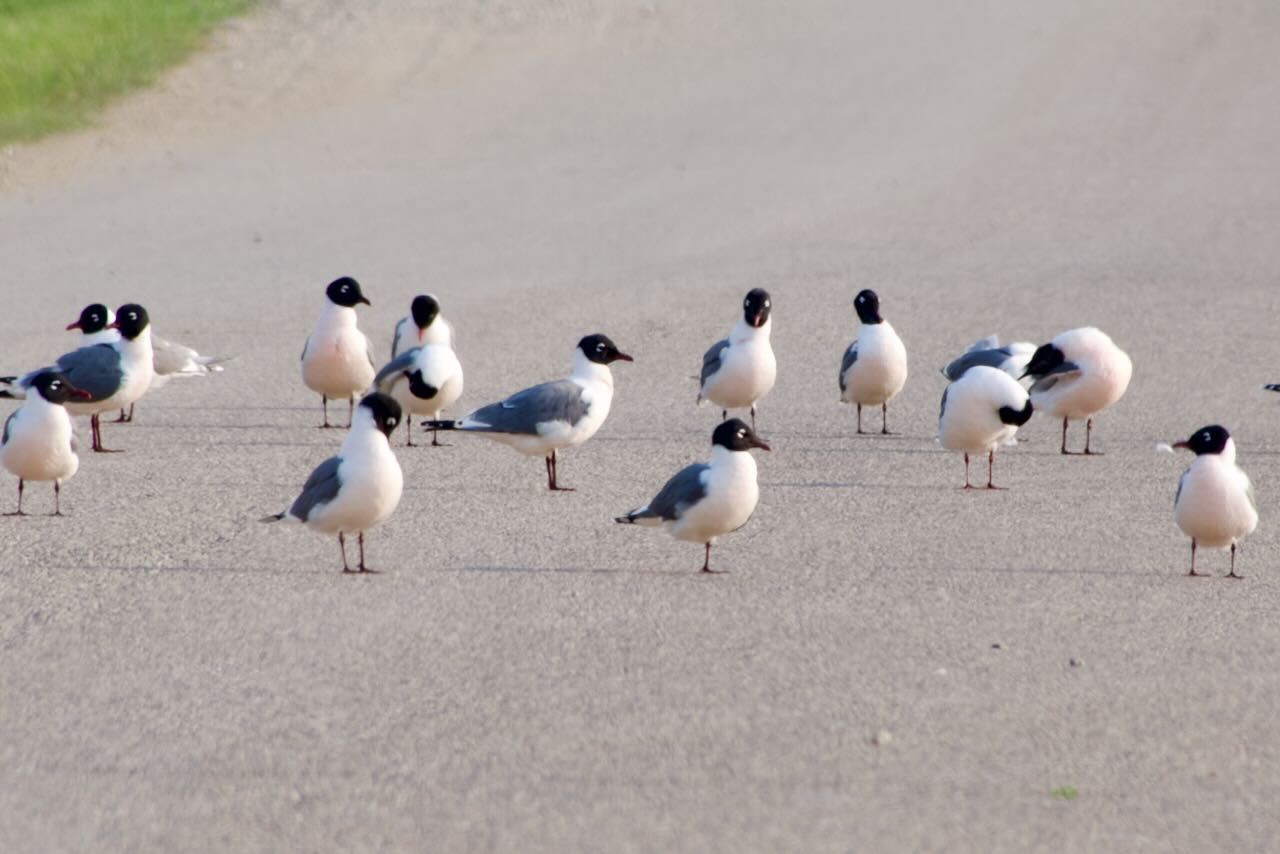
Wednesday we faced a long drive of 12 hours mostly because we opted to drive in Canada instead of heading into the US which would save us 3 hours. We had originally planned on birding in Manitoba but with wildfire smoke and time constraints we opted to drive through and save birding in that province for our way home. It was an easy drive, little traffic, once you hit Manitoba the speed limit is 110 so the kilometers go quickly. We checked into the Pilgrim Inn in Caronport and then headed 30 minutes west to Chaplin Lake. This salt lake is home to a number of migrating and nesting birds. We added 9 species in a few hours and probably saw a Baird’s Sandpiper but I was not sure so it remains off the list until we check photos and get second opinions. It is getting tough to go through all the photos and for Jerry to send them to me so that I can use them in my blog but we will eventually catch up when we get to my brother’s in BC.
American AvocetCalifornia GullMarbled GodwitRed-necked PhalaropeCommon TernEared Grebe
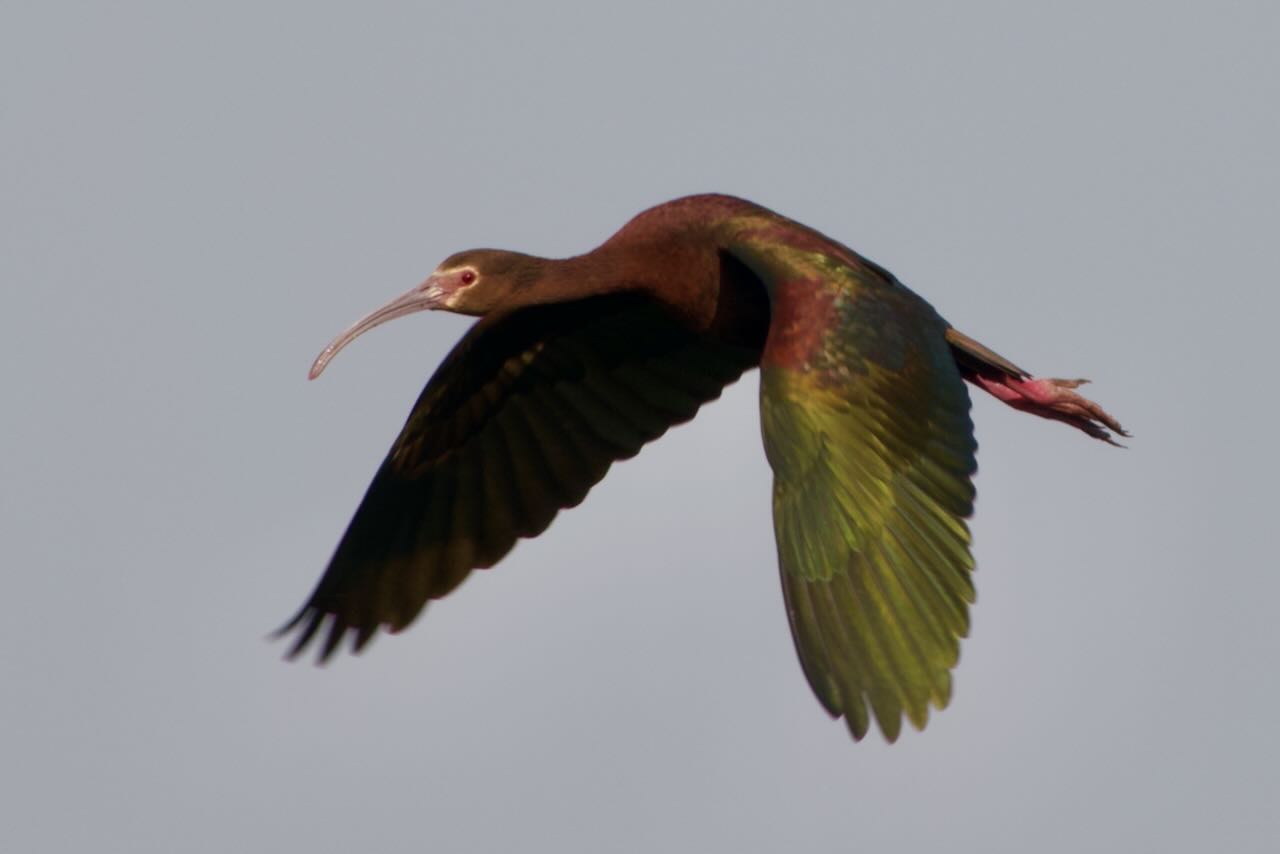
Having checked what was being seen in Saskatchewan the night before I decided Thursday morning to take a detour 30 minutes further west of Chaplin Lake to see White-faced Ibis at Francis Lake. It was a fantastic wetland lake with large numbers of ducks and marsh birds.
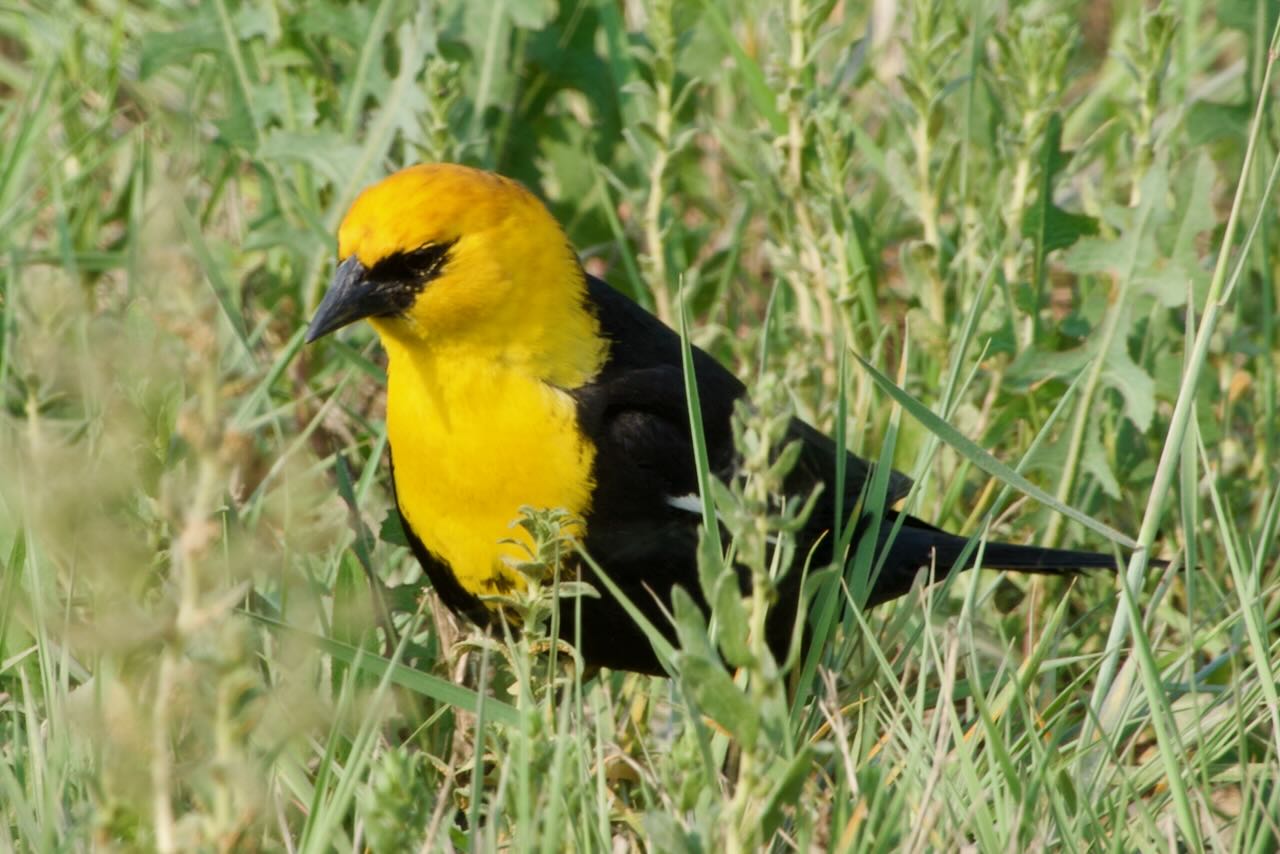
Many Yellow-headed Blackbirds dotted the road edge and Ibis’s exploded from the grasses as you got close to them. They were very skittish and getting pictures was challenging but Jerry eventually managed.
White-faced IbisYellow-headed Blackbird
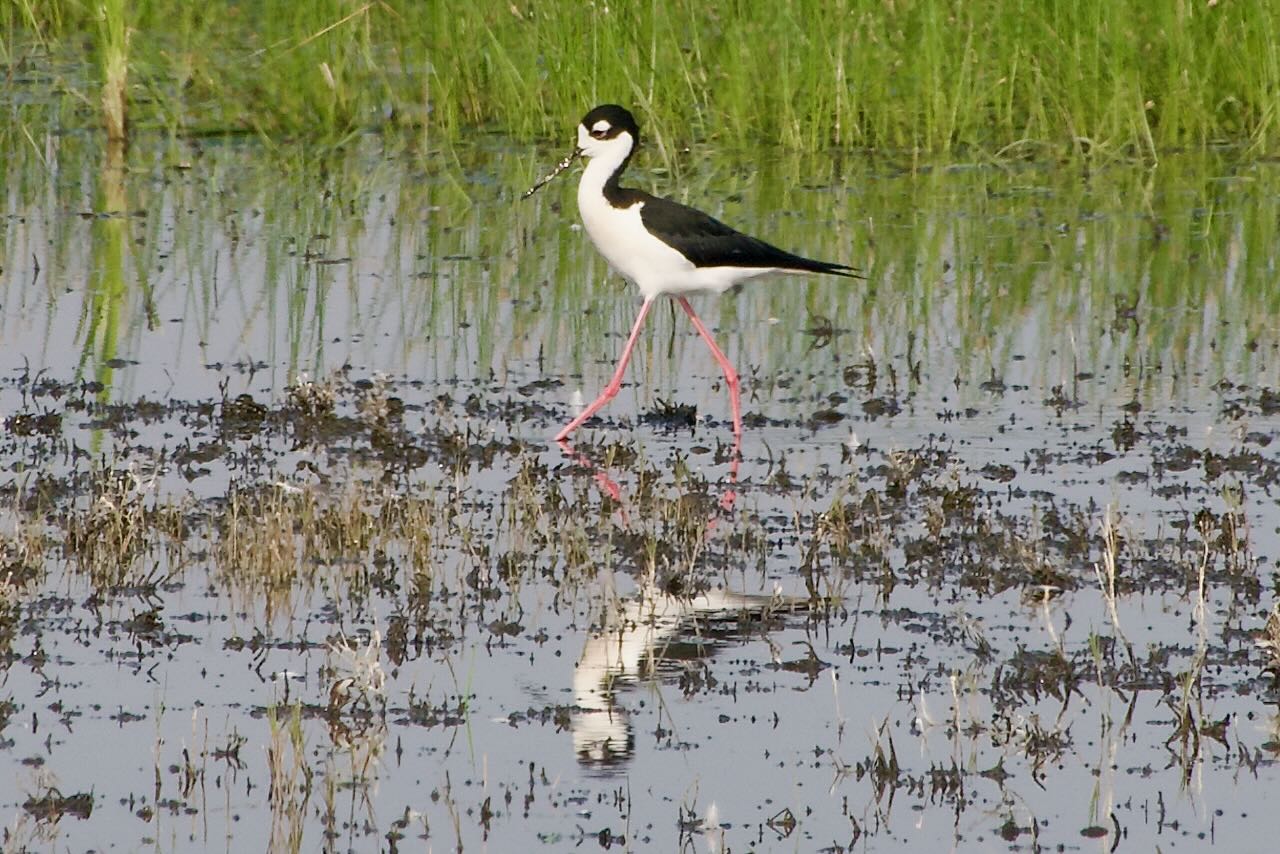
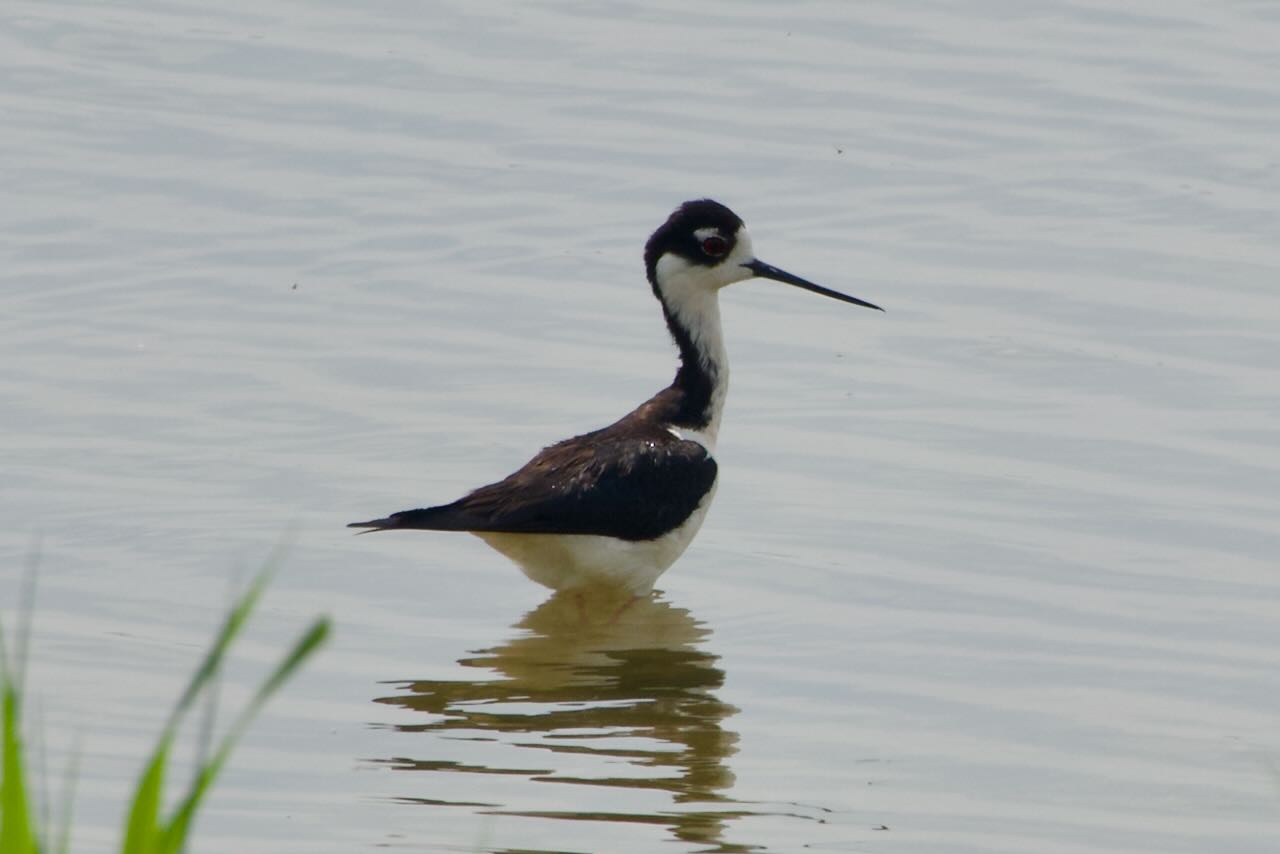
A bonus I was not expecting was to see two Black-necked Stilts, an expected species but not abundant. it saves me from chasing it later in Alberta.
Black-necked Stilt
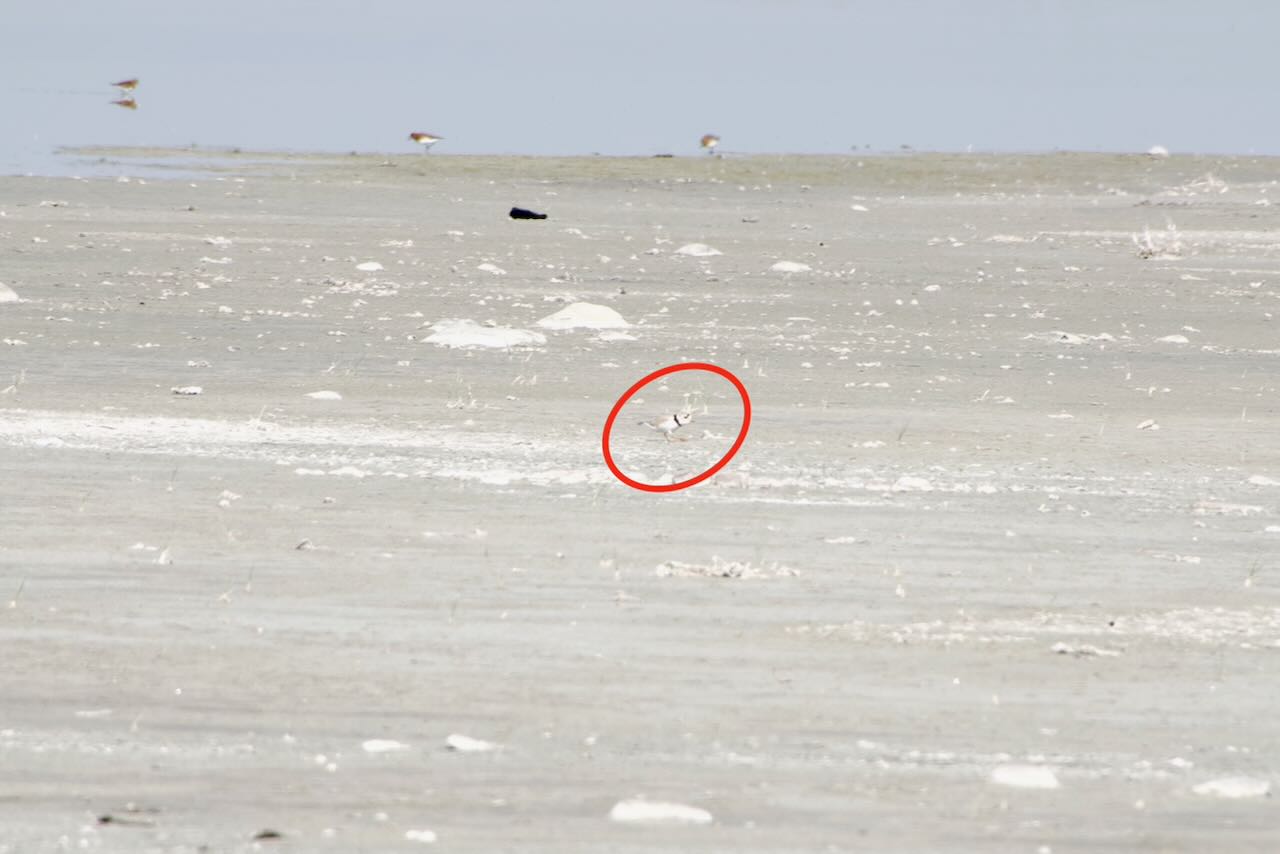
On the way back to Chaplin we stopped at Reed lake, a salt lake like Chaplin to scan for a possible Piping Plover that had been seen.
We walked out to the salt beach and I scoped both directions and saw nothing and then I turned it over to Jerry and there was a Piping Plover! It was way down the beach but we walked down to try and get a better picture. It just kept moving further away. We always take multiple looks for things for just this reason, birds suddenly appear in your scope view!
Next stop was Chaplin Lake again to see if the lighting was any better and we could figure out if a Baird’s Sandpiper was there or not. I still struggled with seeing one, I kept thinking a bird looked good but then it didn’t. It was now later than I had wanted to be heading to the Grasslands 2 hours away so we opted to stop the “search”.
Minutes later, right on time, we had our usual fight that happens 4-5 days in on these trips. Lack of sleep, differing ideas of how to bird, numbers of daily irritations with each other, confined in a car, the reasons are insignificant, but we needed to clear the air. I slammed on brakes to yell at Jerry, he yelled back, we went back and forth for a bit and finally I started to drive in silence and Jerry says, “Gray Partridge”, it was right beside the car! Another bird to add to our list. And just like that the fight was forgotten.
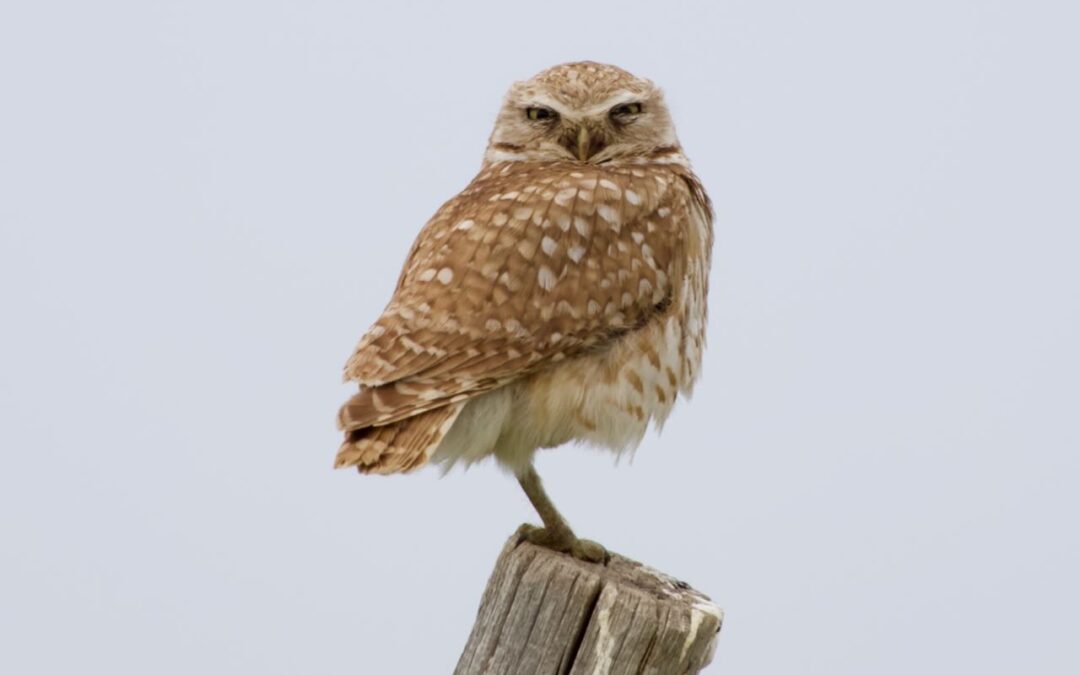
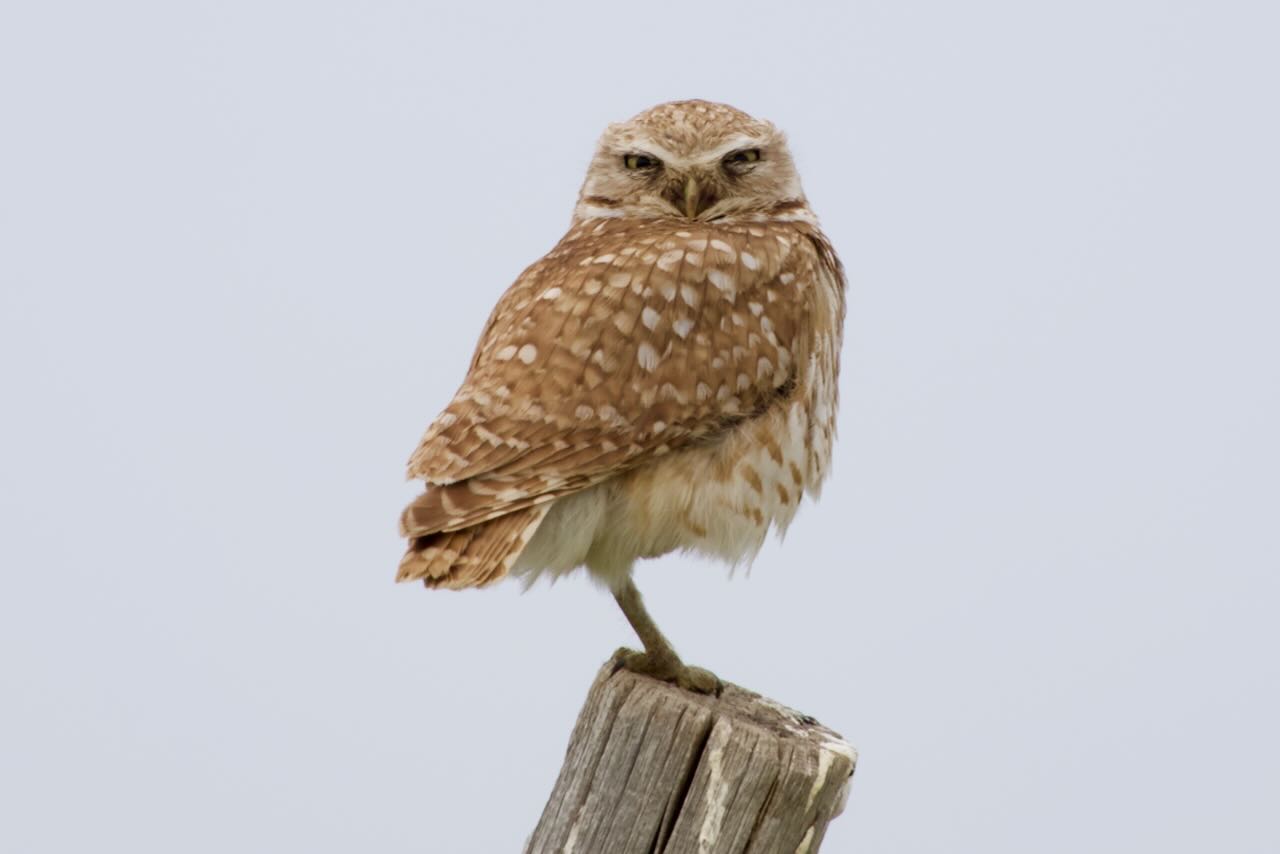
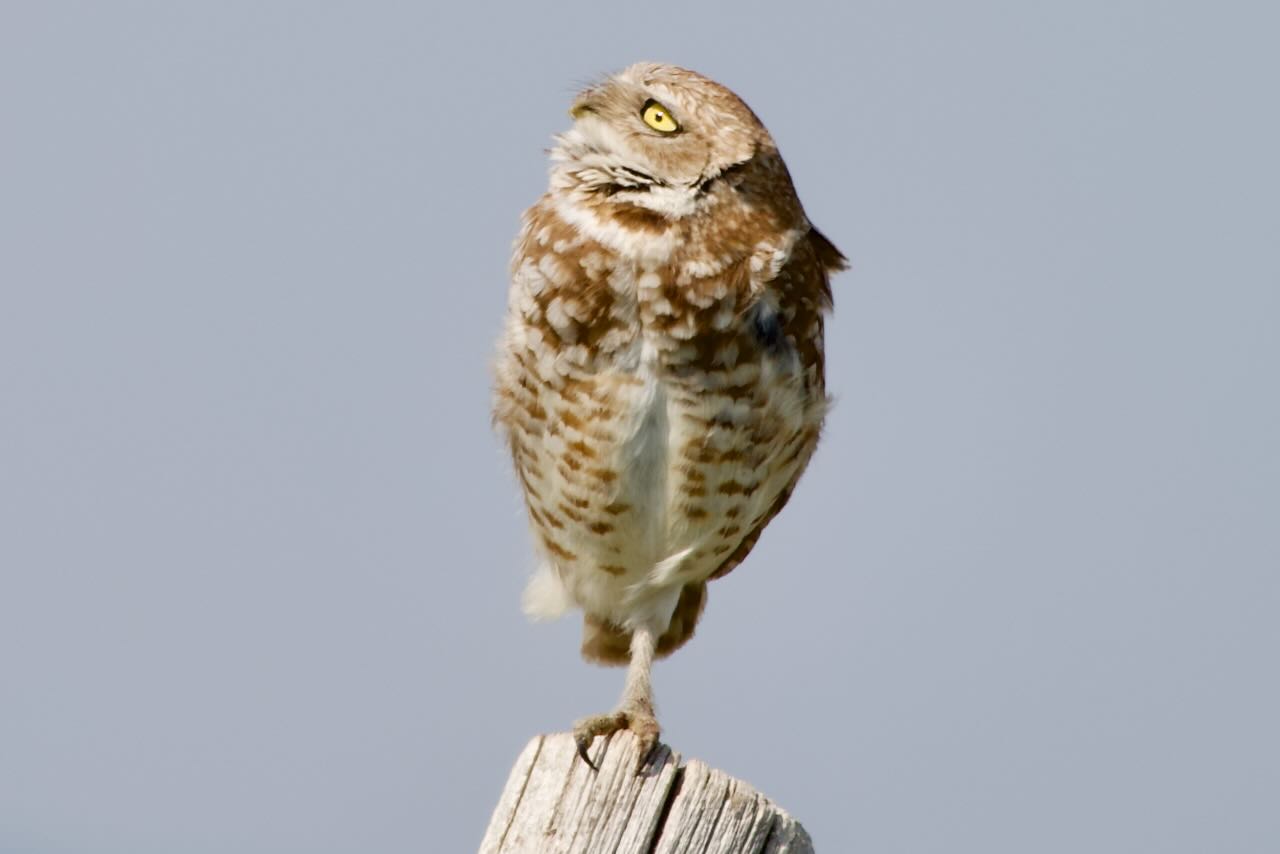
When we finally got to the Grasslands NP it was mid afternoon and we only had time for a short hike but we had added lots of birds on the drive into the hiking area and we added more on the short hike. On the drive in we were lucky to find an adorable Burrowing Owl sitting on a fence post.
Burrowing Owl
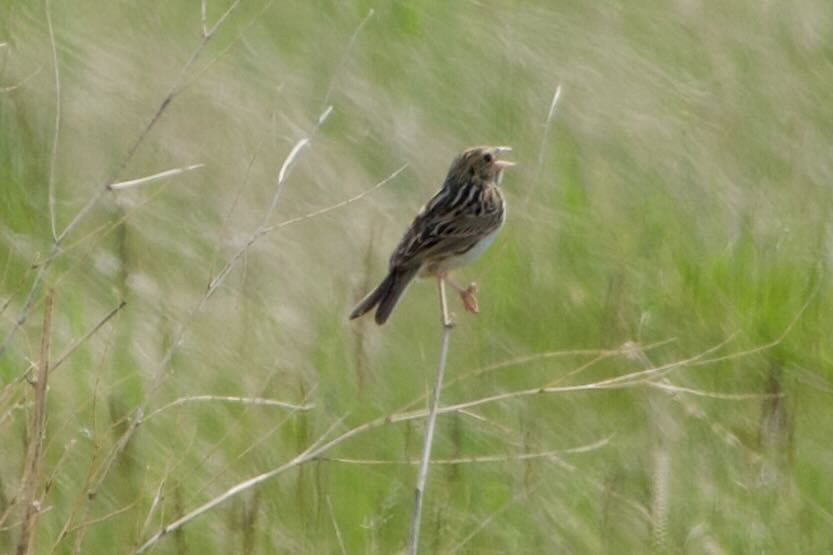
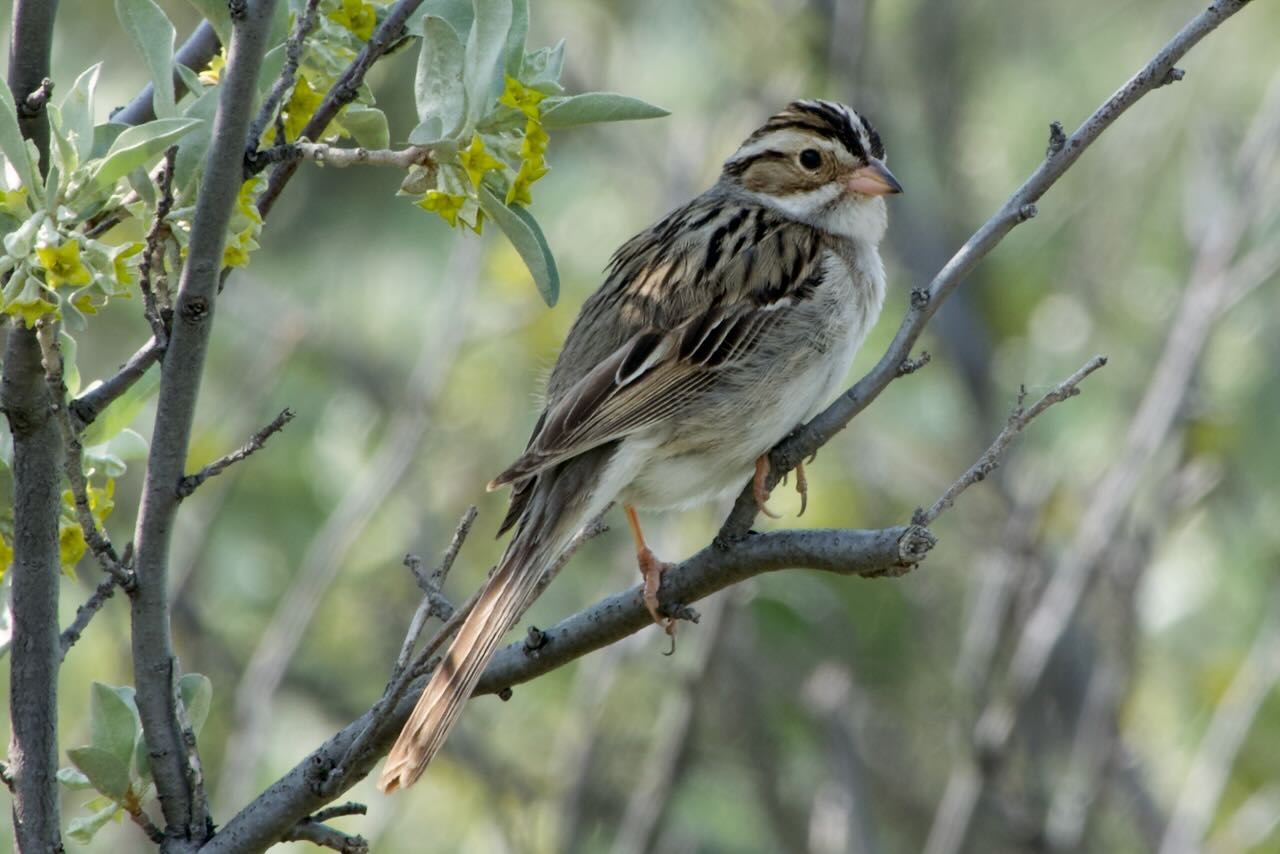
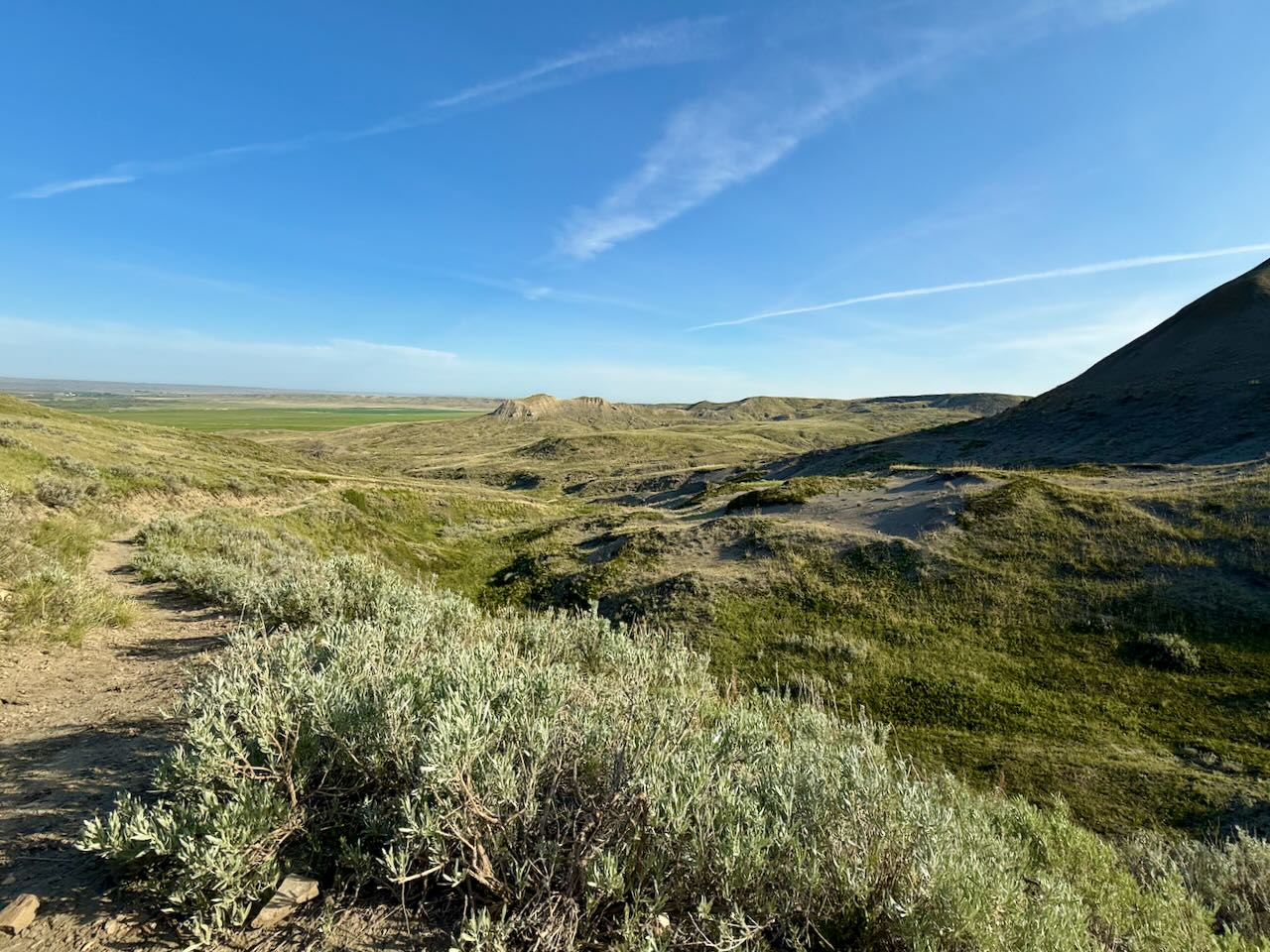
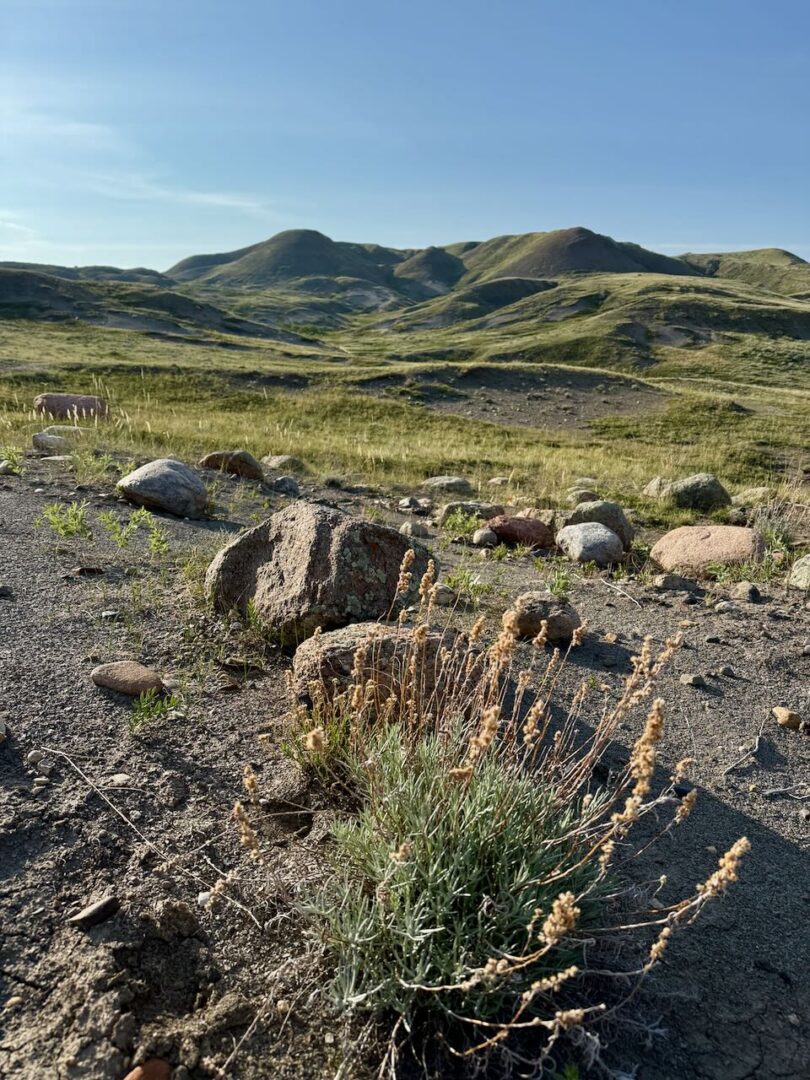
The grasslands and buttes are magnificent to view, the sagebrush and wildflowers add a wonderful scent and the silence is complete. Until a bird buzzes. Sparrows are, of course grassland species and they can look very similar with songs that are often buzzing or trills that take some practice getting to know. Merlin helps us a lot with sparrow song but we are getting better at the more common ones and that helps to identify when we hear something different. Hearing and identifying the call is one thing, but actually seeing the sparrow is quite another. Some like Savannah and Clay-colored perch up on the top of a bush to sing so it’s easy to see them. But other’s like Brewer’s and Baird’s Sparrows tend to sing from inside shrubs or the grass and so it is not always easy to find them. To complicate things further, Brewer’s and Clay-colored are very similar looking and when they are singing in the same area it takes some figuring out which pic is which for us.
Baird’s SparrowClay-colored Sparrow
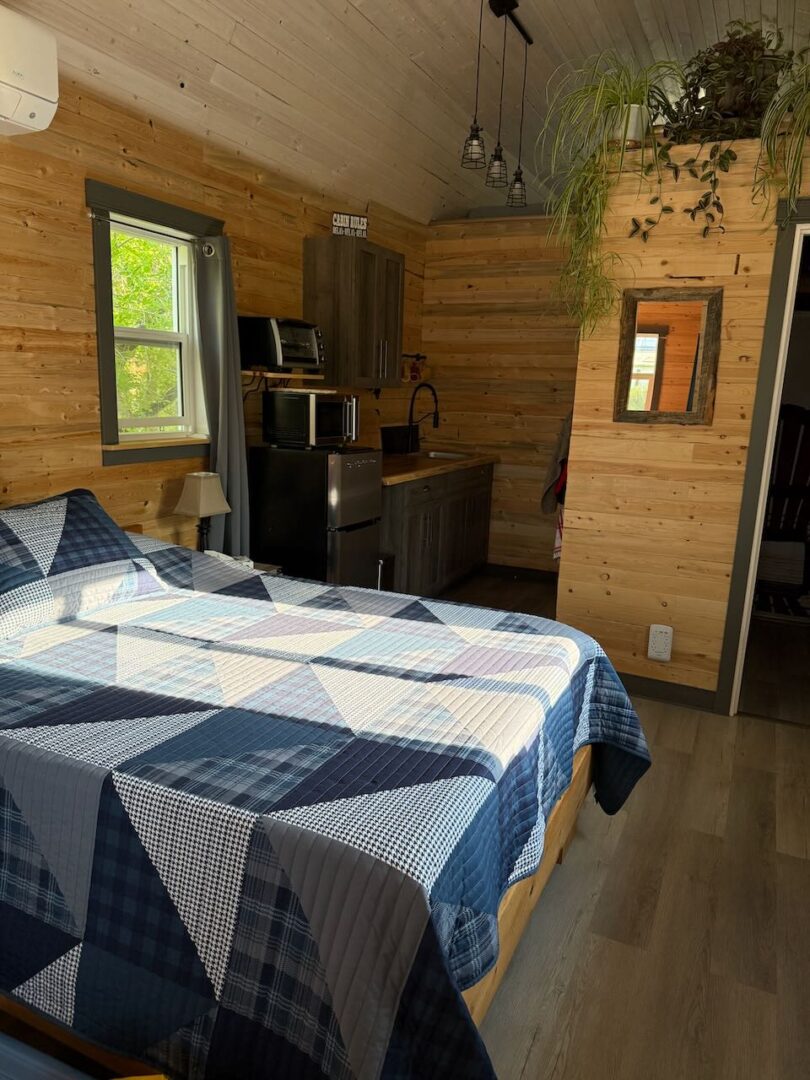
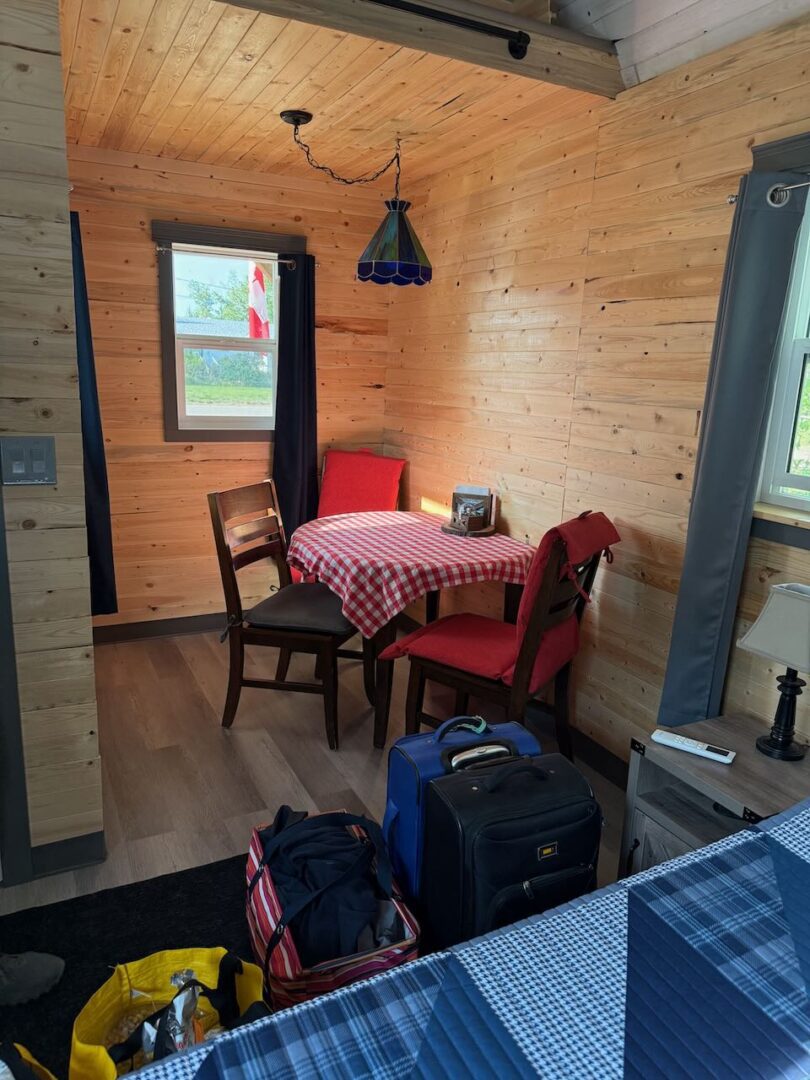
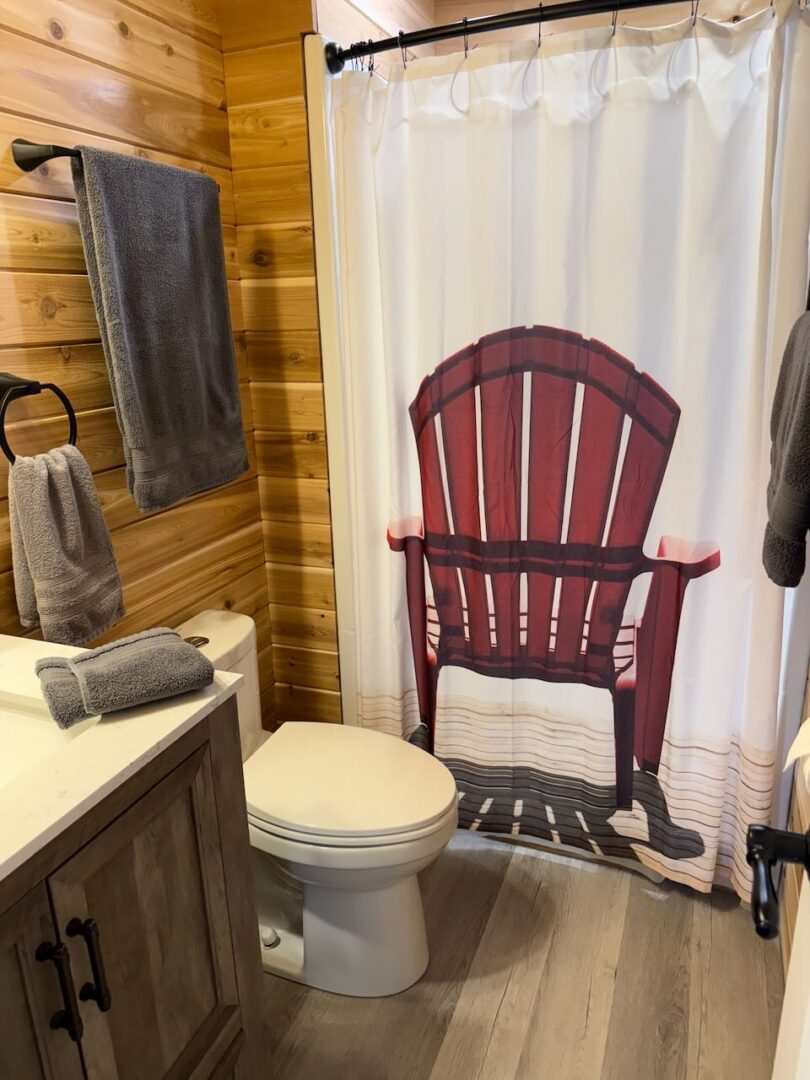
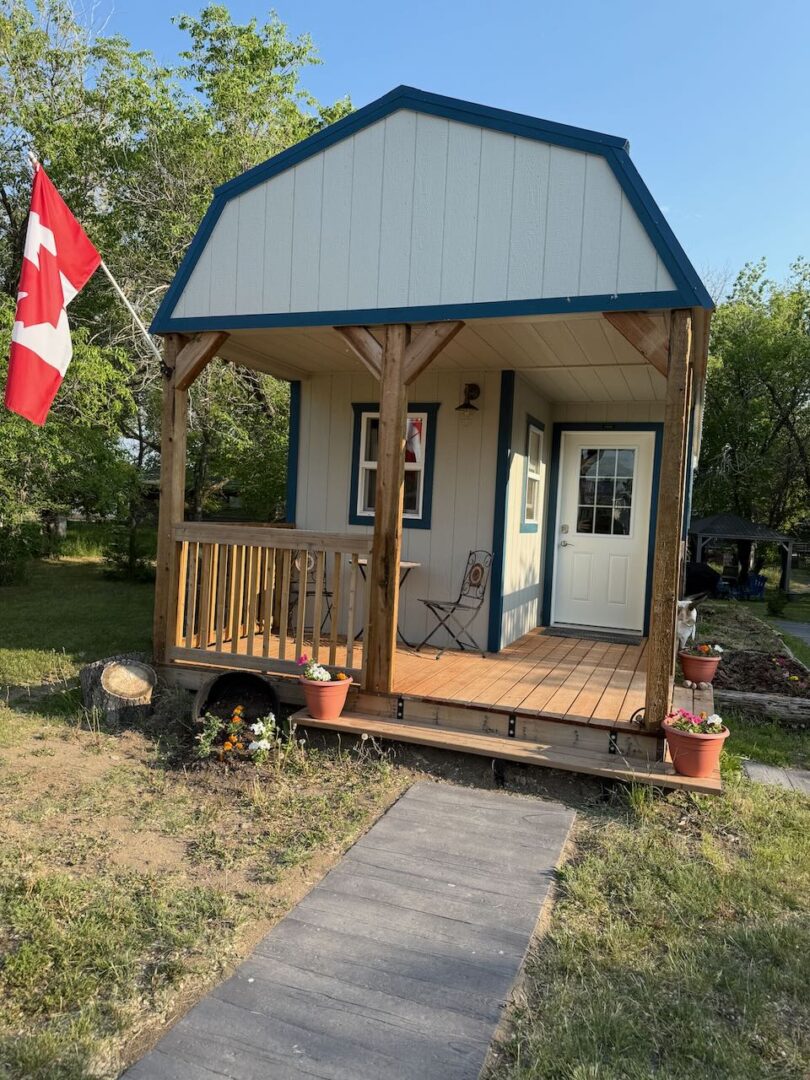
With a bit of a time constraint on us we headed over to the west block of the park and our tiny house for the next two nights. The Sanctuary Inn is a new accommodation in town and we highly recommend it. We stayed in the tiny house and it was perfect! Caitlin is a wonderful host and pays attention to the smallest detail. We would have loved to stay longer!
Friday it was nice not to pack up or rush out early. We headed to the Eagle and 70 Mile Butte Trails to do some hiking with two targets on our minds.
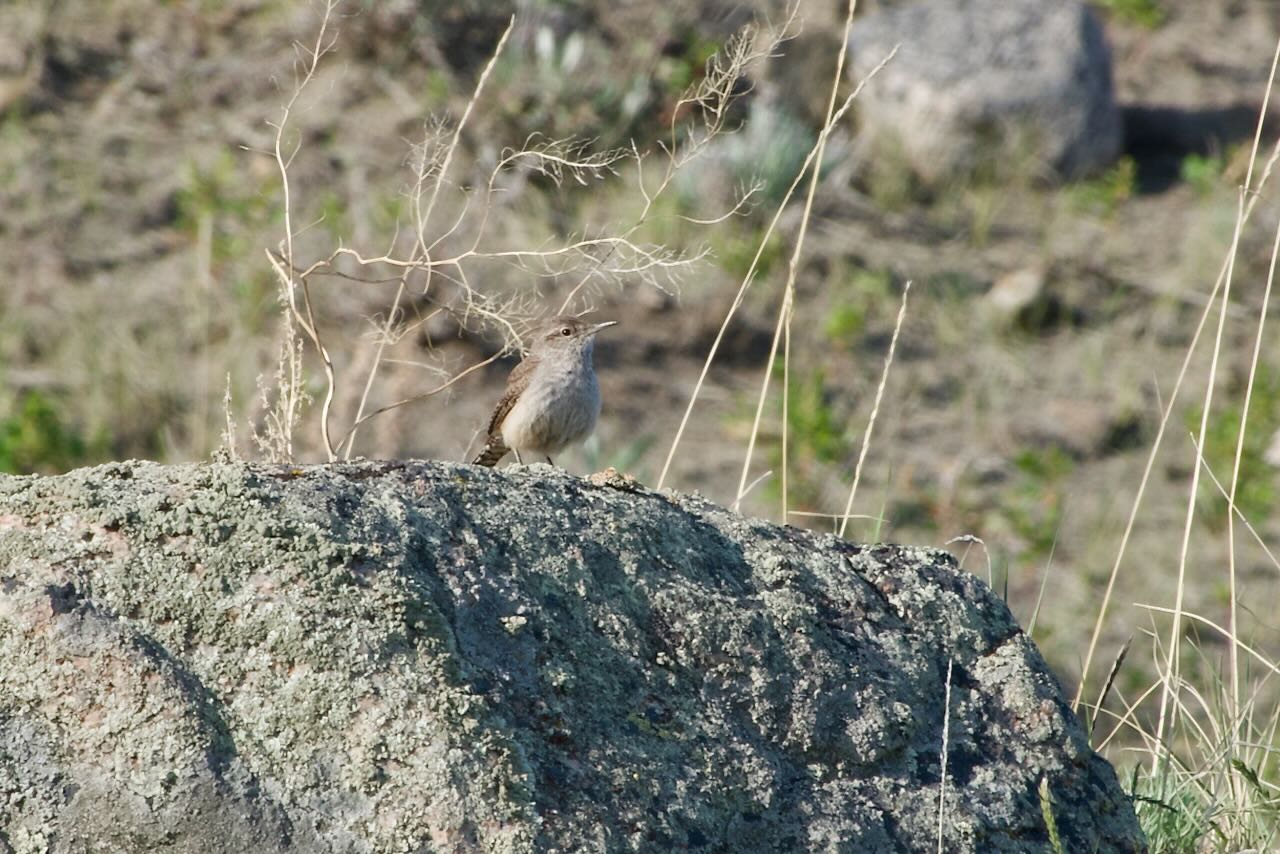
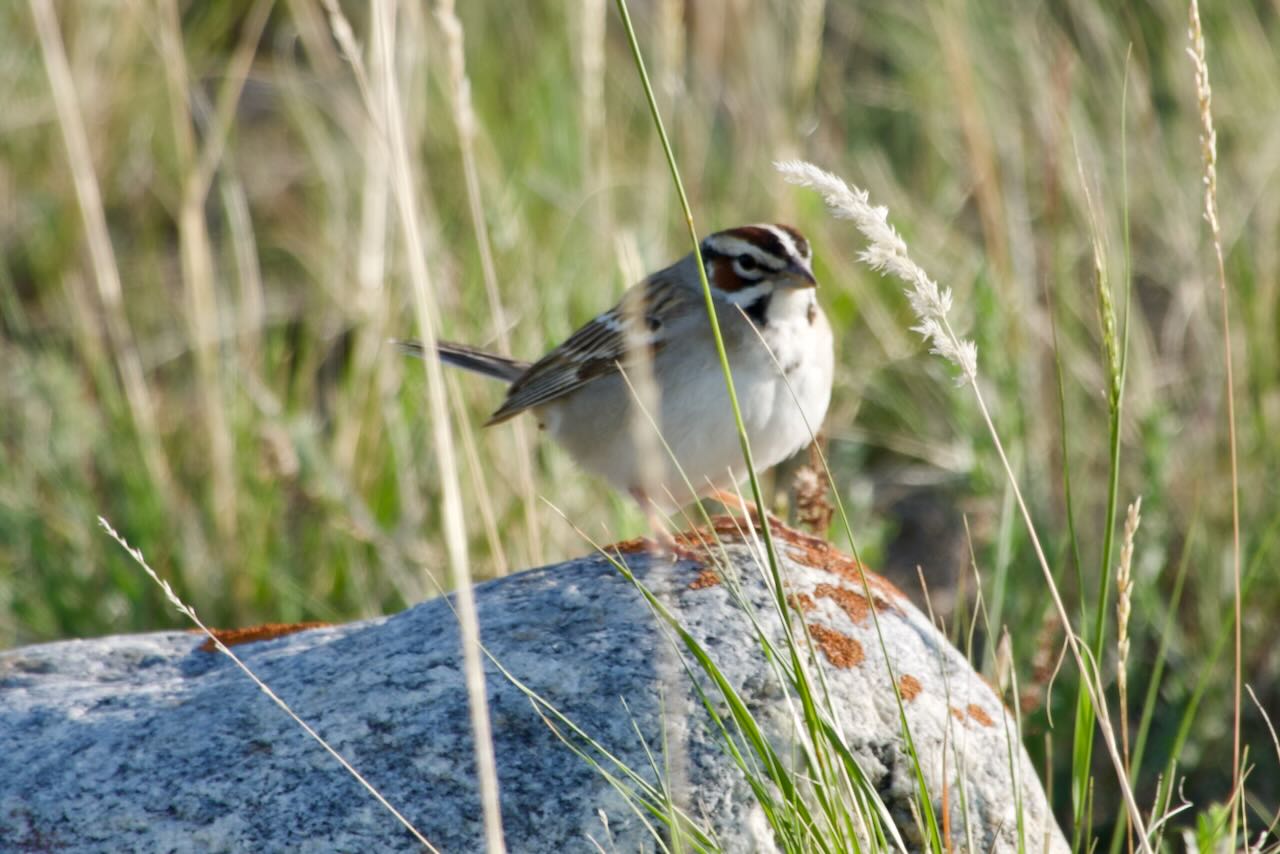
We needed Rock Wren and Lark Sparrow and both were seen regularly on these trails. Within five minutes we saw two Lark Sparrows and minutes after we heard the Rock Wren. We saw many Wrens and Lark Sparrows so Jerry had multiple chances for good pictures and he got them!
Rock WrenLark Sparrow
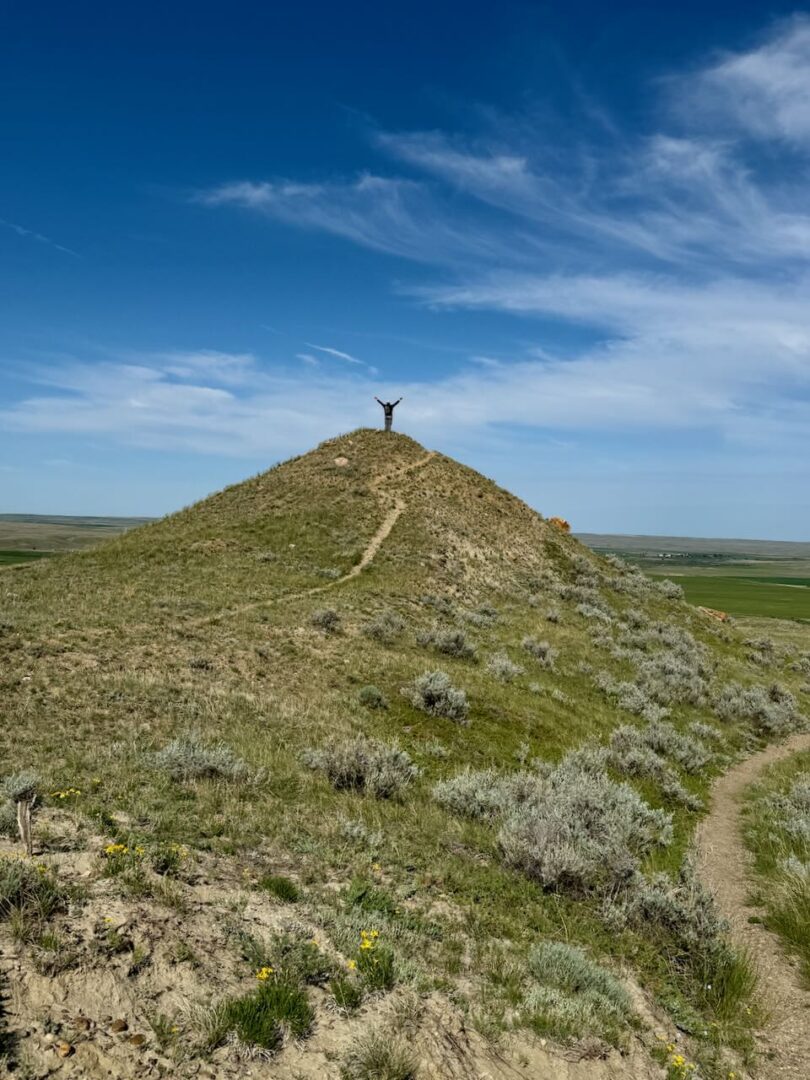
I love when the day starts like that! We traveled up the trail to the highest point where you could see 360 degrees out over the grasslands and badlands. The hike was rated difficult but it was not in our view.
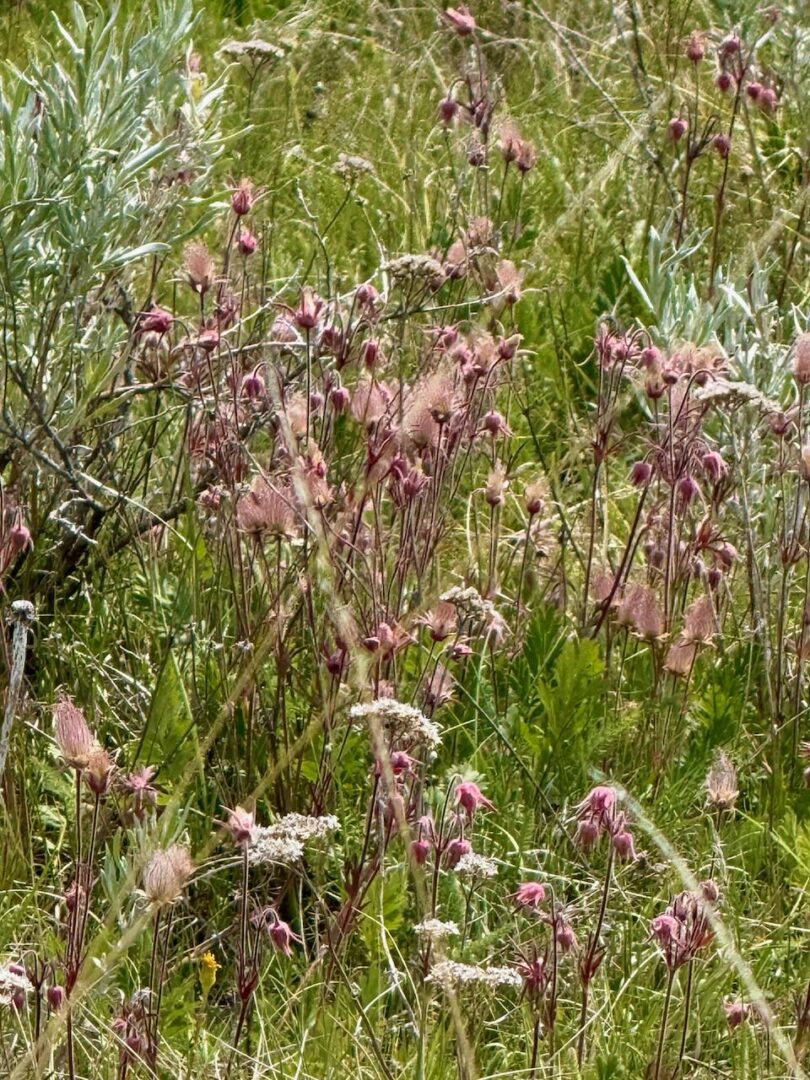
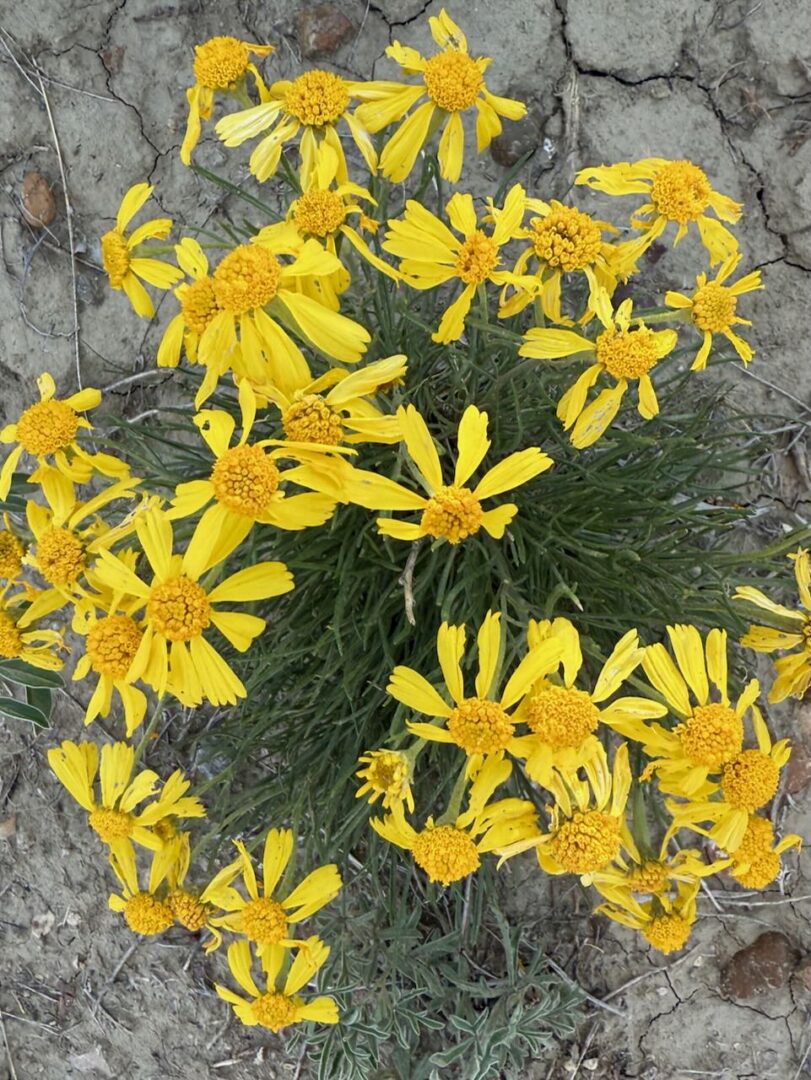
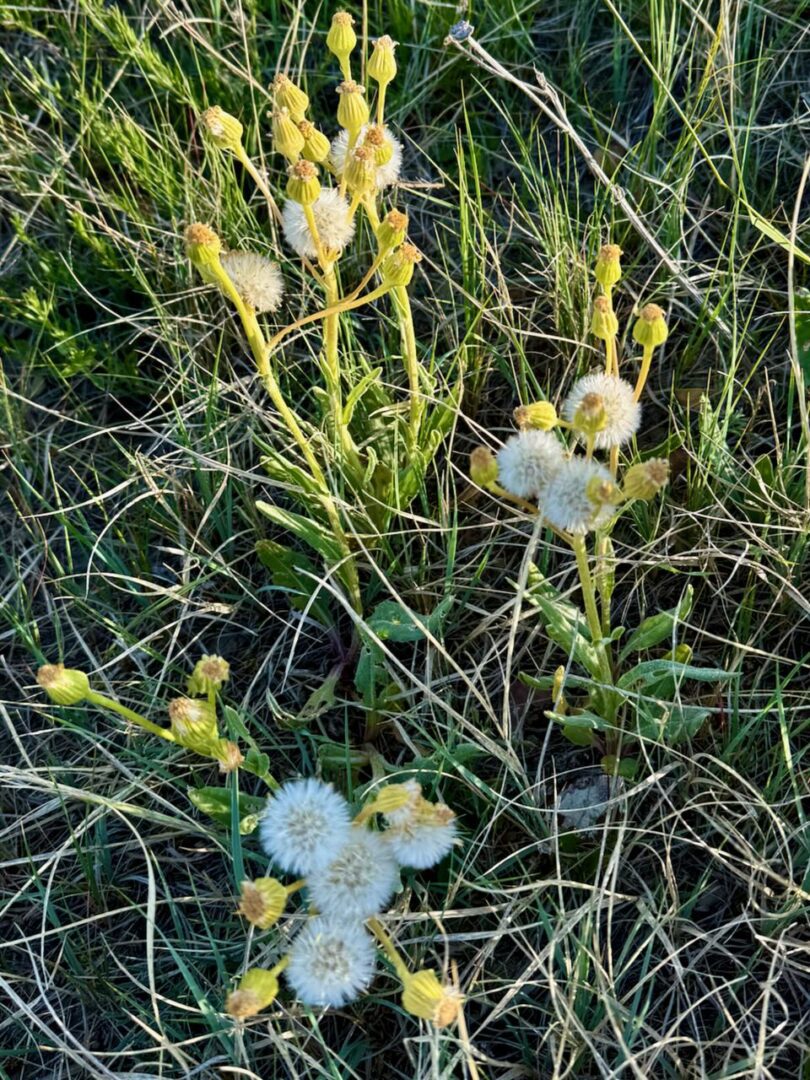
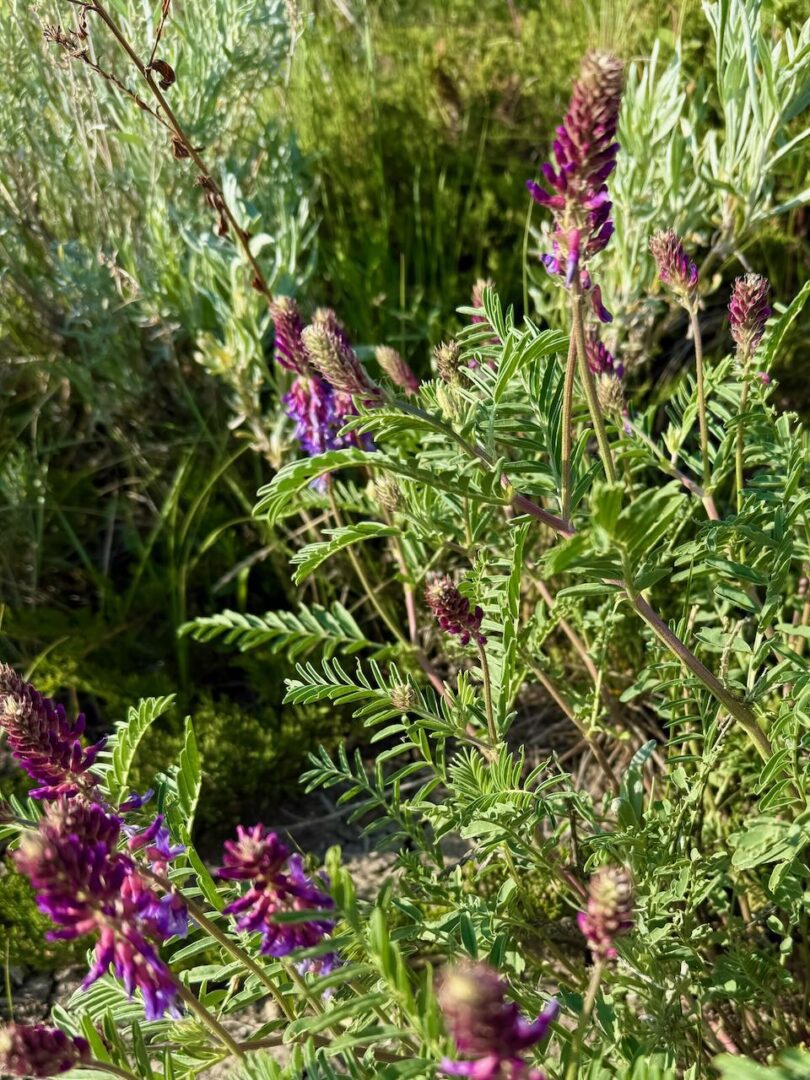
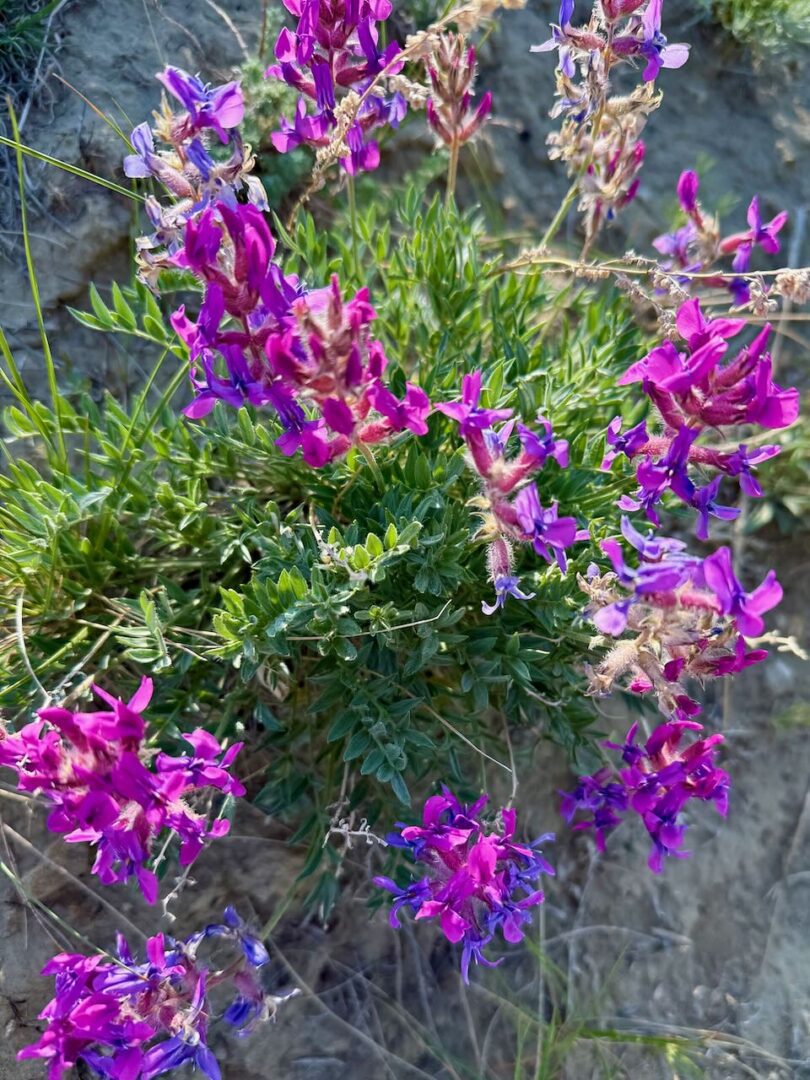
It was lovely seeing the colour of the alpine/prairie plants.
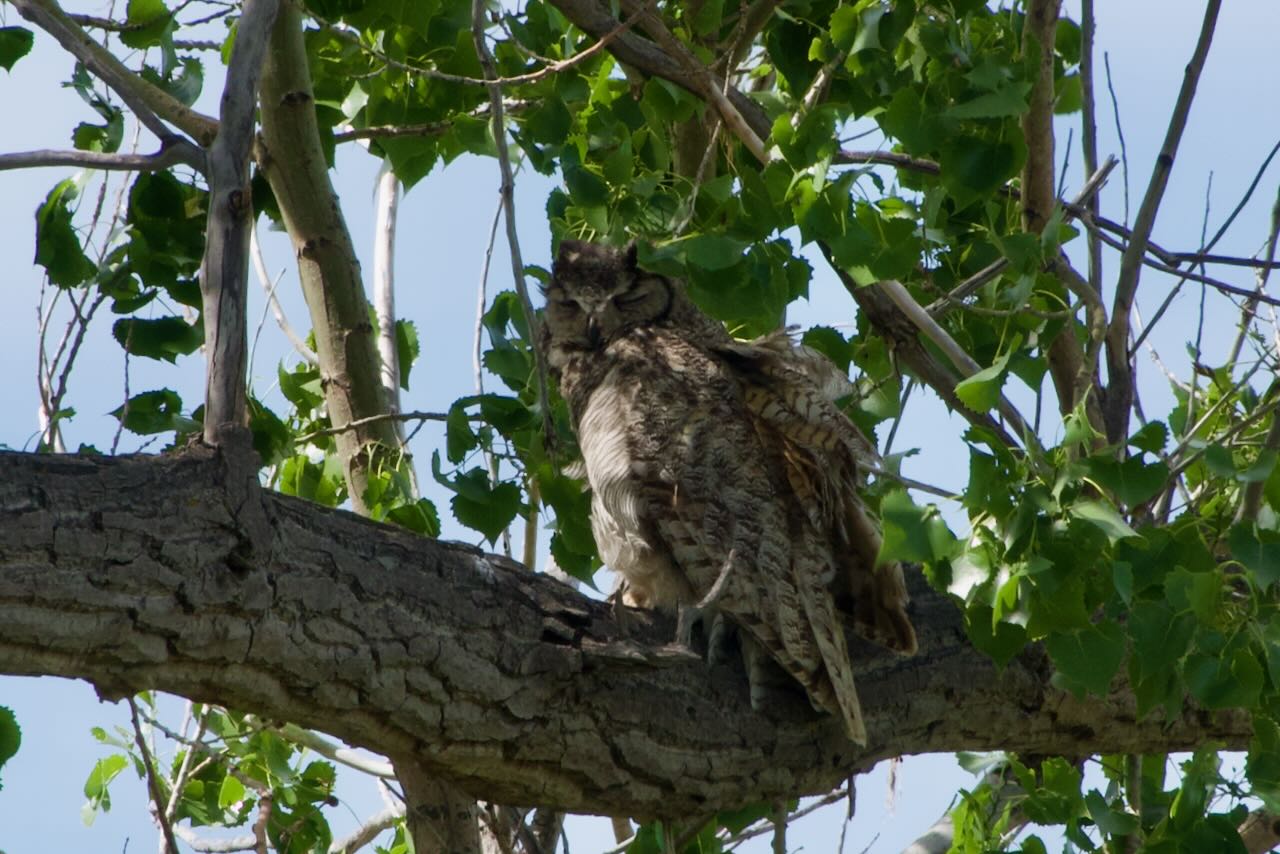
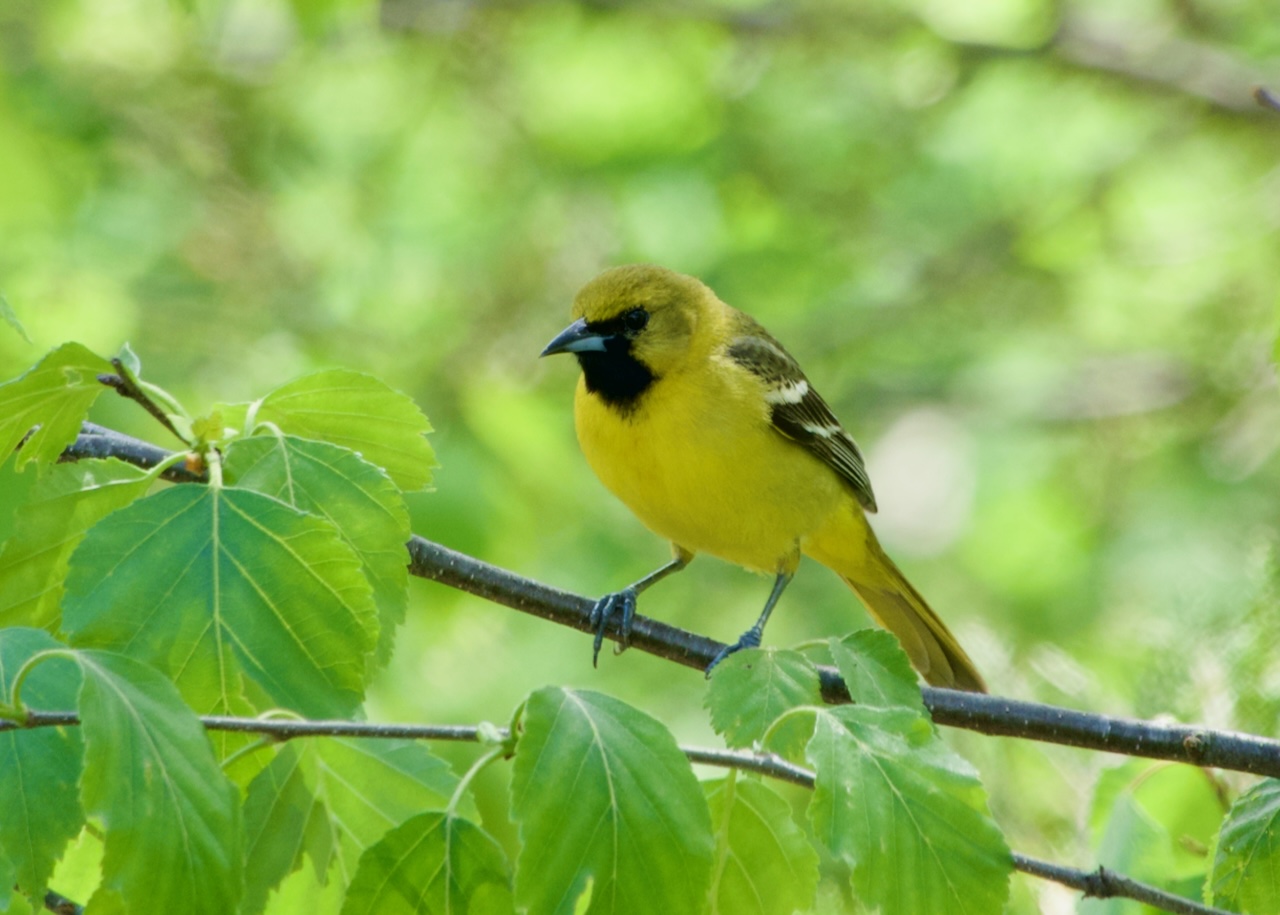
We headed to another area and did another hike along a river stopping at a small area with large trees and resident Great Horned Owls. At the Day Use area there were two Orioles calling continually and we noted the female we saw “looked” different. Merlin suggested it was a Bullock’s Oriole from the call and so we took pics and asked for help from the birding community to make sure we were right in our IDing of a female Bullock’s Oriole with a male Baltimore Oriole. Orioles are known to hybridize and after talking with other birders we opted to put it in as a hybrid female with a male Baltimore.
Great Horned Owl
We headed back to our tiny house for an afternoon siesta, which means wading through the pictures and checking email lists etc rather than napping. We ate our big meal of the day and then headed back into the park for an Eco drive tour. We finally saw a Buffalo!
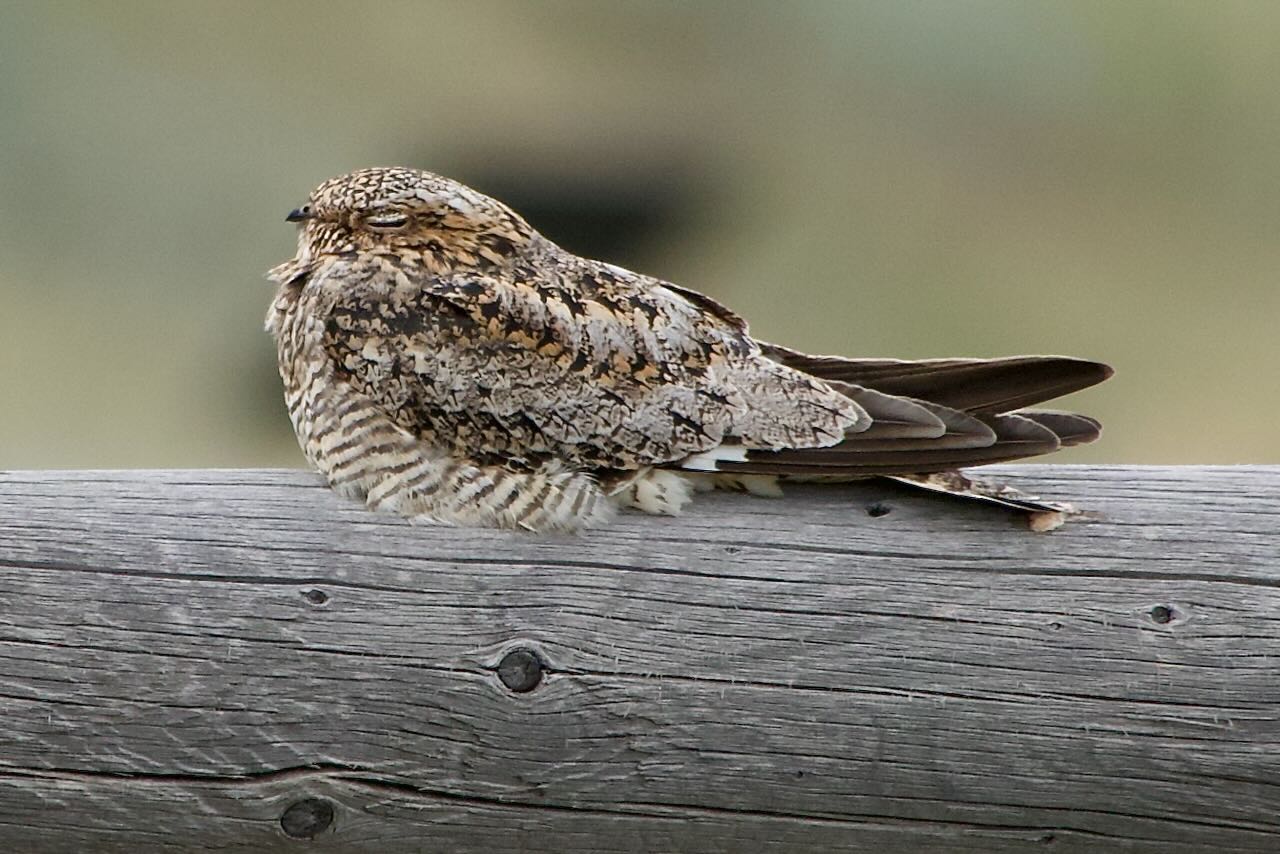
This route takes you past the prairie dog towns where you scan carefully to find the Burrowing Owls that use the prairie dog burrows to nest in. We managed to find 4 Owls at both dog town areas. But the two species we were still hoping for did not appear – Thick-billed Longspur and Sprague’s Pipit. We did manage to see a number of Common Nighthawks roosting and flying at the Grasslands campground.
Common Nighthawk
We arrived back to our home at dusk and I made final preparations for the drive tomorrow. We planned to drive through Alberta but off the main highways so we could bird for our final species that we needed for the Prairies. I took photos of maps and areas because I knew that we would have no cell service for most of our drive.
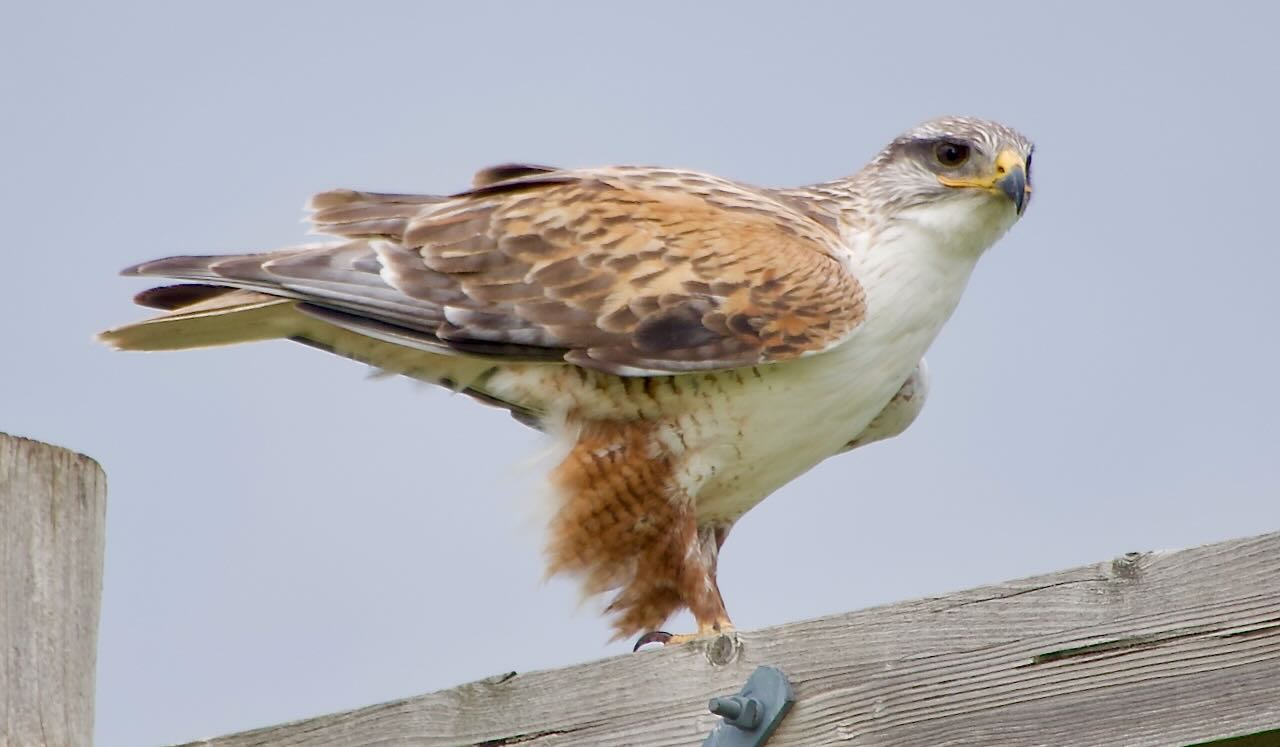
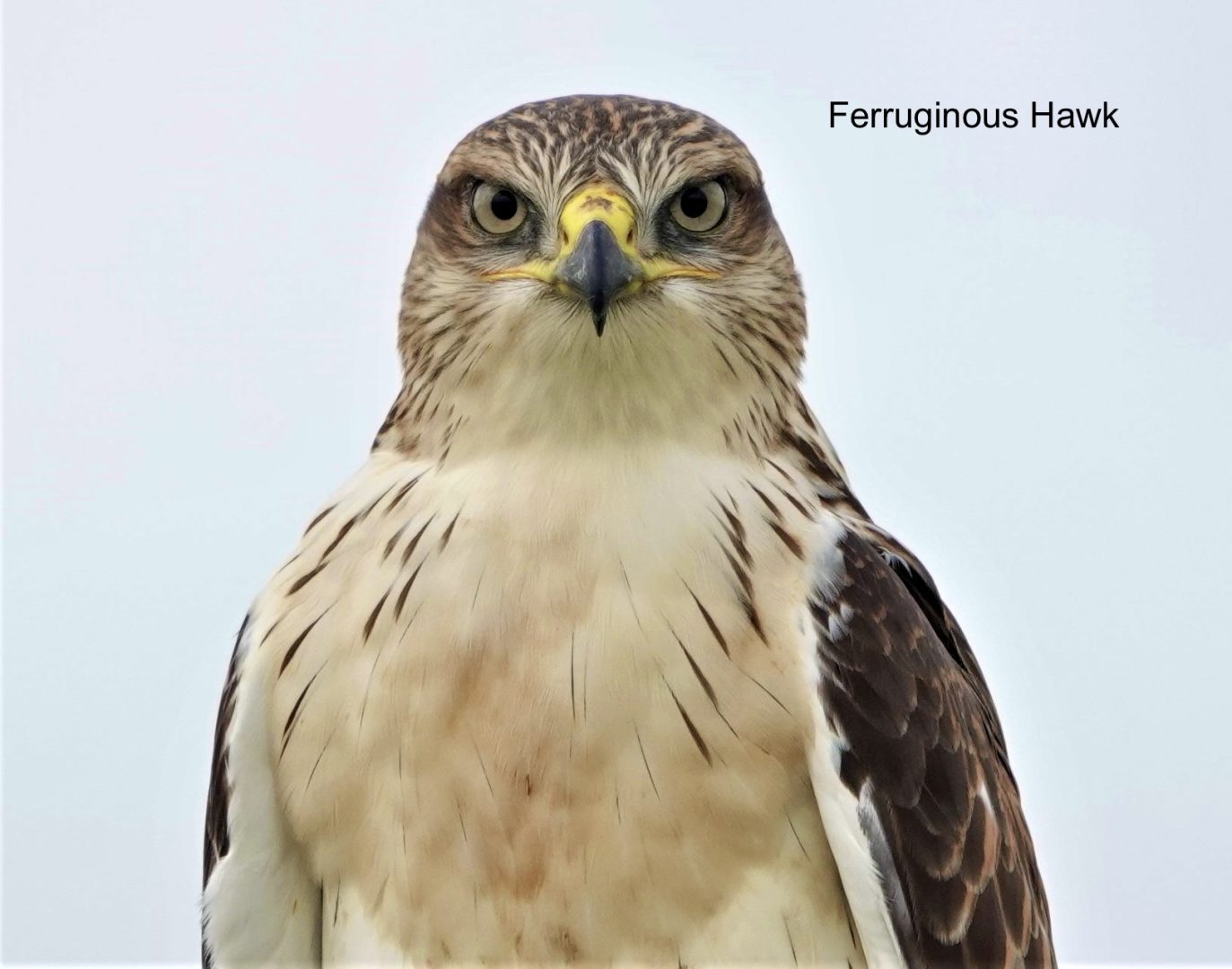
Saturday we headed west our from the Grasslands and within 30 minutes we had our first bird of the day – the lovely Ferruginous Hawk ( google how to pronounce it).
Ferruginous Hawk
Most of the driving, ok, all of the driving, was on gravel roads with wind and dust every time you stopped and opened a window to check out a bird sound or movement. We will not miss the wind
or the fine prairie dust that gets on everything including your teeth!
The inside of our car is a mess!
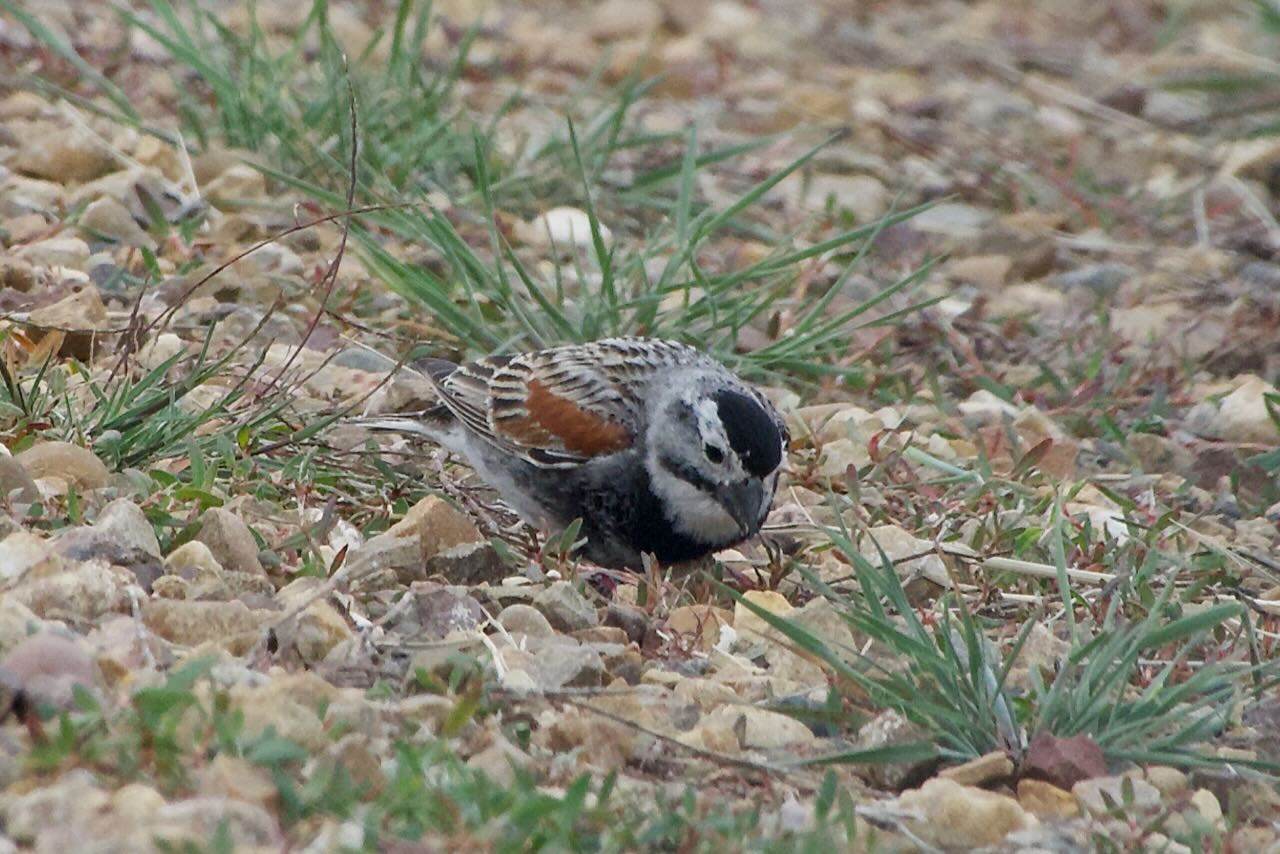
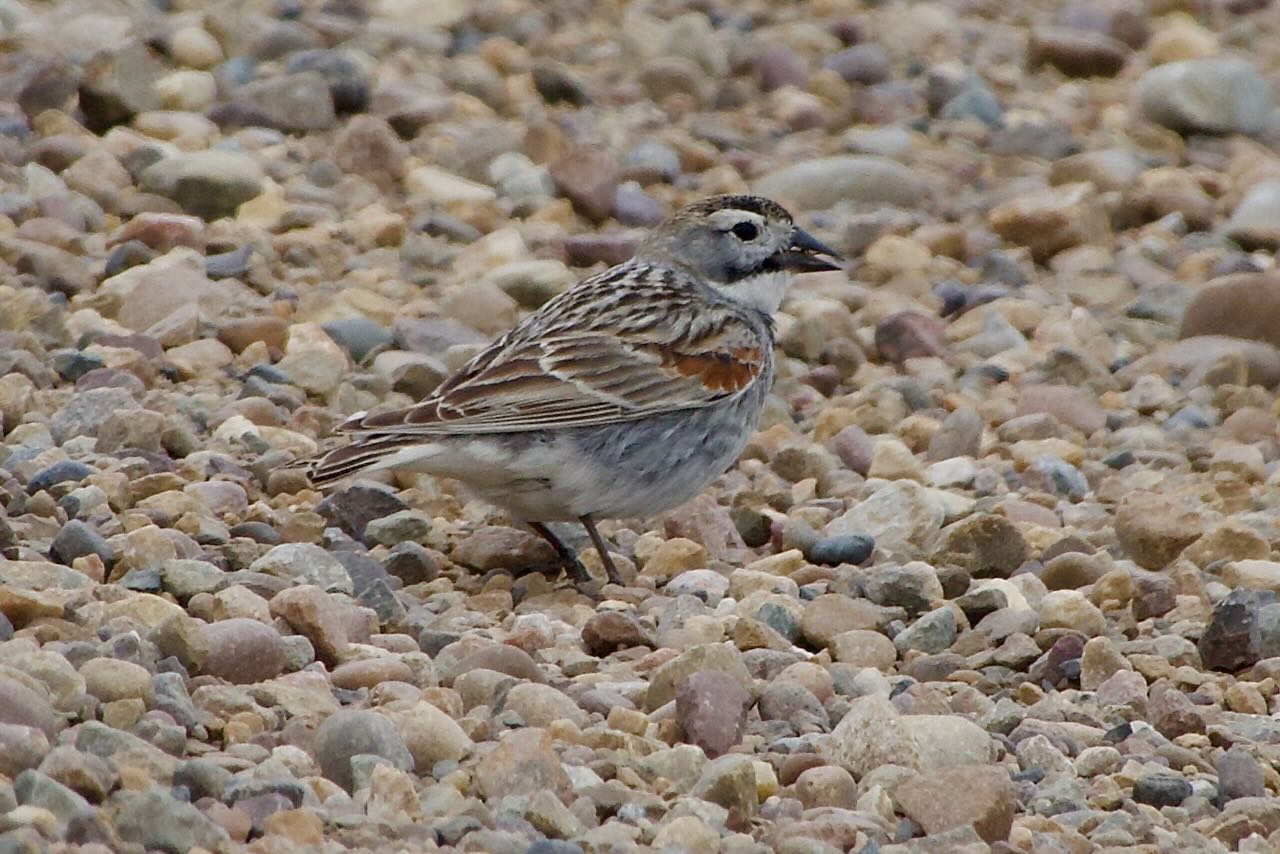
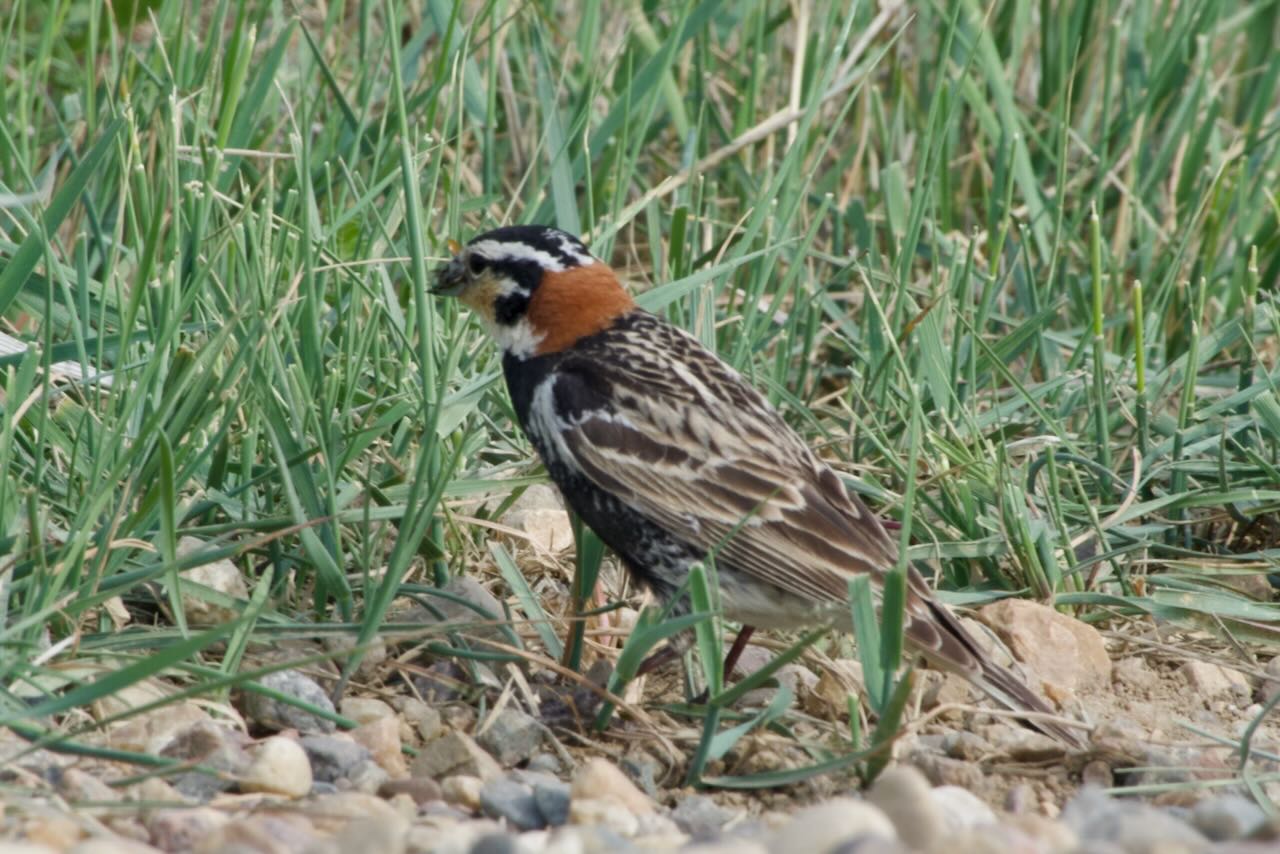
Within the first hour we had both of our missing birds – the Thick-billed Longspur and Sprague’s Pipit. Getting photos was another challenge. Jerry managed to get both Longspurs.
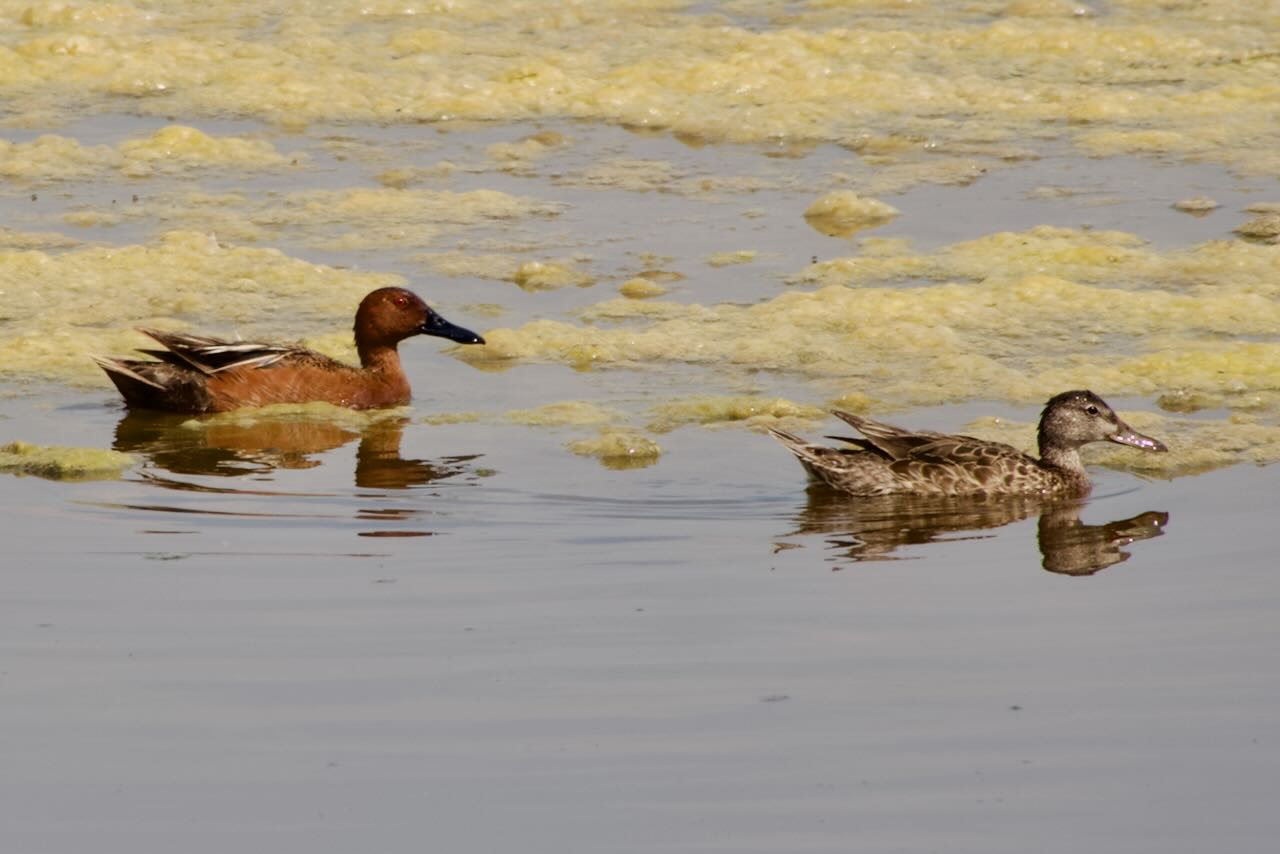
While we were driving between birding areas I checked my emails for hourly reports on Alberta birds and noticed Arctic Terns were nesting near where I knew Prairie Falcons nested. I opted to add that into our schedule and just like that a 5 hour drive became a 6 hour drive but with birding along the way it was a 12 hour day LOL. Just before the Arctic Tern spot a wetland produced our first Cinnamon Teal and better photo ops of Black-necked Stilts.
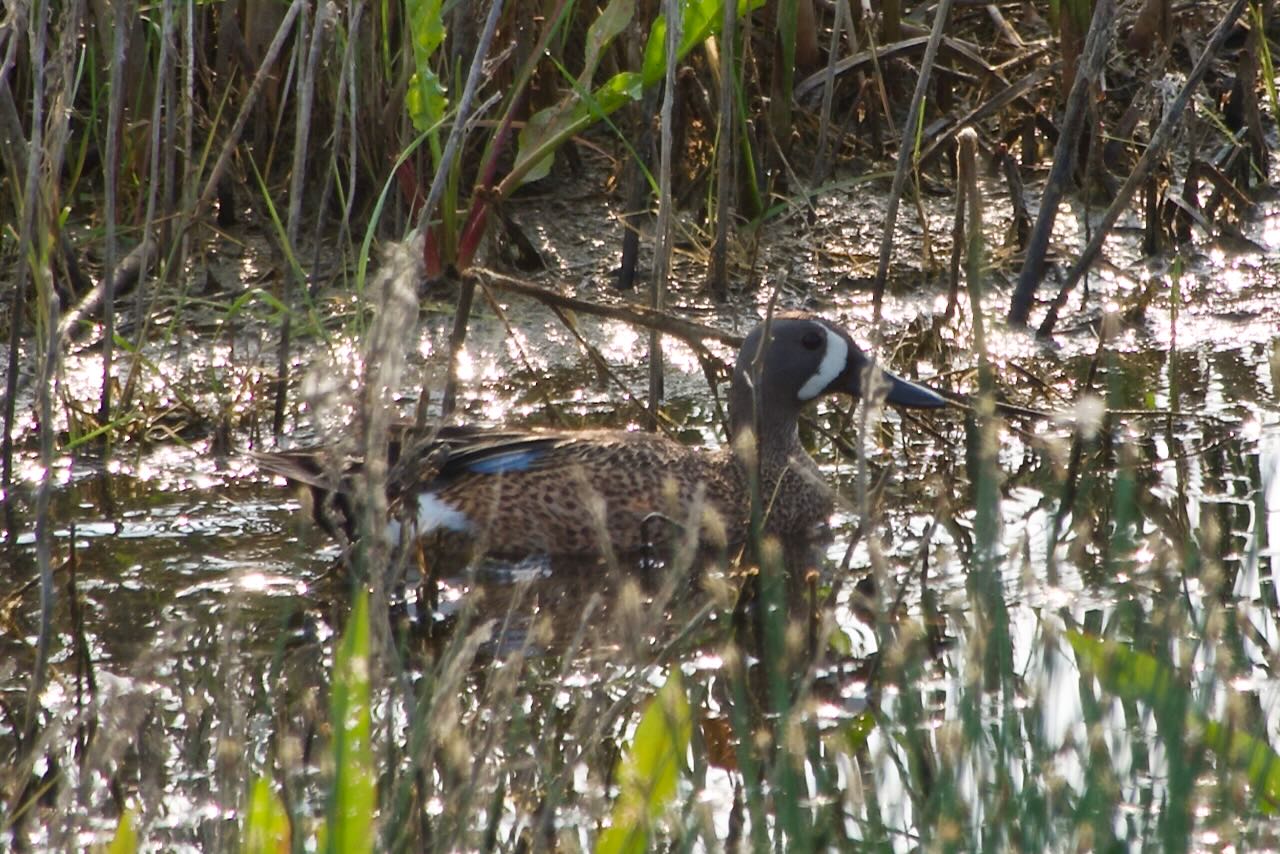
Cinnamon TealBlack-necked Stilt
The lake with the Terns was very large and I was worried we would be spending a lot of time driving around it but as we pulled up to the lake there was a Tern flying around. We thought it was Arctic but it was quite a distance away. Looking at ebird lists from others they had no other terns listed other than the Arctic and we thought we had the Arctic. It was late afternoon and we still had another birding spot so we opted to move on. It would turn out that looking at Jerry’s pic later on the computer we could see a probably black tip on the bill of the Tern making it a Forster’s not the Arctic. I would have liked to have that off the list so we will see if we can revisit that place on our way out of BC if they do indeed nest there.
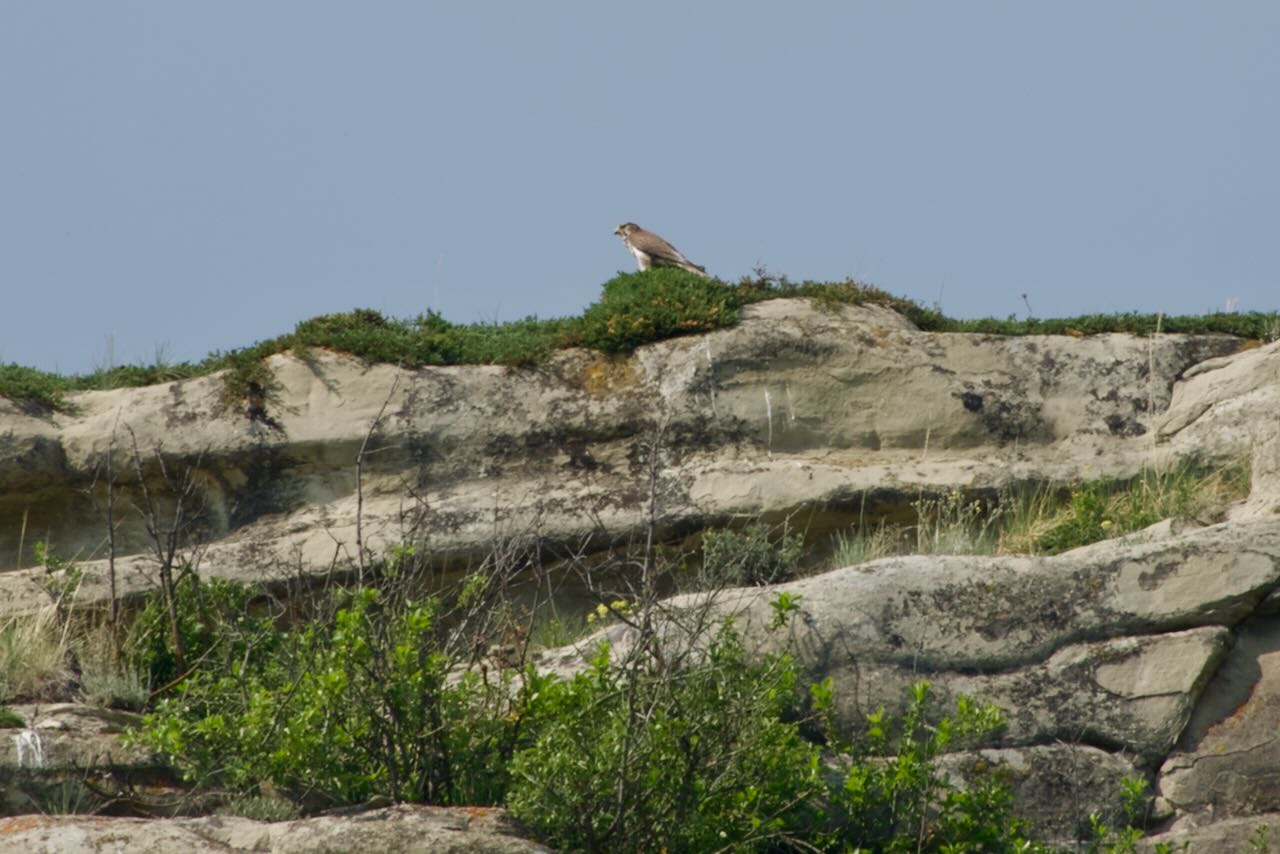
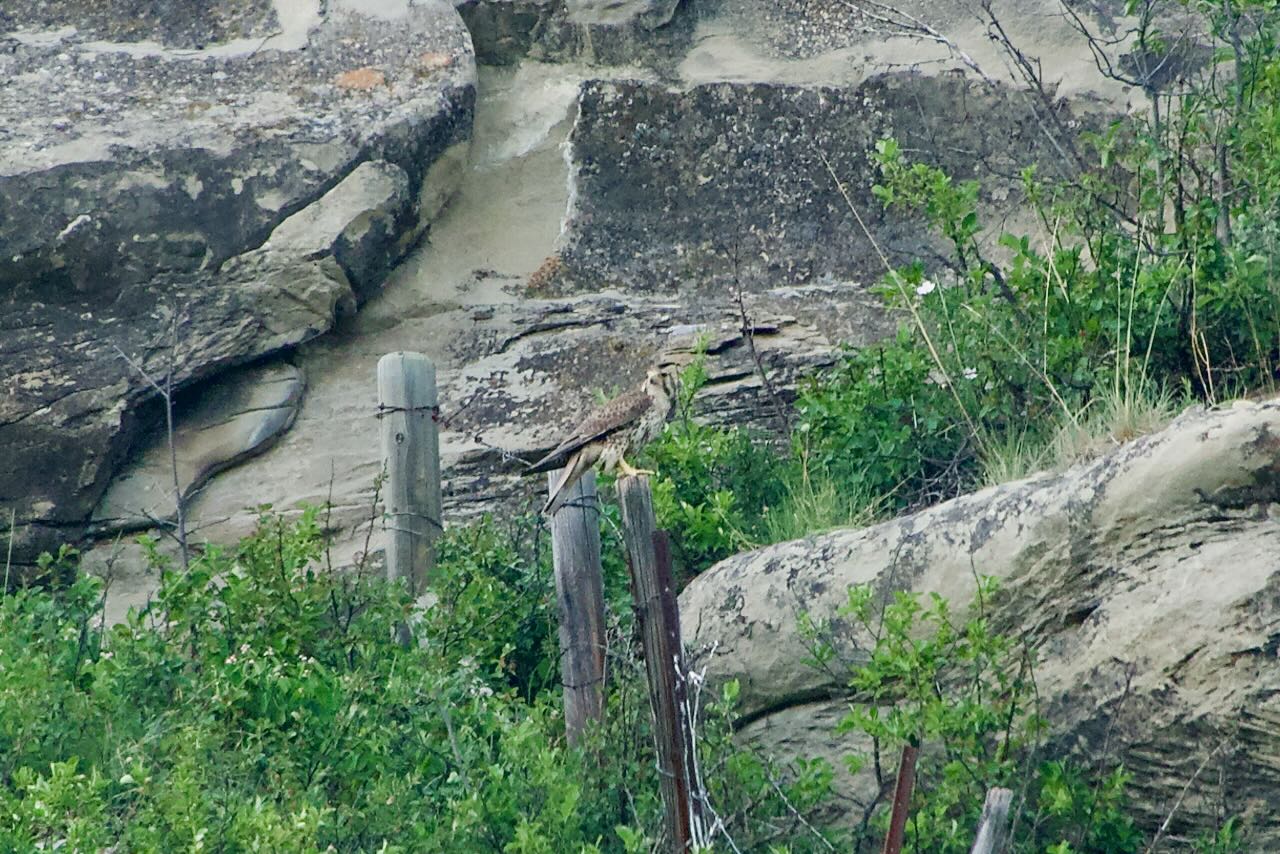
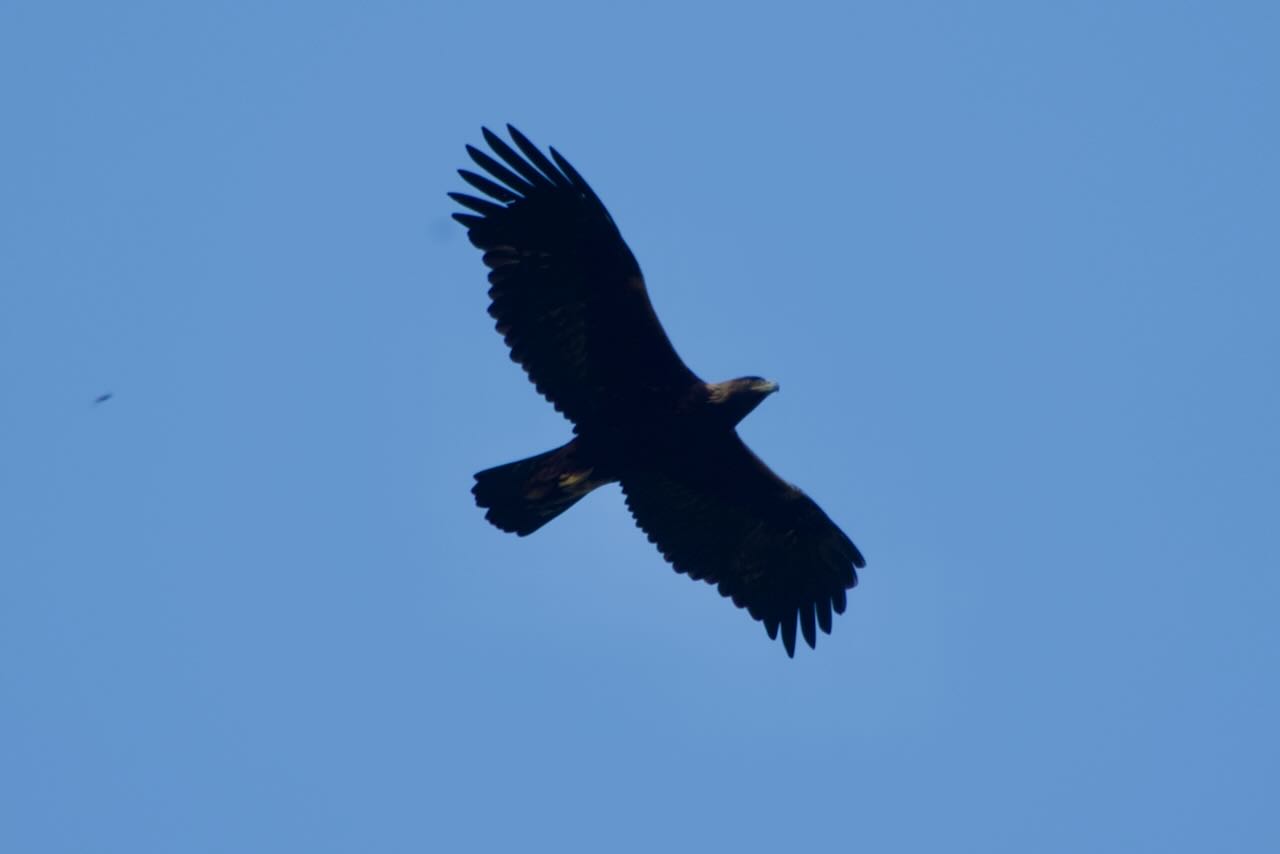
We then headed to William Coulee road where Prairie Falcons are known to nest and we have seen them in past years. It was only minutes in, looking along the cliffs and I spotted a Falcon up on the top rocks. it then flew down and went into a crevice in the rock wall where it probably had a nest. We then saw another Falcon and a Golden Eagle appeared and they had an altercation.
Prairie FalconPrairie FalconGolden Eagle
Further down the road we found another breeding pair. It was a VERY good birding day. We had added 27 species in Saskatchewan and Alberta and I had seen all of my expected species. We headed to a hotel at the foot of the rockies only to find it full for the night so we opted for the sad local hotel and tavern where we paid $80 (cash only) for the night. I’ll leave it to your imagination as to what the room was like. Our tiny house back in the Grasslands it was not! We were only 6 hours away from my brother Darryl’s in Grand Forks!
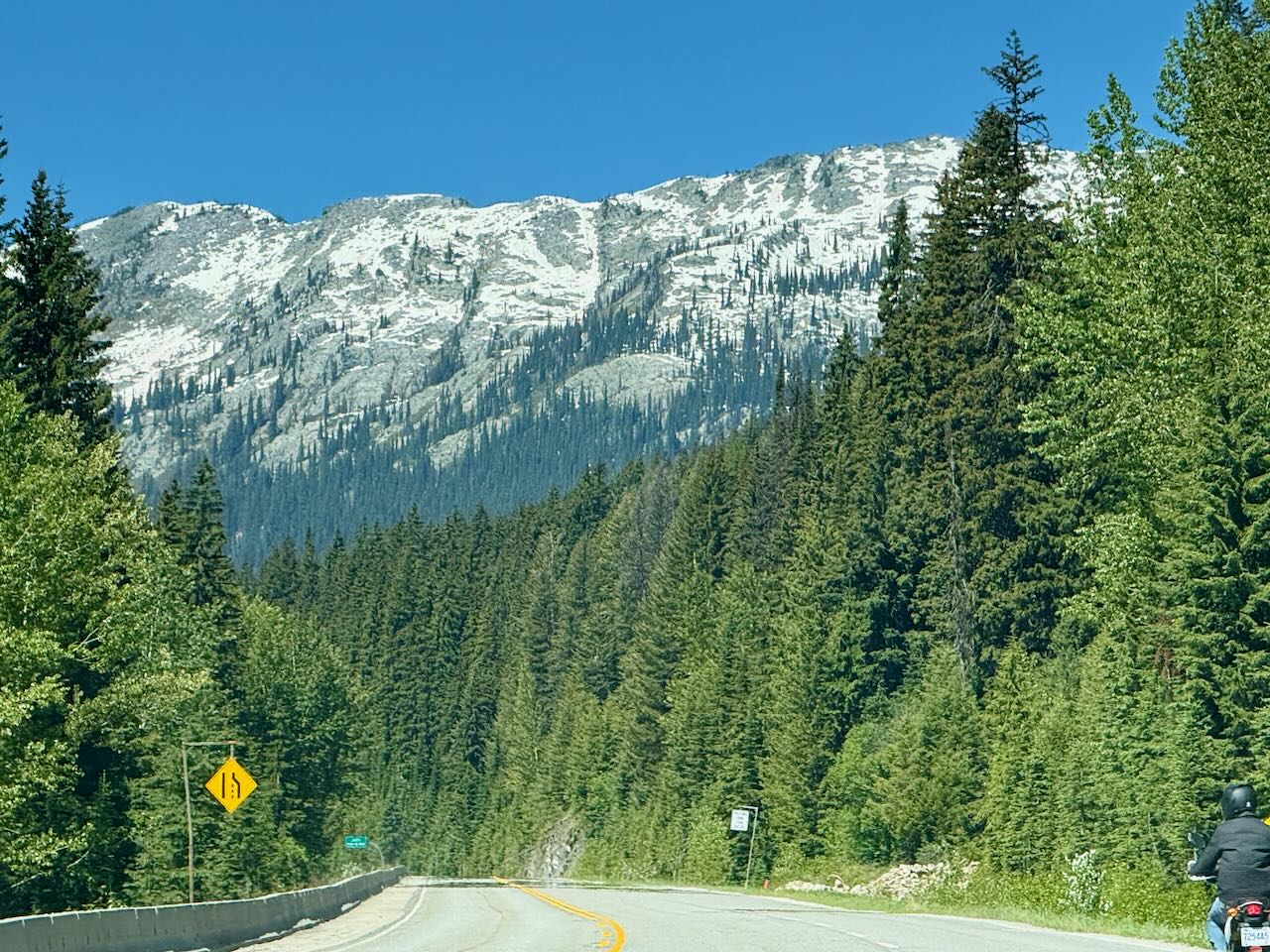
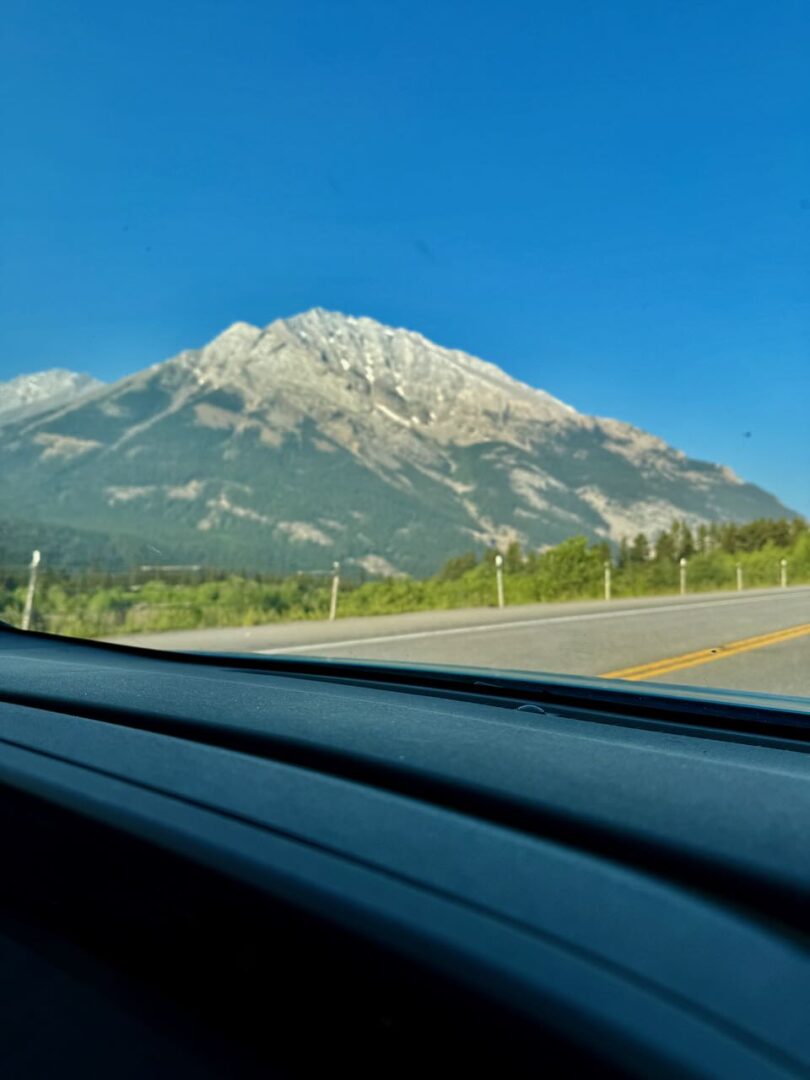
Sunday we drove through the rockies along Crow Nest’s Pass. We stopped at a few rest areas and added 3 species to the list, Hammond’s Flycatcher, Mountain Chickadee and Violet-green Swallow. The mountains are amazingly immense and taking pictures just will never show the true scale of them. I made an attempt to take some from the car.
We arrived in Grand Forks in the afternoon and immediately started hearing birds as we drove up the road to my brother’s family compound. Based on our last trip here in 2022 we expect to add 10-12 species to our list just on his property, hopefully while sipping a Gin and Tonic or Margarita! Cheers!
Week 23 second half 33 species added 346 species Jerry and Ellen
Monday we returned to Pelee, a bit late in the morning as we had a late night emergency with Jerry’s mom and only got to bed at 2am. I wish we had left even later so that we were close to Long Point when a report came in for the first Ontario record of a White-tailed Kite seen by Rowan of Hamilton. Instead we were minutes from arriving at Pelee, 3 hours away. Kites can stick around in an area but more than not they arrive and leave. I made the decision not to go and apparently it was seen again by a very few birders. Instead we spent an enjoyable day in the park finally catching up on some warblers and talking to a lot of people and helping others get on birds. The leaves are out A LOT and the birds were feeding very HIGH. I had “warbler neck” very quickly. A term birders use for the cricks and pain we get in our necks from looking straight up with bins held to our eyes. It was lovely hearing the songs of warblers too and we were pleasantly surprised that we recognized a few more than last year. Merlin is definitely helping with that as we can take a guess at a song before seeing the bird and get Merlin to confirm that is what it is. A useful tool if used properly.
We ended up seeing another 6 species of warbler and added a Wood Thrush that we heard singing in the woods. We then headed to flooded fields and Hillman Marsh and added 2 shorebirds and a Black Tern.
Magnolia WarblerNorthern Parula
Tuesday morning was a little cool with north-east winds, the worst winds to have at Pelee and predictably there was only a few new migrants in the park and no reverse migration taking place. We only checked the tip for a short time and then wandered up into the middle of the park. Each day we check the west beach path either going to the tip or coming back for the possibility of unearthing a rarity like Kirtland’s Warbler that is almost always found on that West side. The park still had nice pockets of warblers but nothing that we didn’t already have. We met up with Pelee friends Cindy and Judy for a walk through Tilden and almost immediately saw a Golden-winged Warbler that had been reported in the area earlier. This is a highly sought-after species and often tough to get so we were very happy to see it.
Golden-winged Warbler
It would turn out to be the only bird we added for the day despite walking 16km through the park.
Wednesday morning the anticipation was high after south winds and a rain storm but nothing much happened at Pelee. Reports from along Lake Ontario came in with numerous warblers about but not so much where we were. I was a tad disappointed but there is always something to get at Pelee and we quickly added another common species, the Red-eyed Vireo. I now only have 2 more common species to get and that list of 144 can be put aside. We also added a Bay-breasted Warbler leaving us with only 2 more expected warblers to see, the Canada and Mourning. I got on a Yellow-billed Cuckoo that a group had spotted on one of the trails but despite my best efforts Jerry did not see it before it flew off. It is a bird that often appears in our back yard and we see often in Brantford so I know he will get it, but for the moment I am one bird ahead of him. He is taking it more graciously than I probably would.
Bay-breasted Warbler
Just before noon a report of a Kirtland’s Warbler came in but instead of at Pelee where they traditionally are, this one was in Grimsby! ARGGGGH! 3.5 hours away. What to do? What to do? I knew I should go for it but at the same time I also felt if I went for it I would miss something at Pelee and maybe one would be found at Pelee or Rondeau, the more traditional areas. So we did not go. And I was upset most of the afternoon that I had not gone as the reports kept coming in that it was still being seen. Around 4 a late report came in that a Worm-eating Warbler had been seen at noon in the same area as the one on the weekend when we were not here at Pelee. Cell service is bad and people try to report but messages don’t go through. So we decided to go over and stake out the Worm-eating Warbler. We took water, snacks and stools and sat and walked the path that it was last seen. Our hope was that it would sing as they spend most of their time on the ground, I assume, looking for worms and are difficult to see. We were prepared to sit until dusk. Then at 6:14 my phone started going crazy with dings and whistles, a Ferruginous Hawk, a western species, was 30 mins away in a tree. We headed back to the car, not running, but walking quickly and then had a tortured drive out of the park behind cars driving 32 kmph! It is the one time I did not feel calm. I bugged Jerry to drive faster. How long would the hawk sit in the tree? Messages were being sent that it was still in the tree and people were being asked to stay in their cars so the bird did not flush. When we finally arrived there were easily 30-40 cars pulled over on Highway 3 and people at the back ends had to be out of the car to see the bird in a tree just off the road on the opposite side. It was a crazy sight and I forgot to take a pic of all the cars and people in my excitement to be there and SEE THE BIRD! The record shot is of the hawk’s butt and from a distance but I’ve added Jerry’s best pic of a Ferruginous Hawk taken in Alberta in 2022 so you know what it looks like.
Ferruginous Hawk Port Alma 2024
And suddenly I felt better about not going for the Kirtland’s. Although that would be short-lived, as ,it would turn out that the Hawk was refound the next day and the Kirtland’s was not and so some birders did end up getting both birds. Sigh!
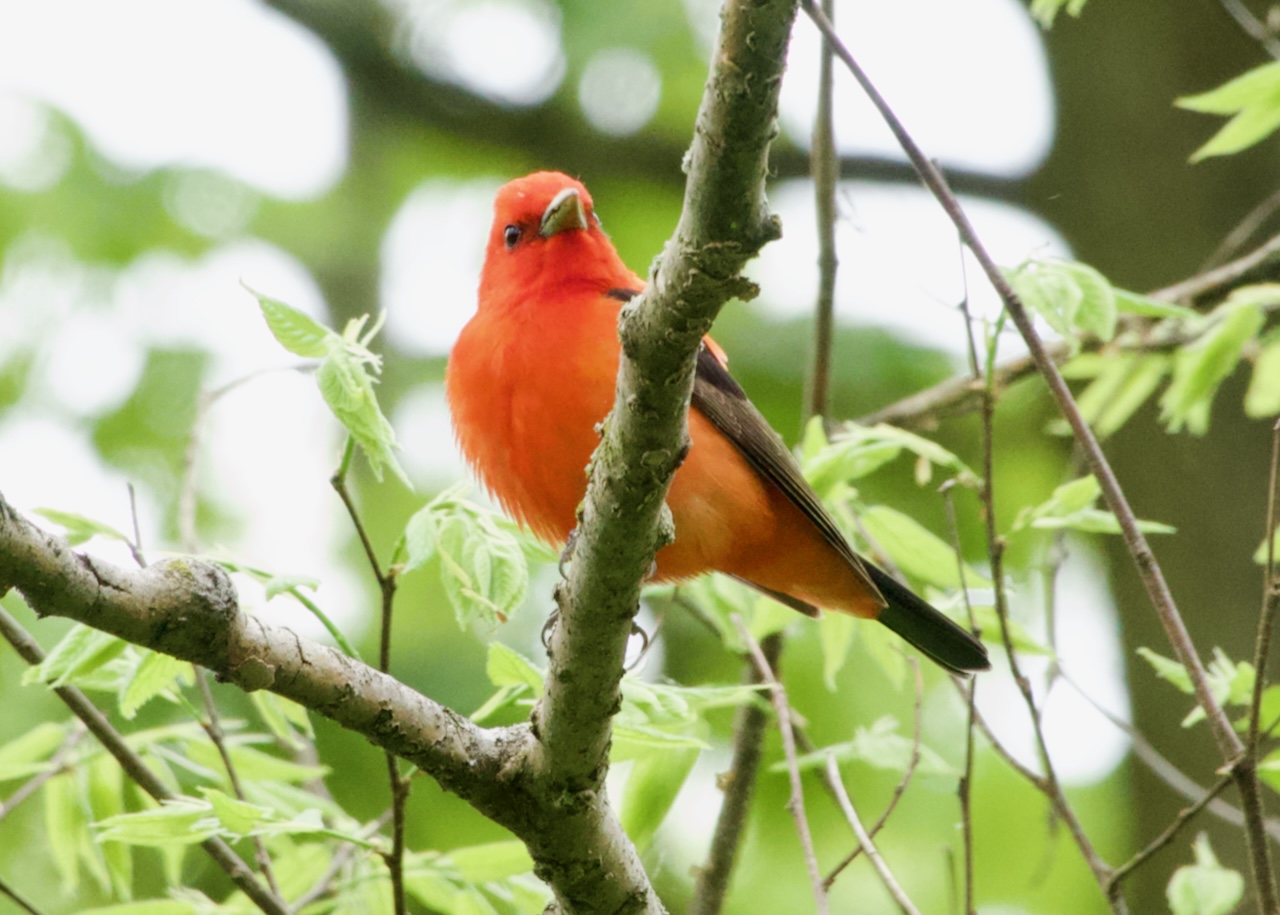
Thursday was cool in the morning with rain starting in the afternoon. We staked out the Worm-eating area again in the morning instead of going to the Tip and while we heard and saw a variety of warblers the Worm-eating was not one of them. We walked our usual West Beach Path ever hopeful of turning up a Kirtland’s and then decided to head back to the car and check the local fields for shorebirds. On our way out a report for a Black-billed Cuckoo came in from the area we were driving past so we stopped to check it out. A group of birders with cameras pointed up are a sure sign of something good but instead of the Cuckoo it was an Olive-sided Flycatcher. A nice surprise and a bird that we often do not see in the spring but we have migrating through our local area in the fall. A bit further up the path were the two kinds of Tanagers, Scarlet and Summer, as well as an Orange variant of the Scarlet Tanager.
It rained into the evening and we were happy to just stay in our hotel, order pizza and catch up on photos, blog and lists.
Friday morning we were up really early, that happens when you fall asleep at 10, and into the park by 5:12. You might think we were first into the park at that time since it only opens at 5 but the parking lot was half full and the first tram was easily almost filled. We chose to walk, our only cardio of the day usually, and enjoyed hearing the birds start to wake as the sky lightened. There were few birds at the tip which was not a surprise with north winds but we hung out a bit socializing with friends.
At the Tip before the crowds.Hooded Warbler ActionPeople looking up = warblers!
We walked up to Sparrow field with Barry and Margaret from Toronto but it was pretty quiet until we got to the Red Bud Path and saw a beautiful Hooded Warbler. As we walked out a group of us were sure we saw a Mississippi Kite fly over. I had a poor view but the others were very sure. We rushed to the Visitor Center hoping it had flown there and others would have seen it to confirm the sighting but no one saw anything. Some birders already had scopes set up hoping the Ferruginous Hawk would be moving through Pelee so they checked out some distant birds and one seemed a candidate for Kite, pictures were taken and shown to an excellent birder who confirmed it was a Kite. Excitement and happy dance ensued. And then a report of a Cattle Egret 5 minutes away just outside the park came in so we headed for that. A Swallow-tailed Kite was also reported at Rondeau just an hour away. We got the Cattle Egret quickly and I decided to head to Rondeau for a chance to see the other Kite. 20 minutes later the report is the Kite was now heading to Pelee! We turned around and headed back down the highway now at least 10 minutes behind the Kite. It was the first time I’ve lost it this year, so disappointed that I had made the “wrong” decision yet again and most of the birders at Pelee would likely see the Kite and I would not. To make matters worse, Margaret texted me to say Sarah (another stellar birder) had reviewed the photos and our Kite was not a Mississippi Kite but a Broad-winged Hawk. The only consolation was the Kite didn’t head into Pelee and so only a few people outside the Park saw the Kite as it went through further north so I was only one of many frustrated birders. But on a positive note we did add a Cattle Egret, another rarity on my list! My hope is that this year will make us better birders from all the mistakes we make along the way and those future Big Year Birders reading this will also learn what not to do. LOL!
Saturday we were back at the Tip after south winds and still quiet. Some new migrants appeared in the park but it still didn’t feel like many arrived. A thunderstorm rolled in quite early and put a stop to all bird watching as we all headed for cover at the Tram stop. The rain persisted for a bit while we all chatted about, well, birding, and when it slowed we headed out to bird with our niece Theresa. We managed to see a few warblers and hear many singing but not visible in the leaf covered shrubs and the high leafed out trees. It was a challenge to ID anything and a challenge to share the information. We only added a Common Nighthawk roosting on a tree branch but Theresa, as a new birder, added a few lifers which is also exciting for us to remember that feeling.
Common Nighthawk
Late afternoon we headed to Hillman after a report of a Western Sandpiper and managed to find the small piper with a limp (injured, not a trait of Western Sandpiper) among all the Dunlin. Just as we were finishing up another rainstorm hit and we headed for the car and called it a day.
Sunday we opted to head to Rondeau as it was Mother’s Day and Pelee gets packed with families. We were waiting on a report of a Blue Grosbeak we were thinking of chasing. It was pleasantly birdy at Warbler Way but nothing new for our list. Still it was nice to just enjoy the birds and Jerry tried for better photos of some. The Blue Grosbeak was refound so we decided to head out only to get a report 20 mins later of a Townsend’s Warbler (a Western Species) from Rondeau. Man, we just cannot get a break, every decision seems to be the wrong one. We opted to turn back and try for the Townsends but it had flown by the time we got there and was not refound that day. By the time we did a few loops hoping to find the warbler we opted not to go for the Grosbeak and of course it was seen again around 4. We spent the day at the park but did not add any species. We did had lovely conversations with many people including Susan and Jim who will also be doing a Canada Big Year in 2025. Susan has helped me with this Big Year as she is a veteran of one in 2022 when she saw 335 species!
On the way home we stopped at Wheatley Harbour, our habit, and managed to add the only bird of the day, a Whimbrel. And so the week that feels like a month comes to an end. And where will I be tomorrow? AT THE TIP!
Whimbrel
The stats are: 1 Common Bird left – Willow Flycatcher, 9 spring migrants left, 2 Warblers left, Canada and Mourning then we move to finishing Special Trips for Birds and then all that is left are the few Fall birds that come through and rarities. We have driven a shocking 21,800 km and walked 603 km so far.
Week 19 26 rarities so far 21 species added this week 281 total species E 280 total species J