Week 36 EAST and a FEAST of BIRDS
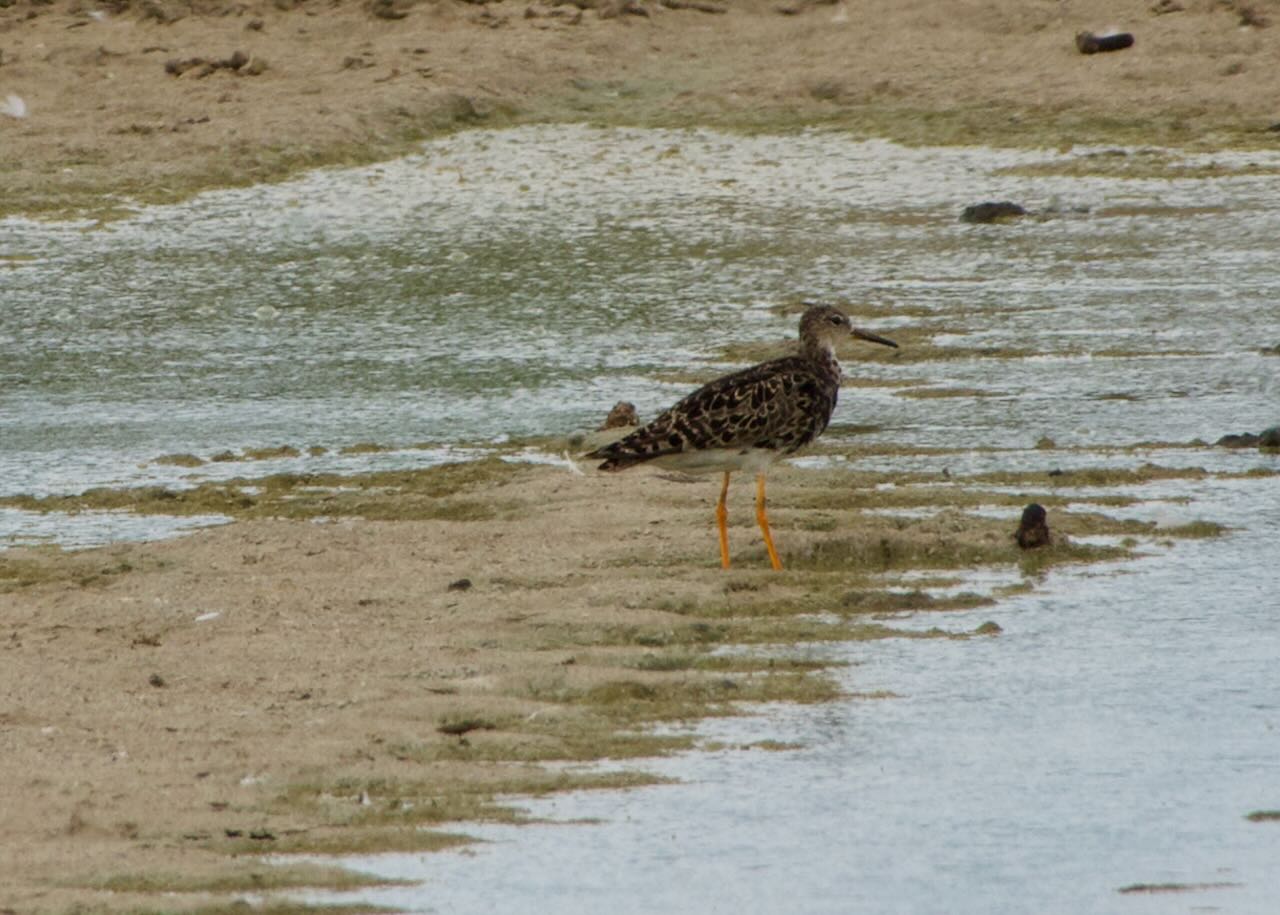
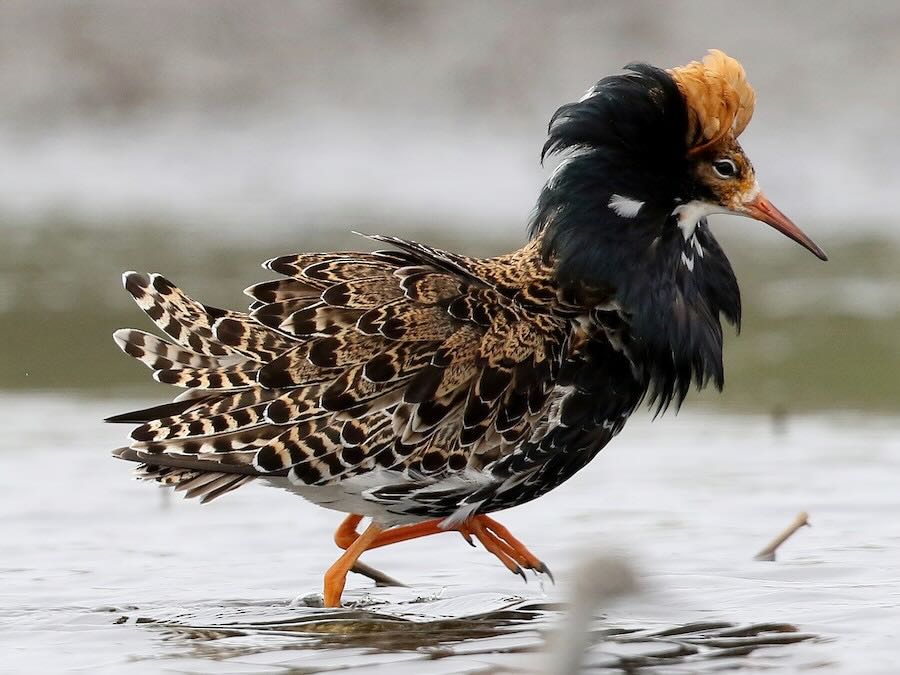
Monday we left at our usual 4:30 am and cruised through Toronto with little holiday traffic. We were headed into Quebec to chase three possible birds. A Common Ringed Plover had been found as well as a Ruff and a Purple Sandpiper. They were very close together but a bit past our turnoff to New Brunswick. Well worth taking the detour if they were still there. In between driving I checked emails and the Quebec Discord. The Ruff was re-found but it appeared the Plover was gone as well as the Purple Sandpiper. There was still time for the birds to show up so we continued to plan to go to the Ruff spot. We arrived just before 4:00 and made our way to the trail to the beach. We spoke to a few birders in a combination of English and hand signs for more details because I know very little French. The Ruff had been seen minutes before but had flown down the beach so we happily set off to find it. After being in the car 11.5 hours we were happy to walk. Jerry spotted the Ruff in with a few hundred Semipalmated Sandpipers and we both had good looks before it flew off down the beach. I followed it with my bins and then we headed down to where it had landed. Jerry waded in a ways to get some better pictures.
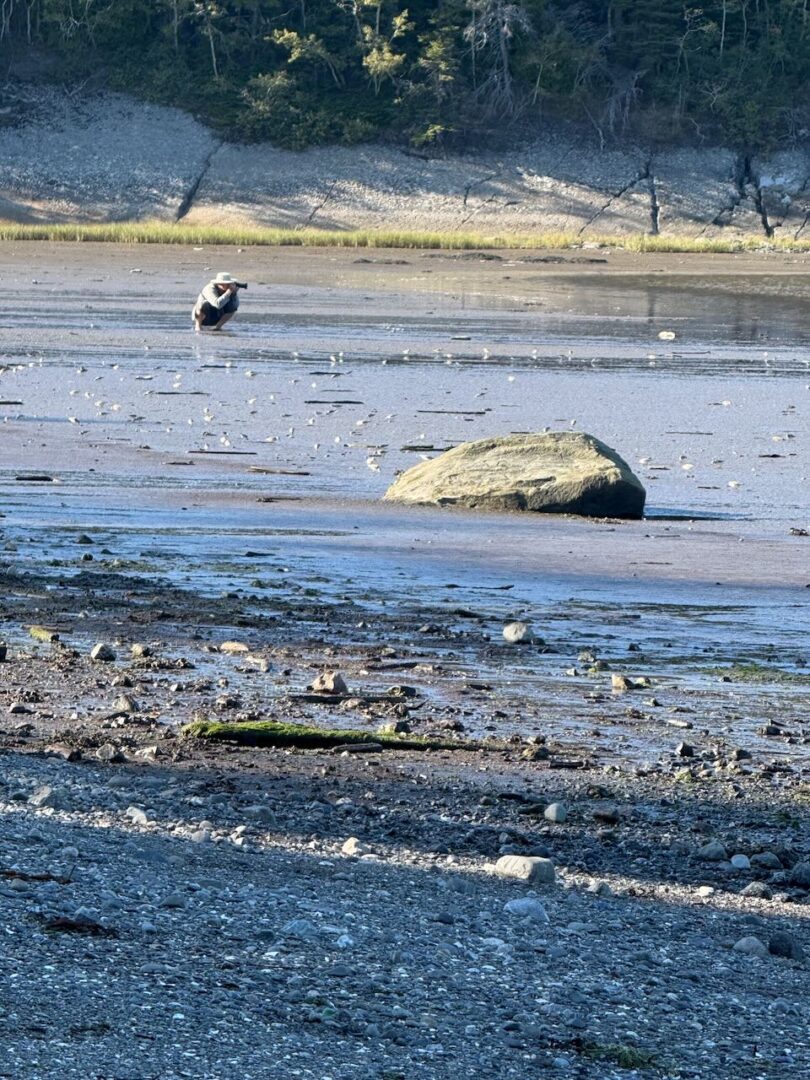

There were many other peeps (sandpipers) along the beach and close enough for nice pictures and video.


So out of 3 birds we only got one but the Ruff was a good one. We missed that species in February in BC because people did not have our contact info and we were in the parking lot where it was being seen and did not know it. Anyway, it was a good one to get a second chance at. We drove on to a hotel in Edmunston.
Tuesday we drove south to the end of New Brunswick and took the first of four ferries of the day over to Deer Island. It was not so much that the island had birds we needed but I wanted to be on the water as much as possible in the hopes of seeing some seabirds. And we quickly saw Black Guillemots just after we left the dock. The atlantic Guillemot is similar to the pacific Pigeon Guillemot – all black, red legs, and white wing patches. There were many juveniles that look different with lots of white/black/gray feathers for a mottled look. Shortly after we saw our first Great Cormorant mixed in with a group of Double-crested Cormorants. Again, small differences between the two species.

We stopped on Deer Island at a few places and went to the Lighthouse Point to do a bit of a sea watch but we were not very successful. We did get to practice identifying various gulls and terns. We then decided to take another ferry to go to the next Island – Campobello. Again hoping that something cool would cross the ferry but it was fairly quiet. We checked out a few places on the Island and then took the ferries back and drove onto Saint John. On the way along the highway I suddenly saw a hawk glide across from the other side of the road and I knew it was an American Goshawk, a beautiful adult it cruised right past the windscreen while I was trying to brake from130km/hour. Jerry did his best to try and get out of the car but the hawk disappeared below the tree line. I suggested there would be other opportunities. That made it a 3 bird day! Very good for this far into the year, but to be expected being our first time out to get Eastern specialities.
We stopped at Irving Nature Park at the end of the day for a quick look at groups of peeps. There were hundreds flying forming murmations (tight groups flying together) and then landing on the beach only to be disturbed again by people and dogs. We had little opportunity to see them up close but scoped a bit and Jerry took some pictures. We drove around the loop and as we came around a corner another Goshawk flushed from the trees to make it a two Goshawk day which is crazy!
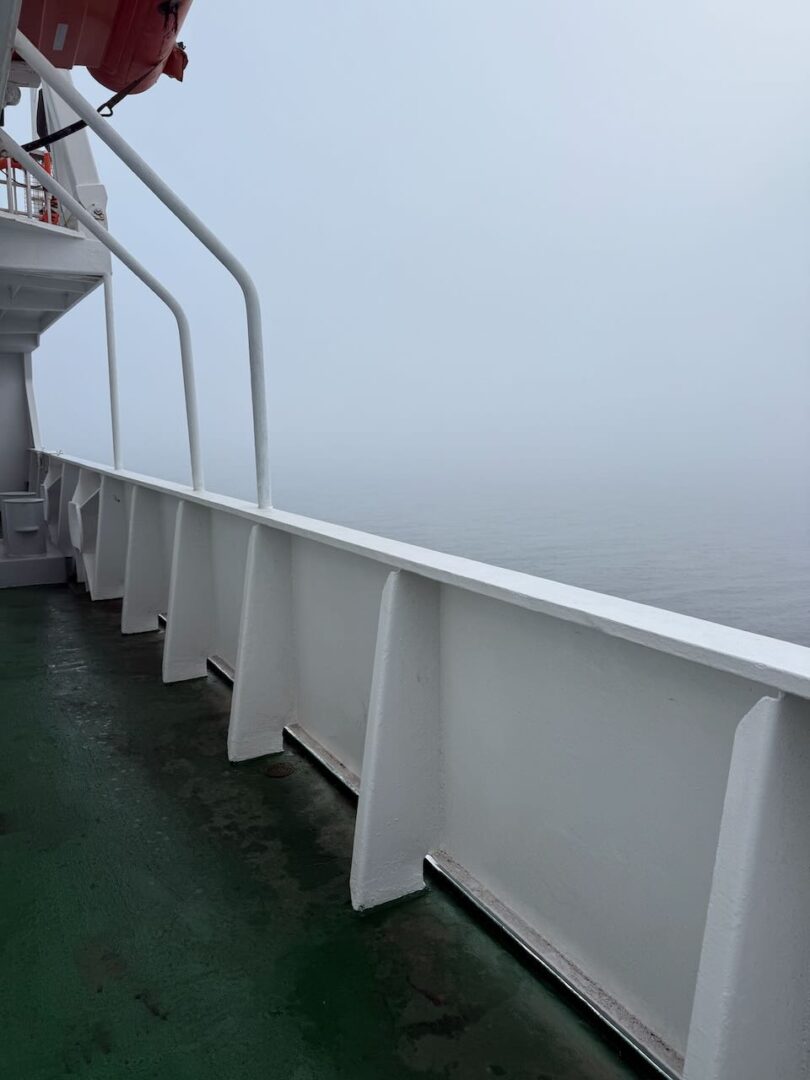
Wednesday we headed out early to catch the ferry to Grand Manan Island. It was clear when we drove to the ferry at 6:30 am but by the time we set sail a thick fog had settled in and I resigned myself that we would not be seeing anything on the way over. The ferry trips are important at this stage as most of the birds we need are out on the water. We still stayed out on deck for some of the trip and eventually we saw a shape in the fog that turned out to be a Northern Gannet. An expected species to see and another bird for the list.

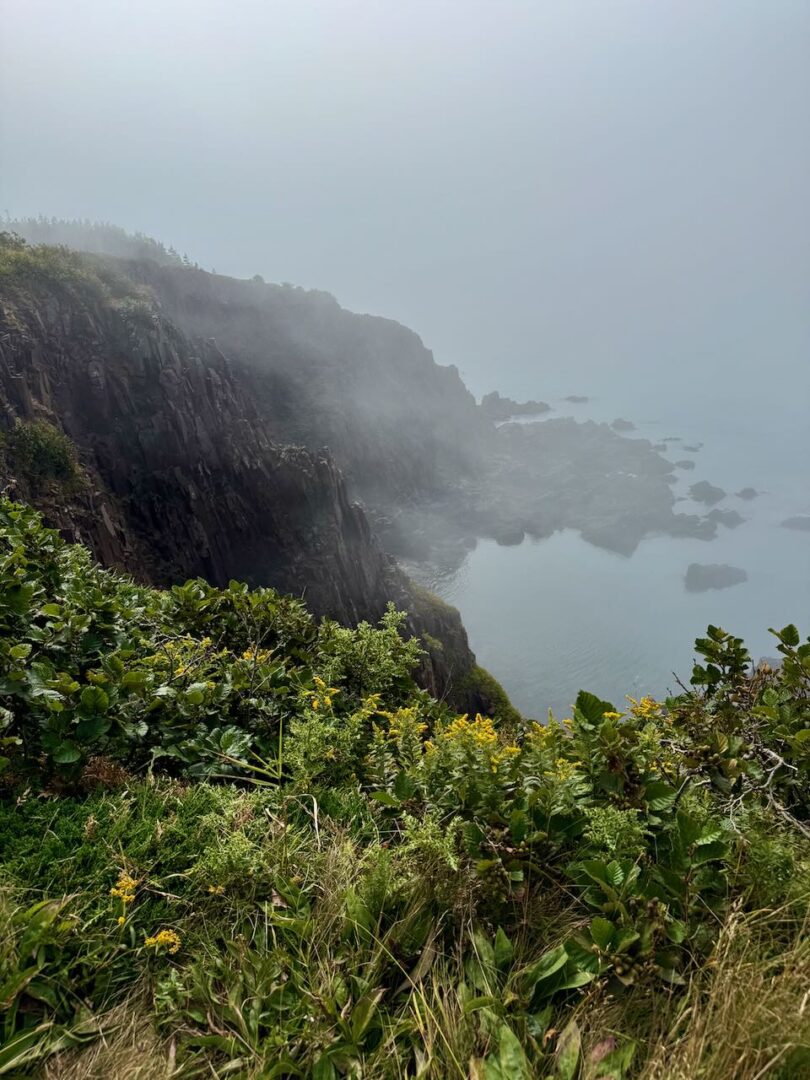
I had seen reports from a Hamilton birder on the island over the last few days and so texted over to see if Barry would be up for a day of birding with us. He graciously accepted our invite and we picked him up when we arrived and set out to see about getting 3 targets. We needed Laughing Gull, Razorbill and to see and take a picture of a Nelson’s Sparrow. Barry had seen all of these in the last few days and so we had high hopes. Our first stop was at Castalia Marsh hoping that the Nelson’s Sparrows would be sitting up on grasses keeping out of the high tide but when we arrived high tide had quickly arrived and left and there were no apparent Nelson’s Sparrows. Our next stop was for the Gull and the area was still fogged in even though we had just been driving in sunshine minutes before. We thought we might have it but scope views in the fog left us a little unsure so we chose not to list it. We moved on around the island but everywhere we headed to became covered in fog. We had to laugh because it was so bizarre that we would be in the sun but then into fog. We were not upset because the company was fine, Barry had some lovely stories about his many years visiting Grand Manan, so we paid little attention to the lack of birds not being added to our list. At 5:30 we got back on the ferry and what a different ride from the morning.
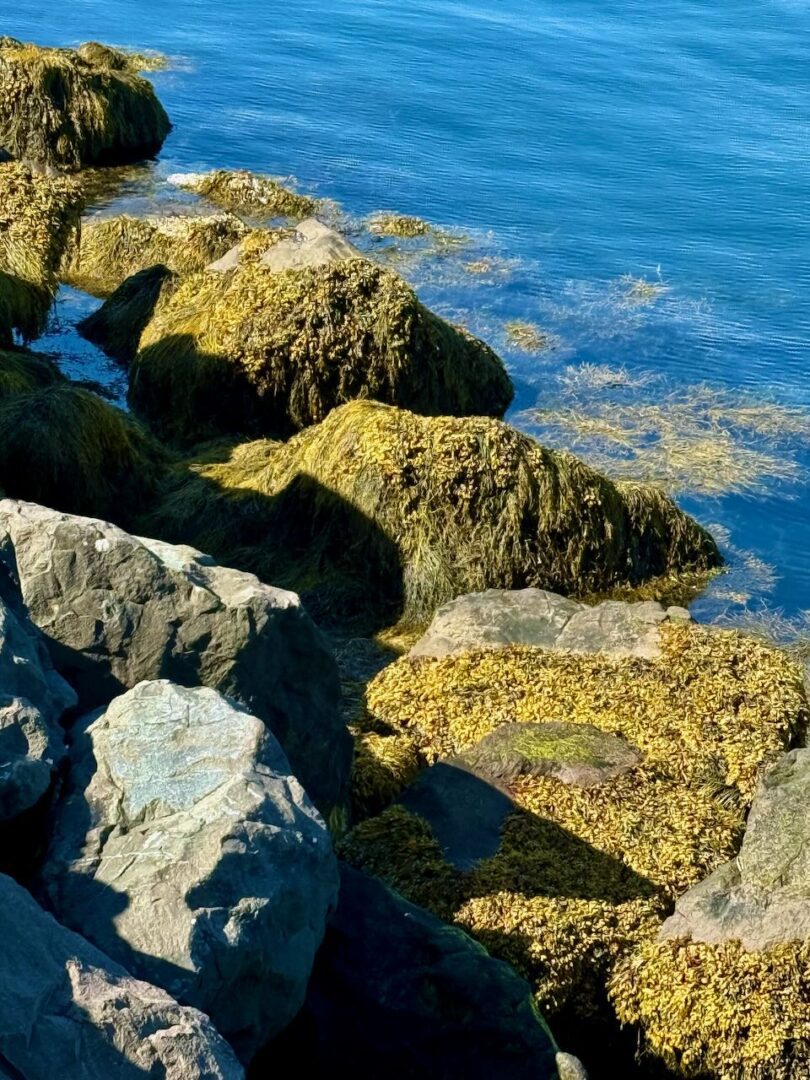


We had numerous Northern Gannets flying past and hundreds of Phalaropes we assumed would be a mix of Red-necked (which we already have) and Red (which we need). Again, the differences are subtle and not obvious from a fast moving ferry at a great distance but Jerry managed pictures of some closer groups and we were sure there would be a Red Phalarope in them that we can count. We do hope to maybe see some closer on the upcoming boat trips. Suddenly, we spotted a couple of birds on the water that looked different and realized one was a Great Shearwater! Jerry took photo after photo as I had it clearly in my bins for great looks.

The other bird we were not sure about, was a gull and we knew it looked different. We would have to ID it from the pictures later. A bit further along we saw a large group of birds on the water near the front of the ferry. We could not get closer as there is only one area to watch from so Jerry did his best to take pictures. It was a large group of Great Shearwaters!

The rest of the ferry ride was uneventful but we were happy to have seen what we had. Once we were back to Saint John with a pizza for dinner we started the task of looking at the pictures carefully. The bird that was with the first Great Shearwater was a juvenile Laughing Gull! Another bird for the list. We then scanned through the Phalarope pictures and sure enough there was at least one Red Phalarope we have a picture of so it turned out to be a 4 bird day after having a 3 bird day yesterday! I was beyond happy!
Thursday morning was our 7th ferry ride as we moved from New Brunswick to Nova Scotia. Our great friends Marg and Lawson, from Ontario just happened to be touring out here and we realized we would be on Brier Island at the same time so we met up with them at the 8:00am ferry on another foggy morning. When the fog broke about mid way we went outside and watched some Northern Gannets cruise beside the ferry but the fog moved back in and we chose to stay warm inside instead of trying to see something outside.

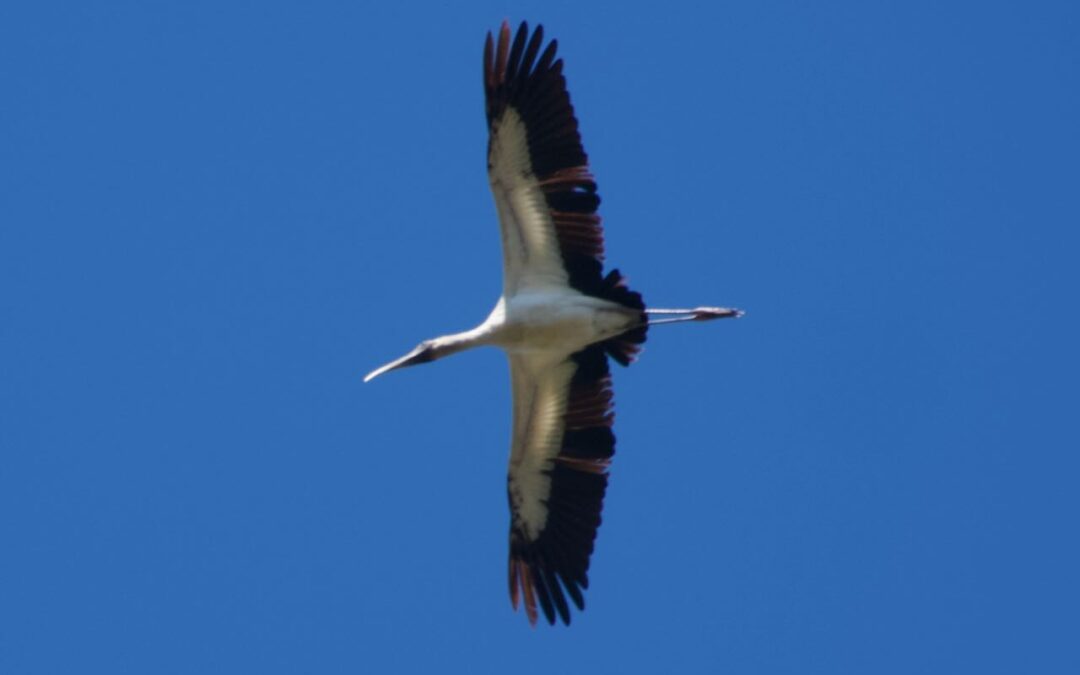
Once we landed in Nova Scotia we headed down to Brier Island where we hoped to catch up with a long staying Wood Stork who had clearly lost its way from the Southern States. We arrived at one of the spots and were told it had been seen about an hour previously and was likely still back in the marsh feeding. Patience was required and we were fine with that. The sun was out, benches were supplied so we sat and watched and waited. Thirty-eight minutes later Jerry looked up and the Stork was there – we did not even see it come up from the marsh. It circled above us for a few minutes before gracefully landing back in the marsh completely hidden from view.


We then toured the Island a bit and then headed to our guesthouse for some welcome downtime and to catch up on pictures and this blog. Dinner was delicious seafood at the Grandview on Brier restaurant with friends! Oh those scallops were yummy, I could have licked the plate!


We woke up on Friday to the sound of RAIN! and deep fog. The people of Brier island have had 3 months without rain so I’m sure there was some rejoicing but it did not last and it was not enough to change the dry, brown grass. We went out after the rain stopped and visited the two lighthouses but with the fog it was hard to see anything off shore. At 12:30 we headed out for our whale watch with low expectations – it was still foggy and visibility was just ok. Once we went out about an hour the visibility was better and we started seeing whales and birds.
We saw one Humpback whale and then I was talking to the guide who suggested that since we had whales in the passage we did not have to go out too far and it was not likely we would see pelagic species, specifically Puffins. I assured her we had no expectations and as birders we knew it is “all about timing”. How many times have you heard me say that? But a minute later I saw a chunky black bird flying along the water off the back of the boat and I clearly could tell it was a Puffin! Did we manifest a PUFFIN? Jerry managed a picture for ID and we continued to enjoy the whale we had stopped for.
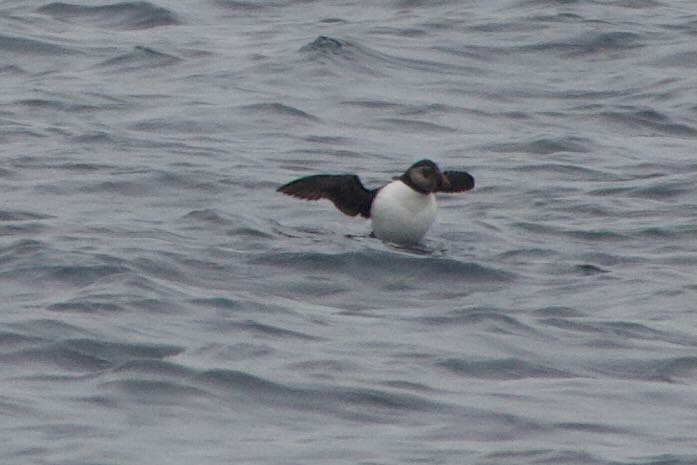


A little while later Jerry had something on his side of the boat and it turned out to be two Razorbills! Another bird to add but I didn’t see it as I was on the other side of the boat. He again managed to take pictures despite a rocking boat and foggy conditions.

We continued on a short way seeing whales as we went and then I saw something out on the water that I was sure was not a gull. I called to Jerry and he came over and I had him photograph the bird and he took it up to the captain to confirm what I thought it was. A SOUTH POLAR SKUA!!!! A lifer and a very good bird to get inland at all. It had been seen on a few whale watches of late and I had spent some time studying what they looked like and it had paid off.

I was now making sure I did not miss any birds as I needed to see a Razorbill too or Jerry’s life would be under substantial threat LOL. Luckily, a short while later we saw another one and I could breathe a sigh of relief. Three birds on our whale watch – we were VERY happy. We were only on our 5th day and we had added 12 birds.
Saturday we had a second whale watch booked and headed out at 9:30. There was a bit more wind and a bit more swell and no whales were found where we had had them the day before. The captain headed out further and we were hopeful we would get to see more pelagic species but the waves were high, it was difficult to see with binoculars and the rolling of the waves. We did manage to see Puffins, Razorbills and Great Shearwaters again but we did not see anything new.

Many people on the boat were sick with the large waves but the miracle gravol pill I took kept me from joining that club LOL. After 2.5 hours we managed to see one Humpback whale who put on a great 5 minute show of slapping his tail on the water.
After the whale watch we drove the 3.5 hours to Cape Sable Island in search of the few American Oystercatchers that tend to summer in the Atlantic. When we arrived a birder, that we had just met over on Brier Island, was there hoping to see the Oystercatchers to. We chatted in between listening to the Jays game and scoping the hundreds of sandpipers visible to us. Just as we were about to leave I looked up at a gull flying over and knew it was “different”. The guys got on it and Jerry managed a few quick pics. We assumed a Laughing Gull but the other birder suggested it looked like a Franklins because it had the white wing tips. We consulted Sibleys and then I put it on the Discord ID help and it was confirmed to be a Franklin’s which is rare to this area but common out west.

When the light faded without seeing the birds we headed to the East Wind Guesthouse, our home for the next two days, for a scumptious meal prepared by the proprietor, Louise. If you want to visit Cape Sable book the East Wind, it is lovely!


Sunday we were out birding early and then met up with our nephew and his fiance to spend the day birding. We went for a lovely beach walk in the fog and mist. The beach edge was teeming with pipers and while it was difficult to see we managed to identify many species and got some pictures. And then the rain came. We had a long walk back to the cars and by the time we got there we were pretty soaked. Not to give up easily we waited it out a bit and checked for Oystercatchers again but then the rain was too heavy to continue. We warmed up in a Tim Hortons and talked about birding and weddings and then went on to a wonderful dinner at JB’s Family Restaurant.


We will have one more chance for those pesky Oystercatchers in the morning. And so our first week out East ends as we move again and head to Newfoundland and hopefully a few more birds…
Week 36 12 species added 411ebird, 412 J&E