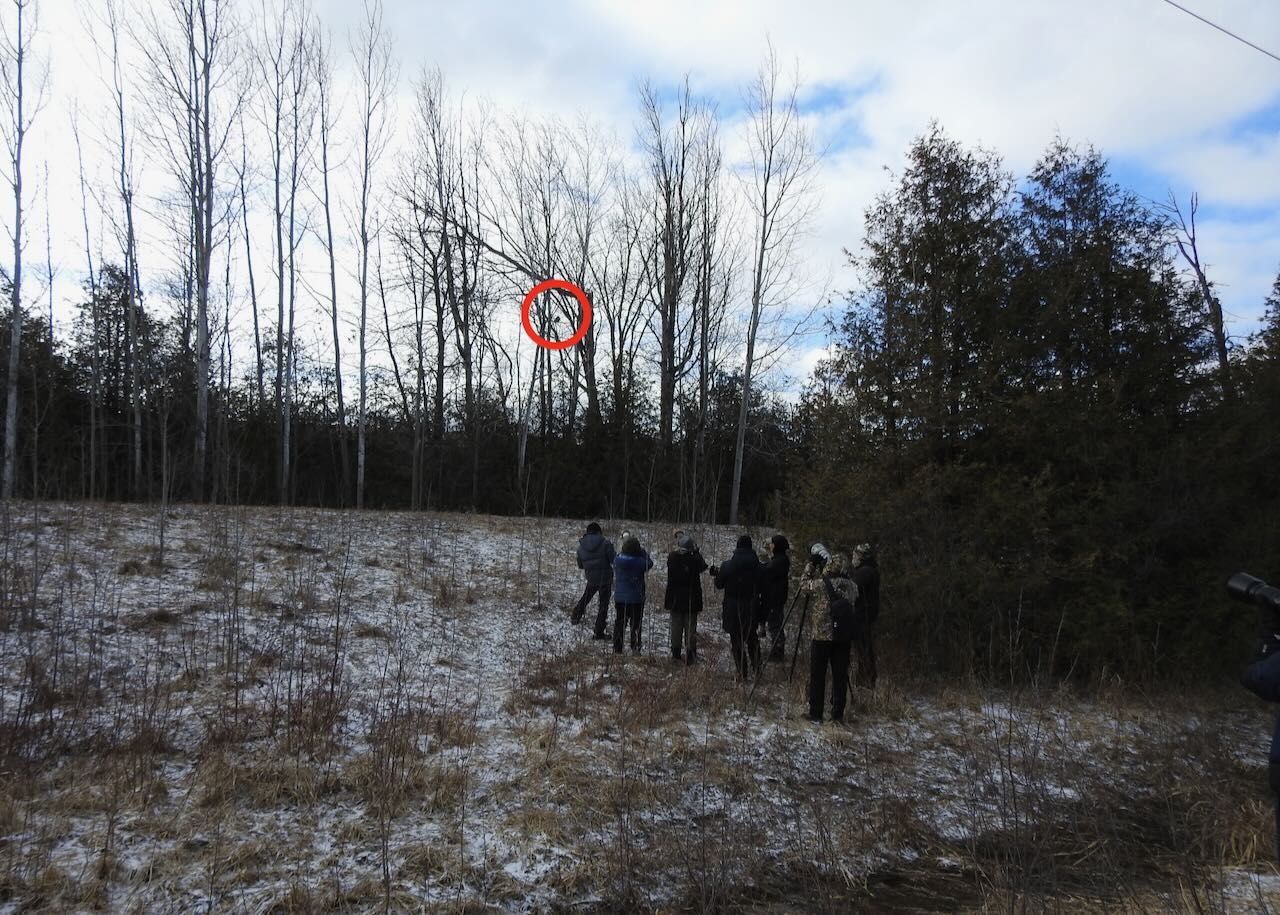
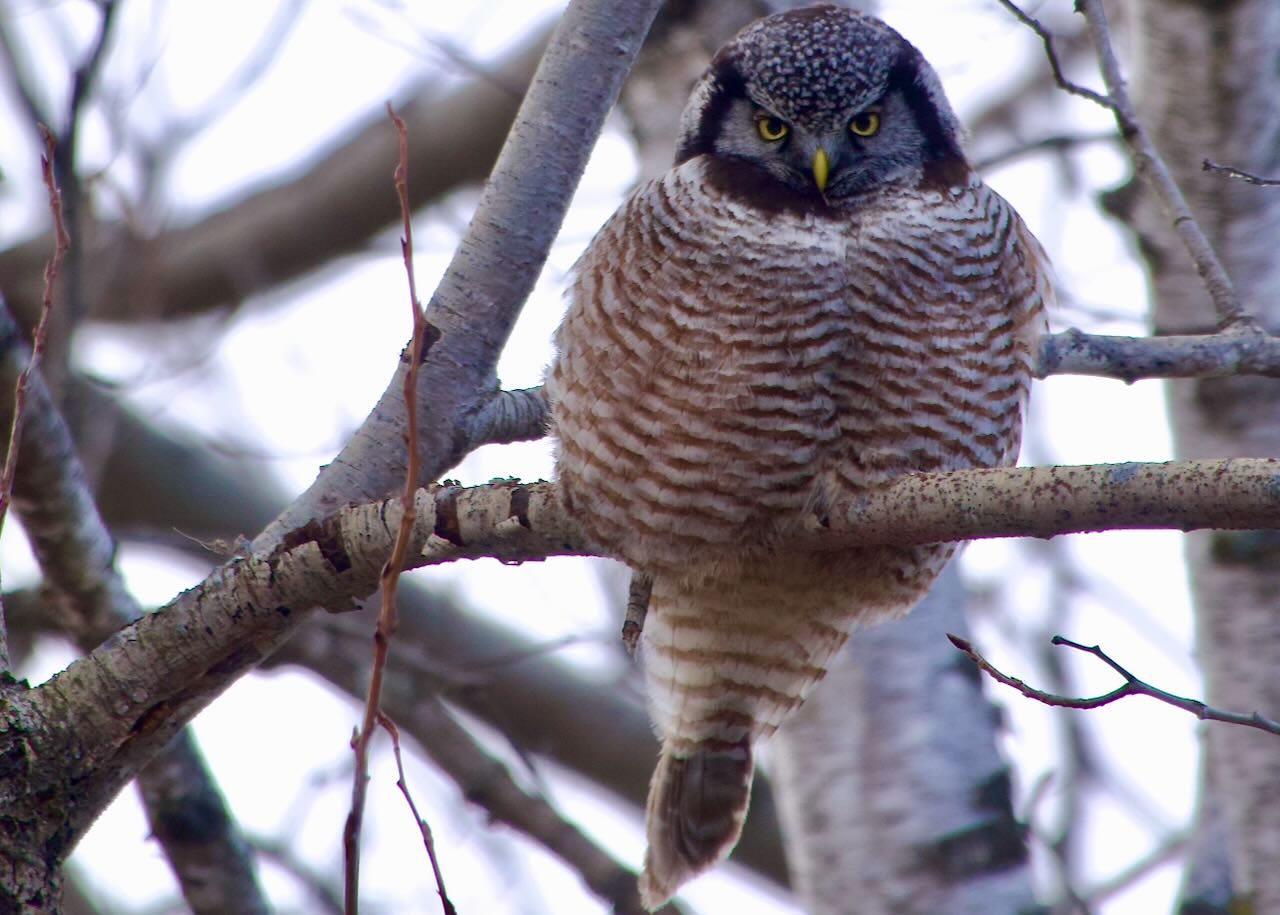
We finally saw a Northern Hawk Owl! and it was bird 150! Half-way to 300! We heard some intel that a Northern Hawk Owl was being seen near Ottawa and had been there for about a week and a half. Early Monday morning, 4:30am, we headed for Ottawa for our 11th attempt and 7th location to add this Owl. When we arrived there were 8-10 people gathered just off the shoulder of the road and the owl was in a tree about 20 meters away. The Northern Hawk Owl is a boreal species that can move a bit south in the winter where there are good supplies of rodents. It will hunt through the day and often stashes what it catches in crevices to snack on when,I guess, it just doesn’t feel like hunting much like us ordering take-out when we don’t feel like cooking. This Owl had been seen using its stashes so there did not seem to be an urgency on its part to hunt that day. It sat in the tree, watching us, staring off intently, bobbing its head as something caught its eye and preening. This species seems to tolerate humans but, still, everyone on site that day kept their distance while we were there. It was hard to resist taking a crazy amount of pictures with a subject close and obliging.
As always, we limited our time there and after chatting with some locals who were monitoring the situation, we headed off to look for our next bird – a Snow Goose. Every year the Snow Geese migrate through Quebec and Eastern Ontario in numbers that astound – fields with 60,000 can be the norm but mid-March is a bit early with peak migration in the first two weeks of April. We quickly found a field about 10 minutes from the Owl with about 2-4,000 geese feeding. They were quite a distance away and it was very windy but the video gives you an idea of just how many geese there were. Now imagine 10-20 times that number!
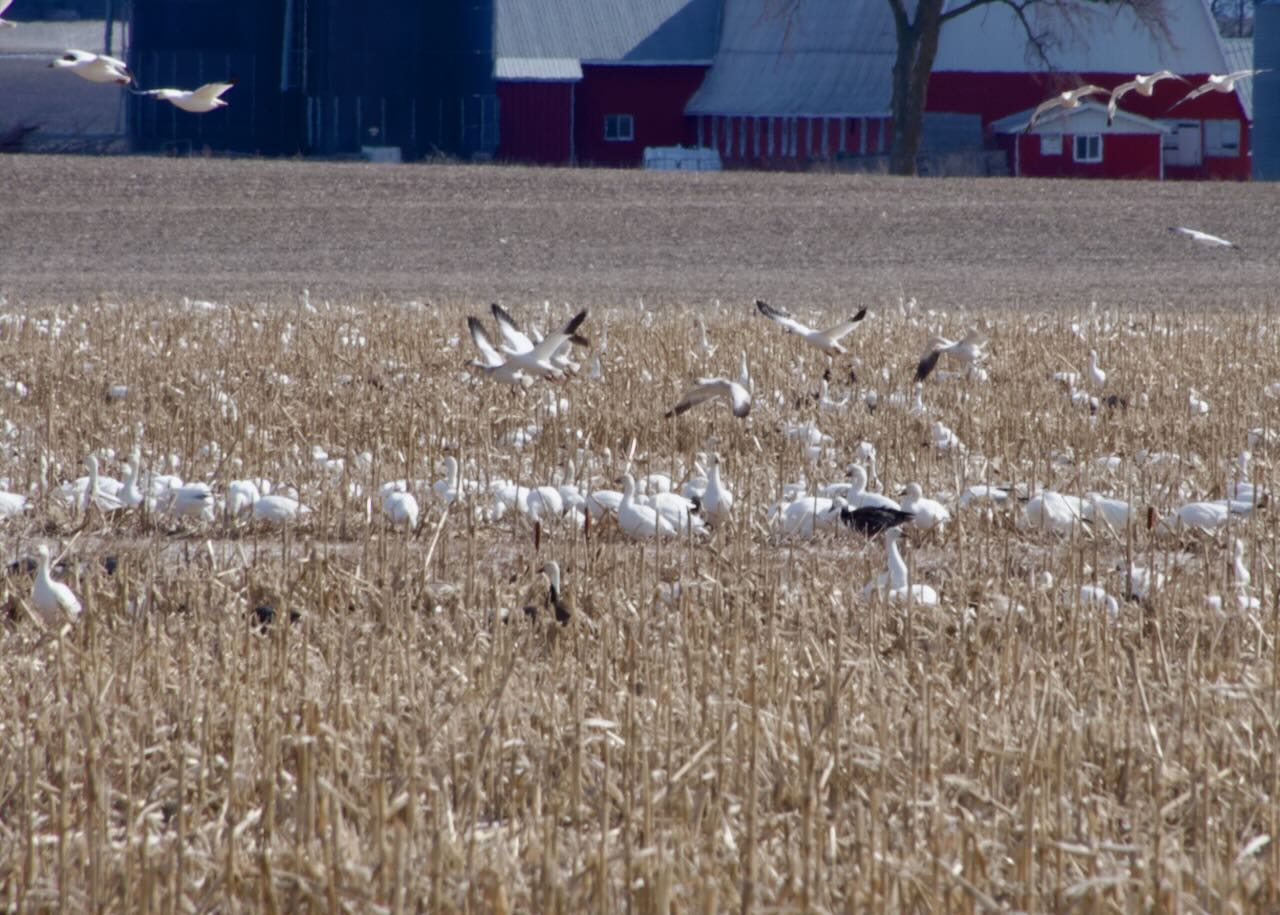
There are two colour morphs of Snow Geese, white and blue. There is a blue morph in the picture above, the dark, almost black bird with a white head and neck. Despite looking quite different the two morphs are counted as one species.
The next 3 days we were busy with grandkids and caregiving as small numbers of early migrants started showing up on my “needs alerts” with record temperatures in the high teens. The first Tree Swallows, Wilson’s Snipes, Towhees, and Yellowlegs were all reported. It was too tempting not to bird a bit so we took Jerry’s Mom for an outing and just happened to go by Sioux Lookout Park in Burlington where Fish Crows hang out and they were indeed hanging out so we added a bird while technically “on duty” LOL. His Mom enjoyed the outing so we just may start bringing her along more often now that the weather is a bit better. We always try to fit birding in around our family commitments so we took the grandkids for a hike at F.R.W Dickson CA the next day to feed the chickadees and hike through the forest but alas, no new birds added.
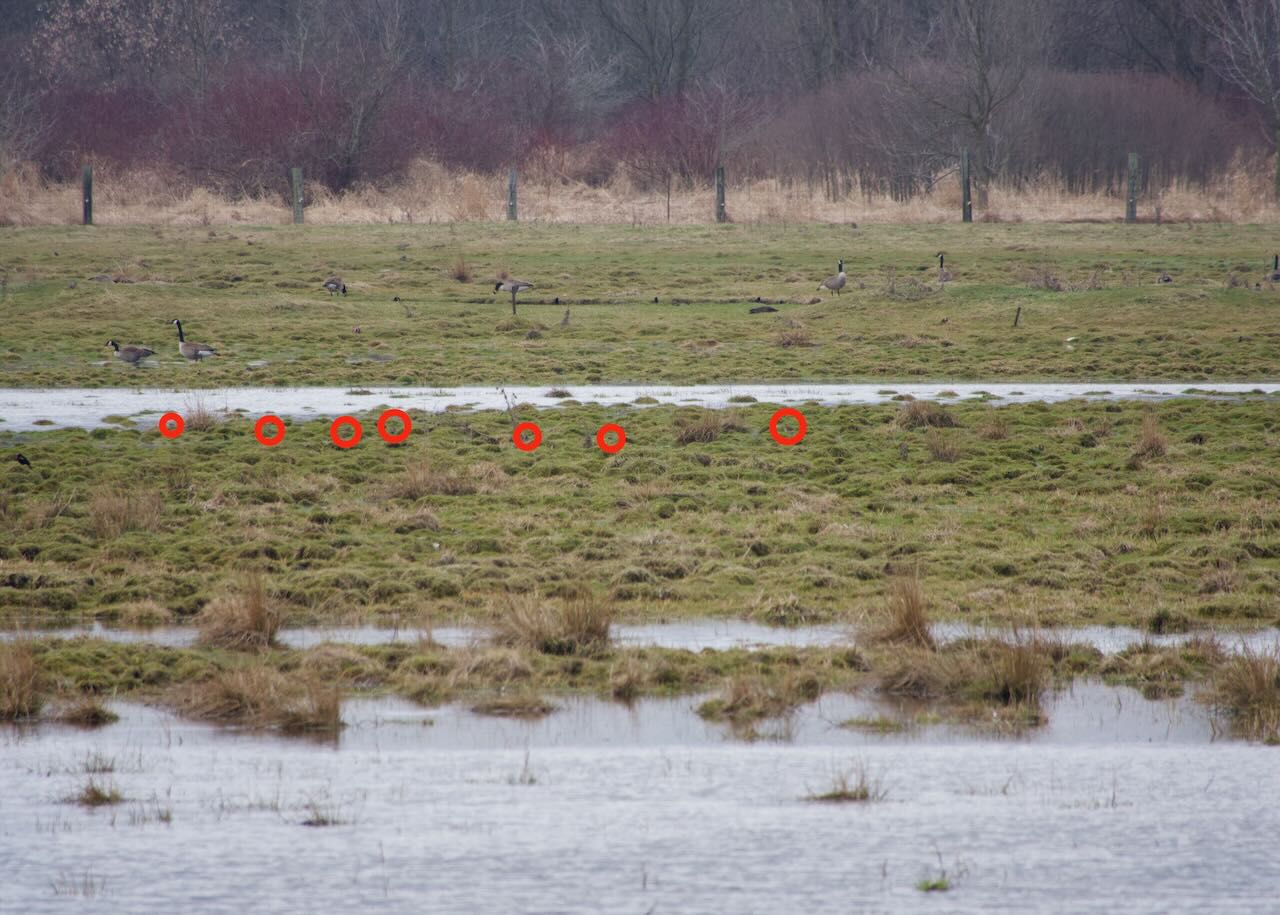
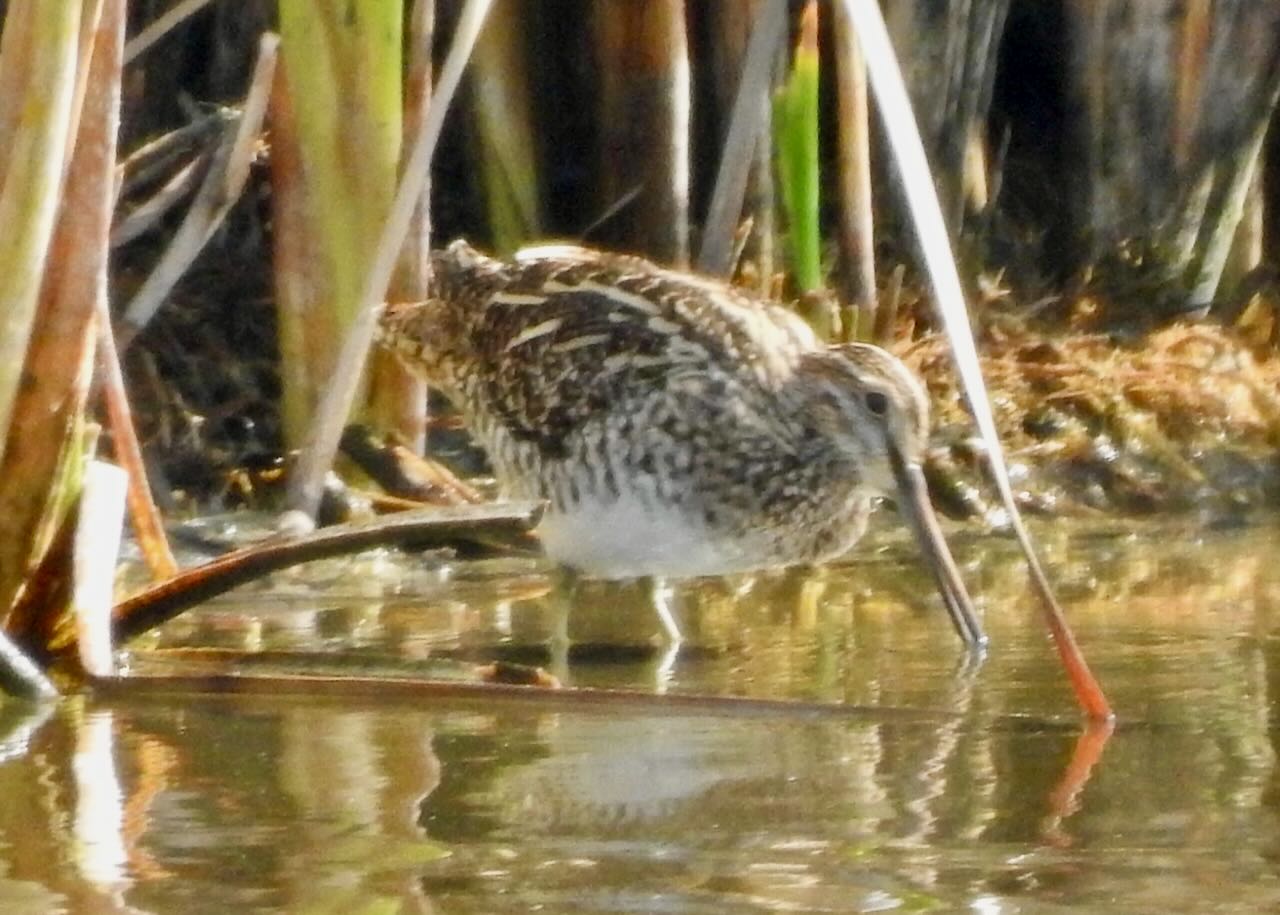
We got back out to bird on our own on Friday at Long Point but a heavy rainstorm and colder conditions resulted in less birds. Still we managed to add 3 common, migrating species, Greater Yellowlegs, Tree Swallow and Rusty Blackbird. I was hoping to see the first Blue-winged Teals but despite careful scoping all along the causeway we could not find any. When we got home I got an alert that there were indeed two seen a few hours after we were there. That “timing” factor yet again. GRRRRR! Saturday we only had a few hours in the morning to bird before caregiving duty so we headed to a local favourite where Wilson’s Snipes had been reported the day before. Snipe’s look similar to the American Woodcock with long bills and stocky bodies. They are found in wetlands and when they fly make this winnowing sound from the air rushing through their tail feathers similar to the Woodcock’s diving display. There were 10 in this wetland area that I re-found with a scope otherwise you would not think anything was there. The picture below shows 7 of the 10 and you will have to believe me when I say they really are there. Hopefully Jerry will get a much better picture of one later in the season. In the meantime, I’ve added one from 2018 so you can see the white bars on their backs that I look for in the field when I am scoping.
I expect that we will try to pick up more of the common species that are arriving early through next week just to get them “off the list” but cooler temperatures will probably mean just trickles of new birds arriving. Spring cannot come soon enough! We are itching to get going with migration and make significant gains in numbers.
Week 11 – still at 13 rarities, Half-way mark reached, 7 birds added 156 species for J&E