Monday we left Vancouver Island from Nanaimo after doing a last sea watch from Clover Point and McMicking Point. It was our last chance to add Heermann’s Gull or Tufted Puffin but it was not to be and so those species that I thought were pretty much a “slam dunk” will not be on our list. In hindsight, I should have planned to go to the top of Vancouver Island to Mount Waddington and taken a boat tour from there. There have been a few reports from there with many pelagic species being seen. I thought being in Tofino would be enough but it clearly was not. Next time we visit we must take the boat trips from Mount Waddington.
We got off the ferry at 3 and then faced afternoon rush hour through Vancouver which doubles any travel time. We had planned on chasing a third Black Phoebe here in BC after missing the previous two. Instead of an hour away, it was 2 hours and 20 minutes! We went anyway. Summer has finally arrived and the temperature was in the 30’s so at 5:30 when we arrived at Willband Creek Park is was still very hot, like 32C hot! And the path was mostly in full sun. We also still had a 3.5 hour drive to Kelowna after that. The Black Phoebe is a southern rarity that tends to show up in BC a few times a year. If you recall we chased the first one in February in running shoes and a foot of snow. The second one was only a week ago but the bird had not been seen for 3-4 days when we arrived on the Island. I was happy to have a third chance at adding this species but after an hour in the hot sun walking the paths and another birder walking the opposite way so we could cover more territory, we had to give up and “dip” on our THIRD Black Phoebe!! SIGH! We arrived in Kelowna at 10pm to spend the next few days trying to see or hear a Western Screech Owl, Northern Pygmy Owl, a Dusky Grouse and a Clark’s Grebe, all birds we missed on our first time through.
Tuesday morning we scoped out some spots we had been given for potential Screech Owls and we found some possible roost holes that might contain an owl. The plan was to return at dusk and see if we could hear one. We then headed up Beaver Lake Road again hoping to catch up with a Dusky Grouse or see a Northern Pygmy Owl. The problem we face is all of these birds are best seen in the early morning or evening and we can only be in one place first thing in the morning so we know our chances dwindle when we are out looking at noon time. Still we had to try. The drive along Beaver Lake and Dee Lake was nice, the temperature was cooler up in the mountains and we had some nice birding experiences with birds already on our list.
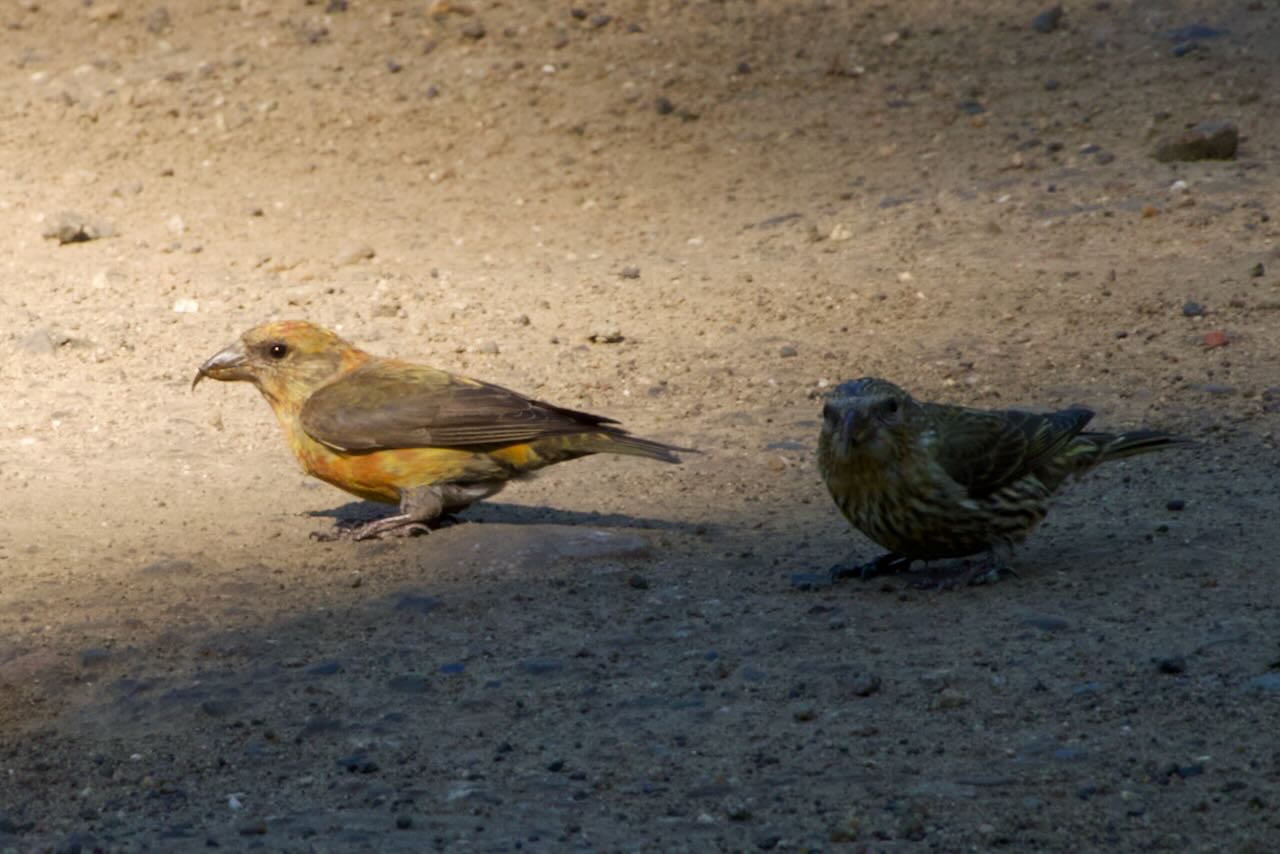
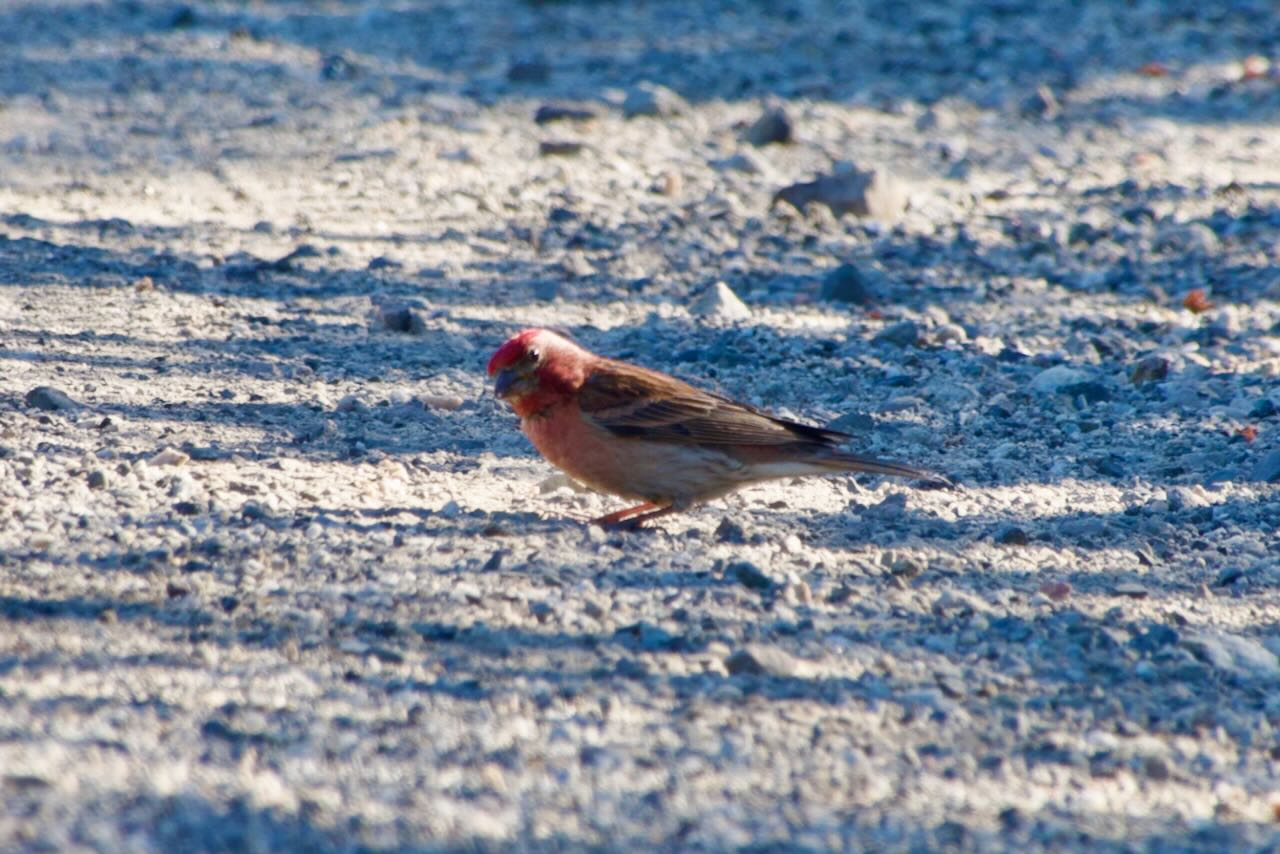
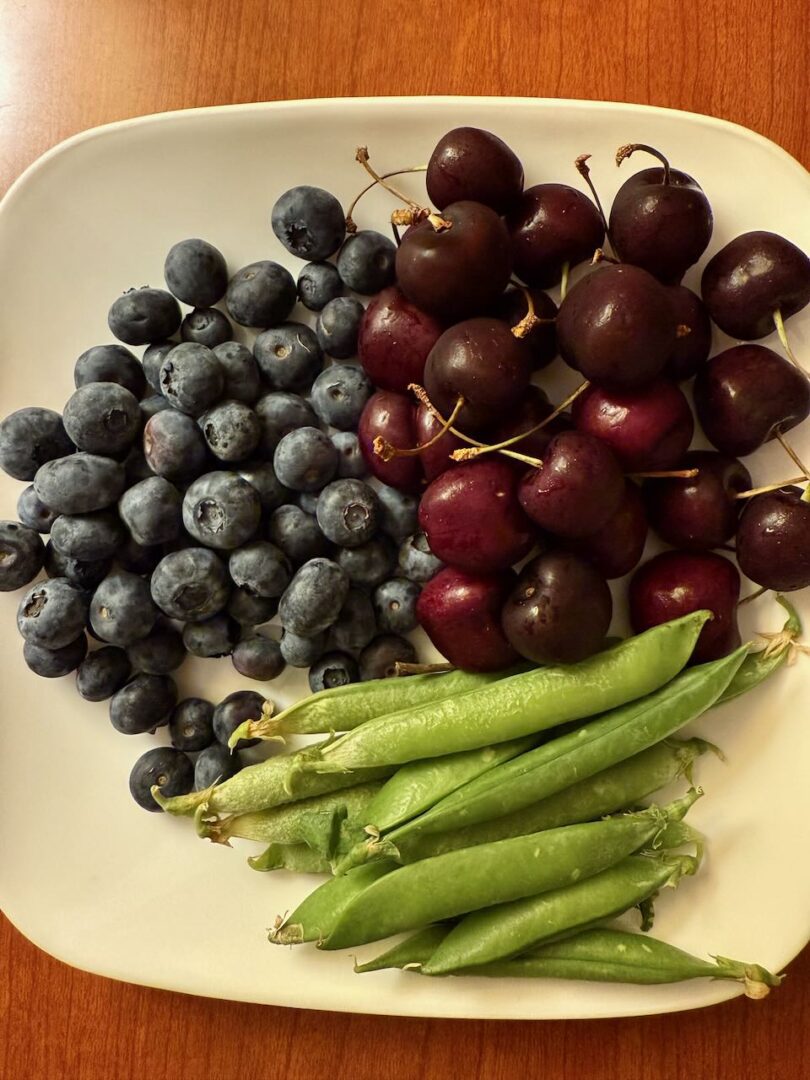
We used the hot afternoon to catch up on pictures, nap and cool down. We have been feasting on Okanagan cherries, fresh peas, and blueberries from the local fruit stands whenever we get the chance.
After a nice dinner at Mike’s Pub at the Ramada Inn we headed back to Sutherland Park at dusk. It was still 30C and we slowly walked around a few trails. Around 9:30 we headed back to the google map pin we had been given by a BC birder we met at the stakeout for the Acorn Woodpecker and I looked off the path and THERE WAS A SCREECH OWL on an open branch easy to see and identify by shape and size! Jerry saw it and then it flew off before he could get a pic. We were stunned! This Lifer had been a long time coming with many attempts and many locations. We stayed for a bit longer hoping it might fly back. Jerry made some squeaky noises like a mouse and suddenly the owl flew over our heads! We were beyond thrilled! We left after that so the owl could begin their hunt in peace. Many, many thanks to the BC birder!
Wednesday we were going to drive up to Salmon Arm for our second attempt at Clark’s Grebe but a forecast of heavy rain most of the day made us change our plans. It is difficult to scope in the rain. We would have to go on Thursday on our way to Kamloops. We headed back to the park instead to see if we could find the roost hole of the owl but despite careful searching of all the trees near the spot we could not find it. It might just be obscured by leaves or another branch or be on the back of a tree we cannot see from the trail. We then drove to West Kelowna and walked the road where the Flammulated Owls are, then checked out a mountain road but it would be too rough for our car to drive up, and finally ended up at Rose Regional Park hiking among the burned trees. It was a short hike as it started to rain and became quite heavy. We headed back to the hotel. Jerry did manage to get some nice pictures of some birds we saw at all the stops.
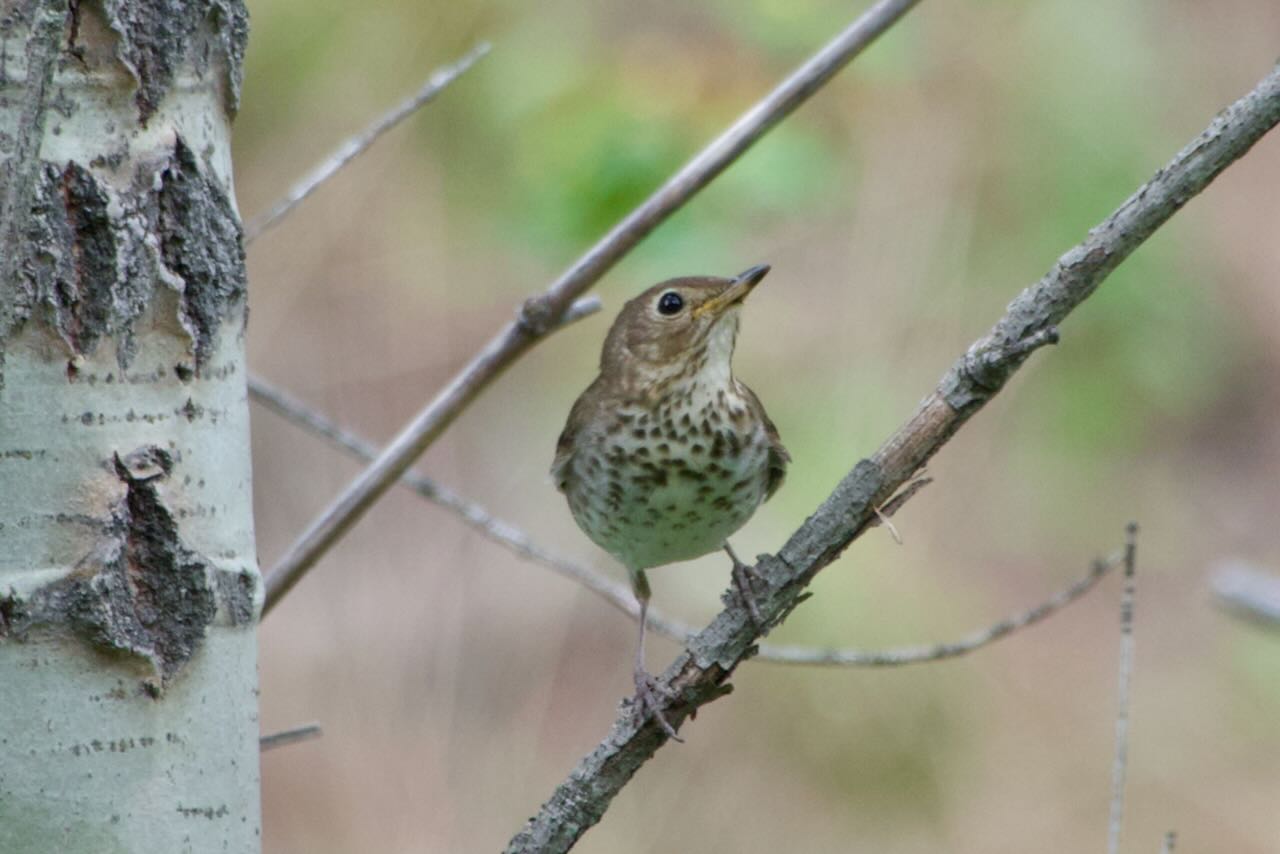
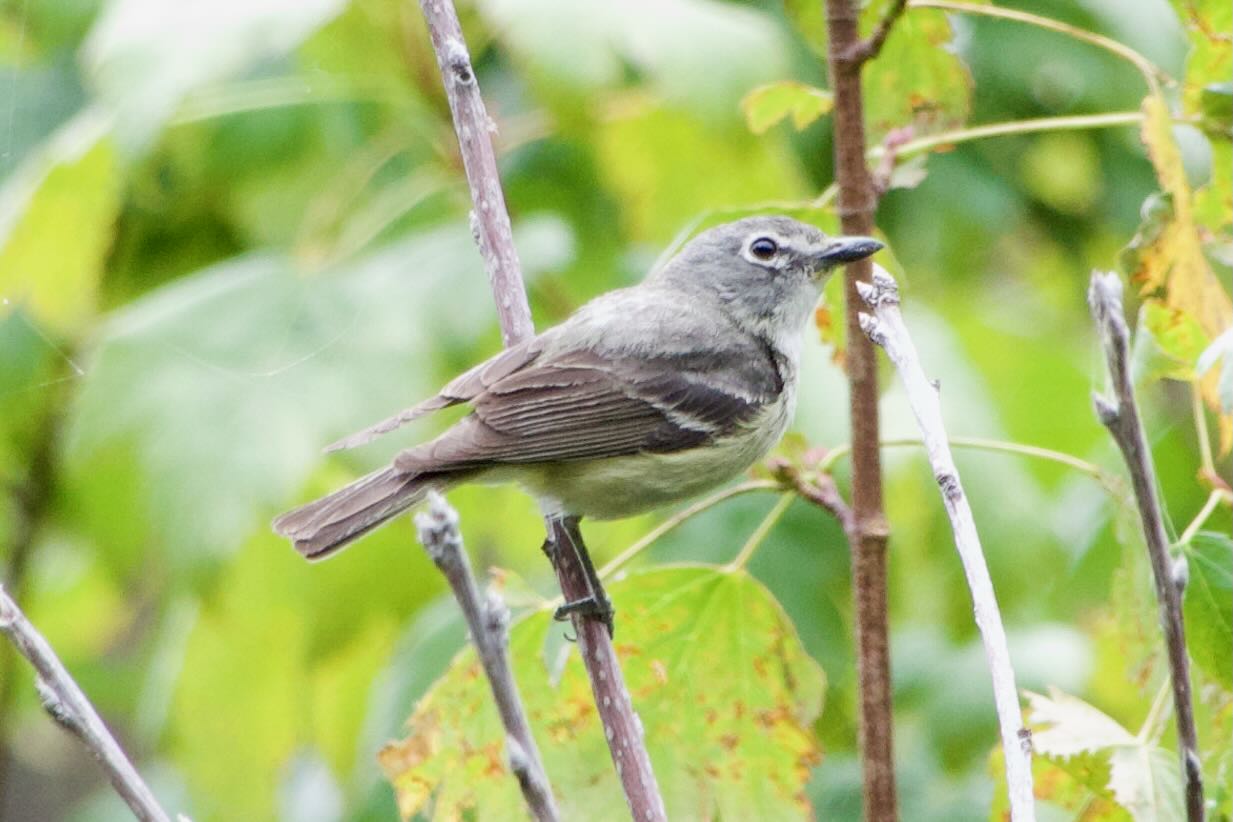
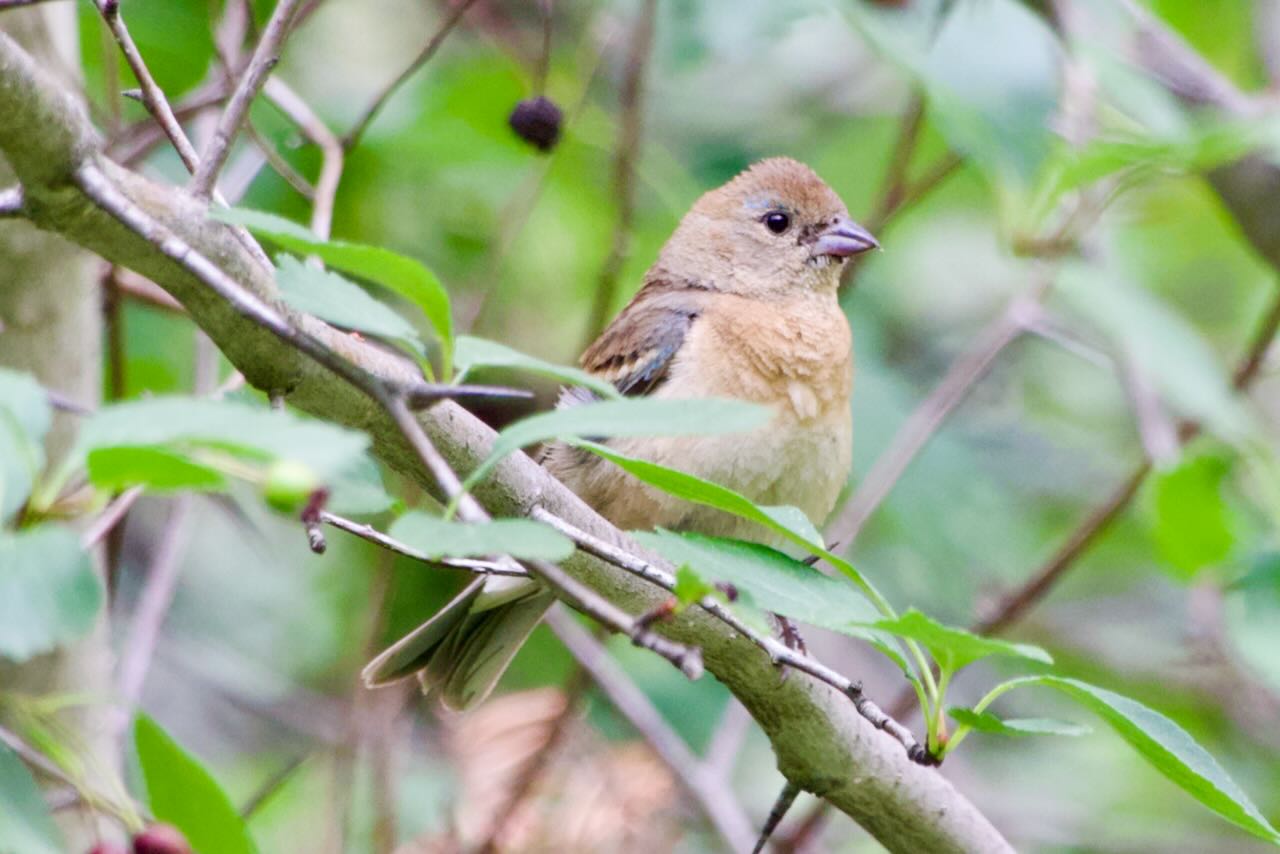
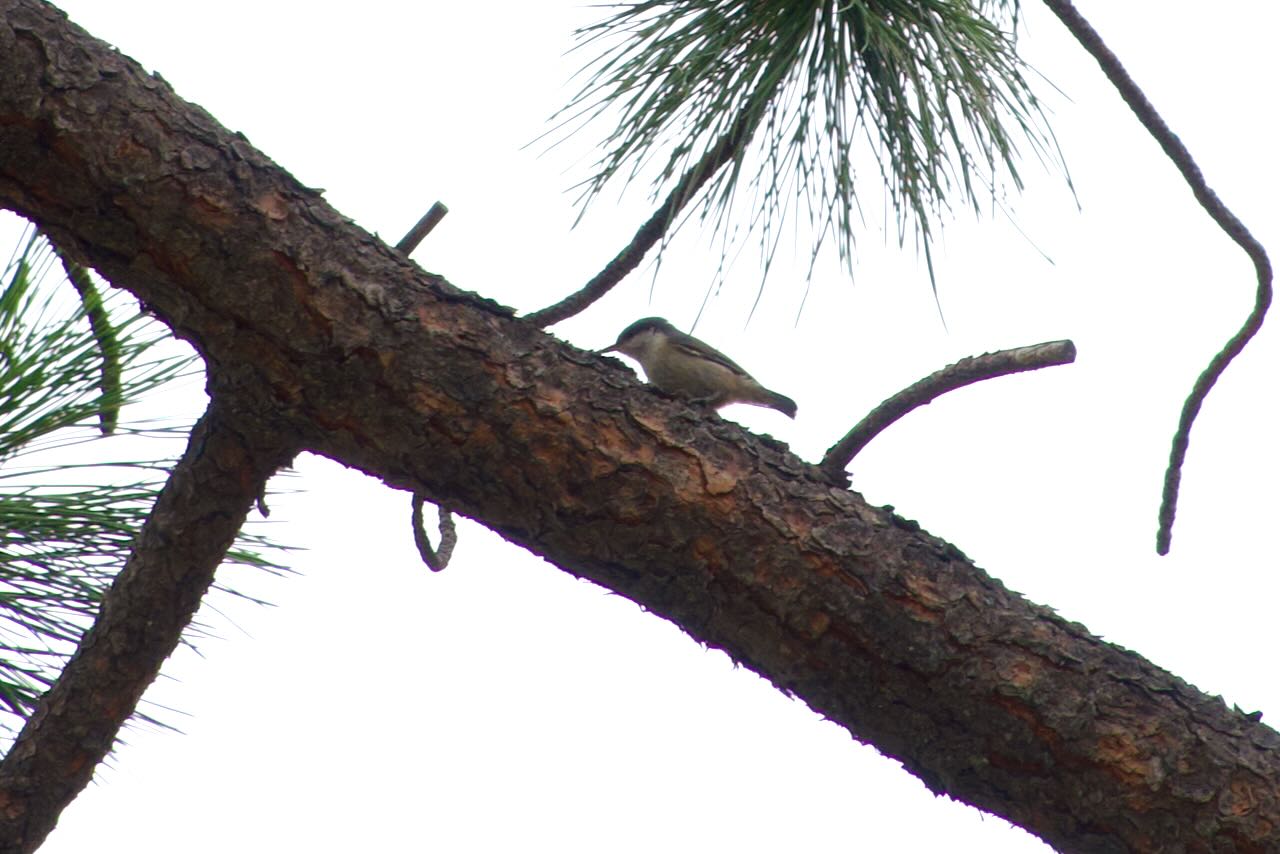
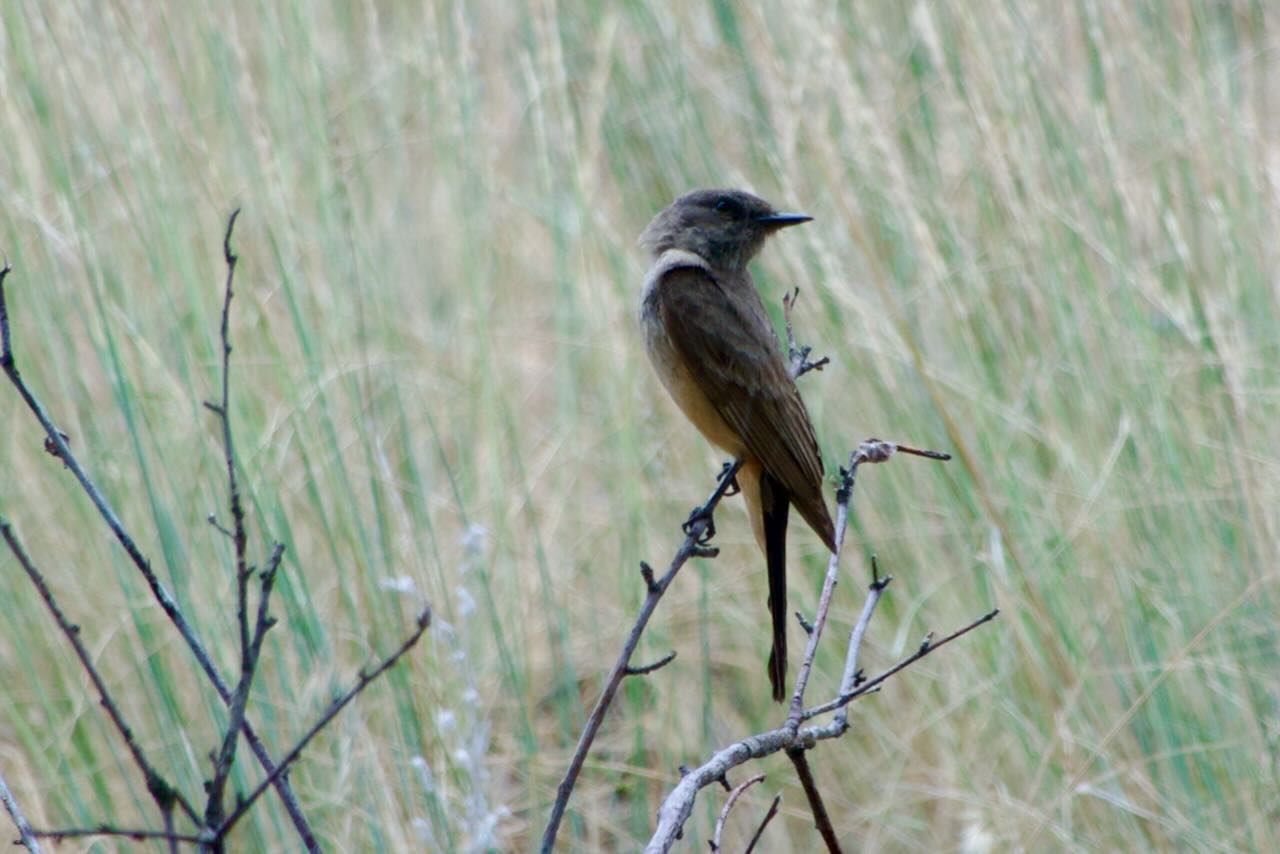
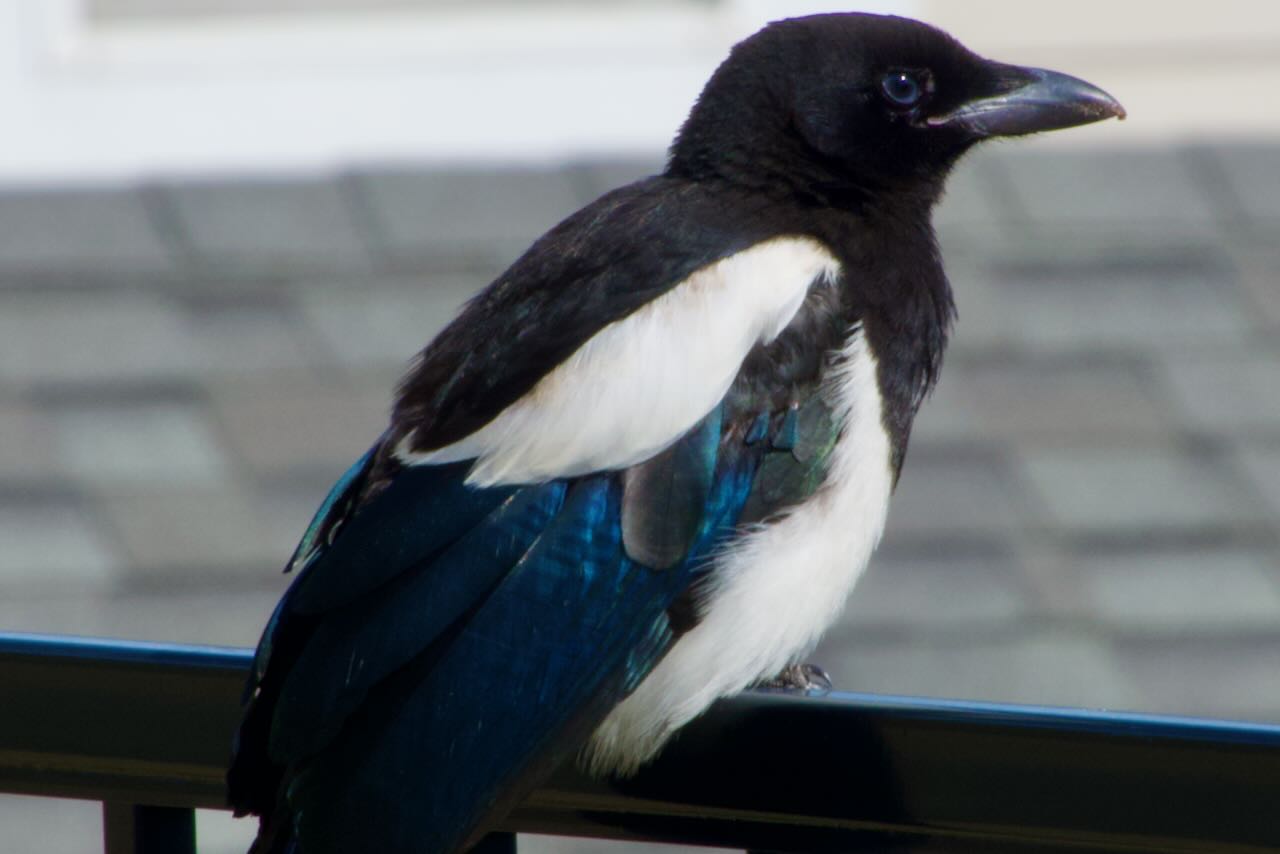
After dinner, ever the optimists, we went back to the “owl” park to see about getting a picture. We waited in the same area but no owl appeared by 9:35 and it was pretty dark for pictures so we started walking out and just out on the main path I saw a familiar shape on a branch just feet away. Jerry got his camera on it but the camera would not work as it was too dark. The owl was making this mewing/whinny kind of call so we assumed it was a juvenile maybe begging for food. Merlin did not pick up the call and my recording is very faint with all the traffic noise. Then while one was calling in the one tree another owl flew down past us. Jerry tried to adjust settings and get a pic of this second owl sitting close to us but again the camera just could not take the pic. We did not want to use flash as it can affect their eyes. We enjoyed the few moments with Western Screech Owls for the second night in a row and then headed back to our hotel. This cute California Quail entertained us before we found the Owl.
Thursday we left early so we would have the day at Salmon Arm to find a Clark’s Grebe.
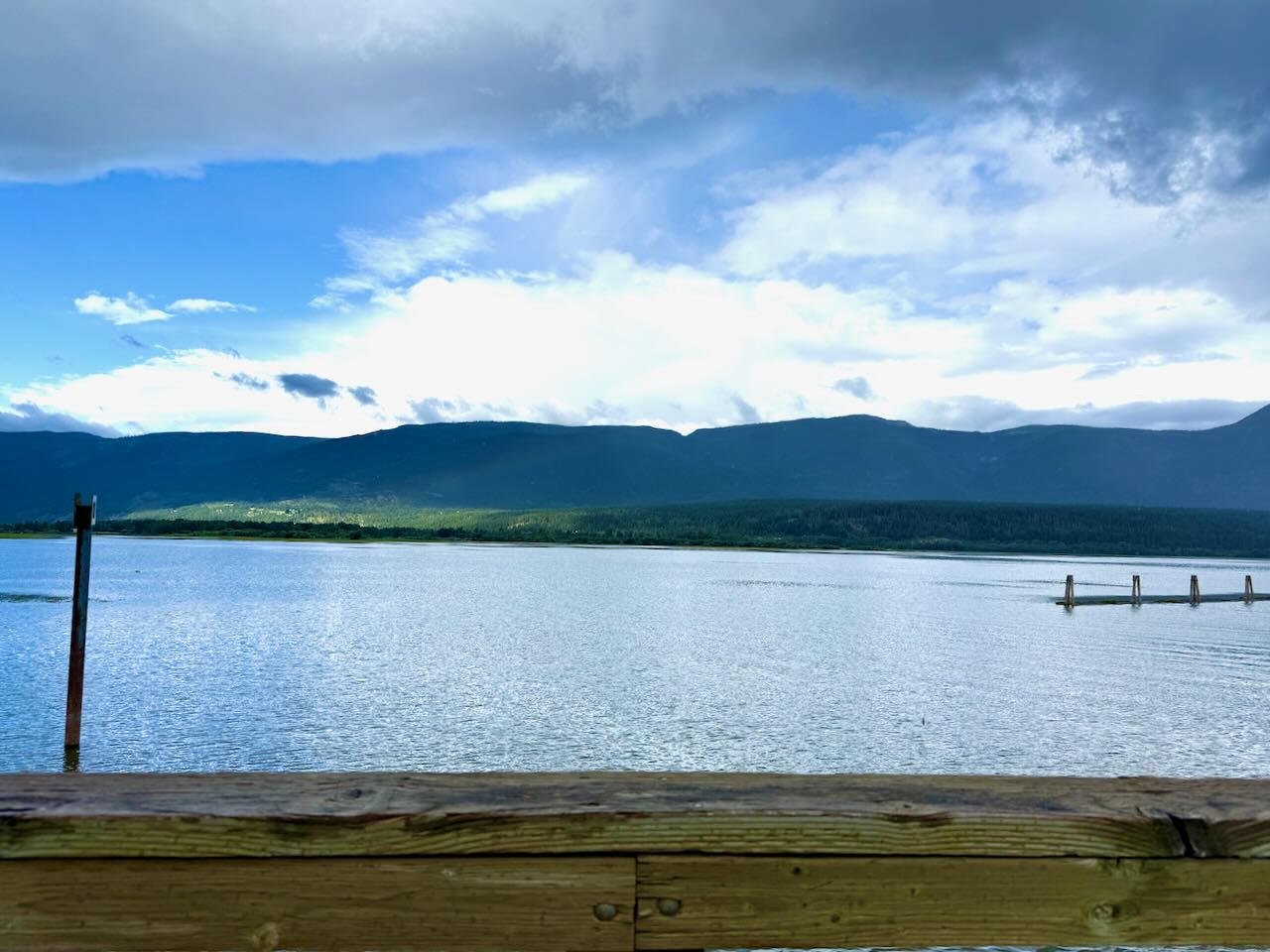
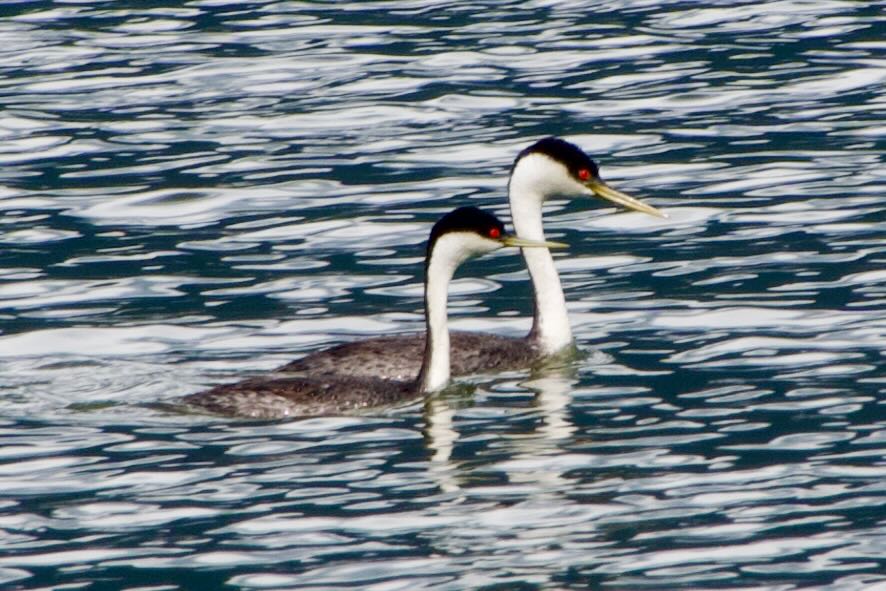
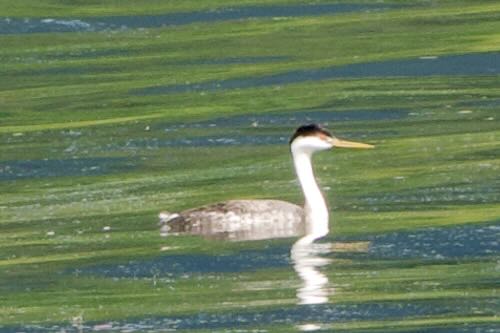
There are hundred’s of Western Grebes on the lake but only a few Clark’s Grebe and the difference between them is subtle. The black cap on the Western extends below the eye and above on the Clark’s. The Clark’s also has an oranger bill.
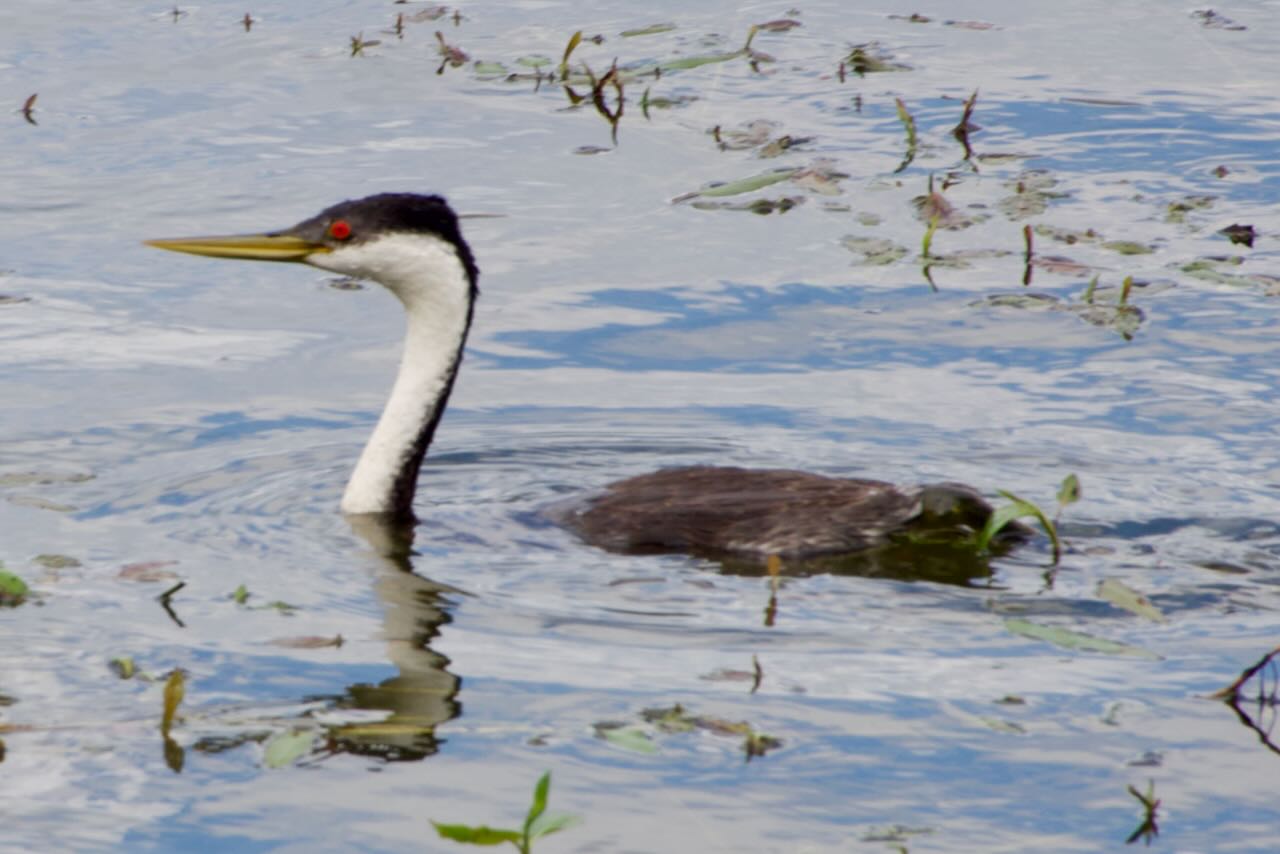
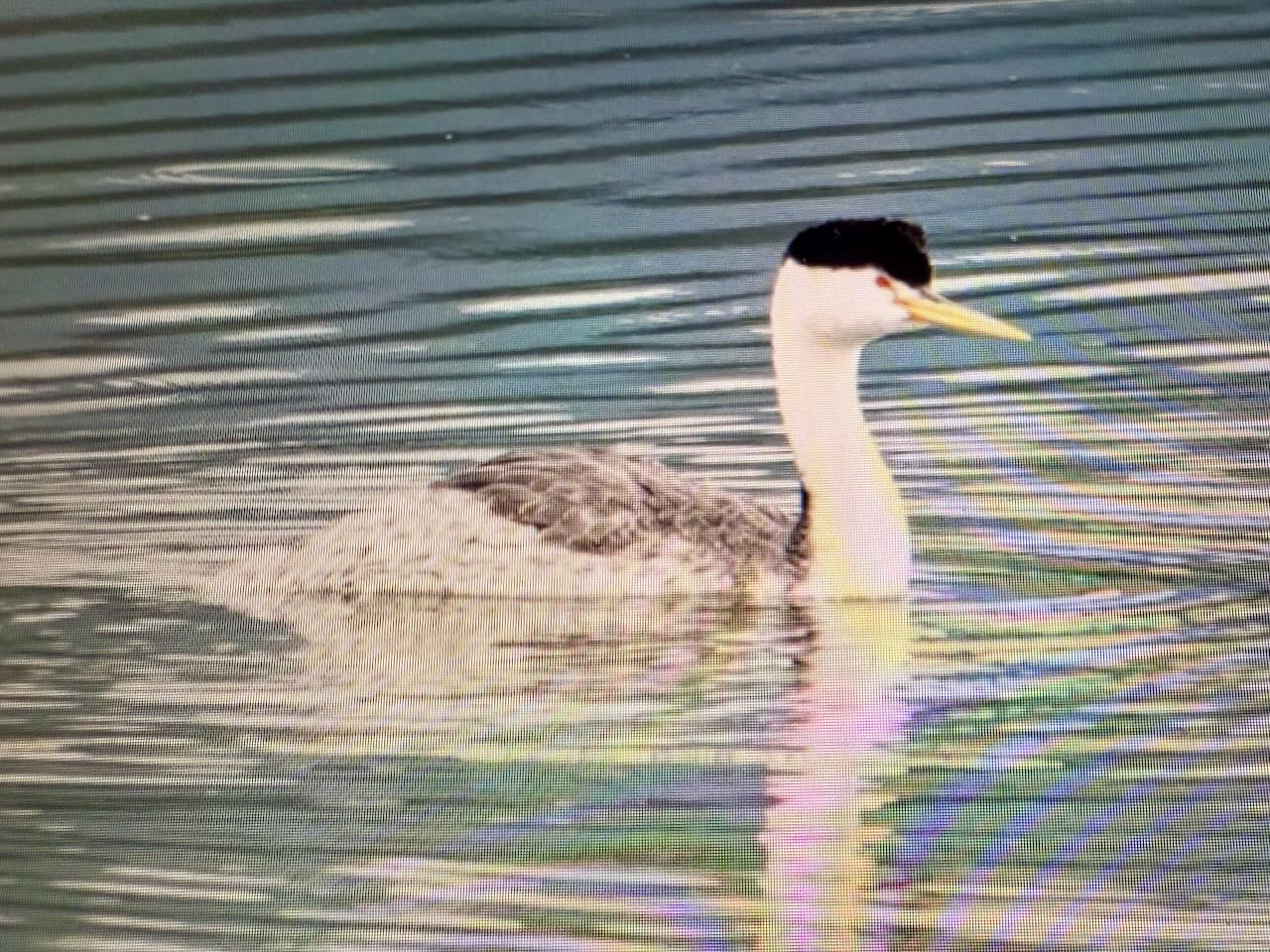
The problem is that there are now hybrids which have some or a mix of the two. We arrived just after 7 and started scoping and looking at the three spots the Grebes tend to hang in. We changed spots, we scoped, we rested, we had moments of “yes I think that is it” and moments of “no just another hybrid”. Below are some pics of our hybrids.
By 3:30 we were tired, disappointed and had achy backs and necks. I had scoped through hundred’s of Grebes multiple times and I was pretty sure there was just no way we were finding a pure Clark’s. I joked about getting my boating license (and I HATE boats) for these situations in the future as it seemed like that would be the only way to find this bird. Back in 2022 we got out of our car and walked on the wharf and there was a Clark’s Grebe right off the pier. But this year it was just not around close enough for us to ID. Another bird that I had considered would be a “slam dunk”. A reminder once again that it is all just about timing and the birds don’t wait patiently for us to arrive. LOL There have been a few reports from Saskatchewan of a pair of Clark’s Grebes having young and so we will try and check that spot on our way home.
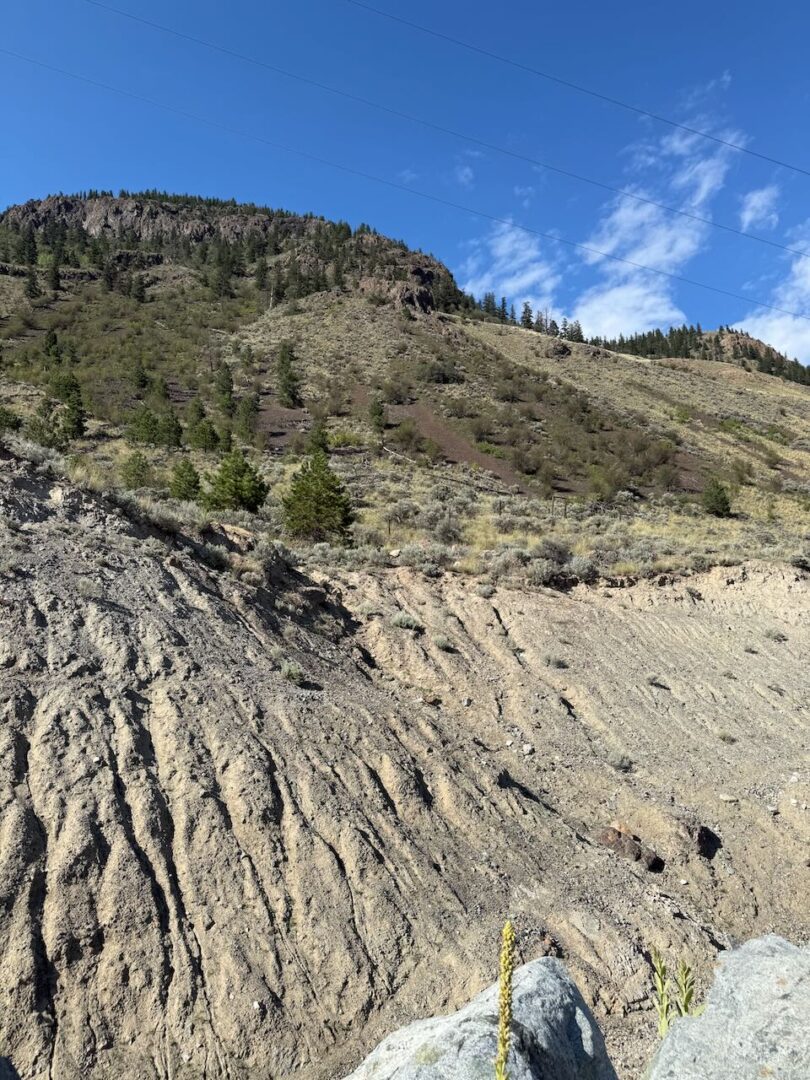
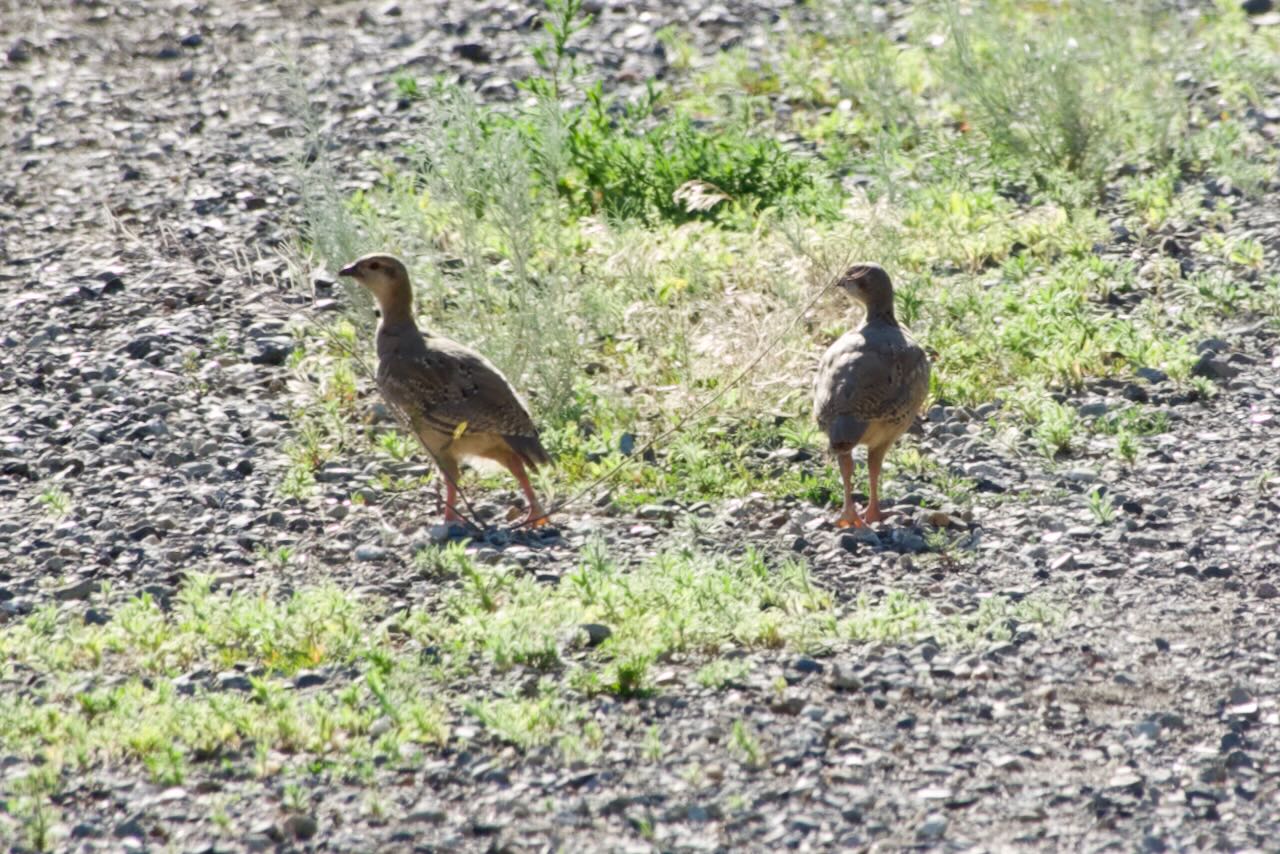
We headed to Kamloops where we hoped to add Chukar to our list. Chukar, a type of quail, are a naturalized species that is only countable in certain locations in Canada. In most locations, including Ontario, they would be considered a released/escaped bird as they are routinely kept by hunters and farmers. The Ebird definition is “Naturalized: Exotic population is self-sustaining, breeding in the wild, persisting for many years, and not maintained through ongoing releases (including vagrants from Naturalized populations). These count in official eBird totals and, where applicable, have been accepted by regional bird records committee(s).” Sun River Estates in Kamloops seems to have a pretty big population that is countable so we headed up into the hills, parked at the base of the cliffs behind the homes, walked a very short distance and saw a family of 8 Chukar at a distance down the road. So easy! It was nice after the frustration over the Grebe to get Chukar immediately. We drove around for a bit and saw a few more adults to get pictures and video.
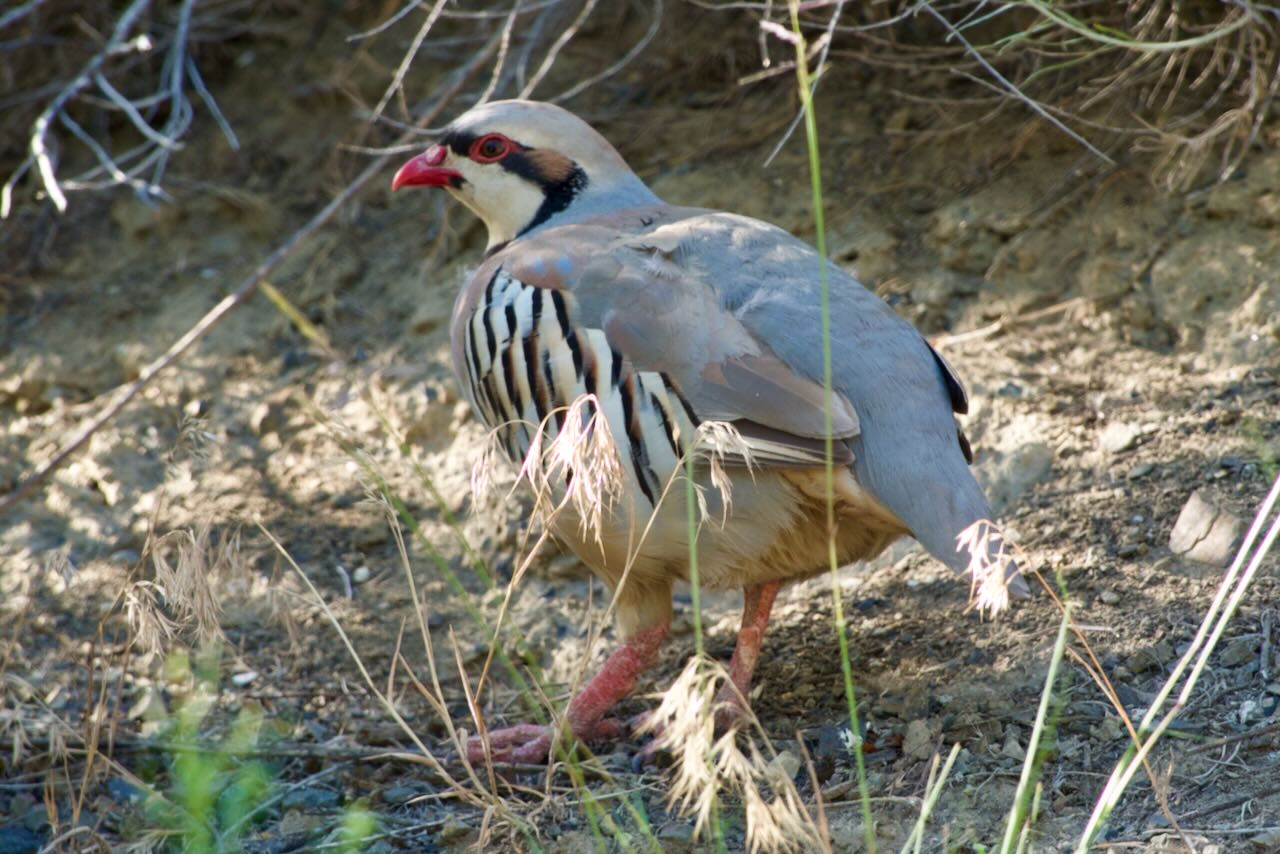
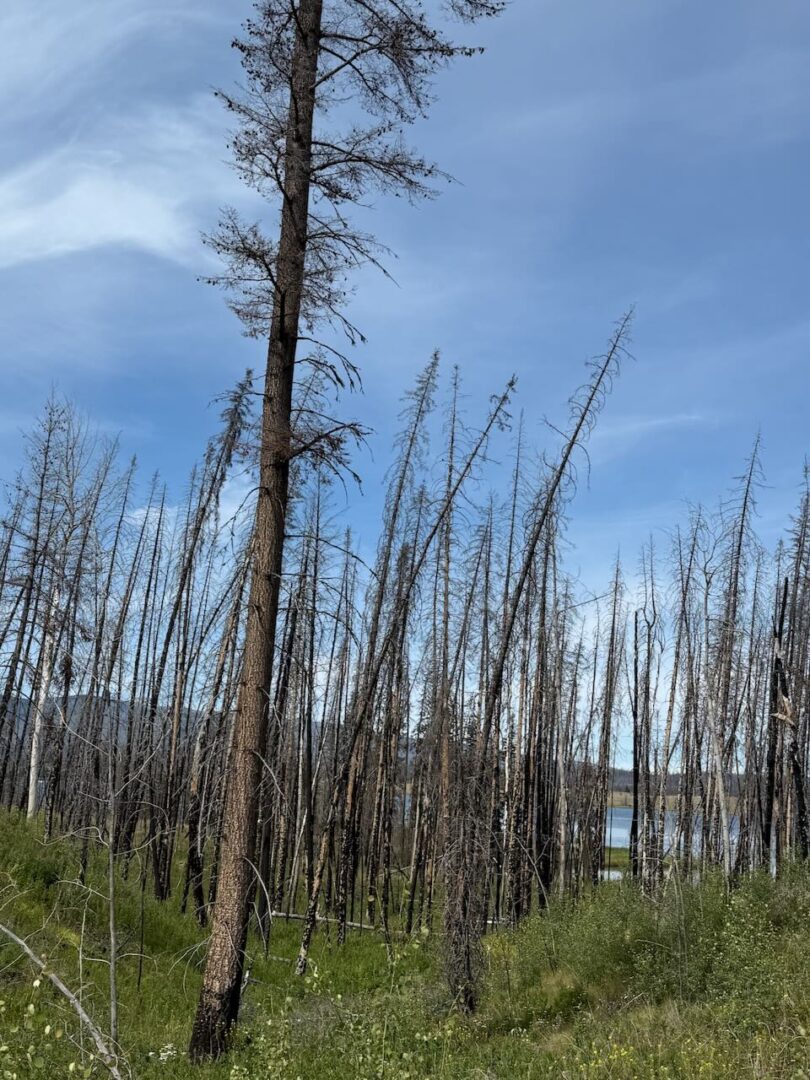
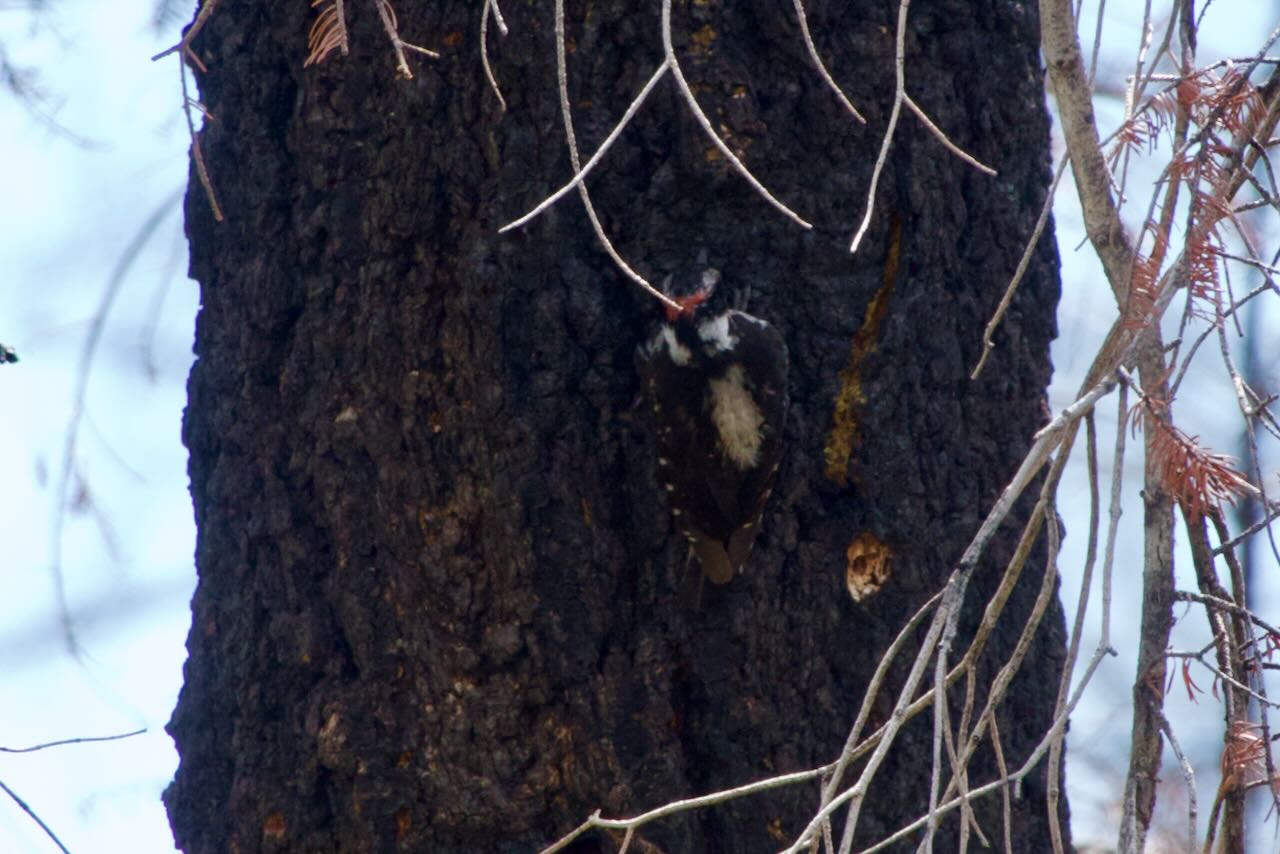
Getting the Chukar so quickly meant we had a “free day” on Friday so I researched a few places to visit and we headed to Tunkwa Provincial Park. We still have not added Black-backed Woodpeckers and American Three-toed Woodpeckers to our list but these birds can be found in most provinces so I have not made them a priority yet. They are specialists in burned areas eating larvae that is deposited in newly burned trees. Tunkwa burned in 2021 and there are still a few reports of these woodpeckers being seen so we thought we would check it out. It is not easy to look for black woodpeckers that might be on black trees as you can see from the picture below of a Hairy Woodpecker. Despite careful looking and listening we did not turn up the ones we need.
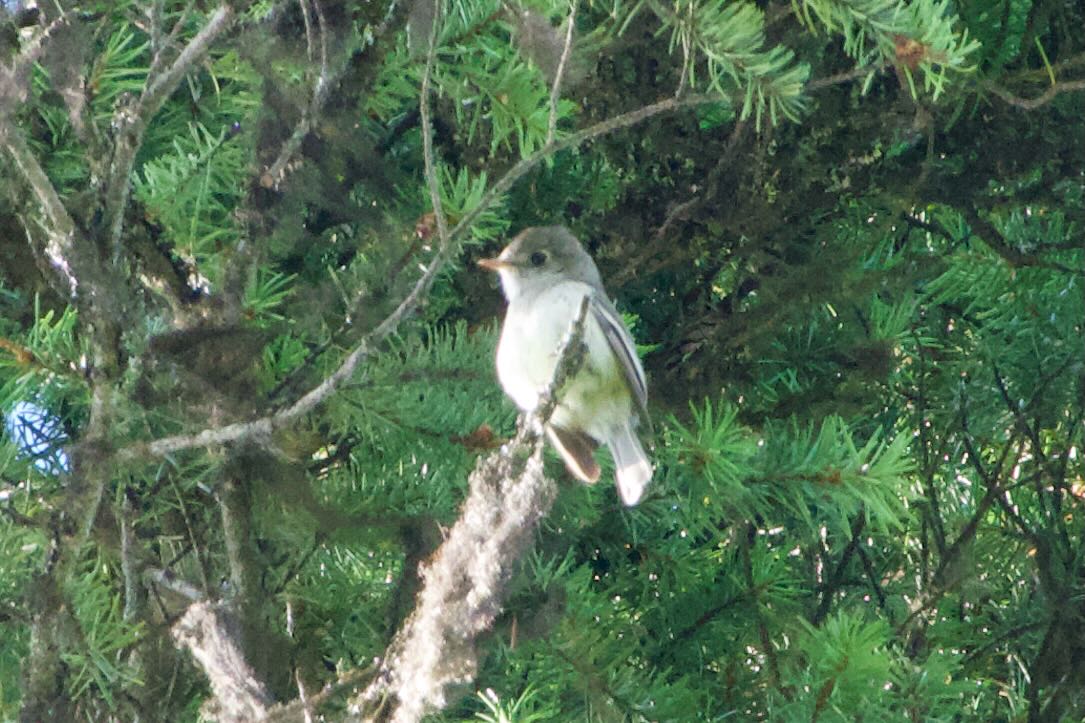
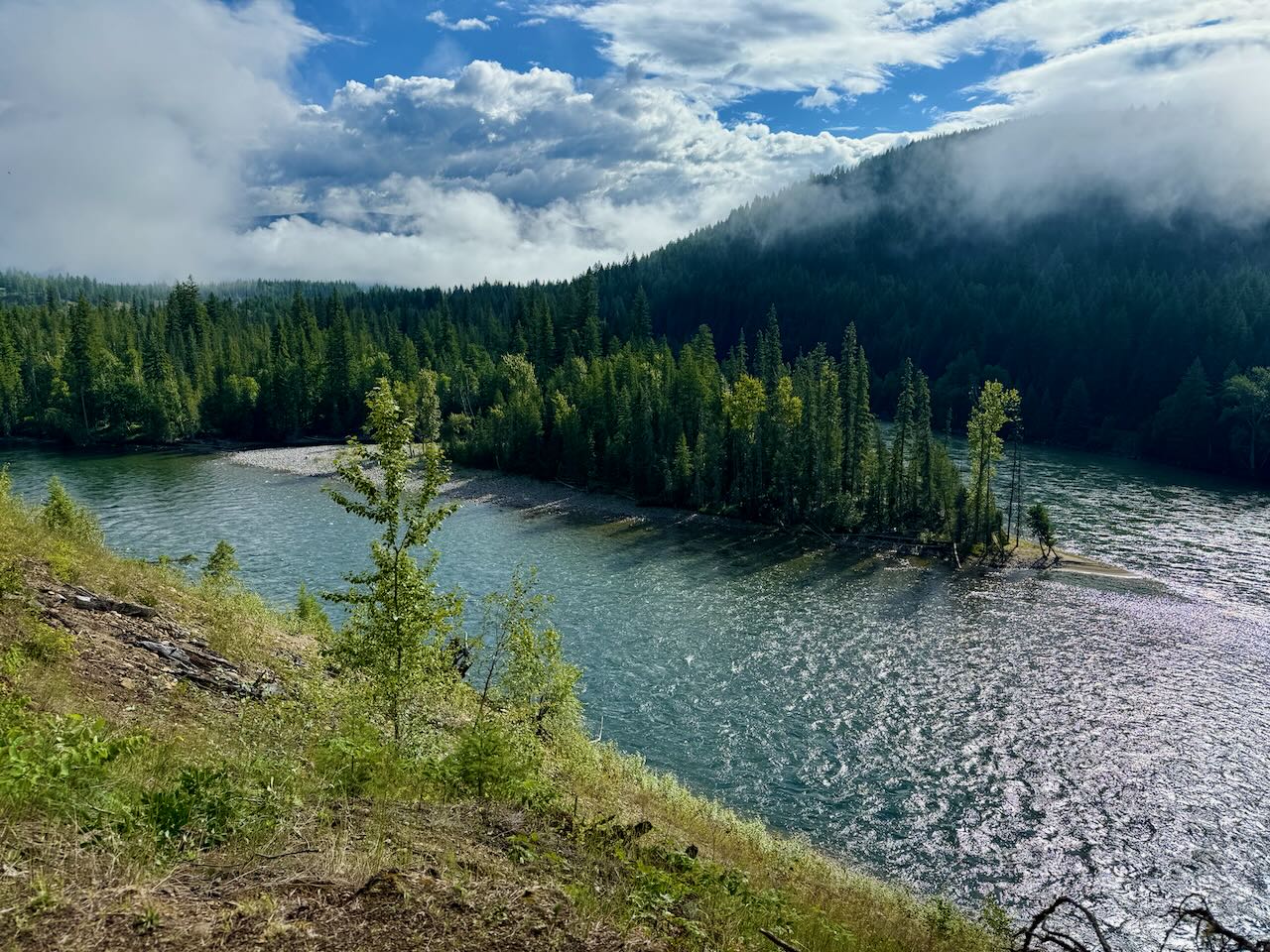
Saturday we moved up into the mountains, heading towards Jasper National Park and stopped at Valmount for our last night in British Columbia. We stopped and hiked at 3 different spots, the first one being North Thompson River Provincial Park. As soon as we got out of the car we heard a Hammond’s Flycatcher singing and Jerry rushed out to track it down. We still needed a picture. And he got it! The trails were pretty and the birds were singing so we spent some time there enjoying the forests and birds.
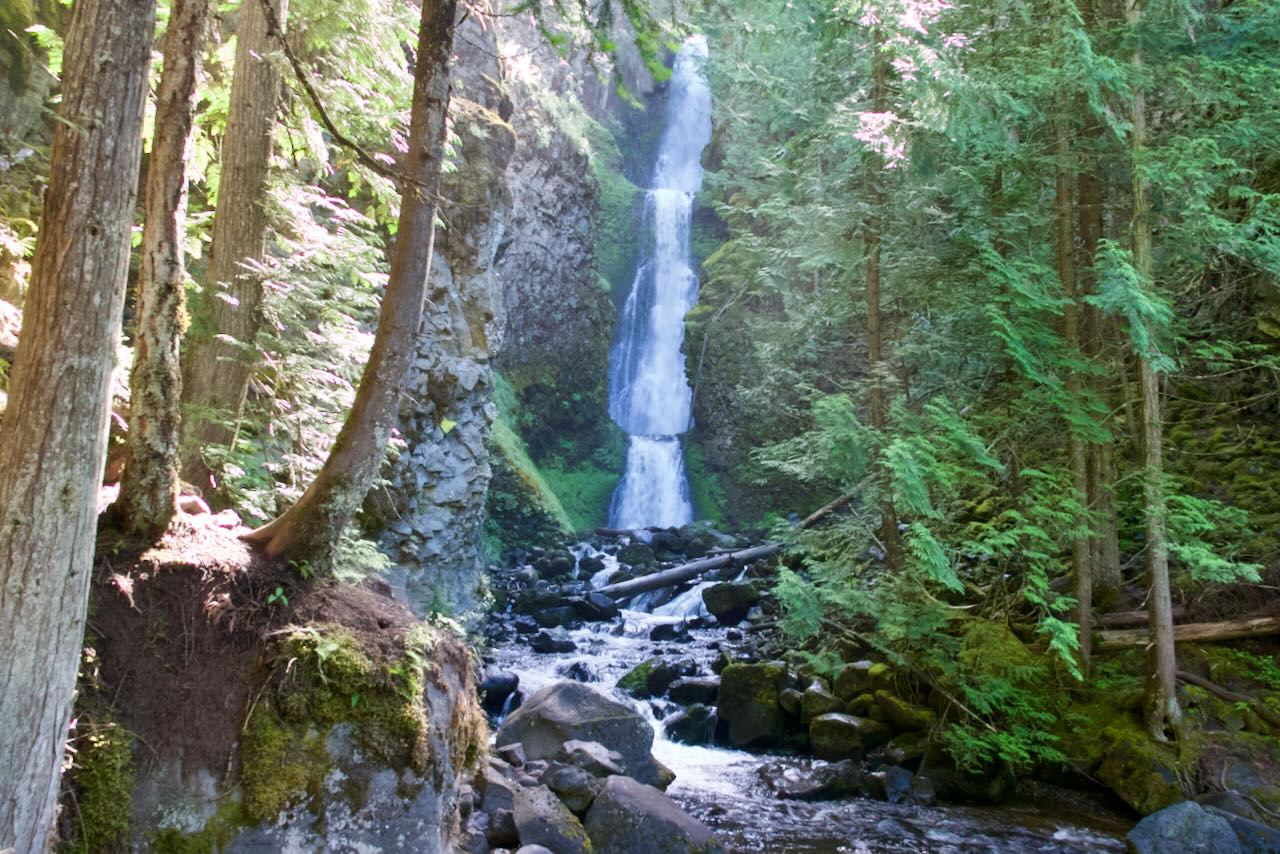
The next stop was a tourist spot, Triple Decker Falls, involving a trail down and of course a trail back up. It was a pretty spot but not too much bird life.
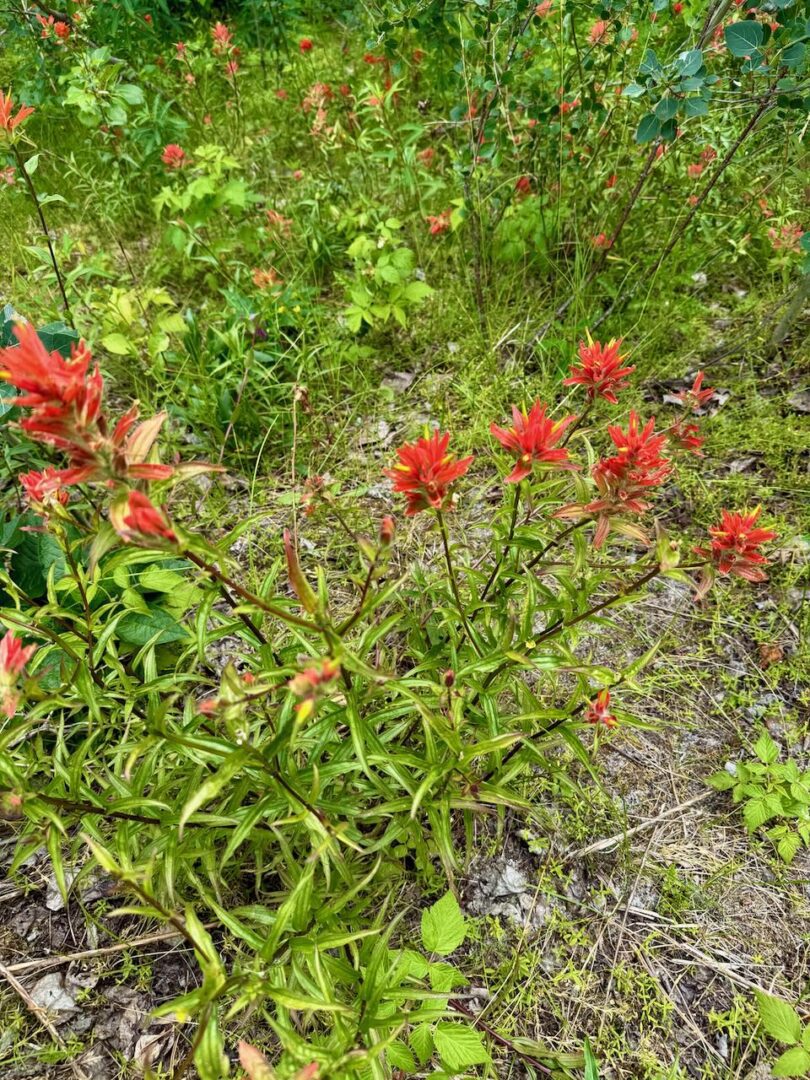
The third spot was in the town of Valemount and was a 6km loop around a marsh area called the Starratt Wildlife management Area. We know it is not likely that we are adding a new bird at this point but we are still very much enjoying getting out of our car and walking in the woods to enjoy the birds that are there.
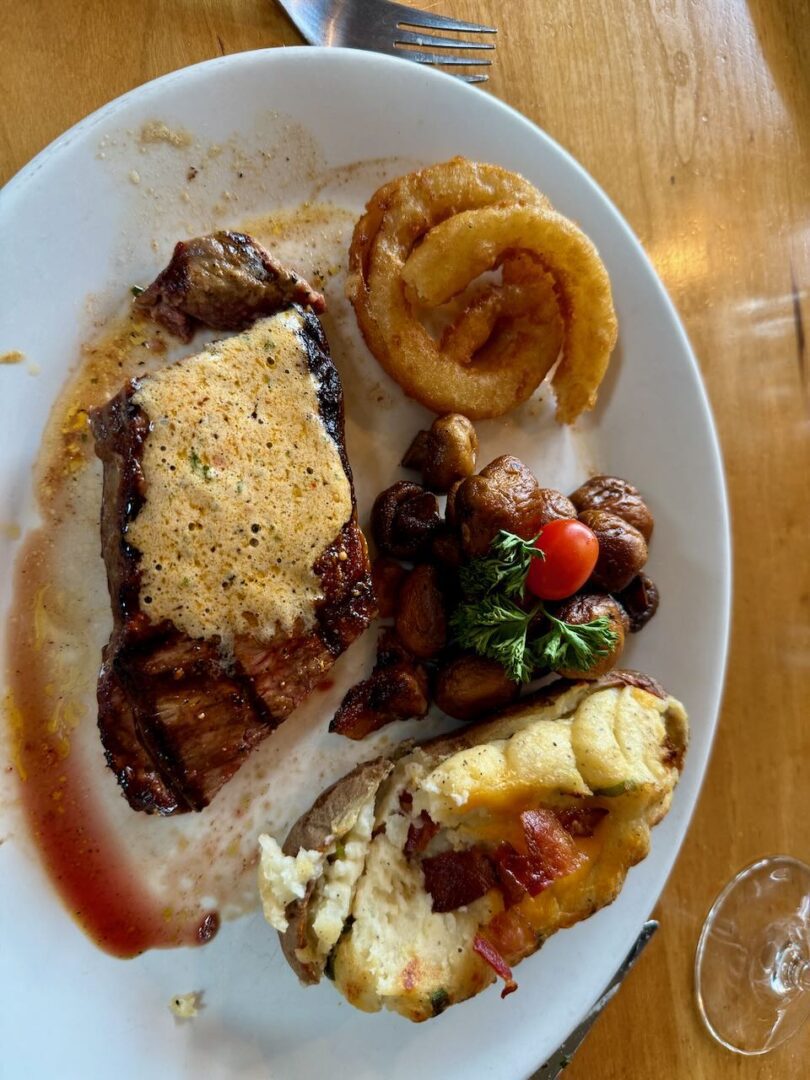
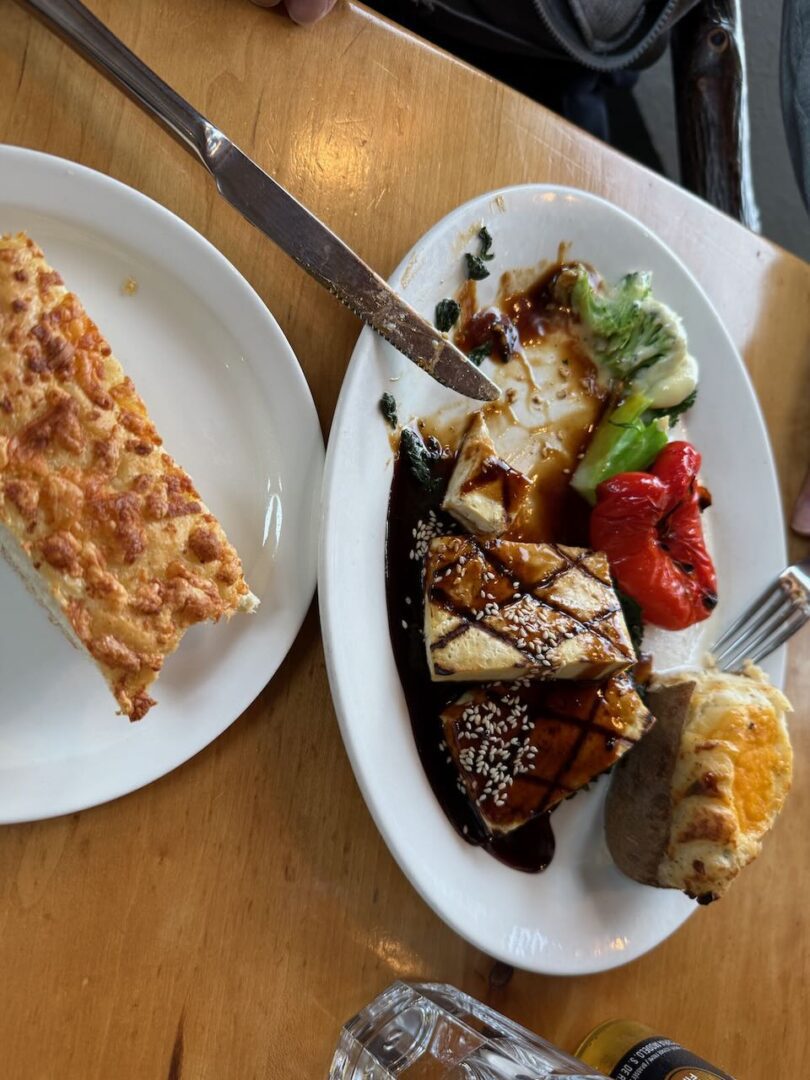
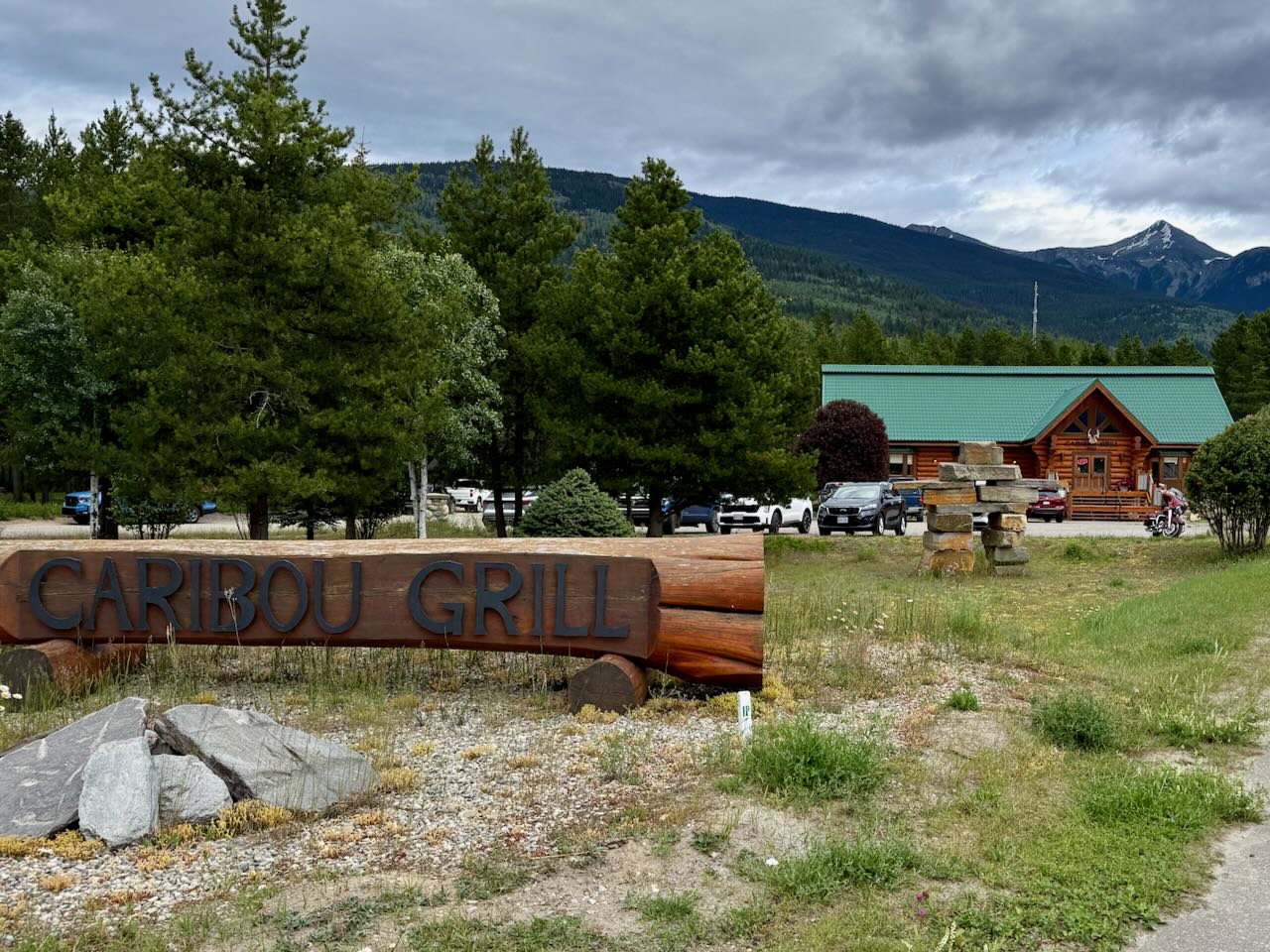
We managed to walk almost 20,000 steps, 13.4 km with 28 flights of stairs and still checked into our hotel by 4. We had a quick shower and treated ourselves to the “best” restaurant in the small community where we finished 6 weeks of road tripping with a real steak for me and a tofu steak for Jerry. While not my usual home grilled filet mignon it was still yummy and the cheese bread and seafood chowder very tasty.
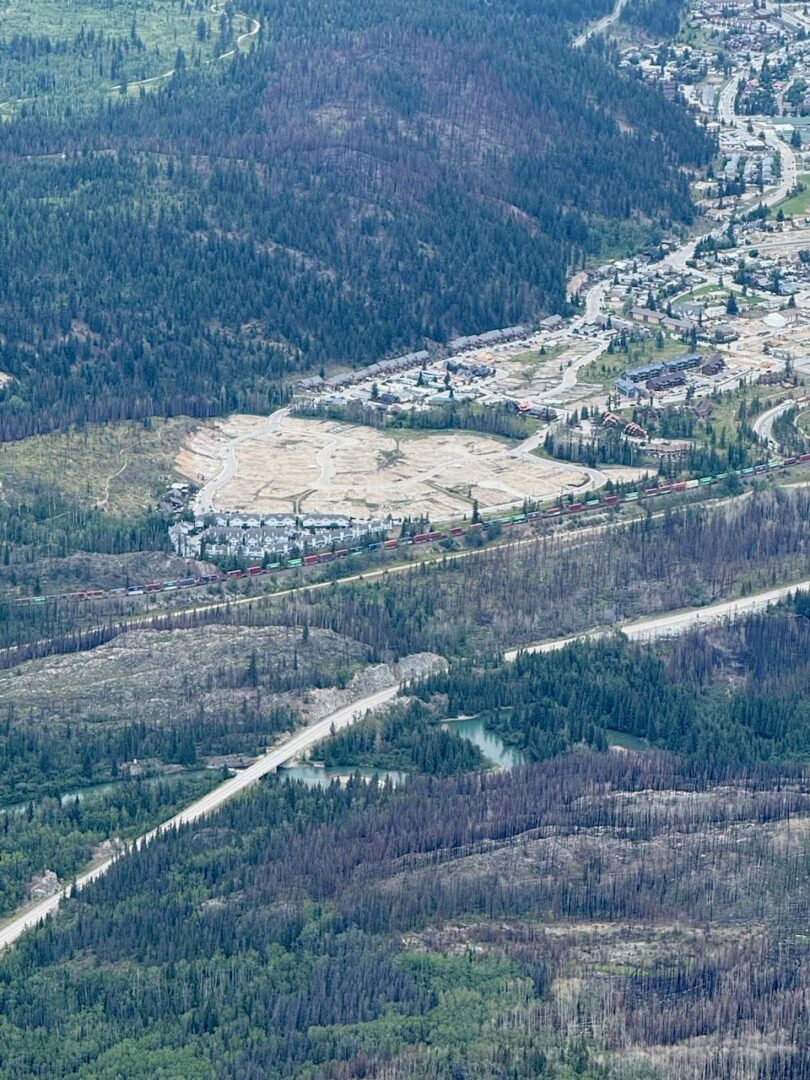
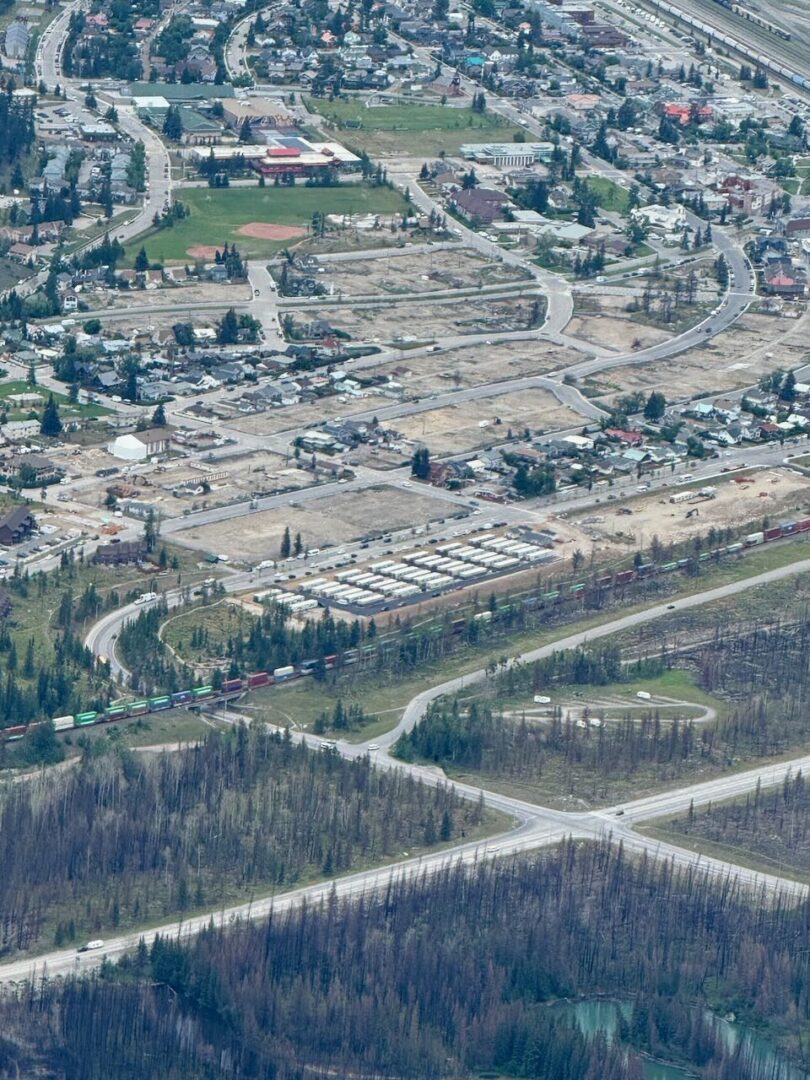
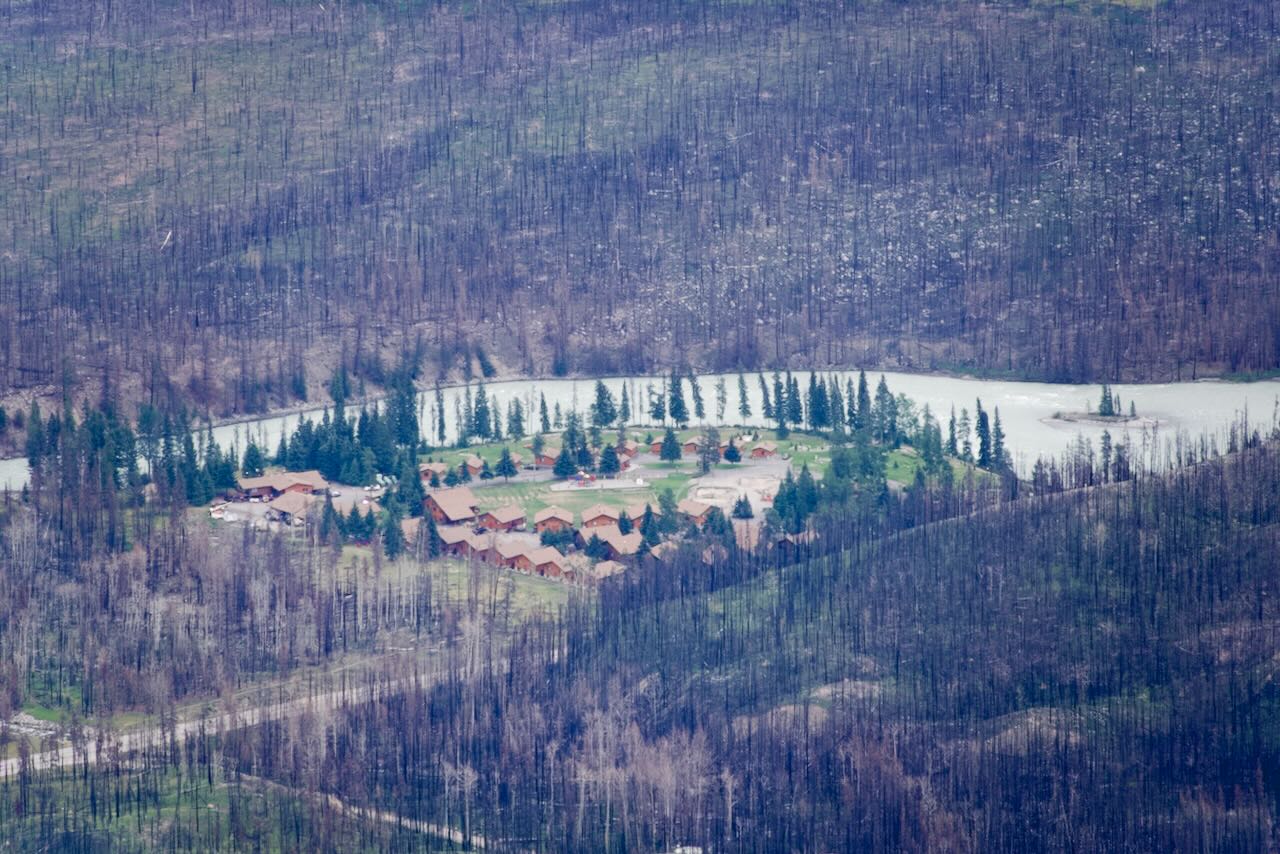
Sunday we drove to Jasper. Last year a fire decimated most of the community and many hectares of trees in the National Park.
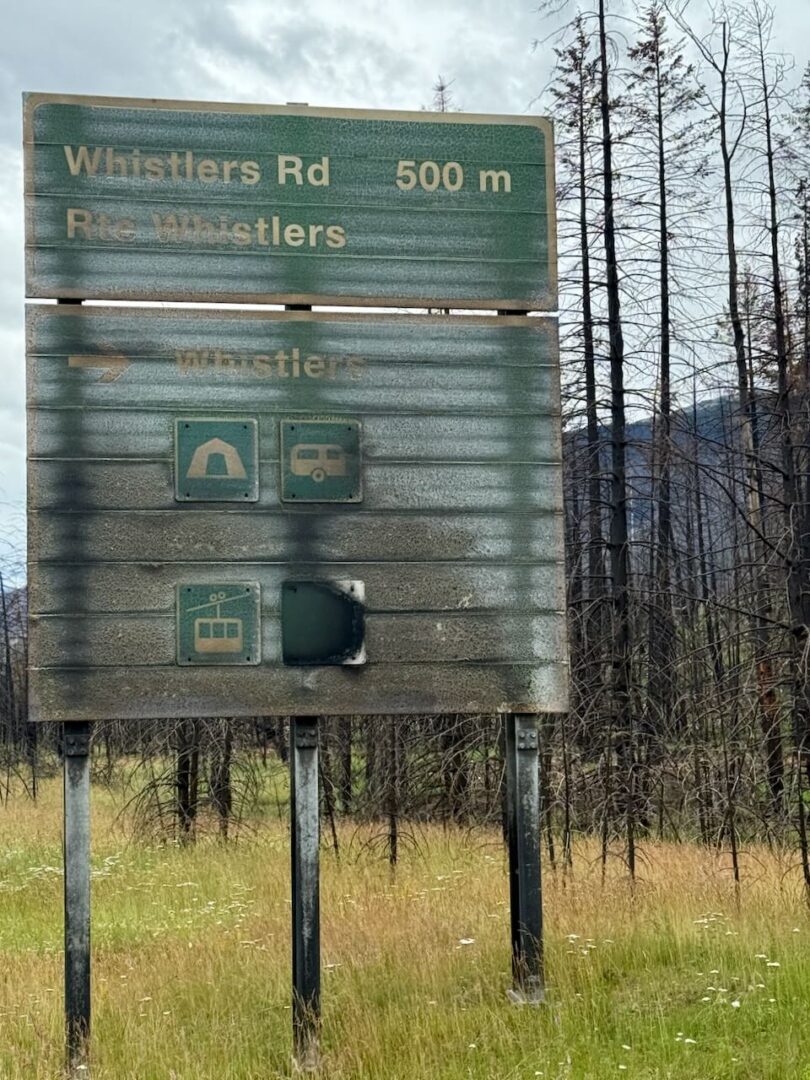
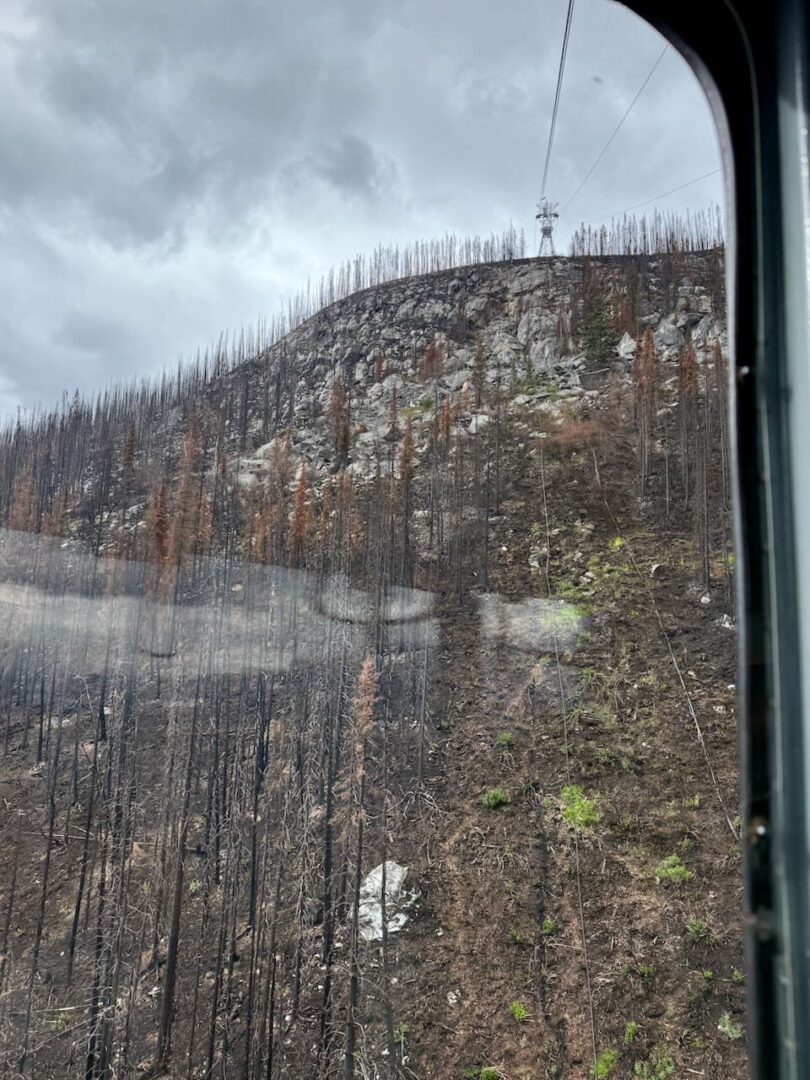
We had booked tickets for the Skytram for Monday but heavy rain was forecast so we opted to get there early Sunday and change our booking. White-tailed Ptarmigan can be only found high in the mountains and the Skytram takes you up near the summit making it one of the “easier” ways to get this bird on your list. I was not keen on taking 8-9hr hikes on other mountains and most people seemed to get the bird off the Skytram with a 1-2 km walk in a few hours. We arrived at the top at 9:30 – took a few minutes to acclimate to the thinner air and then started the climb to the summit. It was about 10C some sun and cloud and we were prepared with extra layers, raincoats and gloves all that came in handy with the wind.
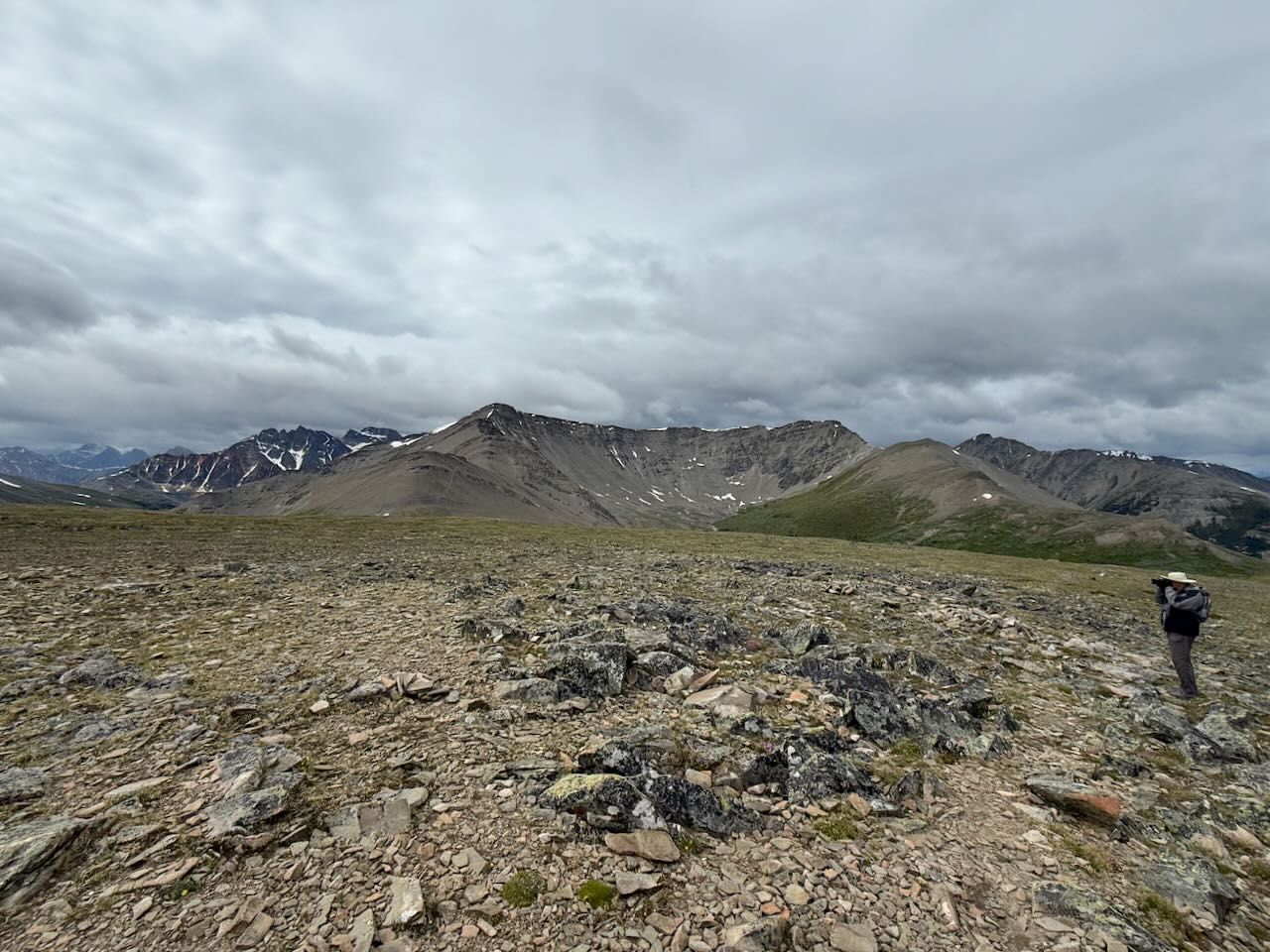
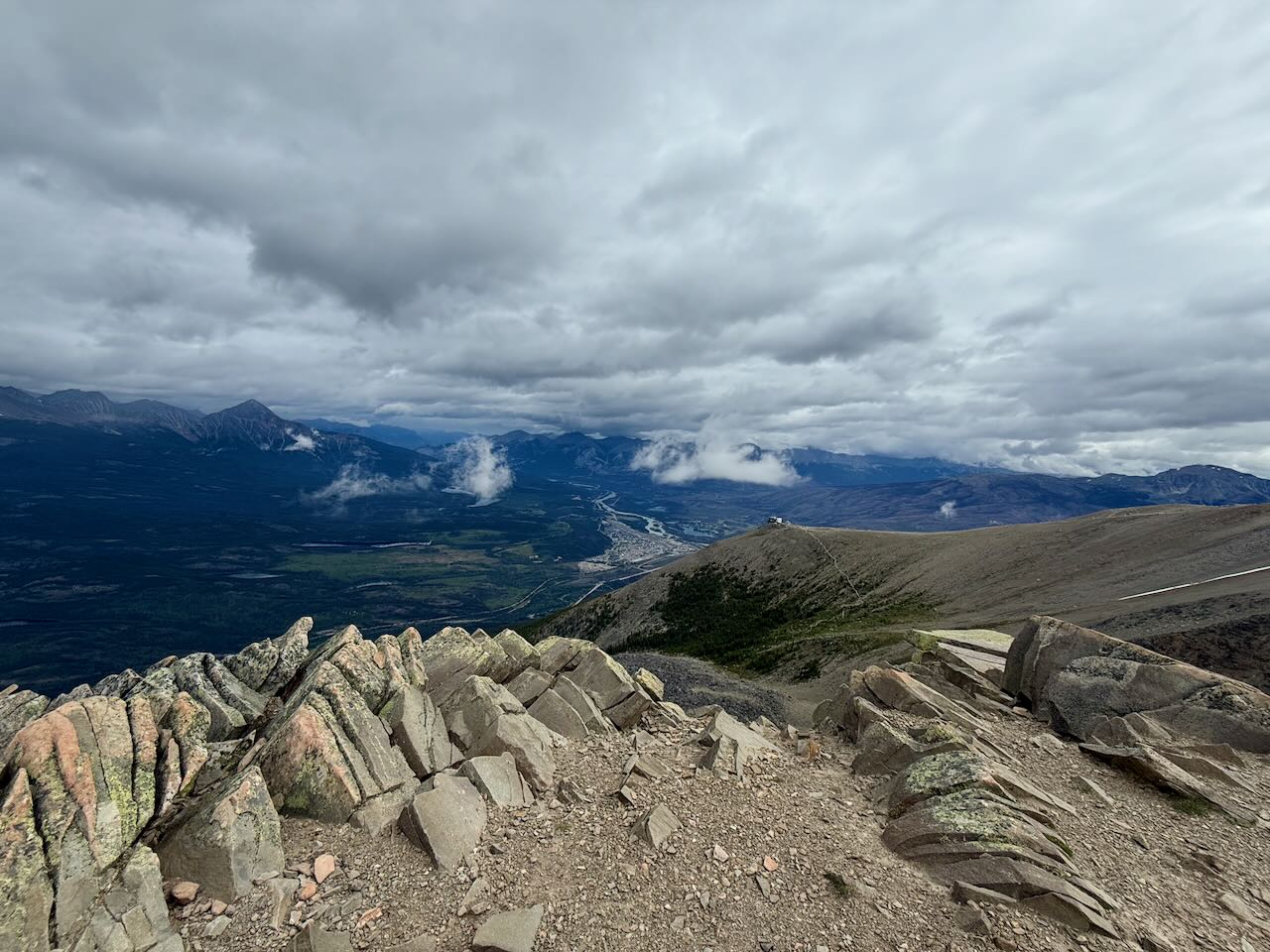
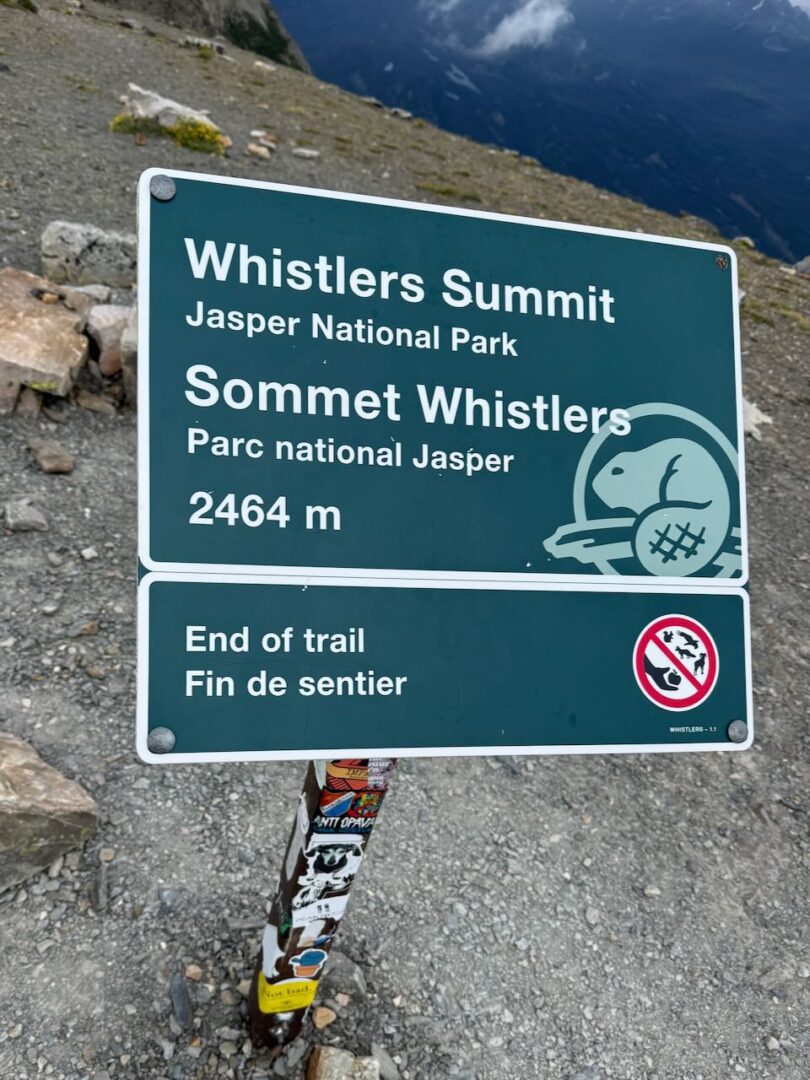
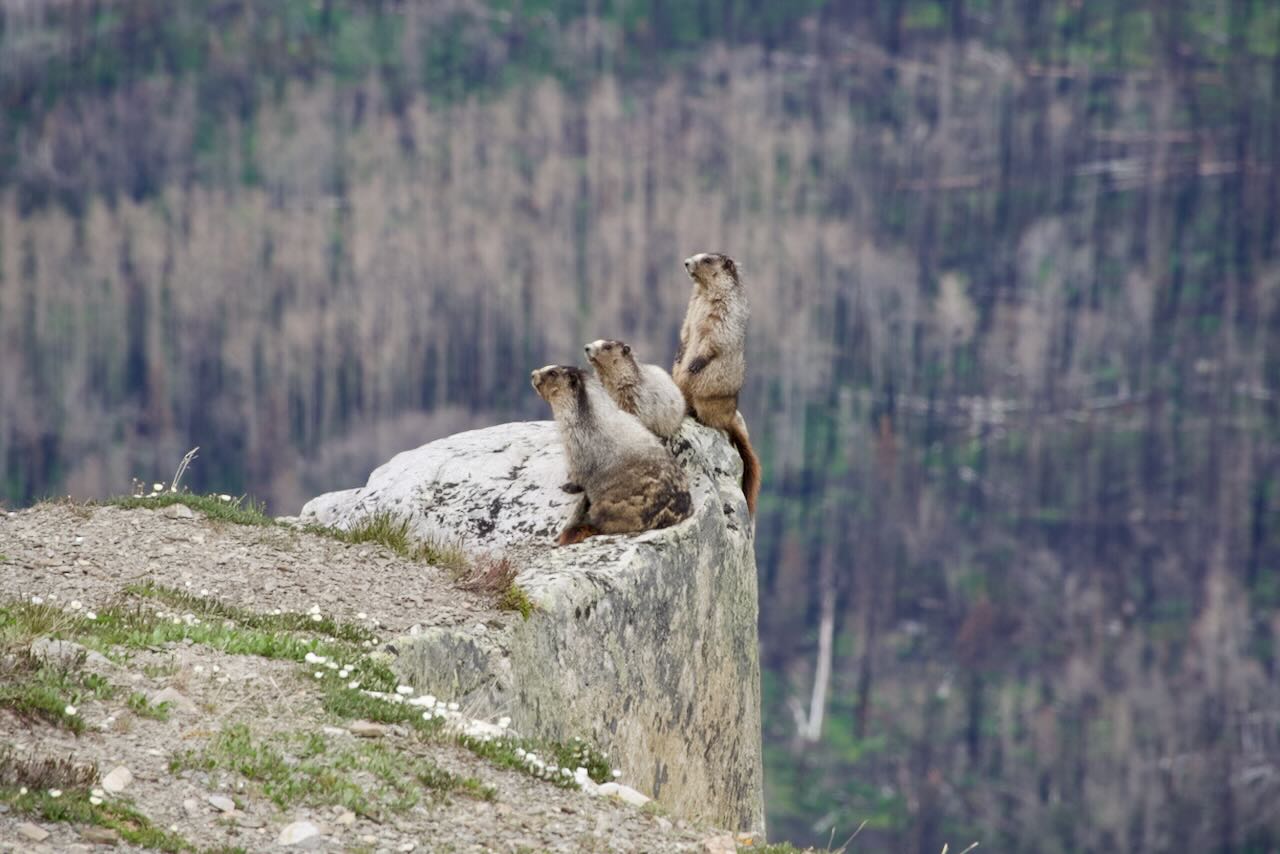
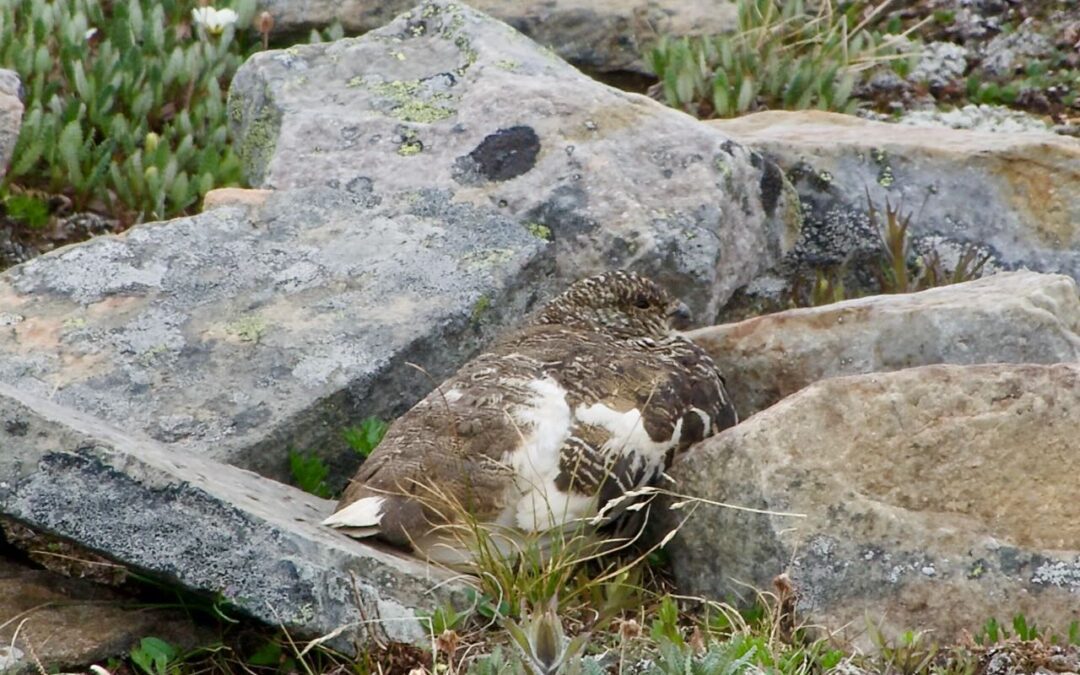
The Ptarmigan is white in the winter but in summer it is a mix of brown/white to blend with the rocks that have a black/green moss on them so it is difficult to see them if they are hunkered down. We checked with our bins every so many feet hoping to see some movement. We made it to the summit, we continued to look and I started looking at lots of black and white rocks. Eventually we started back down and stopped in a “meadow” area that I thought was promising. Still no Ptarmigan. We were now 3 hours in and I was getting a sense of dread. Some tears were shed on my part out of sheer frustration. Would we not get the White-tailed Ptarmigan? Eventually we headed back down to the Skytram building as we had missed our “trip down” and wanted to check with them about the latest trip of the day. Because of the fires last year there are not a lot of people visiting Jasper and that was working in our favour as we could go back down whenever we were ready with the latest trip down at 5:50. We discussed what we wanted to do. By this time we had already done 74 staircases and about 5km of walking in the thin air with only a granola bar and some water. I did not want to give up and have to come up another day. We agreed we would walk back up part way to the meadow area again. I felt strongly that the Ptarmigan would be in that area. The walk back up was grueling and it was starting to rain more. We finally made it to the meadow area, almost at the summit and headed off trail – off trail is not encouraged but also not banned and many people walk all over the top. We walked into an area we had already visited twice. We both were scanning with our bins and Jerry saw movement and then I saw movement. IT HAPPENED! WE HAD OUR WHITE-TAILED PTARMIGAN. I immediately lost where the bird was but saw movement over a bit and found a SECOND ONE! I cannot adequately express the relief and adrenaline of seeing this bird. We took multiple pictures and video. By now the rain was heavier and the clouds were moving in over the mountain but we did not care. We had the bird!
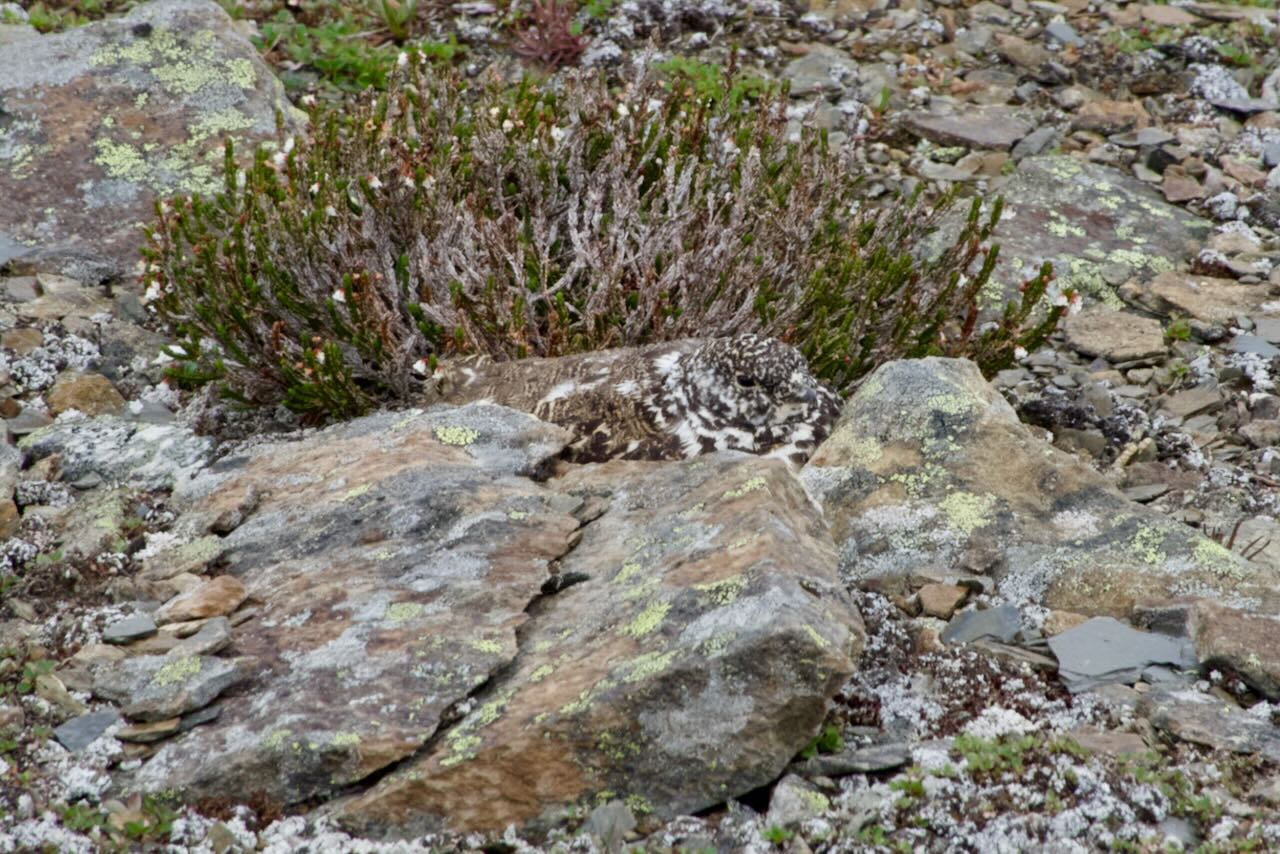
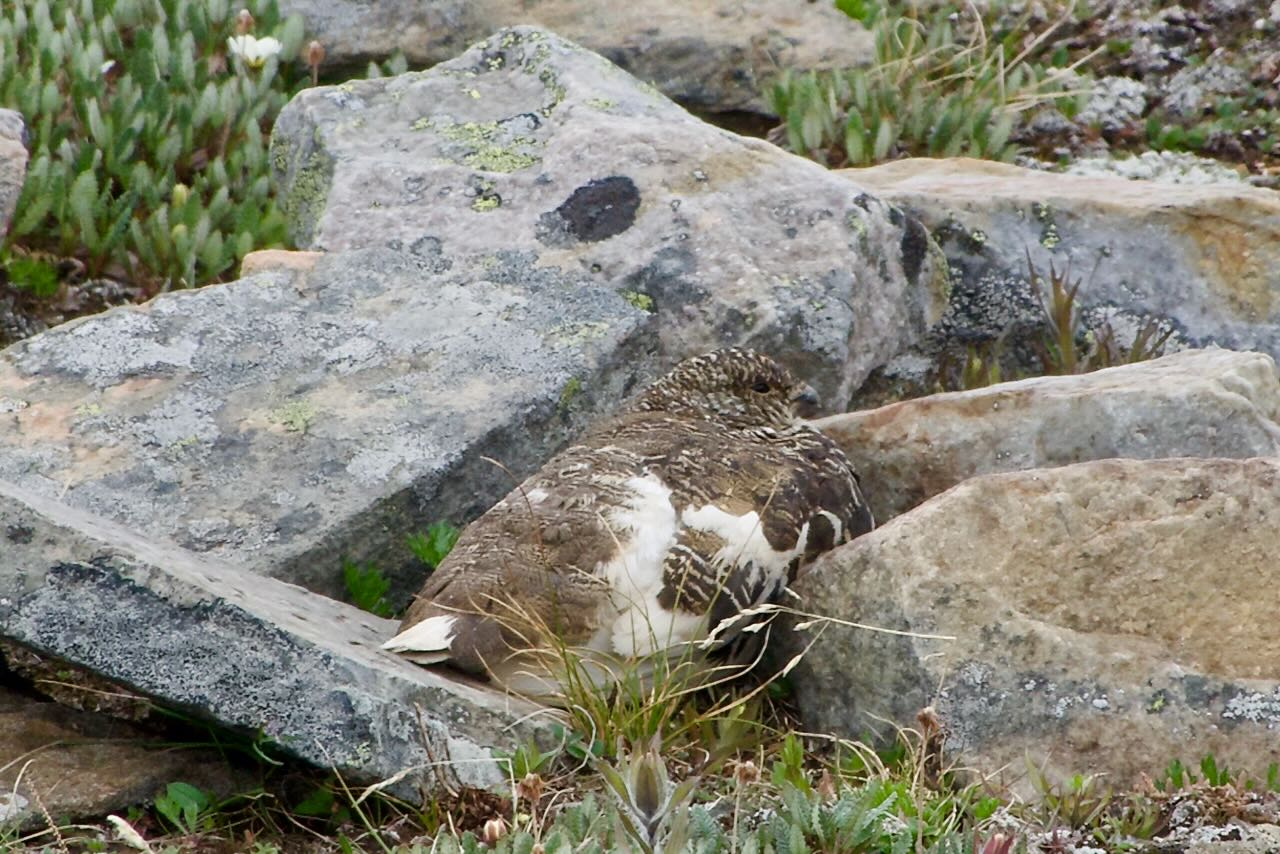
White-tailed Ptarmigan
Eventually we made our way back down to the building for the ride down. It rained harder and the clouds rolled in so we were soaked by the time we got back down. It took us 5 hours and 40 minutes, over 8 kms going over the area again and again and 104 staircases according to my pedometer.
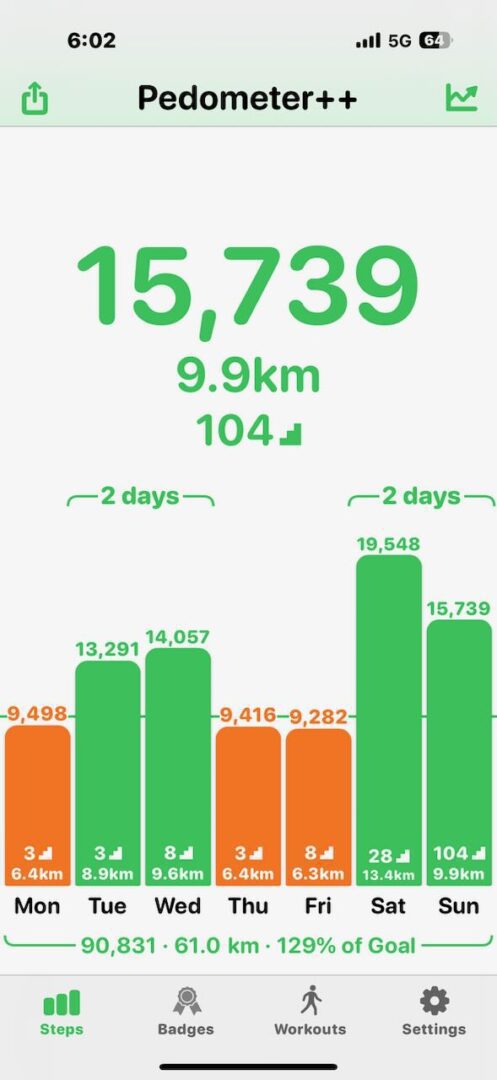
We ended up only adding 1 mop-up species this week but getting the Chukar and White-tailed Ptarmigan meant the week ended on a very high note for us. At this point we are only 13 birds away from our goal and I know that it is totally doable with the birding plans we still have for the rest of the year. We still are checking out places for Dusky Grouse and listening for Pygmy Owls when we get the chance.
Week 28 3 species added 387 species J&E