Yes, I’m talking about Fall, and this week started with a taste of it – cold, rainy and windy. We started the week heading into Eastern Ontario to get checklists in two more Counties and hoping that a Little Blue Heron that had been seen 3 days previously might miraculously be re-found. The Heron was confirmed with a photo and had been near the Thousand Islands last Thursday but not added to ebird until Sunday night. It was likely a non-birder that had to ask someone what kind of bird it was and most likely an American as the ebird list was summited by an American birder but not the person who had seen the bird. Confusing right? and frustrating that another great rarity was not chaseable. I consoled myself with the fact that had it been reported on Thursday I was looking after 4 grandkids and would not have been able to chase it anyway. We started at Presquile Provincial Park, a fantastic birding hotspot for migrating species. There were some warblers and a few shorebirds around but it was pretty quiet and windy! It is in Northumberland County though so it was another County completed. We drove a a bit further east into Hastings County and added another checklist there to leave us with only four more counties to bird in. Two up north and one at each end of the province. There was nothing about the Heron on Discord but we had never birded in that area before so we continued to drive and stop along the Thousand Islands Parkway. Very few birds were around and we had a decision to make. We had originally thought of heading north and staying overnight to drive through Algonquin in hopes of a Goshawk but with the weather it seemed hawks would not be likely. The other choice would be to just head home. We chose home and as always ended up crossing Toronto at the dinner hour and so the trip was 2 hours longer than usual because of a series of accidents. We got home tired and discouraged, a lot of driving with little to show for it.
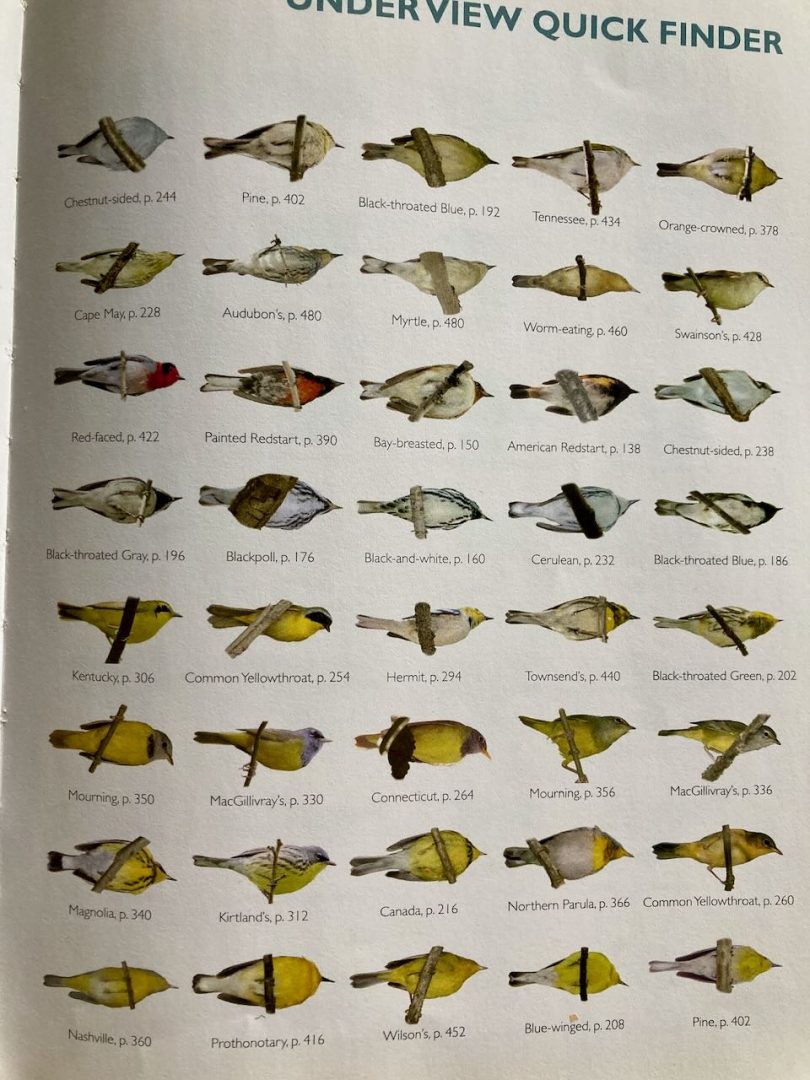
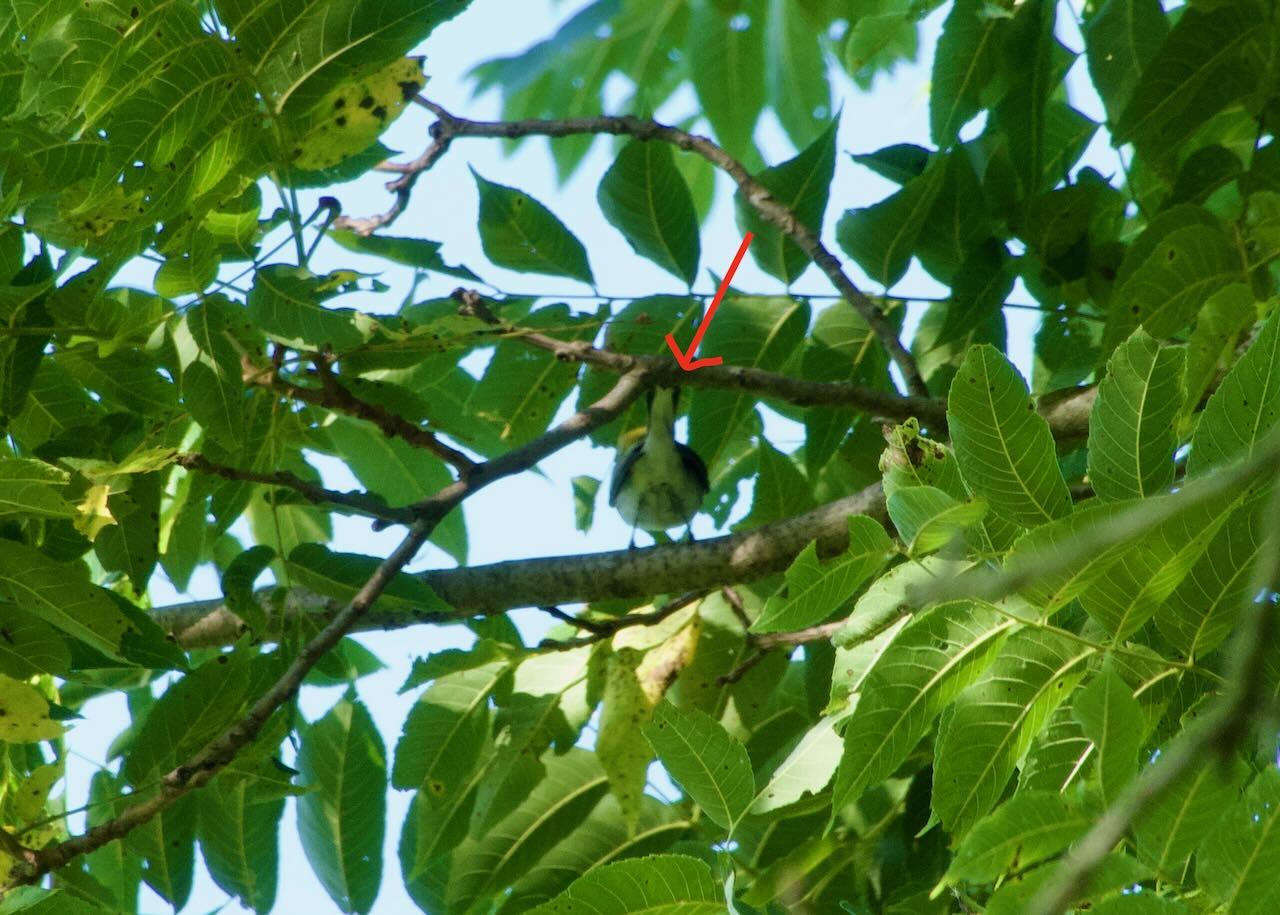
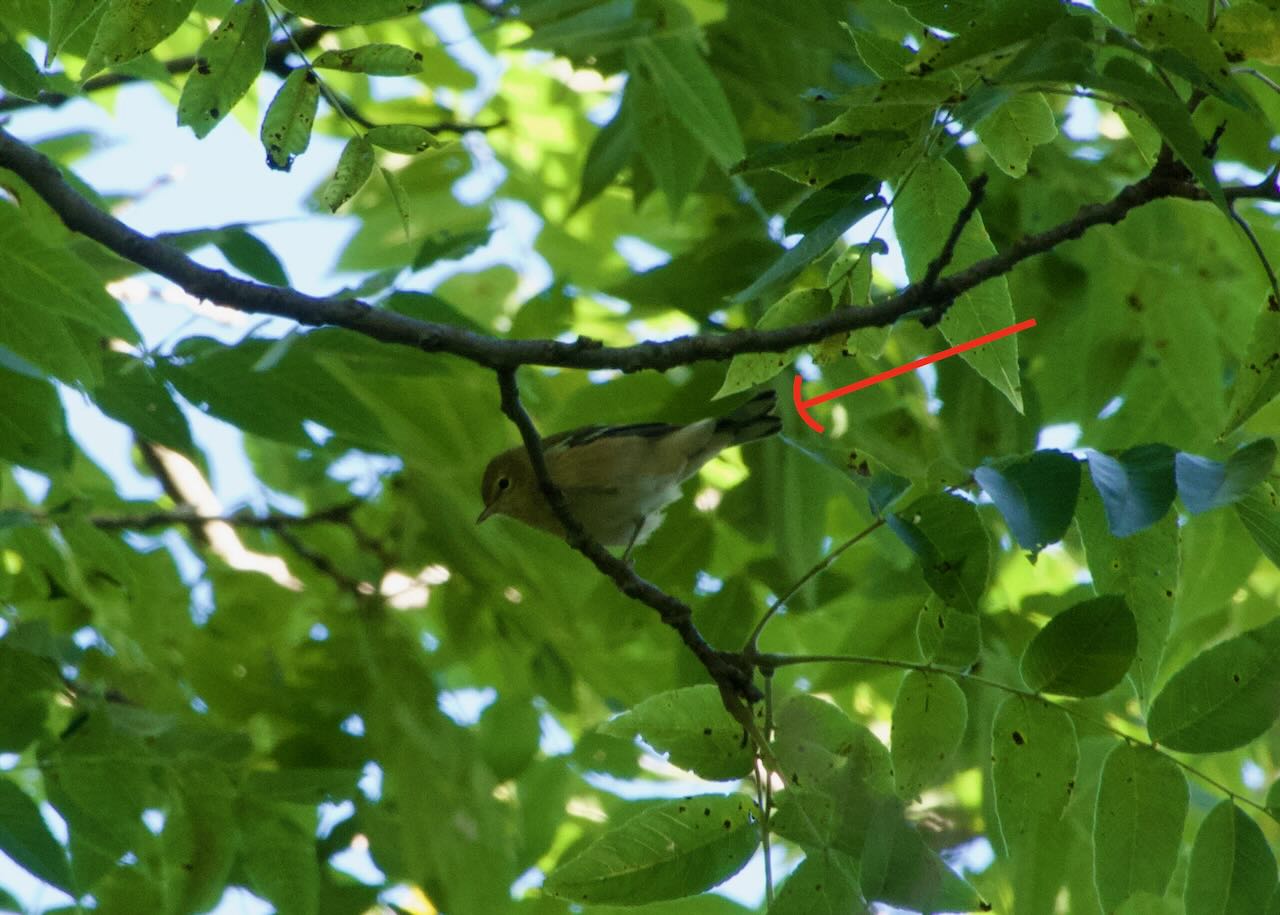
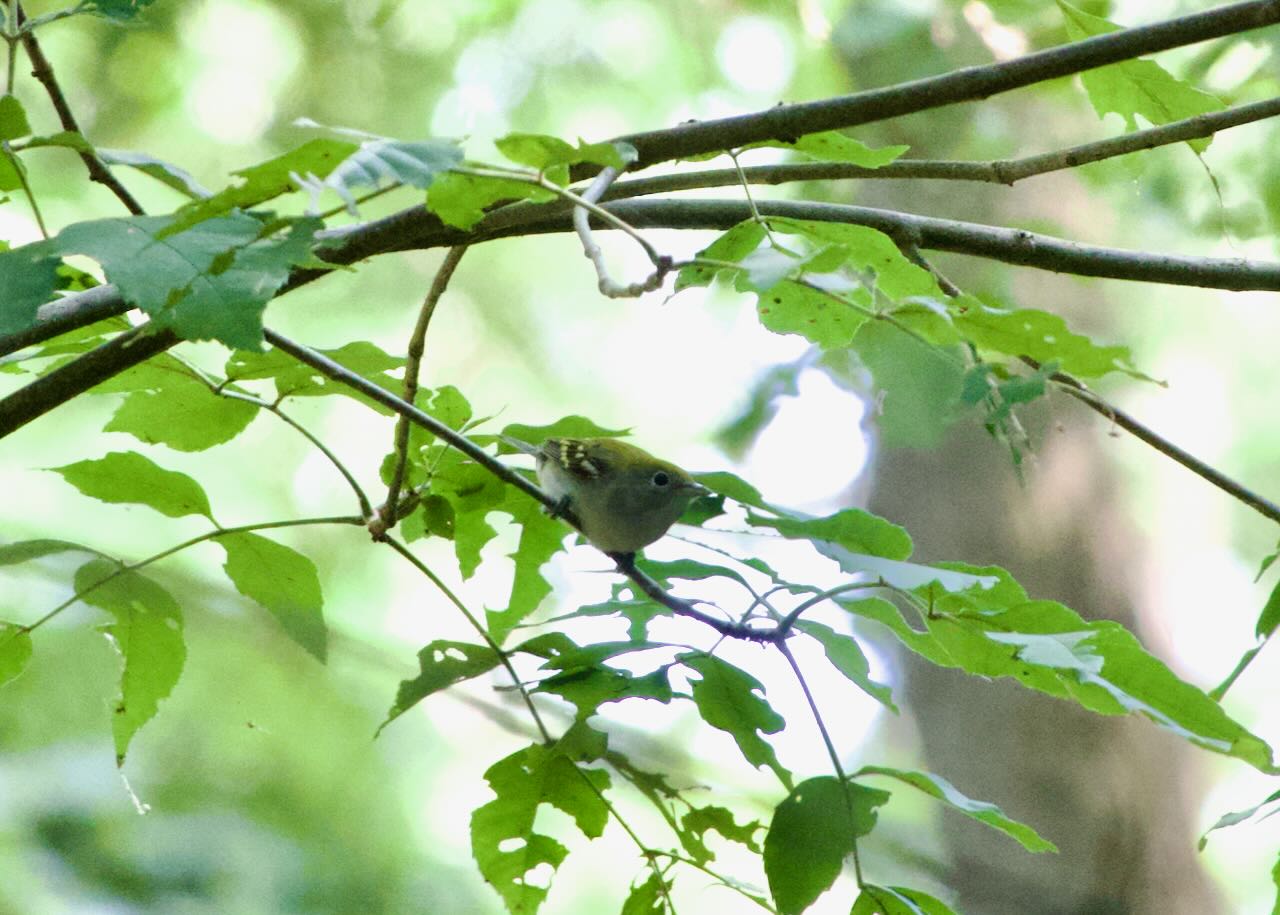
Tuesday we were not getting back into our car for hours so we birded 10 minutes from home to get back our “zen”. We found some early fall warblers at Cavan Flats and spent a lot of time trying to figure them out from seeing small pieces of the birds high up in the trees and hidden by the full leaves. Fall is a difficult time to bird. Most birds are no longer singing, the leaves are still on the trees, the birds are in their fall plumage which is duller and more difficult to figure out. But, we love trying to decipher the clues, that is, until the neck pain gets too intense! There are lots of curses as you just about get the bird and it is gone, as well as delight when you figure out one of them. One of the things we rely on especially in the fall is the under tail pattern of warblers. Each are unique to the species and combined with the amount of colour on the under view often is all you need for an identification. While the birds below show more than the tail there are instances where we make the ID based on just seeing that tail and underside. Cool huh?
Chestnut-sided WarblerBay-breasted Warbler
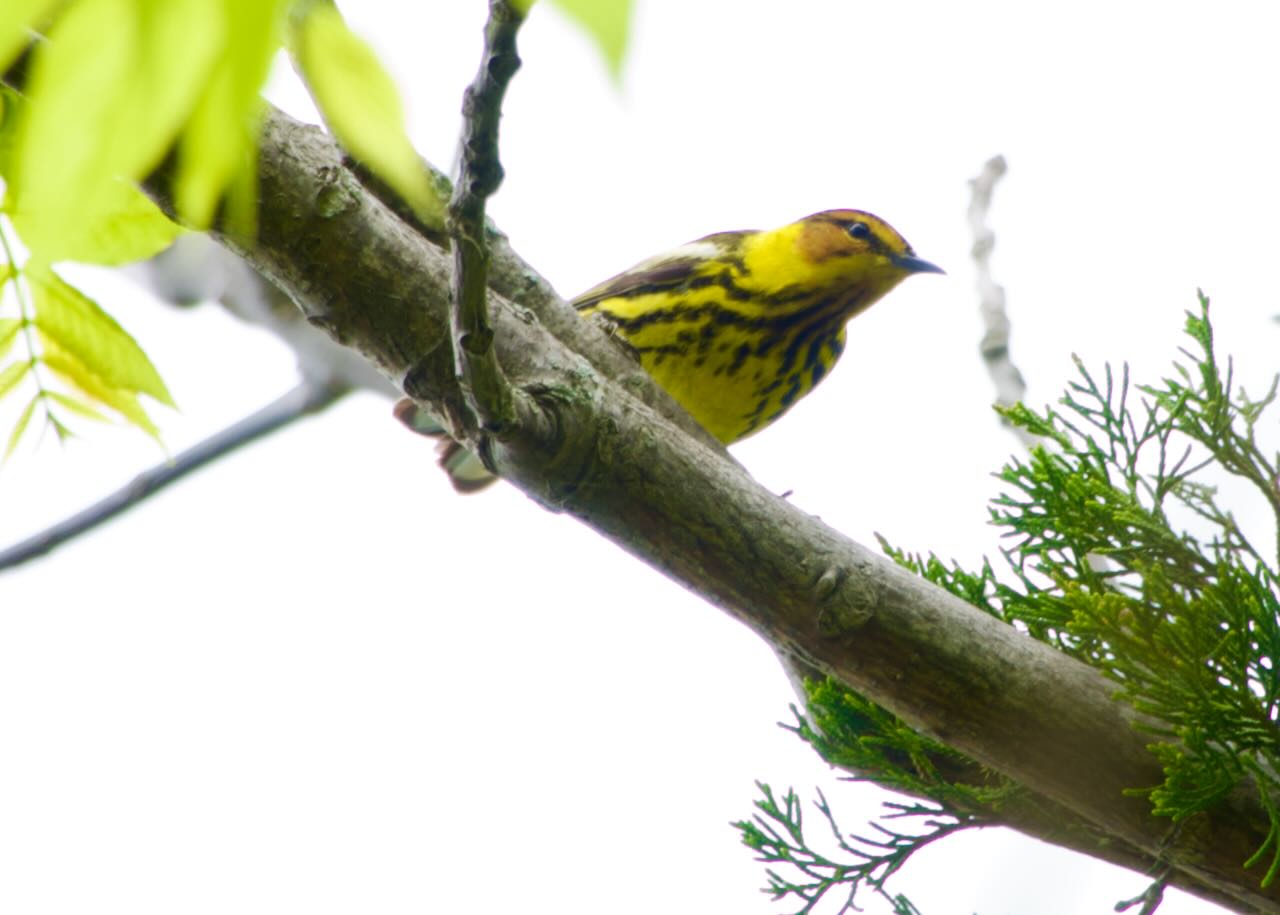
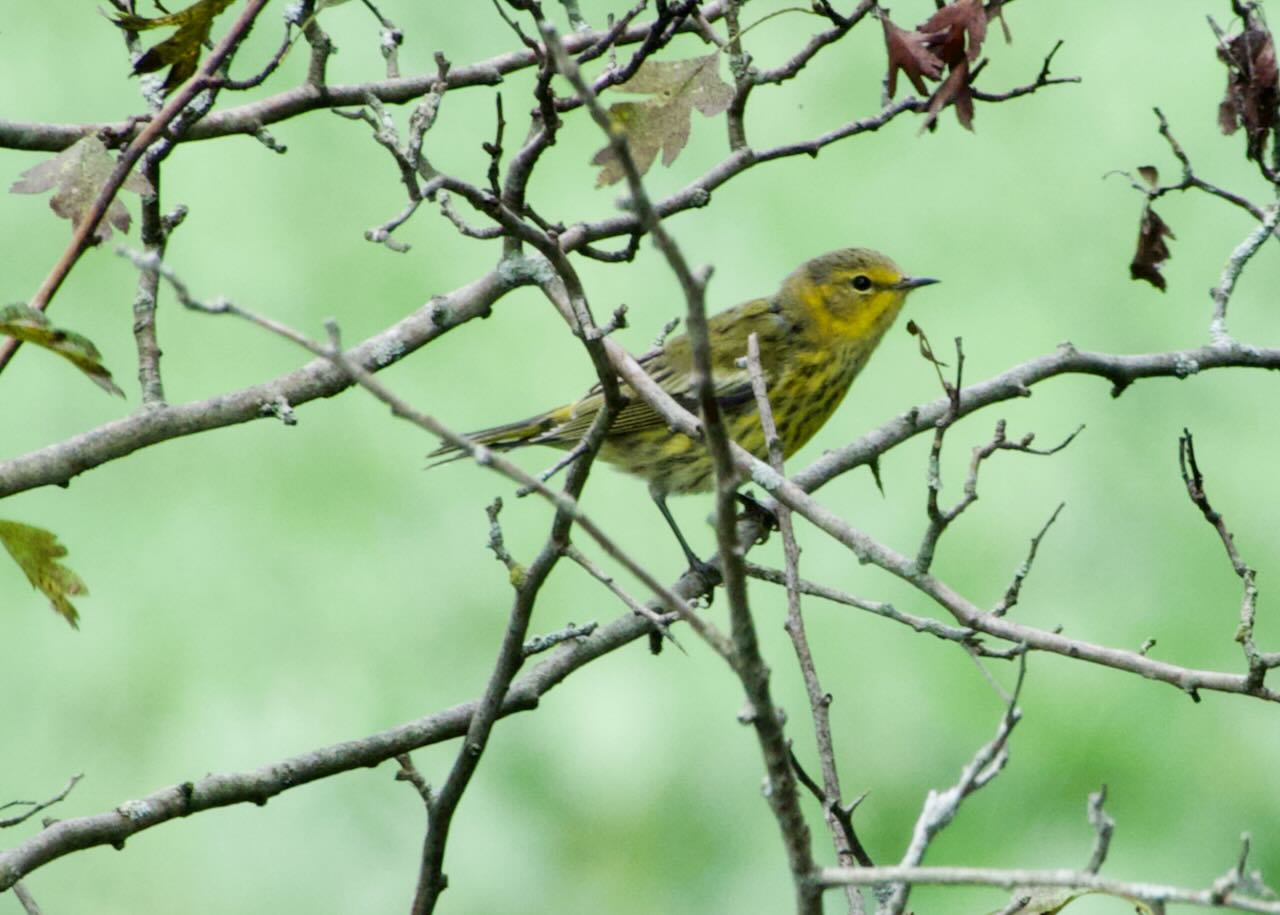
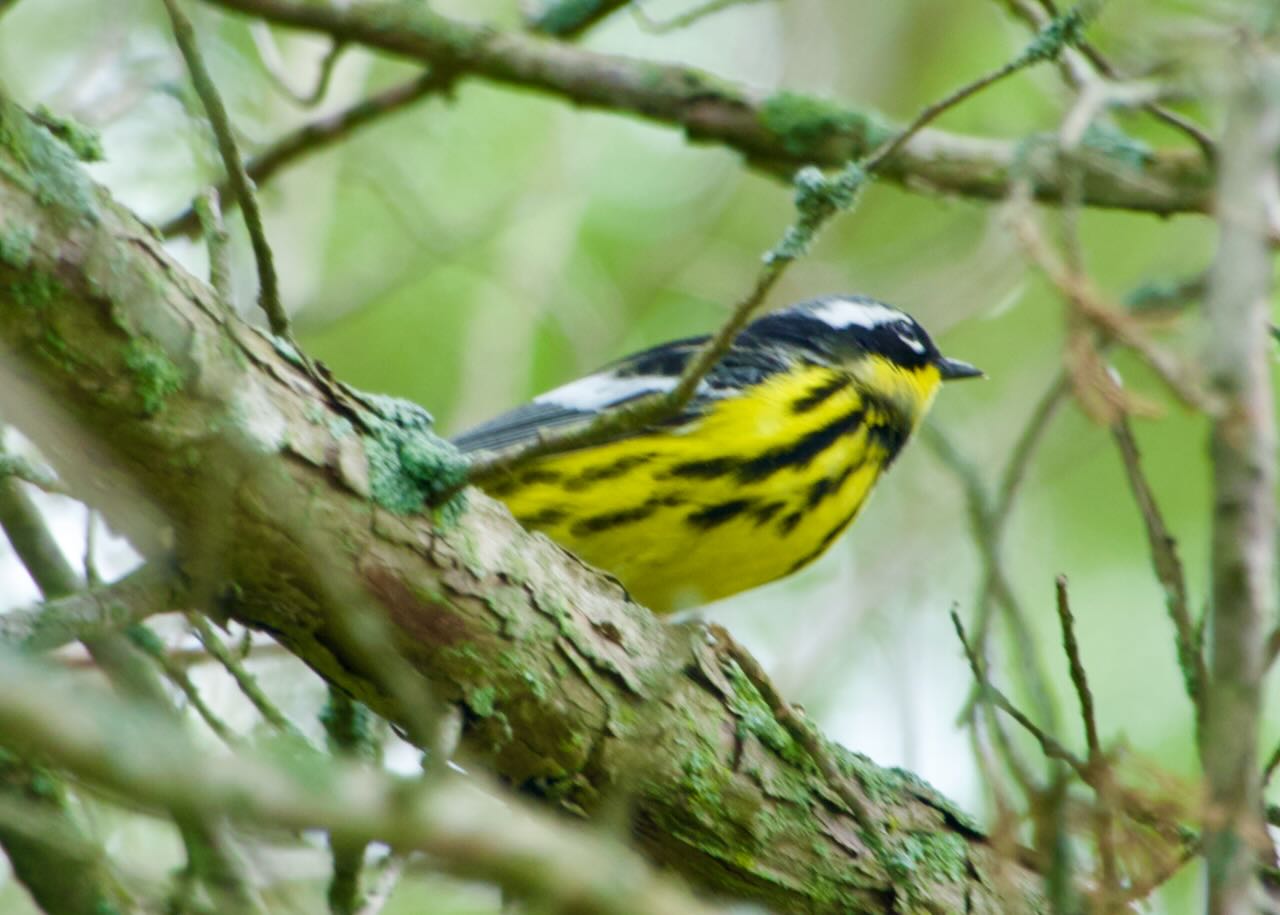
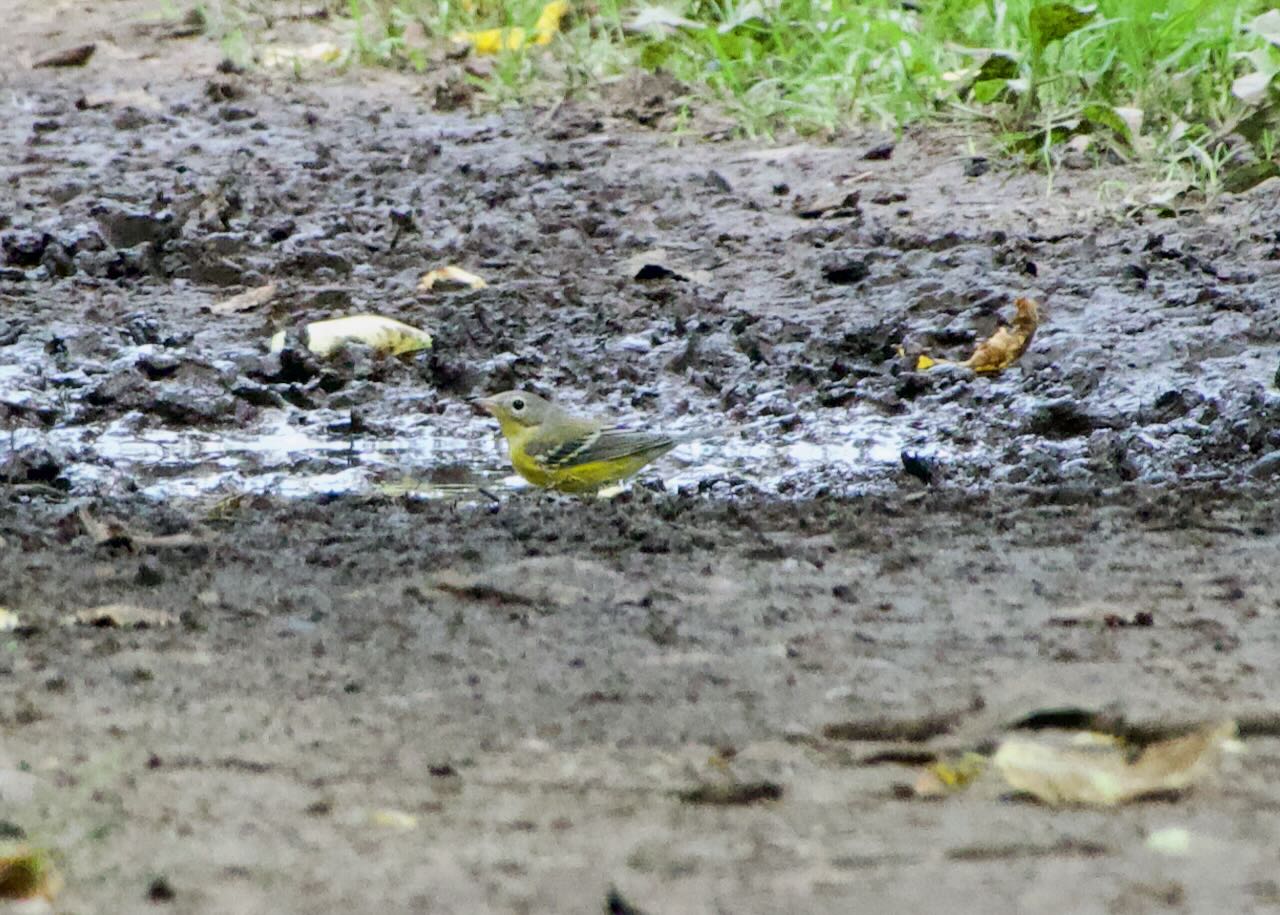
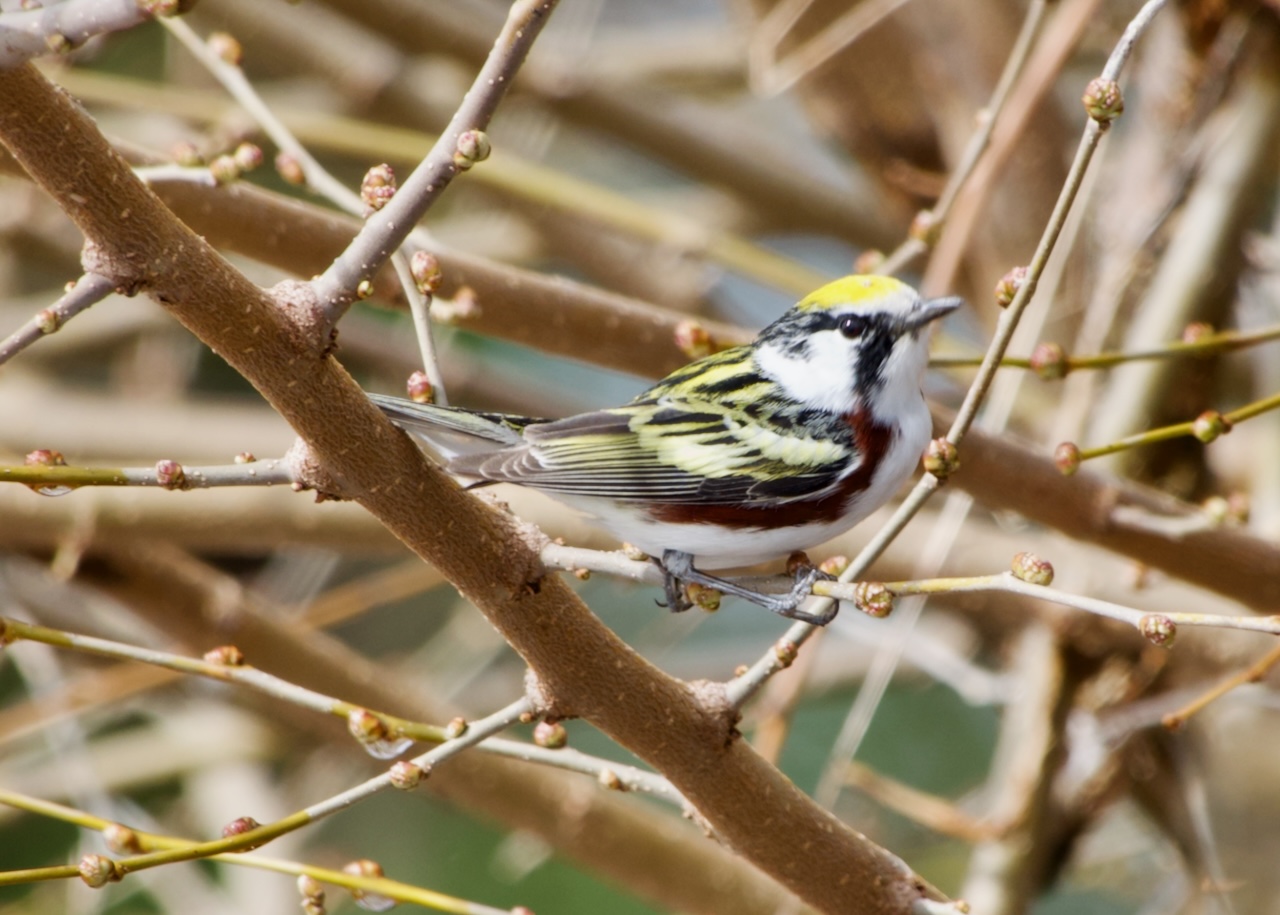
Warblers also change their plumage dramatically between the spring and fall with some seeming like totally different birds. I’ve posted a few below with their spring plumage and fall plumage. These first few weeks of seeing the fall plumaged warblers causes us some grief as we get used to their updated looks.
Cape May Warbler Spring PlumageCape May Warbler Fall PlumageMagnolia Warbler Spring PlumageMagnolia Warbler Fall PlumageChestnut-sided Warbler – SpringChestnut-sided Warbler – Fall
Margaret, a birding friend, had been kind enough to check the Beeton Sod Farms a couple of times for Buff-breasted Sandpipers but still none had arrived. With winds coming from the south and more heat arriving it may be a few more days before those birds arrive. Ideally, I would like to get the Buff-breasted before I have to start lake watches but the birds do not care about my plans.
Wednesday and Thursday we had appointments, meetings and caregiving and so our next birding was Friday when we went out again locally because there were still no reports of Buff-breasted Sandpiper or any other rarities. We birded at the Brantford Waterworks Park, one of our favourite places, and saw 55 species over 4 hours of walking almost 8kms. We had ten species of warblers including a Canada and a Wilson’s Warbler. It did not feel like Fall with temperatures back up at 30C but migration is taking place.
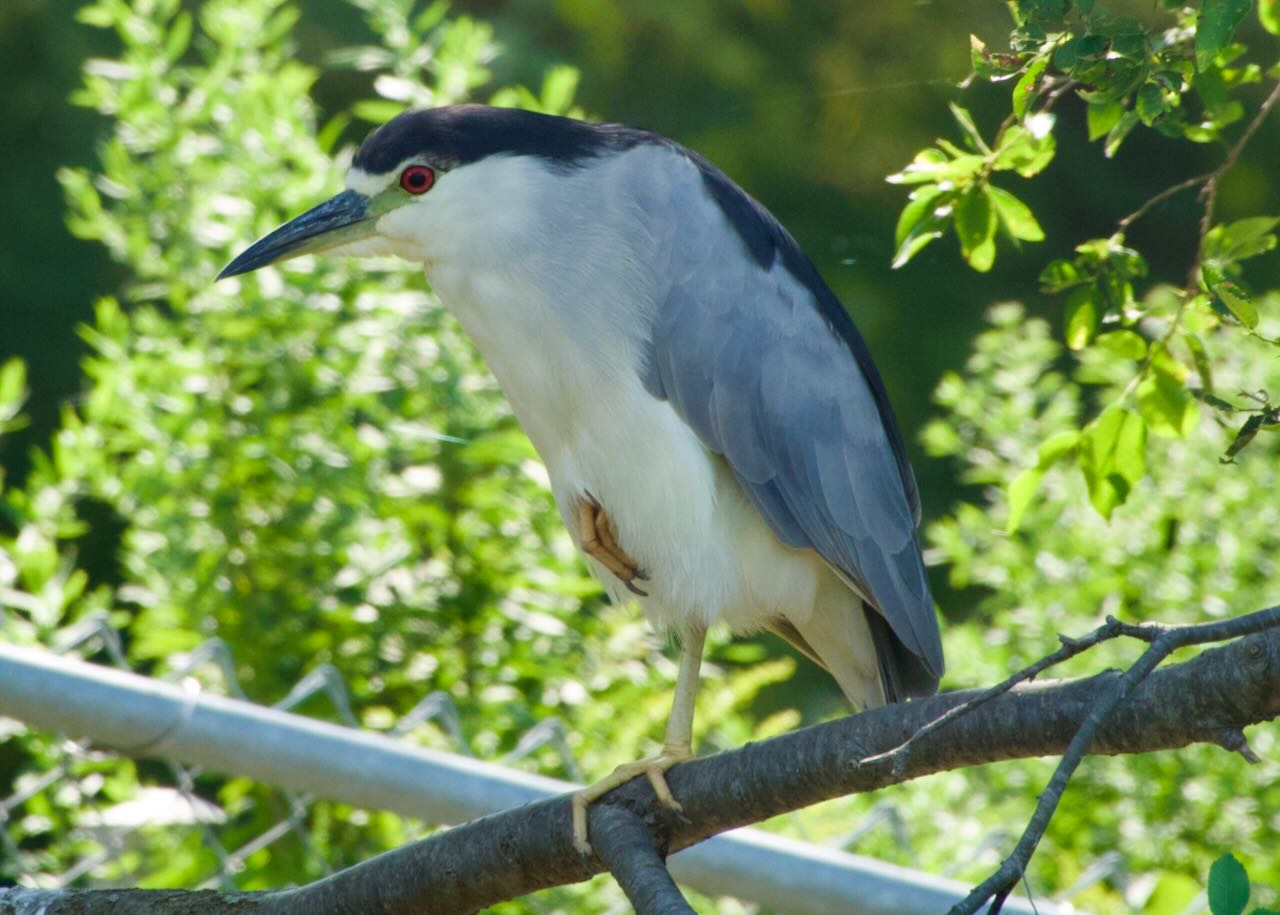
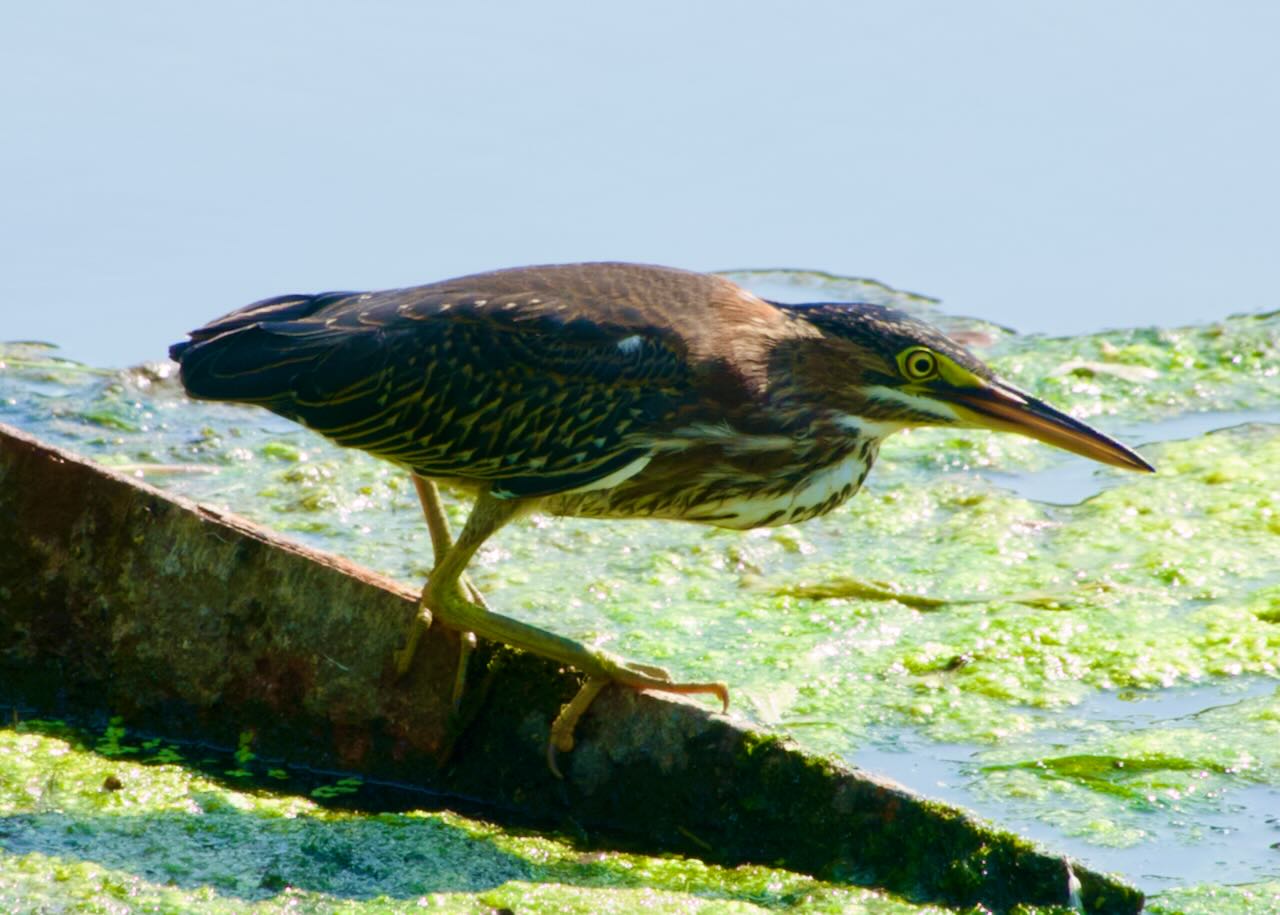
Saturday we headed into Hamilton for caregiving but stopped at the Desjardins Canal first and took a short walk along the canal where we had super close encounters with Black-crowned Night Heron and Green Herons. We took Jerry’s mom to Woodland Cemetery as she likes to visit the family grave and we birded the area for a bit, met Mourad who was out birding too and had a nice group of warblers in the trees there, including a Yellow-throated Vireo. Mourad saw a Yellow-bellied Flycatcher too but we didn’t get on it.
Black-crowned Night HeronGreen Heron
I got a nice video of a Green Heron catching an afternoon snack.
We were going to head to the Sod Farms on Sunday but Dorlisa checked on Saturday and there were still no birds so we headed back out to Brant Waterworks Park and met Jason and Jenny so we joined them for a lovely walk along the river stopping at the pockets of warblers and identifying what we could. Sunday afternoon there were a few reports of American Golden Plovers being seen in some sod fields so fingers crossed that darn Buff-breasted will be here this week! I don’t want to rush the end of summer but I am more than ready to move on and get some fall birds added to my list!
As I said in my previous post, we had our 4 Grandkids for most of the week for our annual “camp” so no birding happened. We did see the Ripley’s Aquarium with them, they ran their own Olympics, multiple games of hide and seek were played and there was an over consumption of sugar treats and late nights. We loved every minute of it.
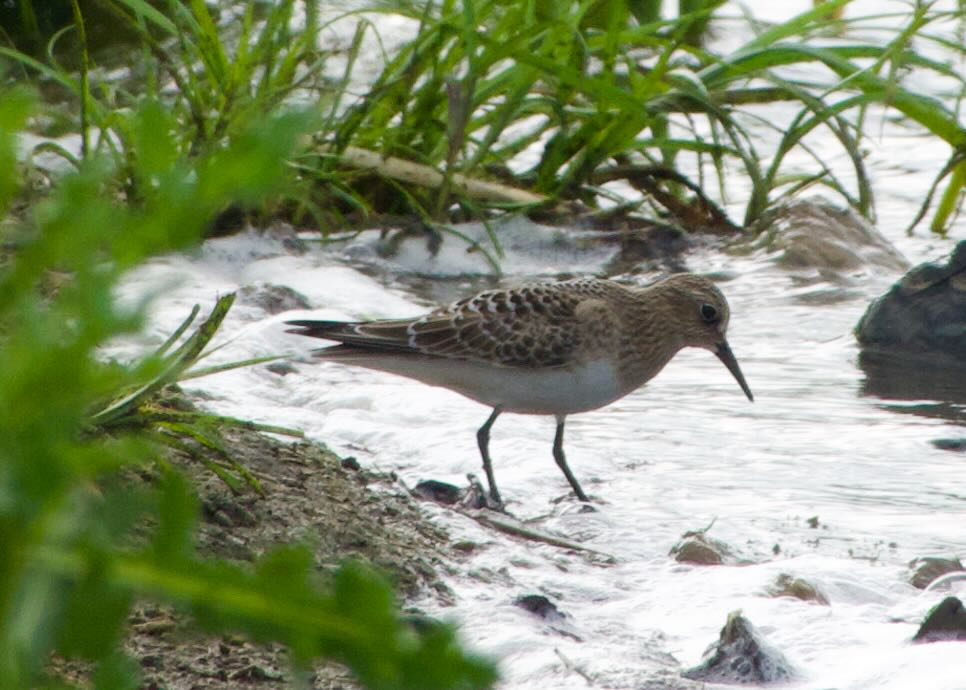
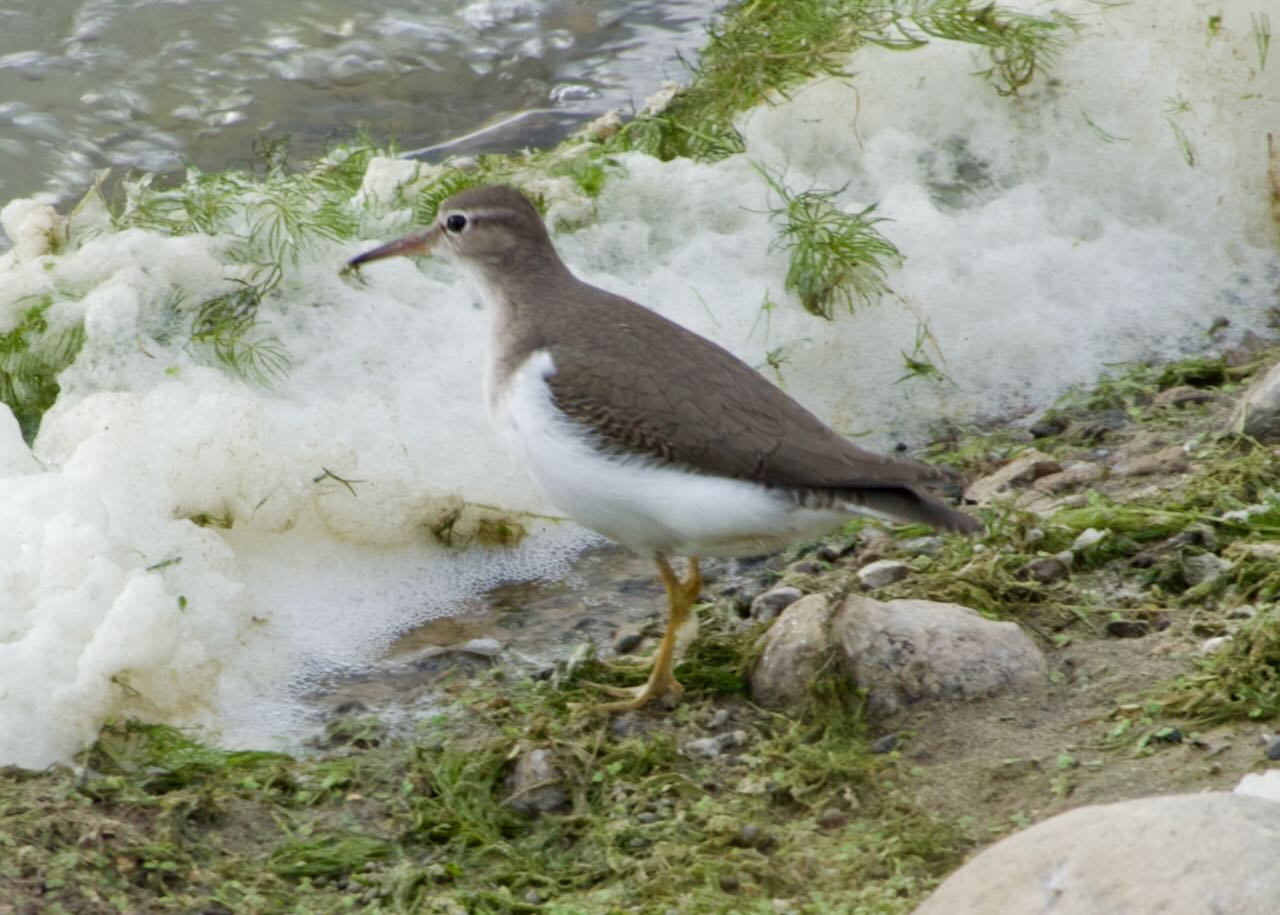
Saturday we headed to Blenheim because there had been reports of Baird’s Sandpipers the last two days and it seemed like one of the few spots not forecasting lots of rain. We scoped the edges of the lagoons and once again thought we had a Baird’s but Steve C. arrived and quickly dashed our hopes declaring it a Semipalmated Sandpiper. Will we ever get this right? We walked down towards some other shorebirds and Steve found us a beautiful Baird’s within minutes. Thanks once again! It was very obviously a Baird’s once we saw it. But will the lesson stick with us until next year when we have to once again hunt for a Baird’s?
Baird’s Sandpiper (definitely NOT a Semipalmated Sandpiper)
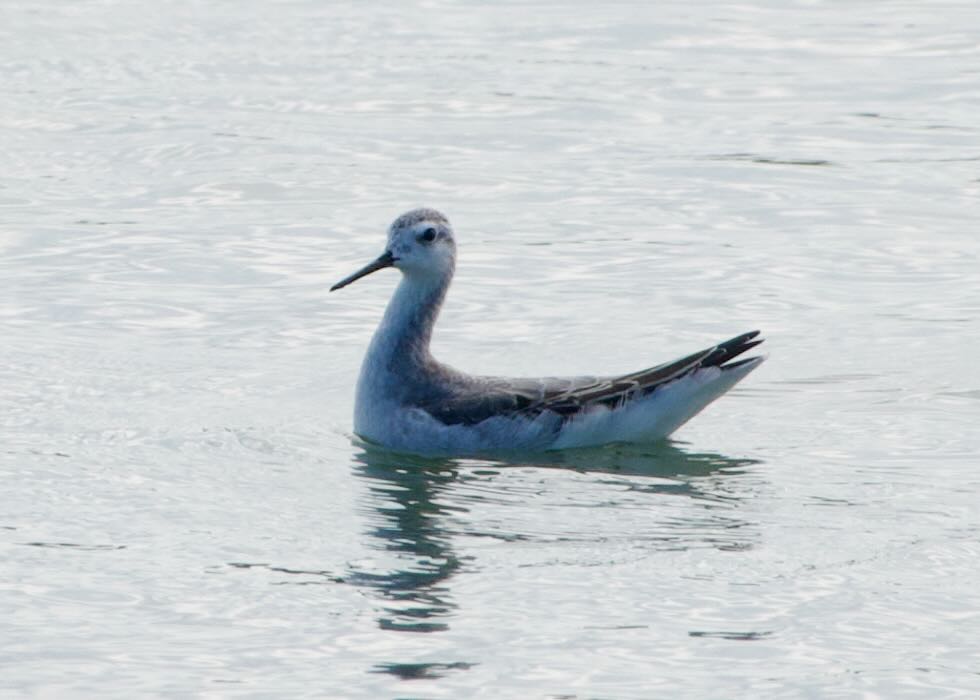
Jerry managed to get better pictures of a Wilson’s Phalarope although not in breeding plumage. Google it to see it in breeding plumage – they are such pretty birds! He has also added a number of better pictures to our Gallery so make sure you check that out again.
Wilson’s Phalarope
Next week another sandpiper species should start to arrive, the Buff-breasted Sandpiper. They hang out in sod farms instead of lagoons so a change of destination will be happening. We also will start to do some Lake Watches if the winds co-operate. Stay tuned…
Most of this week we birded locally, stopping at shorebird habitat on our way back and forth to Hamilton for care giving. There were a few more reports of Baird’s but we were still not able to confirm one. The juveniles will be coming through over the next few weeks and so we will just have to be patient and wait until the numbers increase our chances of seeing one and getting a decent picture. It is hard to be patient when I get those hourly pings that means somewhere in the province someone has seen one. Reports of American Goshawk have started up again. Reports are hidden during the breeding season because of potential falconers stealing from their nests so we have not had the opportunity to chase this hawk much, and of course, it is not always easy to chase these birds, they have wide territories. We may try to get up north a bit over the next few weeks and see if we can encounter one so that we do not have to count on fall hawk migration to find one.
Late Thursday a report came in of a Lark Bunting up in Sault St. Marie seven-eight hours away. It would be a great bird to have on our list but would it stay? We had a discussion. Could we get up there and back before our care giving commitments on Saturday? A 16 hr round trip plus finding the bird? It would be a long way to drive if the bird was not re-found but the only way we might be able to do it would be to leave before the bird would be confirmed there the next day. Jerry felt it was just too far for one bird and not a lifer. I was torn, I thought we should risk it but I also recognized that we might not get back in time on Saturday for his Mom. We also knew that there would not be another chance to go for it because of commitments we had from Sunday and through next week. We opted not to try, it was hard to say no to going for it and I knew there would be regret from not trying for it. Of course it was re-found the next day and continues to still be there today (Sunday) but our window has closed and we have Grandkids with us for the next week now. Will it still be there next weekend?
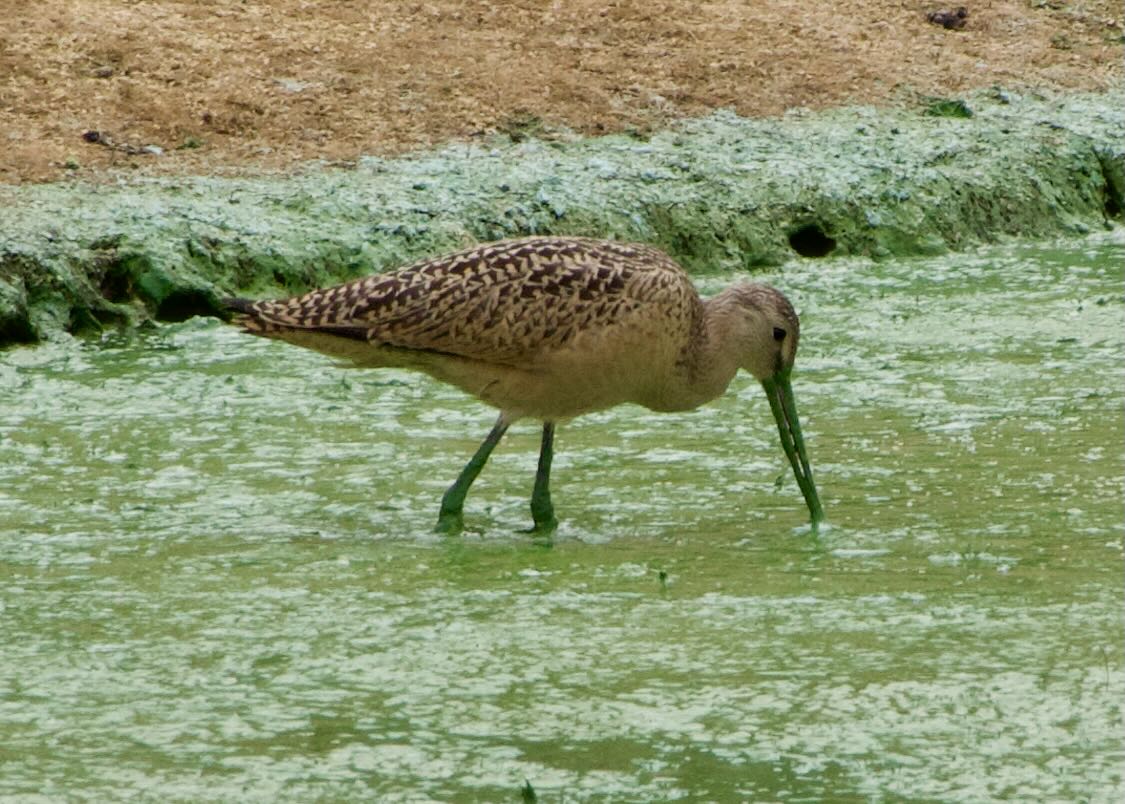
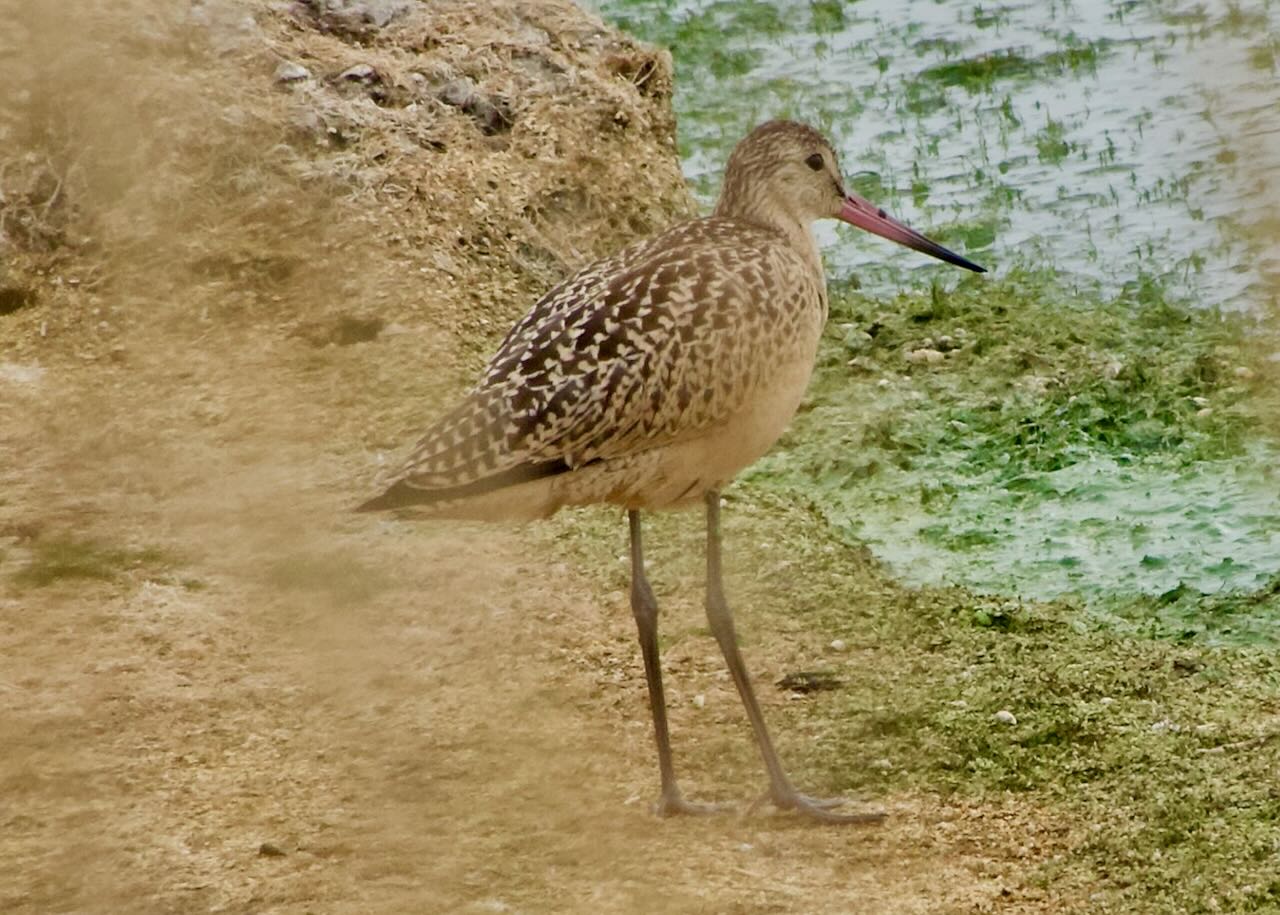
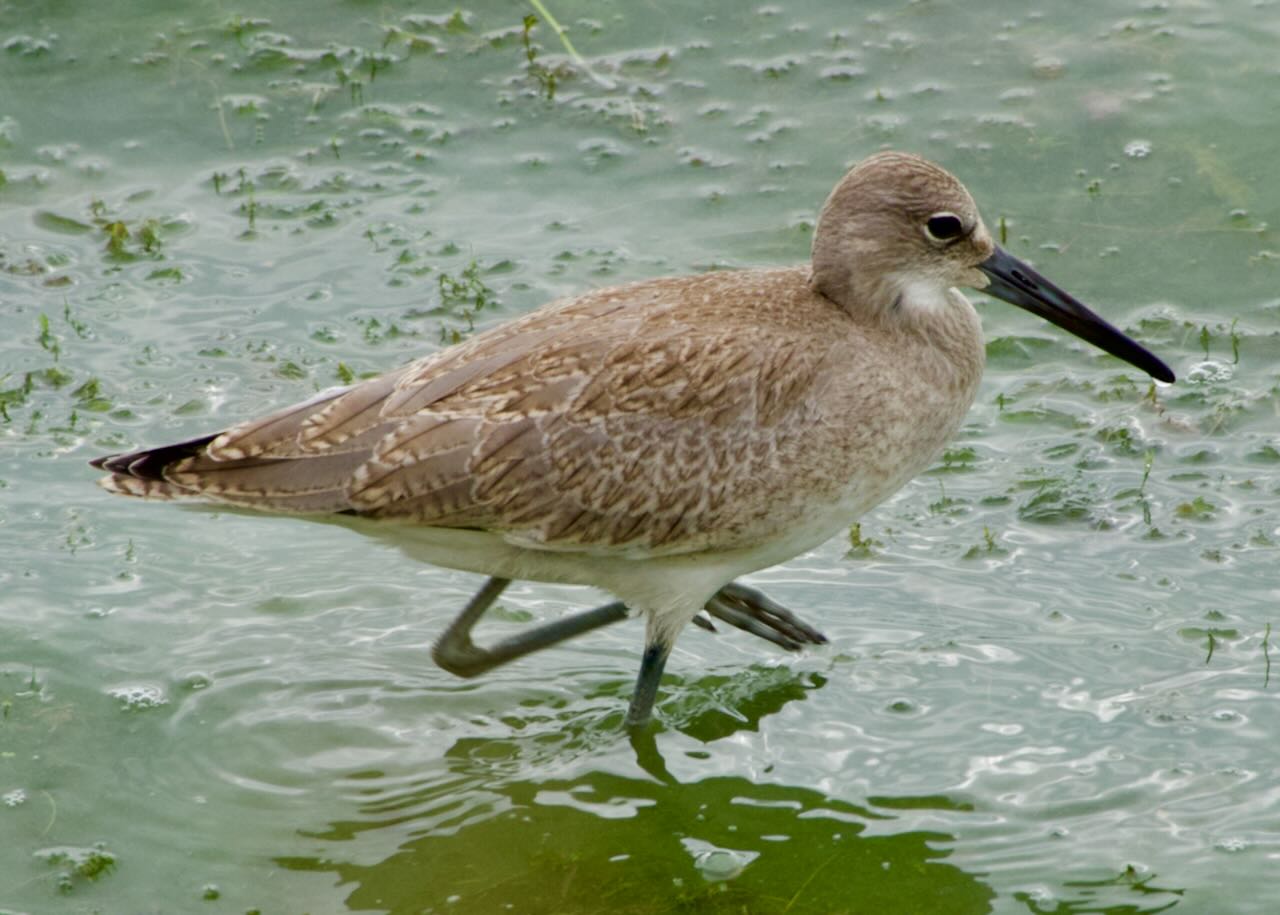
On Saturday I decided not to write a blog this week as nothing much had happened but of course, like clockwork, a rarity report came in late Saturday. Happily, we had just got home from Hamilton and were only an hour away from a Marbled Godwit! This was a species that I had expected to get up in Rainy River in June but there were only a couple of reports of them this year and we searched every day we were there without seeing one. We arrived at the Alymer Sewage Lagoons (yes, the best birds always seem to be in those lagoons) and Michele, who had found the bird, was on it as we walked up. Thank you Michele! A Willet was with the Marbled Godwit and a Glossy Ibis had flown before we got there. The Godwit was feeding in the lagoon so it appeared to have a bright green bill and legs before it washed off to show its true colours.
Marbled Godwit with Algae BillMarbled GodwitWillet
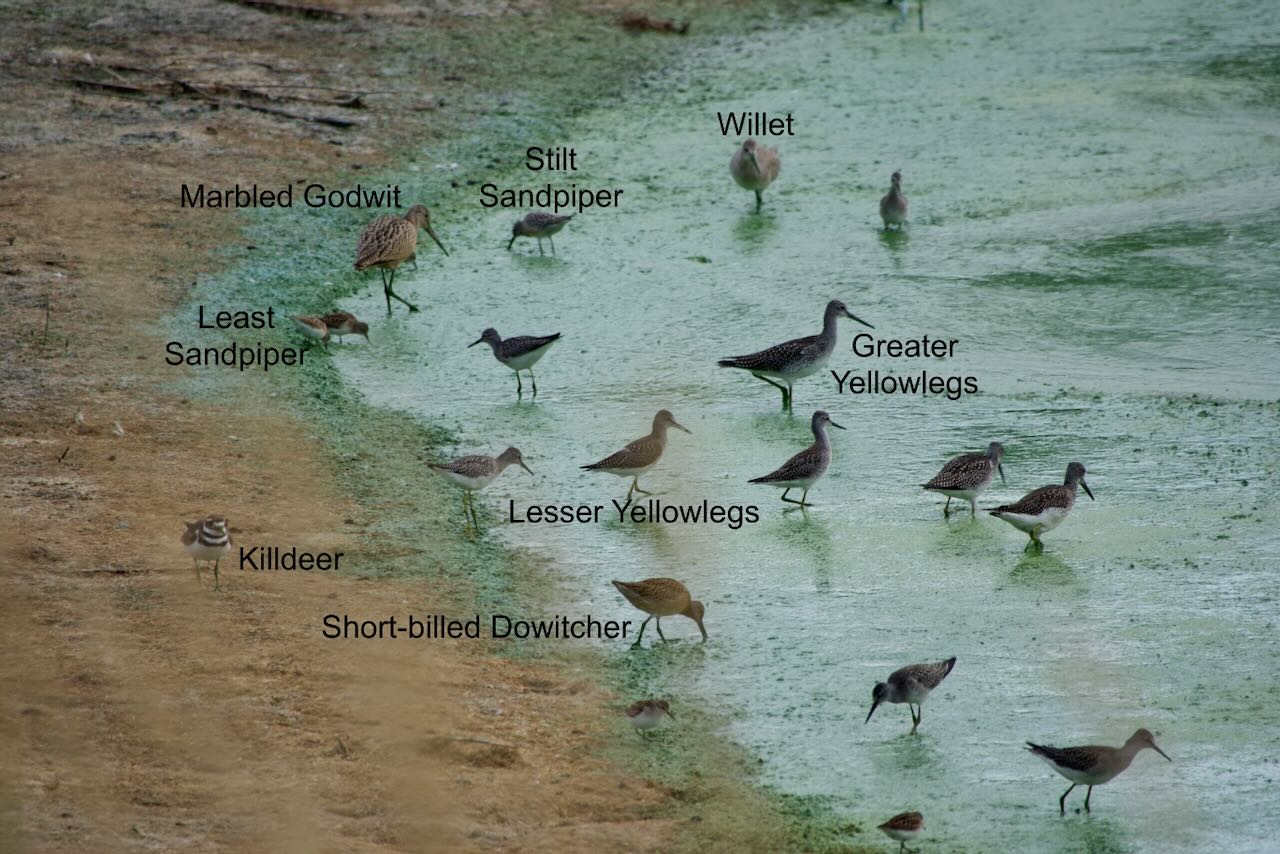
We hung around as we knew other birders, Jude, Jason and Jenny, were on their way and I wanted to make sure we knew where the bird was in case it moved around. It stayed in the same general area and everyone that came got to see the Godwit. Shorebirds continued to arrive until we had a plethora of great shorebirds in the lagoon.
Can you see why Birders love sewage lagoons?
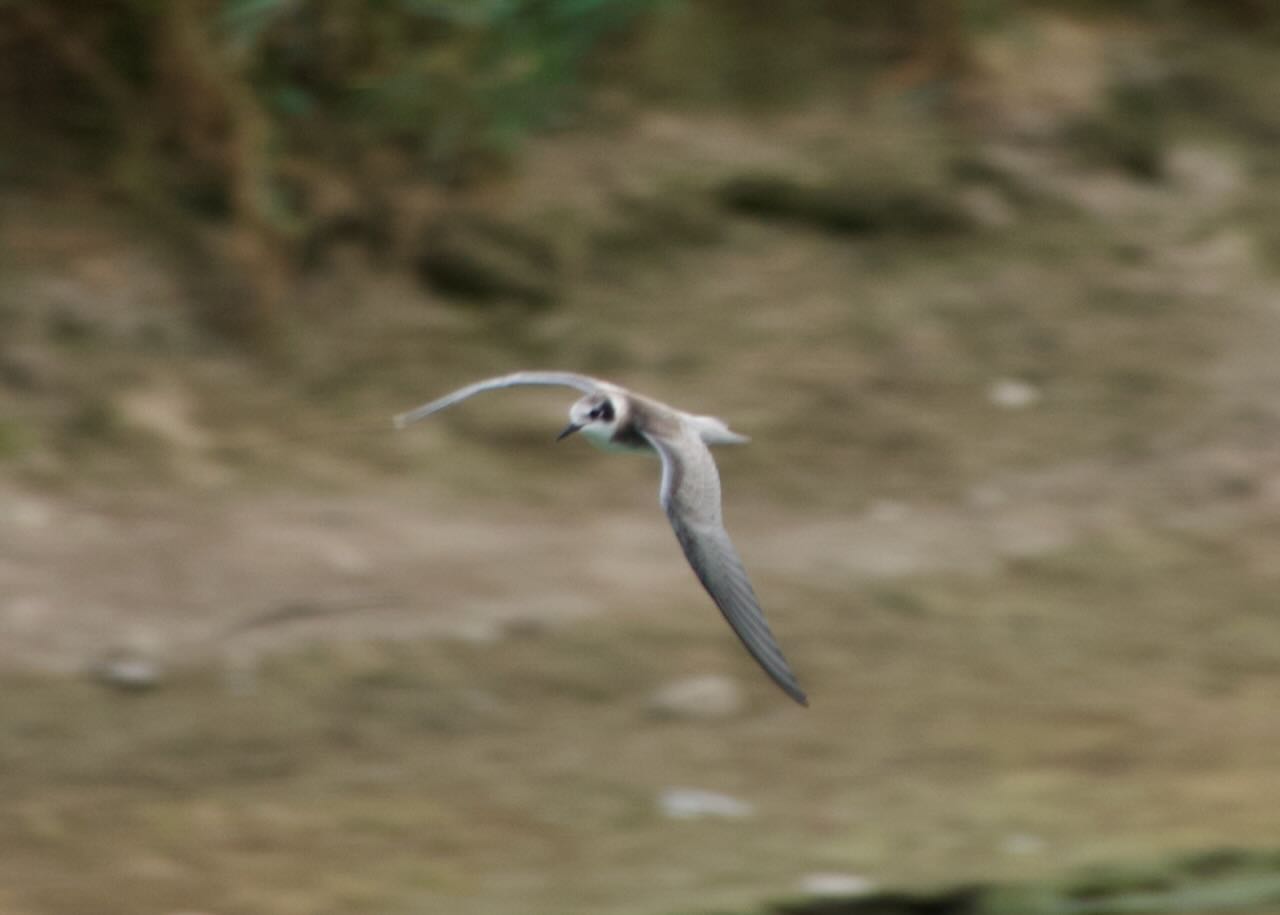
As well as the shorebirds a Juvenile Black Tern arrived to catch dinner and an Eared Grebe was found further out in the lagoon to complete a great late afternoon birding experience. It did not quite make up for the disappointment of not going for the Lark Bunting but it was a good bird to add to our list. The 4 Grandkids arrive for their traditional week with us so I’m hoping for a slight pause to any rarities this coming week until we can get back to birding next weekend.
As we closed out July the birding was quiet under very hot conditions and south winds. Baird’s Sandpipers started to show up in five or six places around southern Ontario and we decided to twitch (chase) some local sightings on Friday. The first place we checked was a large sod farm in Kitchener where Baird’s had been seen by a few people on Thursday but there were no birds visible Friday morning. The next stop was Flamborough Downs. Jude had reported one a few days before and after scoping for a bit I thought I had a Baird’s in my scope. Sandpipers are a very difficult group to tell apart and while we are improving we still are not fully confident. We use Jean Iron’s shorebird book and that has helped a great deal. Baird’s are a bit larger than a Least and smaller than a Pectoral, with wings that are longer than the tail, shorter legs and a thick black bill with a bit of a down curve. They generally have a more grey tone back when we see them in the fall. The bird I had in the scope seemed to fit with those characteristics. We took pictures and put it in our checklist as a Baird’s Sandpiper. Jerry added our pictures at home and I started getting a bit worried when I looked at the picture. It did not show all the characteristics that I felt I saw in the field. Bob Curry, birder extraordinaire from Hamilton, sent us a note shortly after seeing the pics and suggested he was not convinced it was a Baird’s and that it was more likely a Semipalmated Sandpiper. So bird #313 went on the list and off the list LOL. We should have just had someone check the pictures before putting in the checklist but we got a bit overconfident and sometimes you just feel bad always asking for assistance. Bottom line is, as good as we are at identifying birds we are still nowhere near being “great” and there is still lots more to learn.
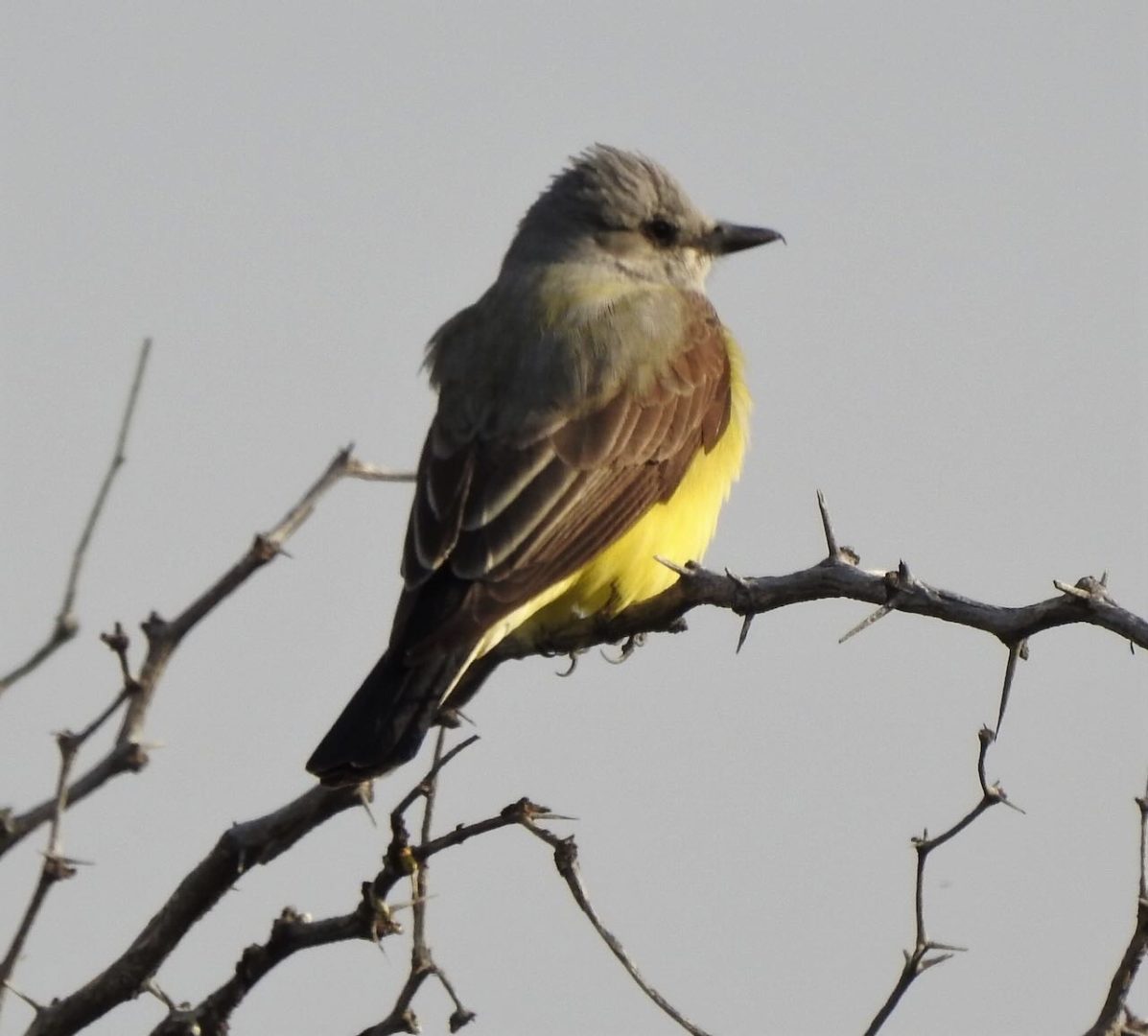
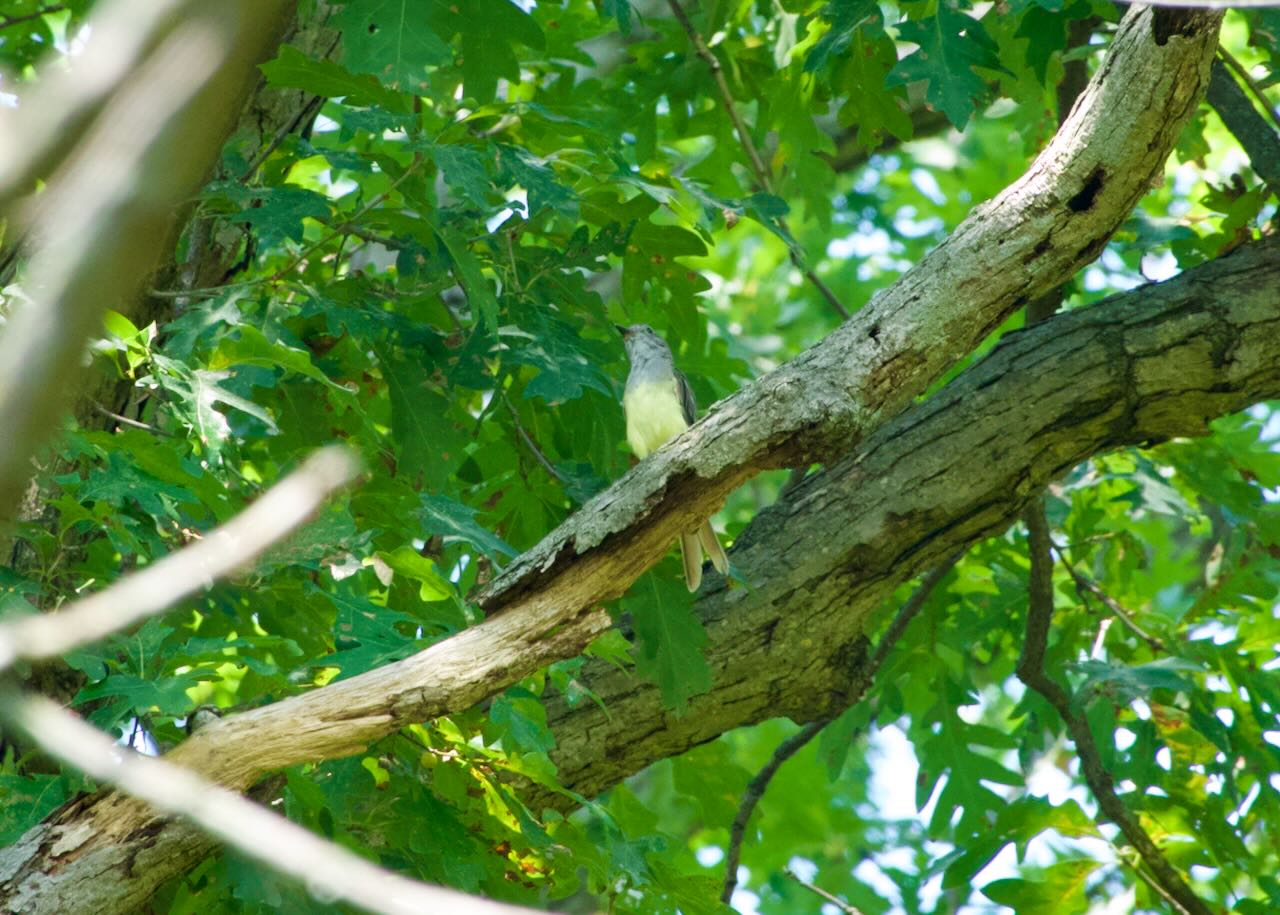
Saturday, we patiently waited at home, itching to bird, but not wanting to make a move in one direction or another. At 10:30 a text from Discord announced a rare Western Kingbird 2.5 hrs west of us and we were in the car by 10:45 heading to the spot between Rondeau and Pelee. We had missed Western Kingbird up in Rainy River where they are most often seen in the summer months so I had been hoping one might end up closer to home. When we arrived, Rick and Mike from Pelee had been looking for a few hours without re-finding the bird. That was not good news. It was hot, humid and Jerry had forgotten his hat in the rush to leave. I gave him mine (he has had skin cancer a few times and needs to keep his face covered) and we looped the short 2km trail a few times hoping to see the bird. As the heat increased I started hanging back in the shade while Jerry, in the hat, moved further along the path. Suddenly a text from him, “I got it”. I ran along the path realizing as I ran that I went the long way to where he was and arrived gasping for breath and tried to get my bins on a bird he was pointing out. The bird was in trees, partially obscured. It had the yellow belly, a grayish head. It looked good. I sent a quick text that we had found it and then we got clearer looks at the bird and realized it was a Great Crested Flycatcher not the Western Kingbird. UGGGGH!
A Western KingbirdThe Great-Crested Flycatcher
Another mis-identification. So frustrating. I try to tell myself that with each mistake you learn and you are less likely to make the same mistake again so it is forward movement although at the time it always feels like backward, rookie mistakes. In the end we stayed for almost 2 hours hoping to find the Kingbird but it was not to be and was not re-found the next day either.
Being so close to Leamington we decided to drive some roads outside of the town in the hopes of spotting a Eurasian-collared Dove that we still need on our list and when that failed we stopped at our favourite Mexican restaurant, Salsa Caliente to cheer us up. The freshest guacamole I have ever tasted! On the way home we stopped at a few sewage lagoons to see if we could turn up a Baird’s Sandpiper to redeem the day but it also, was not to be. And to top off a kinda lousy birding day, Jerry ignored GoogleMaps attempt to take us off the highway to avoid an accident and we ended up sitting for 2 hours because they closed the 401 further along and we eventually had to exit the highway onto narrow country roads with hundreds of other travellers. We got home at 10pm. Sigh!
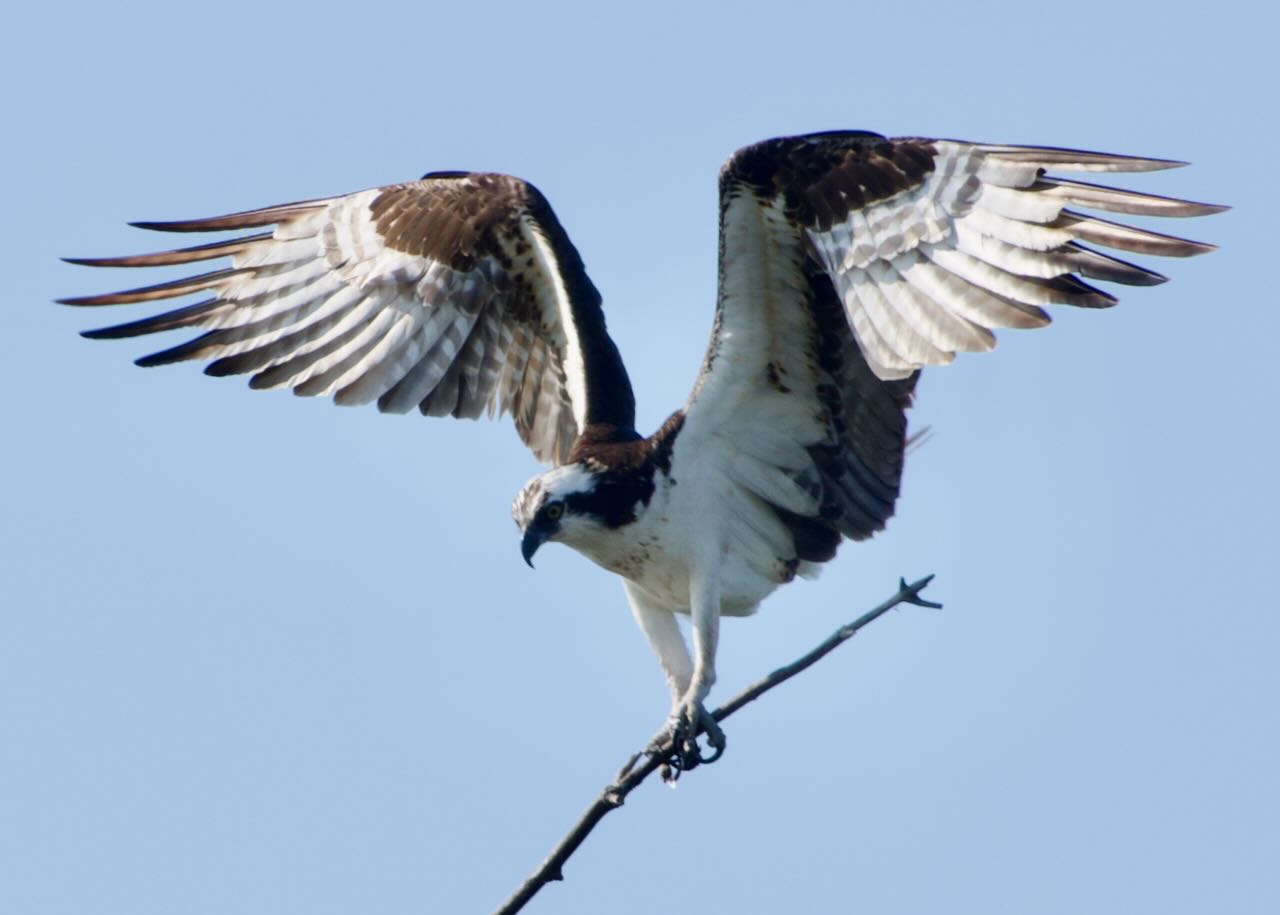
Undaunted by a bad birding day, early Sunday morning we headed to Rattray Marsh in hopes a Baird’s Sandpiper would still be there. It was a beautiful drive in with no traffic or accidents LOL! It was lovely and cool standing at the shady marsh edge talking with Margaret and the other birders while we waited to see if the Baird’s would return. An Osprey catching snacks kept us amused and we had great scope views of the ducks and shorebirds close by.
Osprey
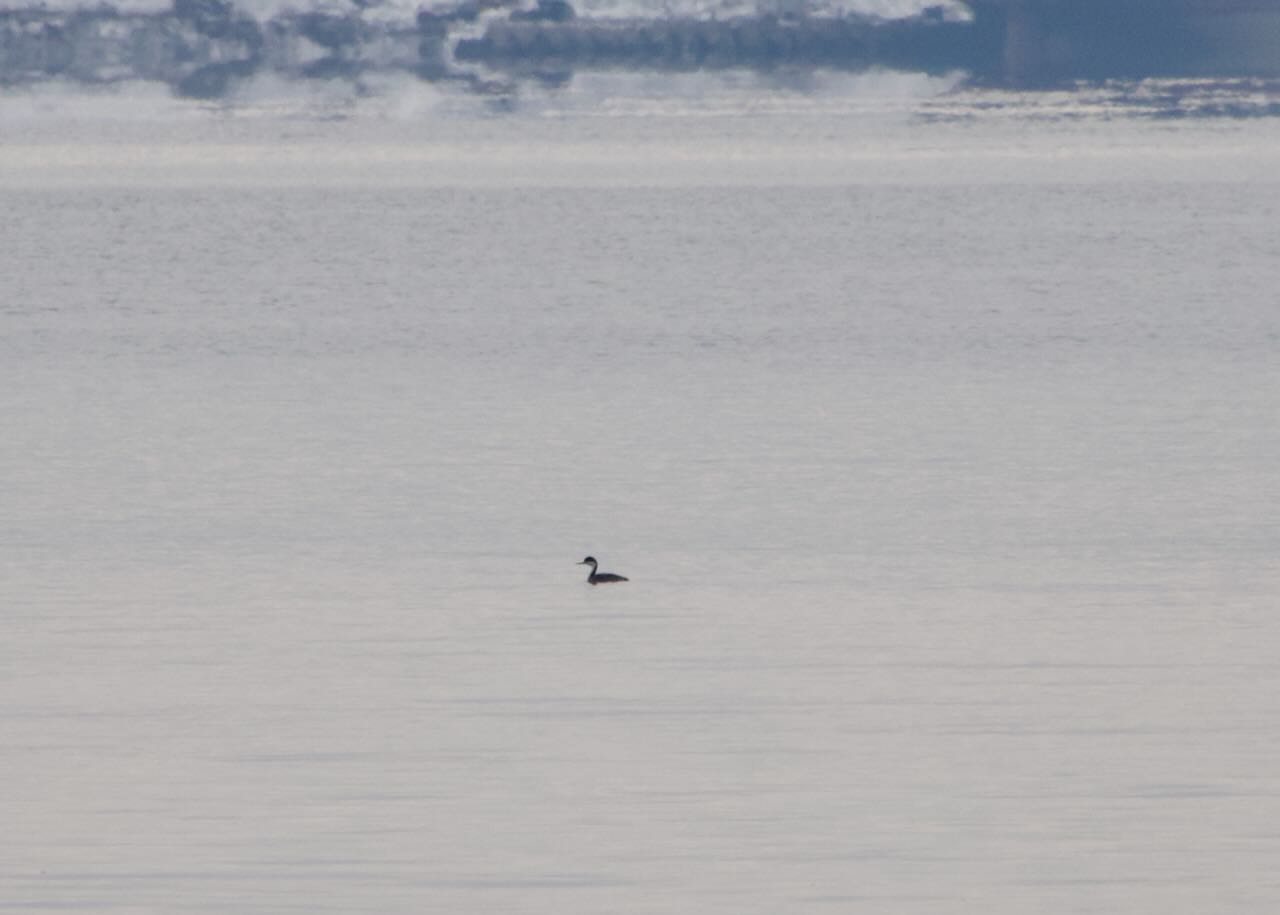
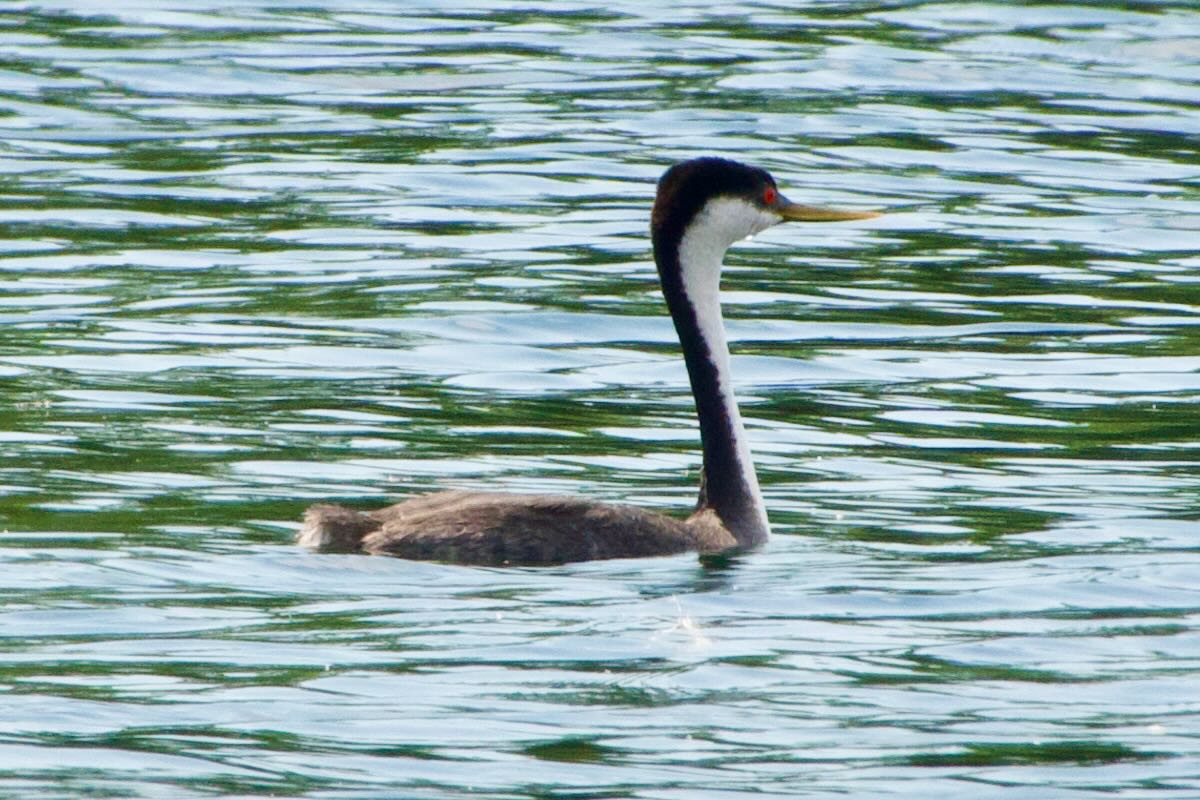
The Baird’s did not return so we headed off to Colonel Sam Smith Park where the wintering Western Grebe had been sighted close to shore. It seems likely that this is the same Grebe that we first saw back on January 7 at LaSalle Park. A Grebe was reported on and off from January until April 30 at LaSalle and then May 1 was the first report from Colonel Sam Park and it has been sighted there and at Rattray on and off from then until today. I found the Grebe quickly off of West Point but it was closer to the farther shore so we decided to walk over to the other side. It was a bit of a hike and in the punishing heat it felt longer but in the end it was worth it to get better views and picture. I think you would agree too…
Our first Western Grebe pictureThe updated Western Grebe picture
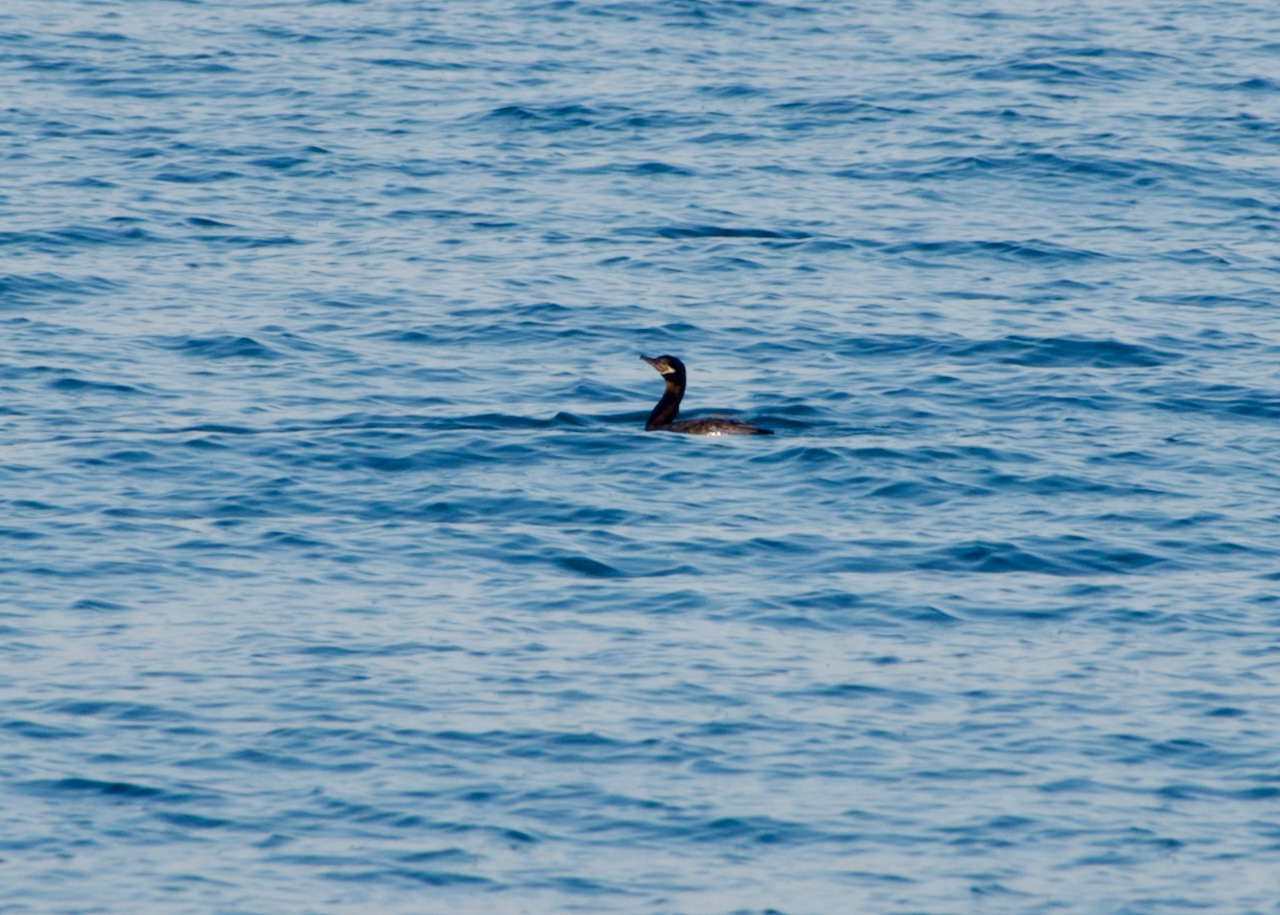
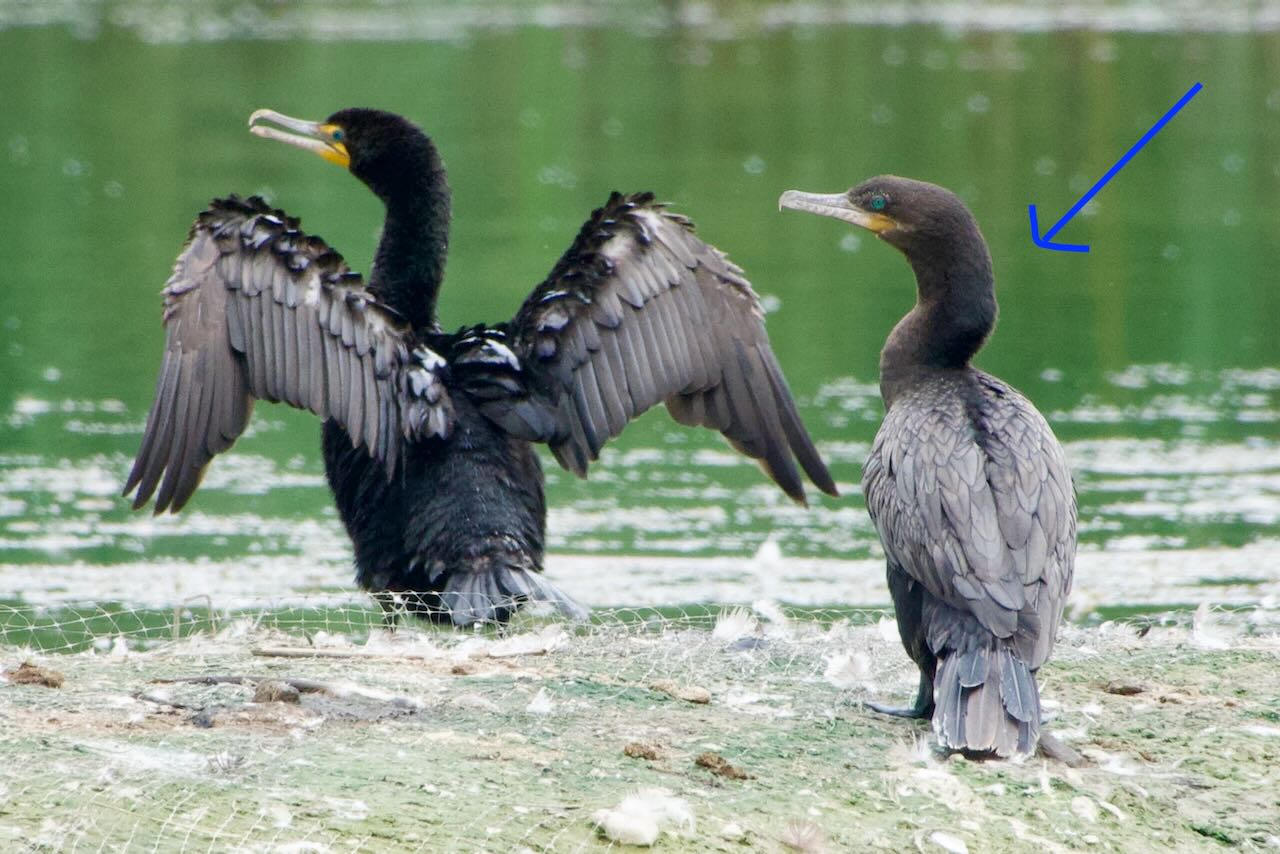
We then headed up to Davos Pond where a Neotropic Cormorant had been hanging out, again, for better pictures. This was one of those perfect birding moments where we parked our car, walked across the street and the Neotropic Cormorant was sitting in a pond a short distance away. We were there for 6 minutes. We are appreciative of these easy gets after all the tough ones. Again, Jerry was happy to get better pictures then the ones we got at Pelee in May.
Our first Neotropic Cormorant pictureThe updated Neotropic Cormorant picture
We also got our first checklist of the year in York County. Only 6 more counties in Ontario to get checklists in for the year. So we added no new birds this week but I’m trying to keep a positive slant on things – we did manage better pictures of some birds and got another county completed so still moving ahead with our challenges.
And we can hope that maybe our mis-identifications are finally behind us…
Week 29 ended up being a non-birding week with only one backyard checklist added to ebird. We enjoyed a few days looking after our grandkids and we had a few caretaking tasks for Jerry’s mom. It was also the week of rain and floods so I was not interested in trying to bird under those circumstances. It continues to be quiet on the birding apps but there are trickles of birds starting to move down from the north. When will something good arrive?
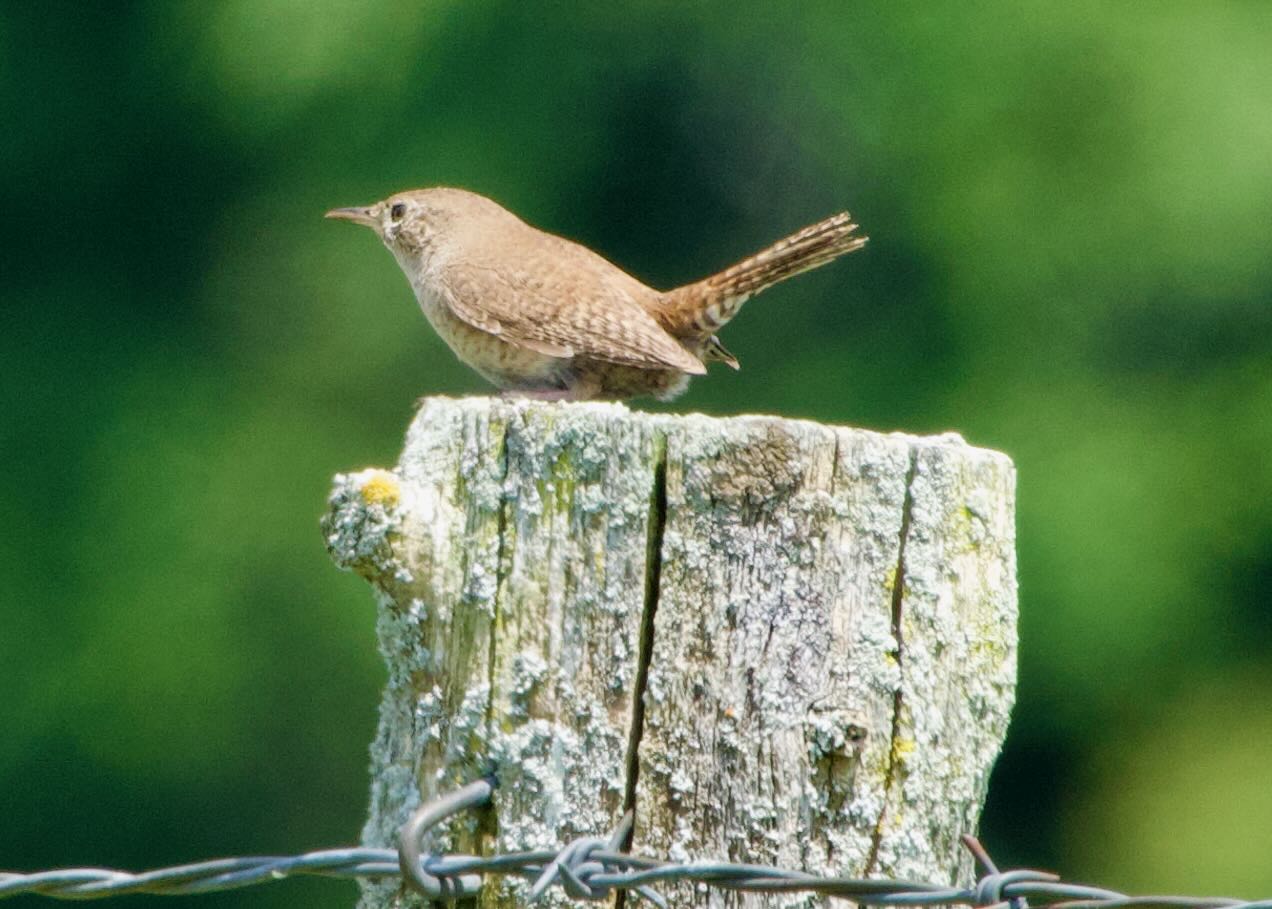
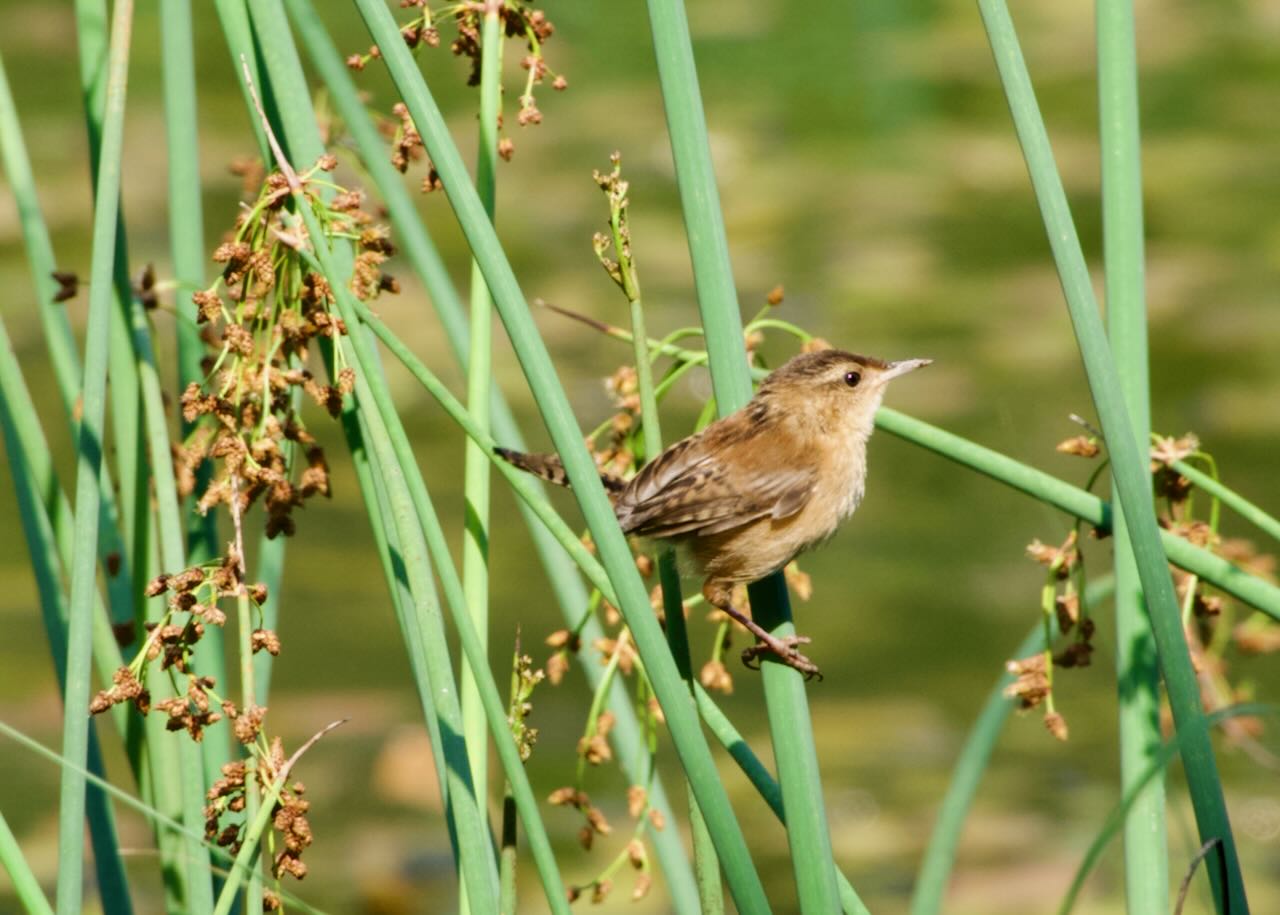
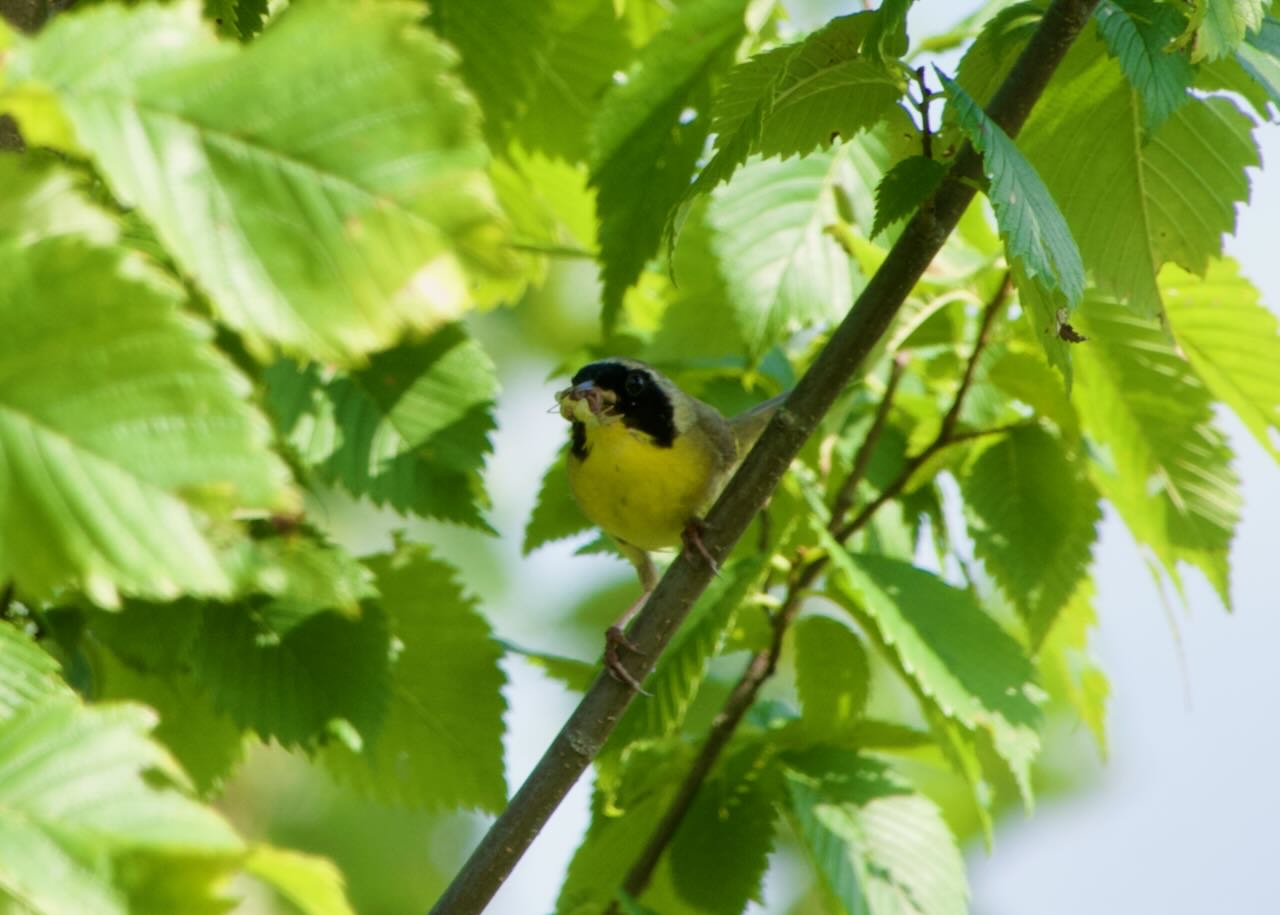
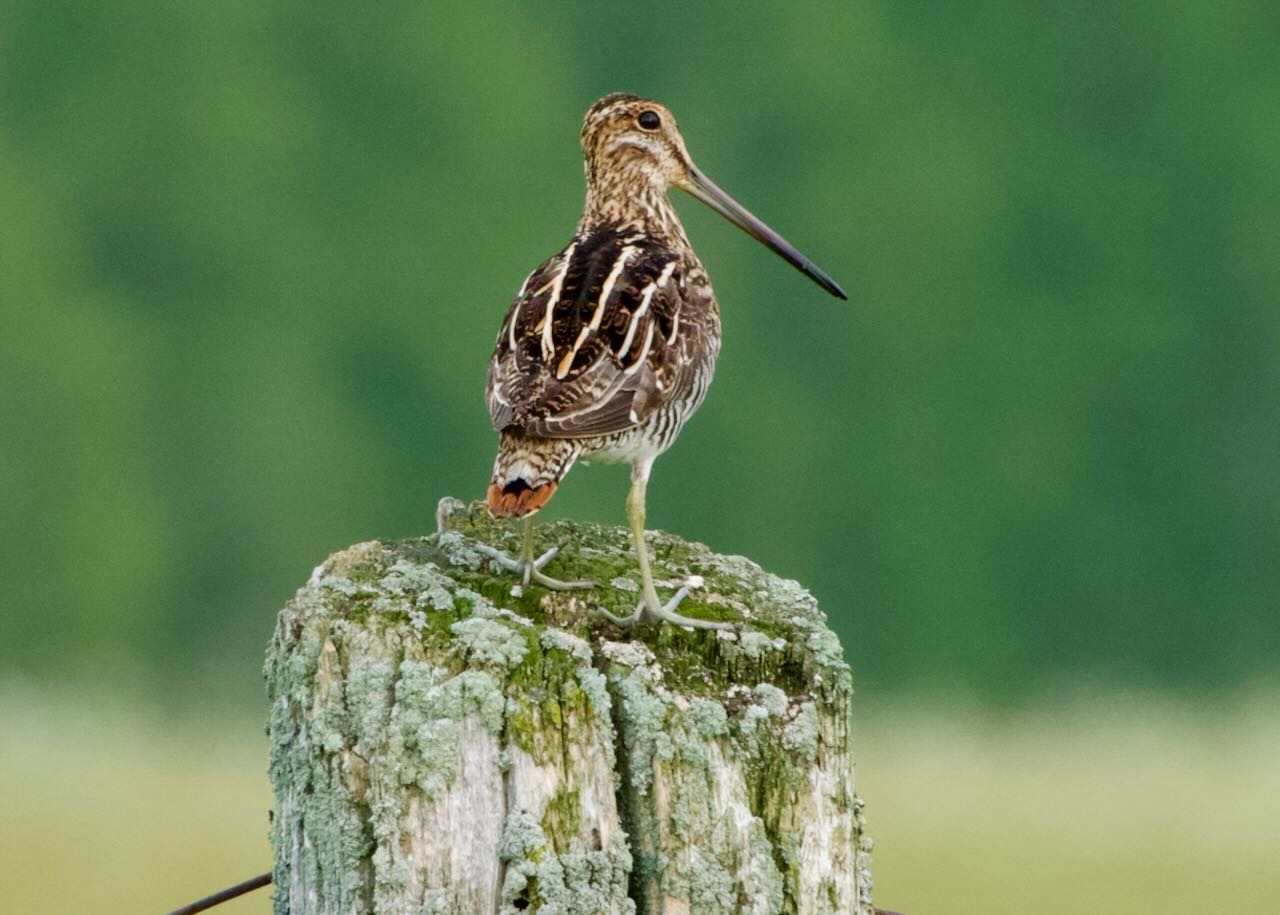
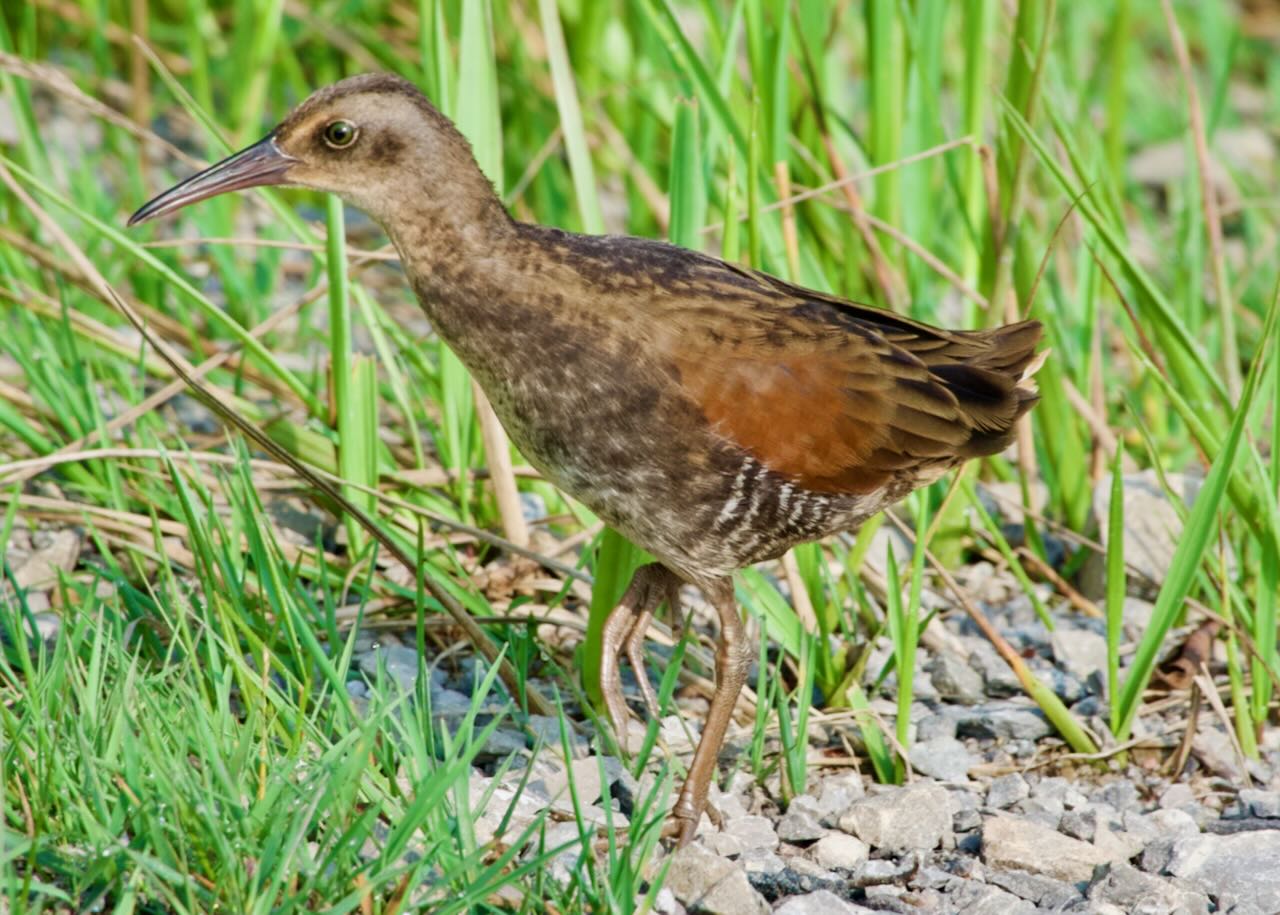
On Sunday, the last day of week 29 we headed up to Carden Alvar in hopes of running across an American Goshawk or, at the very least, getting better pictures of birds on our list. Carden Alvar is a magical place for birds. Alvars are naturally open habitats with little to no soil over a base of limestone or dolostone that set the stage for natural communities that don’t exist any where else. Carden Alvar is one of the largest in the world. We arrived at 7am and by 9 we had seen 44 species of birds. Upland Sandpipers, Wilson’s Snipe, Bobolinks, Meadowlarks, Various Sparrows and the endangered Loggerhead Shrike all breed in the Alvar. Yellow and Virgina Rails, Bitterns, Soras, Sedge and Marsh Wrens breed in the nearby marshes. Jerry managed to take many great pictures and I got some nice video of a juvenile Virginia Rail as it walked along the road undaunted by our presence. I’ve included a video of an Upland Sandpiper we came across a few weeks back as we didn’t get pics and video at Carden.
House WrenMarsh WrenCommon YellowthroatWilson’s SnipeVirginia Rail
On Wednesday, with Discord still silent for new species, we birded locally trying to add some species to our Brant County list. An Acadian Flycatcher had been heard singing by a few birders but we did not manage to hear it. The wetland and forest area where it was heard is bisected by a very busy road with trucks traveling at 80-100km so it is very difficult to hear anything and there is very little shoulder to walk on. I am always nervous there but it is an excellent wetland with lots of species of birds. We managed to add a few birds to our Brant list and packed it in early as thunderstorms rolled in.
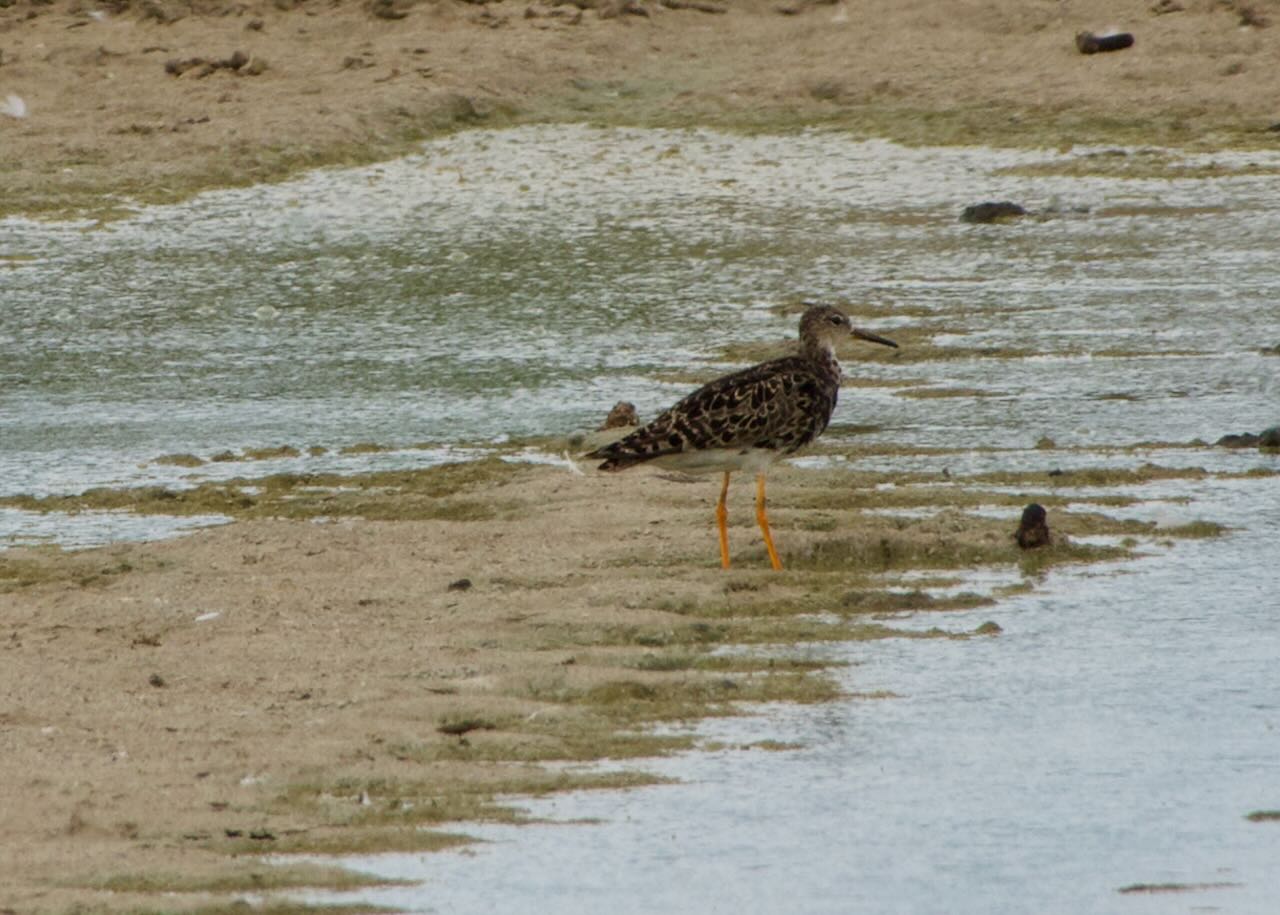
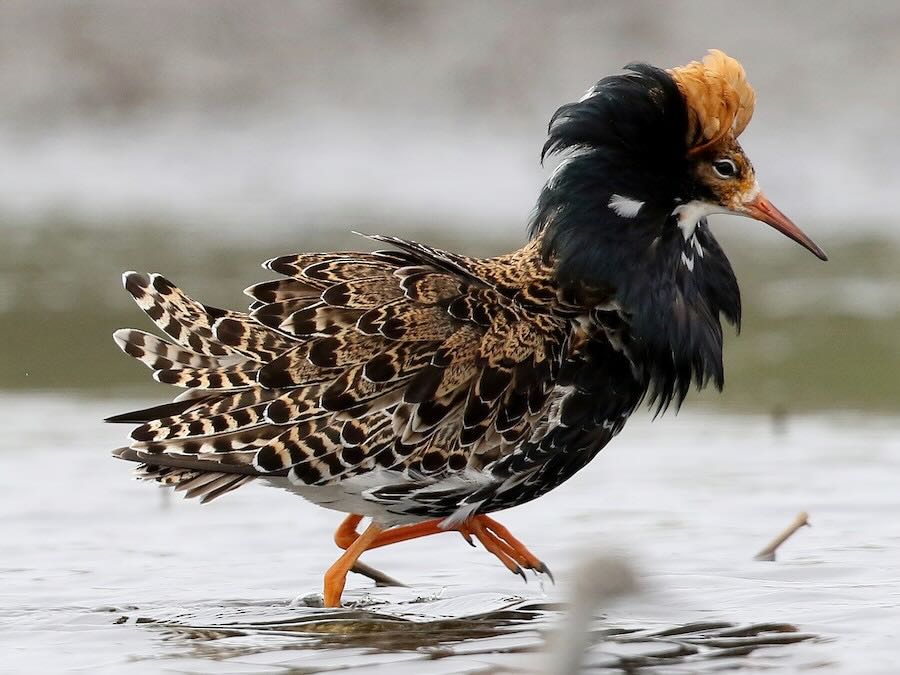
On Thursday I opted to head to Lake Erie to check out Rock Point PP. We have not been in many years but we know the rocky shore is good habitat for shorebirds. I wanted to scope it out for later in the season and it was a gorgeous summer day for a beach walk. We had nothing else to do. As we left Rock Point that familiar ding was heard – Ruff at Blenheim Lagoons! Of course, 3 hours west of where we were! GRRRRR! If we had stayed home it would have only been 2 hours! It seems I have not been able to ever be in the right place LOL! Anyway, we drove. Again. The 4 or 5 single lane construction through London on the 401. The inevitable trucks trying to overtake another truck at the excruciatingly slow speed of 105km! We arrived at Blenheim Lagoons to hear that it had flown 10 minutes before we got there but it had done that a number of times that day. We waited. There were many other shorebirds to amuse us, including FIVE Stilt Sandpipers, the bird we had been chasing two weeks back. After 45 minutes the Ruff made a brief appearance, Jerry got a decent look, I was just getting the scope on it when it flew again but managed a brief view of the orange legs in flight. Trish, who had arrived after us managed to get a quick look too. A few minutes later it returned and this time we could all rejoice with great views and pictures. It was a LIFER for Trish! It was bird #312 for us! A nice rarity to get!
Ruff we sawRuff in Breeding Colours (we never see here)
The weekend was filled with family and social gatherings, catching up with friends and so we close out week 30 with 312 species seen.
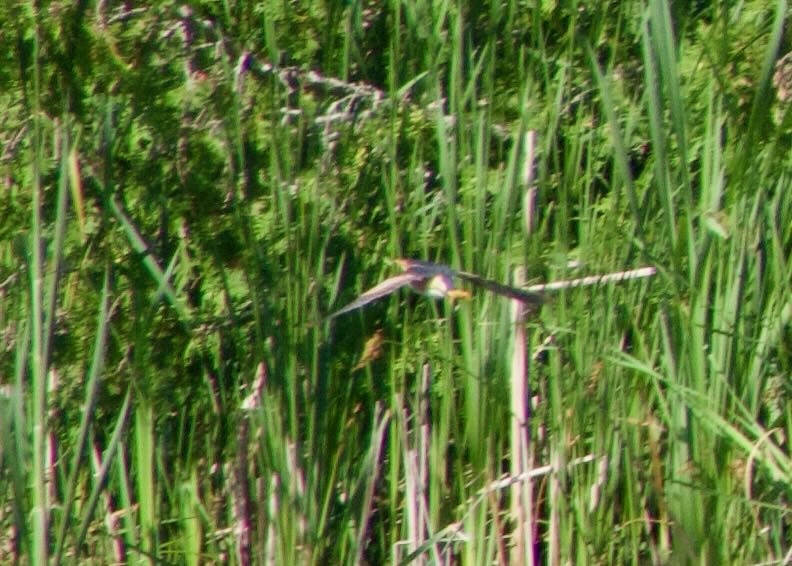
Canada Day we were at Confederation Park in Hamilton to cheer on our our daughter’s family as they ran 1&5K races to raise funds for McMaster Children’s Hospital. We did a bit of a Lake Watch at Van Wagners afterwards to just practise our skills at identifying birds at a distance with the scope. Starting in August we are going to have to spend quite a bit of time at this spot hoping to get Jaegers and rarities coming in. The rest of the week we looked after grandkids and then on Friday headed up north for a weekend with our kids and grandkids at Viamede Resort. We left early Friday and stopped along the way with the goal of seeing and getting a pic of a Least Bittern. We did not see a Bittern at our first stop at the Darlington Waterfront Trail but further north we stopped at Duoro Park in Peterborough. We saw nothing in the actual park but decided to check the river from the road bridge beside the park. Jerry was taking some pictures of a Green Heron when suddenly a Least Bittern flew almost eye level over the bridge. It was only seconds before we got across the road but the bird had disappeared on the other side. I had a fantastic view of it and Jerry missed it. We scouted the area and then decided to go back into the park for a different view of the area we were sure it must have landed in. We scoped for a bit and then it flew up out of the reeds we had been scanning and went down river back to the other side. Jerry managed a crappy shot but we achieved our goal and saw a Least Bittern and got a picture.
Least Bittern in flight
We put in a few lists over the weekend with Loons and Warblers all the while really hoping an American Goshawk would fly over the resort but we were just not that lucky haha! We birded in a few more Counties so our new goal of birding every ebird County and District this year now stands at 41 with only 9 more to be birded.
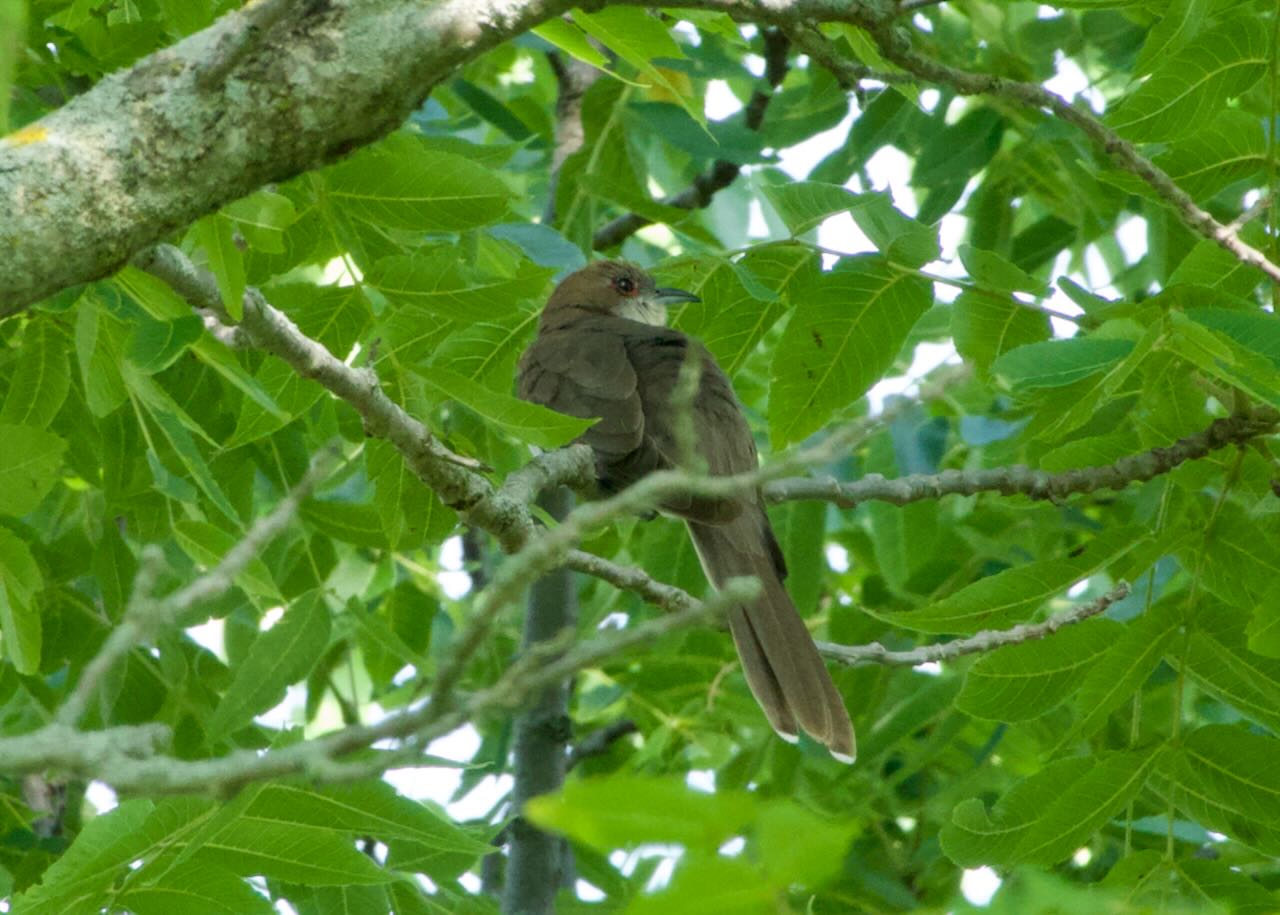
On Monday we birded locally checking some of the storm ponds. Shorebirds are the first migrants to start back and a few are starting to be reported. While we were at the Paris Stormwater Pond Jerry saw a Cuckoo flying from the field to the trees along the road. We have only heard a Black-billed Cuckoo so we hoped this bird was it. We headed out to the road and paced back and forth keeping our eyes on the trees and then heard that distinctive song of cu-cu-cu-cu-cu meaning it was a Black-billed! We waited, we watched, we looked and at long last I saw it hop onto a branch. Jerry ran over and it flew a few trees away, he managed a picture and then it flew to another tree and then flew out towards the field. We scrambled through the scrub and trees and got back out into the field and waited again. In a few minutes I saw it fly between trees and we finally had a clear look at it and Jerry was able to get some good pictures showing its black bill. Another “Heard Only”bird changed to “seen and photos taken bird.”
Black-billed Cuckoo
We now have 8 “Heard Only” Birds left on our list and I hope we can still remove a a few more in the coming months but I know that we will not remove them all.
Week 28
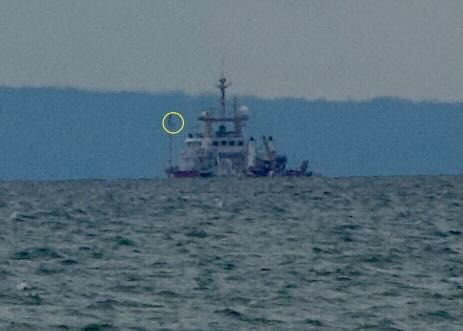
Late Monday, Marcus in Hamilton saw a mega rarity out on Lake Ontario just before dusk. A Common Murre is a first Ontario record! His sighting was not long, just a few minutes, and although the bird was a long way out they are pretty distinctive birds from the East and West Coasts. We decided to do some lake watching on Tuesday in the hopes of seeing this bird and started at the spot Marcus had seen it. We then worked our way towards Toronto stopping to view and scope the lake. We did not find the Murre and planned to head out again on Wednesday or Thursday to work our way from Hamilton to Niagara. Late Tuesday, (why are the great reports always minutes before dark?) a report by a crew member on a Coast Guard boat in Lake Erie was put on INaturalist that a Brown Booby, another mega rarity, was sitting on their boat offshore. With Hurricane Beryl making its way up from the US on Wednesday there was an expectation that some rarities would arrive here before, during and after the storms. So far there had been a Roseate Tern, the Murre, and the Brown Booby. None that were easily chased. But Wednesday around 11 the rain lessened and we headed down to Long Point to canvass the shoreline for the Booby or a Stilt Sandpiper that had been reported a few days before. We met two birders, Jax and Jack at Hastings Drive and birded there for a bit moving on to check out Turkey Point and Port Dover. Before we left Long Point I handed my business card to the guys. At 5:19 my phone lit up with a report from the guys who were still at Long Point that they could see the Coast Guard boat and what looked like a Brown Booby on it. We jumped in the car and headed back, 30 minutes away. The guys texted (thanks for that help!) and we had a quick discussion regarding the boat direction and made the decision to get down to the beach at Long Point east of where they were. By this time the original reporter of the bird had confirmed that the Brown Booby was back on the boat so we knew all we had to do was see “a bird” on the boat for it to count. We flew out of the car and I could see the boat, grabbed the scope and got the scope on the boat. The view was horrible but we could see a shape that looked like a bird on the front mast! Number 310. Whew. We only spent about 5 minutes there and decided to drive further east into the provincial park for maybe a better view. The boat was further out but more sideways in the water so the shape of the bird was marginally easier to see. This will undoubtedly be the worst view and the worst picture of a bird this year. I am glad that it was not a lifer for us. The last Booby hung around in Hamilton for a number of weeks so there is hope that the bird will eventually roost where it might be more easily seen. The reality though is, it will not survive up here on a fresh water lake, it belongs in the warm southern oceans and will die sooner rather than later.
Yes there is a Brown Booby in that circle! LOL
On Friday we headed to Alymer Wildlife Management Area because there had been reports of Stilt Sandpipers the last couple of days. When we arrived a birder told us that he had seen one but the lighting was horrible. The viewing is limited to permanent wooden stands and so we were facing east to see where the birds were with the sun in our eyes. In those conditions the birds are all black silhouettes but when they move you can pick up some detail. After scanning for a bit I was sure I had the Stilt – I could make out a bird with a heavy eyebrow that was dark on top and underneath. Jerry had a scope look and then tried to get pictures. We felt confident we had the bird and put in a checklist and decided to continue birding and come back in the late afternoon when the sun would be behind us. We checked out other lagoons and wetlands down near Rondeau and then headed back to Alymer in the late afternoon. I had a migraine most of the day and it was getting worse as the day got hotter so I was not as focused on birding as I usually am. We met up with another birder, Dorlisa at Alymer and searched for the Stilt to no avail. I was beginning to have second thoughts that we had seen it in the morning. We went home and looked through all the pictures and all we had were many Lesser Yellowlegs that are somewhat similar to the Stilt Sandpiper. We removed it from our list.
I am always aware of the cognitive bias’s that all humans have and the ones that can affect a birder when we are deciding on an ID. Expectation Bias happens when someone tells you a bird is there and then your brain finds what you are looking for even if it is not there. I think that is what happened with the Stilt – we were told it was there and so we found a bird that had close to the characteristics we were looking for. Authority Bias can happen when an accomplished birder announces an ID and everyone else goes along rather than consider the bird themselves. Everyone makes mistakes, even the best birders, and so it is always important to try and confirm an ID yourself. Today, with most people taking pictures and posting them quickly there are less chances of these bias causing major mistakes but back in 1988 in England a major birding mistake became the hallmark story for these bias. You can read the detailed version here. https://www.birdguides.com/articles/general-birding/phantasms-and-fallacies/
The shortened version is a rare warbler was caught and banded, pictures were taken and the bird was released. The bird was supposedly “refound” and 600 people traveled to see the bird over the week and the people that had banded the bird often were the ones showing the bird to the others. Everyone went home happy. The author of the article, a teen at the time, thought the bird did not check the boxes for the rarity but didn’t question the experts. The next day the bird started to sing and it was a common warbler that looked a bit weird from the norm, not the rarity at all! Those bias’s had clouded all of the 600 people seeing that bird, even the original bander who had held the real rarity in his hand!! Crazy right?!
I read about these bias’s when we started birding and I am acutely aware but even with awareness you still find yourself falling into the trap of them. I often second guess myself after seeing a really good bird because I don’t want to make a mistake so I often talk myself out of an ID rather than be wrong. I’m glad that Jerry takes pictures for proof that I really did see it. I hope the more we bird the better we will be at avoiding these bias’s.
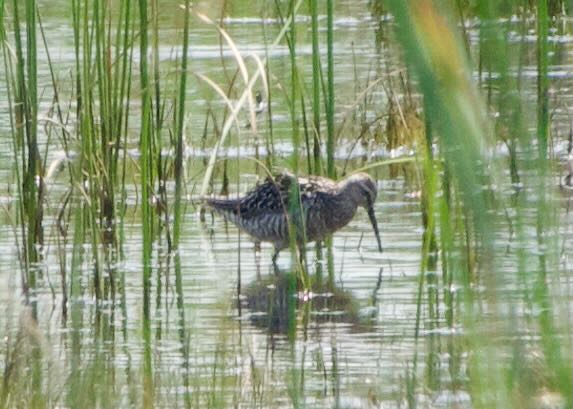
On Sunday morning we headed to Long Point where Stilts had been reported on and off for over a week. We spent a few hours on the beach off Hastings Drive but no Stilts. We then headed over to Crown Marsh, then back to Hastings and then decided to head home but first I suggested we head back for one more stop at Crown Marsh. We walked down the trail and Jerry found a Stilt in with some Lesser Yellowlegs. We had great scope views and this time there was no doubt that it was a Stilt! Heavy barring underneath, a prominent eyebrow, a thick black bill with a bit of a downturn, a bit smaller than a Yellowlegs. All the boxes checked, we had Bird #311 to end the week.